
Press Release
GLOBAL AWAKENING OF THE IJAW STRUGGLE FOR JUSTICE AND SOVEREIGNTY,

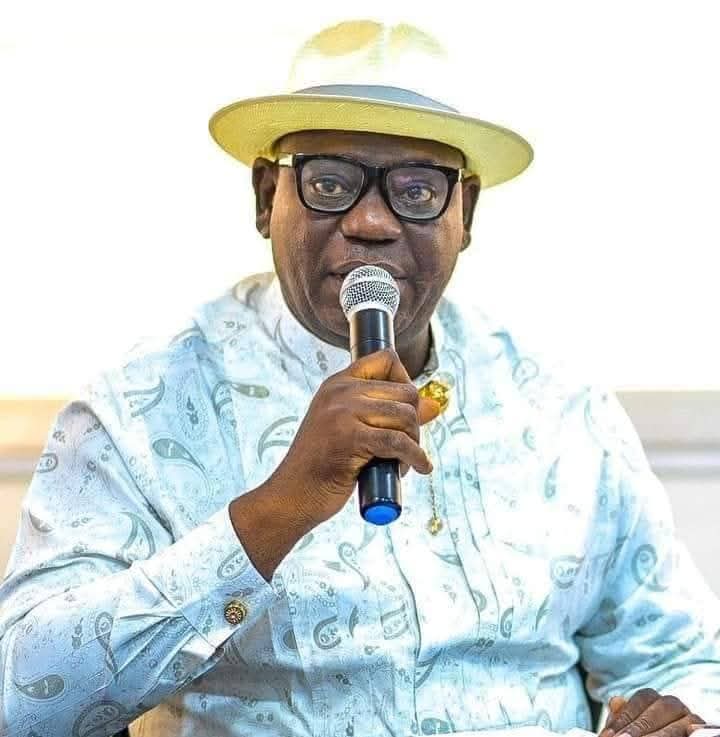
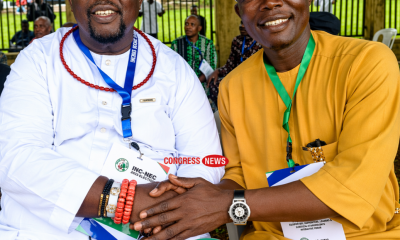
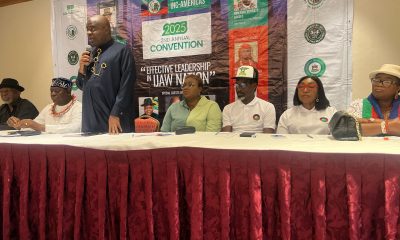
Being Text of International Press Conference, held at Houston TX, United States of America, on t Global Awakening of the Ijaw Struggle for Justice and Sovereignty, the 6th July, 2025 by Prof. Benjamin O. Okaba, President, Ijaw National Congress (INC) Worldwide. Gentlemen of the Press,
We, the people of Ijaw ethnic nationality of the oil and gas rich Niger Delta region, wish to reaffirm our commitment to justice, dignity, and self-determination. The Ijaw National Congress, INC, the umbrella social cultural organization of the Ijaw race worldwide, stands resolute in our mission to advocate for and restore the rights of the Ijaw people as enshrined in international laws, ancestral treaties, and natural justice. We are resolved in championing the quest for autonomy and dignity for the Ijaw people through peaceful, strategic, and diplomatic means, and seek the solidarity of our allies worldwide.
We envision a future where traditional governance harmonizes seamlessly with modern statecraft, while ensuring that the resources, dignity, and voice of the Ijaw people are no longer subjugated to exploitative forces. This vision is not merely aspirational. It is our collective destiny, guided by the wisdom of our ancestors and fueled by the prevailing circumstances and dehumanizing experiences of our people, and galvanized by global solidarity.
Gentlemen of the press, we assemble at this historic press conference not merely to recount our wounds, but to illuminate a truth long buried beneath the sediment of silence. The Ijaw nation, ancient and dignified, stands today at a decisive threshold of being completely erased or emancipated. Our right to self-determination is not a matter of sentiment or protest. It is anchored in solemn treaties with the British Crown, validated by the sacred norms of international laws, and preserved in the living memory of a people who have refused to forget who they are. We do not come here to seek pity. We come bearing documented truth, historical legitimacy, and a solemn moral summons to justice. In addition, we affirm today that the Ijaw nation’s sovereignty, one of the four largest ethnic nationalities in Nigeria is neither a relic nor a wish, it is a right rooted in law, in history, and in justice. The Nigerian state has woven an intricate web of laws and decrees designed to disinherit and displace us. The Nigerian state feeds fat on the marrow of our natural resources, while leaving our people in hunger and disease. Yet, through it all, we have not lost our voice. Today, we raise that voice before the international community to say: ‘enough is enough’. We call for justice rooted in truth, for peace grounded in equity, and for a future shaped by our own will. We invite the international community to stand with us, not as observers of our pain, but as partners in the restoration of our dignity, our environment, and our right to self-determine and sovereignty.
Our quest for self-determination is rooted in rigorous, multidisciplinary scholarship evidenced in compact and diplomatic exchanges between the Ijaw nation and the British Crown. These documents demonstrate that before 1914, prior to British amalgamation of Nigeria, Ijaw communities entered into mutual agreement with the Crown, affirming local governance, resource rights, and autonomy (we shall publish these archives widely and submit them to the United Nations and international legal bodies to underscore their enduring validity under international law).
From Nigeria’s independence in 1960 to the present day, there has been a calculated and sustained legal trajectory, whereby successive regimes have constructed a juridical architecture designed to transfer control of oil and gas from Ijaw territory into centralized federal custody. From the 1969 Petroleum Decree to the 2021 Petroleum Industry Act (PIA), these instruments, engineered largely by oppressive hegemonic regimes and later embedded in a post-military constitution, have institutionalized the expropriation of the natural resources in Ijaw land, waterways, and mineral wealth. What masquerades as national interest is, in truth, a profound betrayal: a systematic disenfranchisement of a people whose ancestral domain once engaged the British Crown in treaty-based diplomacy. These laws do not merely dispossess the Ijaws of economic value; they severe their sovereignty, dignity, and cultural inheritance. They represent a seamless evolution of colonial extractive logic into postcolonial statecraft, internal colonialism veiled in the robes of legality and legislative order.
The legal instruments in question do not merely marginalize; they orchestrate a calibrated economic asphyxiation of the Ijaw nation. By stripping regional control of hydrocarbon wealth, suppressing derivation entitlements, and shielding corporate polluters through federal impunity, the Nigerian state has institutionalized a regime of repressive governance where Ijaw communities remain the locus of production but wallow in the periphery of benefit. Gas flaring, oil spills, and aquatic toxification persist not as unintended consequences but as inevitable by-products of a profit-centric legal order. This constitutes a form of structural violence, slow, invisible, yet devastating, where the Ijaw people are not only impoverished but imperiled in their own environment.Perhaps most pernicious is the constitutional petrification of these decrees under Section 315(5) of the 1999 Nigerian Constitution (as amended), which renders their repeal virtually impossible through ordinary democratic processes. This legal ossification transforms historical injustice into an irreversible jurisprudential orthodoxy, foreclosing the avenues of redress within Nigeria’s own legal system. It is a tragic irony: a democratic constitution has become the chief custodian of autocratic plunder. In this light, the Ijaw case transcends domestic grievance, it demands international intervention, for where national law calcifies oppression, transnational justice must respond.The fiscal trajectory of Nigeria’s derivation formula unveils a paradigm of institutionalized expropriation, whereby the Ijaw Nation, custodians of the oil wealth that undergirds the Nigerian state, has been condemned to economic peripheralization. Before 1960, non-oil (groundnut, cocoa, palm oil) producing regions were rightfully allocated 50 percent derivation share, an arrangement anchored in the spirit of equity and genuine federalism. Yet, as successive regimes entrenched central control, that share was ruthlessly eroded to a paltry 1.5 percent by 1984. Though the post-military era saw a token restoration to 13 percent, the Ijaw people remain trapped in a fiscal straitjacket. Bureaucratic sabotage and selective disbursement have converted constitutional entitlements into tools of political patronage, disbursed not as rightful claims but as discretionary favours. The result is a cruel paradox: oil-bearing communities, rich in resources, languish in penury. The image is haunting, a vineyard owner exiled from his own estate, watching others dine lavishly on his harvest, while he and his children beg for crumbs beyond the gate.This betrayal deepens when one examines the misallocation of funds meant to redress these very inequities. Between 1992 and 1995, commissions linked to Ijaw development, legally entitled to ₦72 billion, received barely ₦11 billion. In stark contrast, an astounding ₦346 billion in so-called “special funds” was diverted to non-oil-producing states. This is not mere mismanagement; it is fiscal parasitism masquerading as federalism. Even more egregiously, from 1960 to 1999, an estimated $300–$400 billion in oil revenue was siphoned into private coffers, implicating successive political elites in a kleptocratic machinery that bled the Ijaw heartlands dry. The environmental devastation consuming the Ijaw homeland is not a tragic byproduct of industrial progress, nor is it a failure of oversight, it is a deliberate, prolonged assault, meticulously veiled in the rhetoric of national interest. From 1976 to 1991 alone, more than 2,976 oil spills hemorrhaged nearly two million barrels of crude into Ijaw rivers, wetlands, and sacred soils. By 2001, this figure ballooned to 6,817 incidents, unleashing an additional three million barrels, most of which remain unrecovered, saturating the land with toxic permanence. And the crisis has not waned, with 535 new spill incidents reported in 2023, the state’s abdication of environmental responsibility becomes irrefutable. Although gas flaring was officially outlawed in 1984, more than one hundred active flaring points continue to burn defiantly across Ijaw territories, releasing invisible poisons into the atmosphere. It is on record that nearly 70 million cubic meters of gas is flared daily, an alarming figure that accounts for 41 percent of Africa’s total. These flames, though silent, speak volumes. They smother entire towns in noxious fumes, choke the once-breathing mangrove forests, and extinguish life from sacred wetlands that for centuries nourished generations.The skies above the Ijaw nation are now saturated with carcinogens and acid rain, steadily corroding both nature and human vitality. The consequences are harrowing. In areas near spill sites, neonatal mortality has doubled, and children face developmental harm before they can even speak. This is eco-imperialism, a cold, predatory order that weaponizes misery, suffocates the environment, and ruins the people’s means of livelihood. These are not random misfortunes of nature; they are the brutal consequences of a system that has traded human dignity for crude oil. If the prosperity of nations is built upon the ruins of silenced and suffering peoples, then justice must rise with urgency and not apathy. The international community must no longer look away. Yet, this devastation is not abstract. It is visceral, generational, and ruinous, etched into the daily rhythm of a people whose traditional food systems have collapsed.
We have proclaimed it in solemn assemblies, across diverse platforms, and to all who are willing to listen. I declare again with indomitable conviction that we do not come to beg for sympathy, we come to awaken global responsibility. We stand not as victims, but as people determined to reclaim their destiny that was unjustly delayed. For too long, the Ijaw people who are one of the major custodians of Nigeria’s oil and gas wealth have been victims of national injustice. Let it now be understood with absolute clarity that we are not merely dwellers on resource-rich soil. We are an ancient nation, deliberately dispossessed through manipulative decrees, deprived through coercive force, and continuously degraded through institutionalized greed. This is not the chaos of failed leadership. It is a calculated strategy of legalized oppression, designed to silence our people and erase our heritage. The Ijaw call for justice is rooted not in emotion but in international law. We invoke the universal principles enshrined in the United Nations Charter, the International Covenant on Civil and Political Rights, the Vienna Convention on the Law of Treaties, and the United Nations Declaration on the Rights of Indigenous Peoples. These are not decorative texts for ceremonial reference, they are the moral scaffolding of the global order, forged after humanity’s darkest hours to prevent the continued subjugation of the marginalized. To ignore their application to the Ijaw question, is to render them hollow, and to betray their very spirit.We therefore assert, unequivocally, the Ijaw people’s right to self-determination, to decide our political future, own and manage our resources, preserve our ecosystem, and protect our cultural life without interference. Without prejudice to the above, we call upon the United Nations to immediately establish an independent international commission of inquiry into the decades-long pattern of environmental destruction, economic disenfranchisement, and treaty violations inflicted upon Ijaw Nation.
We further urge the United Nations Environment Programme (UNEP) to spearhead a transparent and science-driven remediation process, underwritten by a Niger Delta Restoration Fund financed by oil multinationals that connived with the oppressive hegemonic Nigerian regimes to expropriate our oil and gas wealth, profited from our suffering.We welcome the international media to walk our creeks, witness our wounds, and document our exploitation, deprivations and neglect. Our prevailing realities and circumstances is a challenge to the conscience of the world. Global silence is no longer neutrality, but implies complicity. The season of reckoning has dawned, heralding an unyielding call for justice, restoration, and the rightful self-determination of the Ijaw people. Let history remember not only that we cried out, but that the world finally listened.
Let it be etched in the hearts of nations and echoed across oceans: the Ijaw Nation will not vanish into the footnotes of forgotten histories. We rise not in bitterness, but in boldness, armed not with arms but with ancestral truth, sacred treaties, and the enduring torch of global solidarity. We rise to reclaim what was never surrendered: our voice, our land, our future. We are not begging at the gates of the global order, we are standing at its altar, invoking the highest ideals of humanity. What was stolen was not merely our resources, it was the deferral of hope, the extinguishing of opportunities, the erosion of human dignity, and the systematic dismantling of an intergenerational promise once rooted in the dream of a dignified future.As we stand united at home and in the diaspora, let the bravery of our ancestors ignite a new dawn for the Ijaw people, and by extension, for all oppressed nations yearning for light. May justice flow through our creeks like a mighty tide. May truth rise like the mangrove after flood and fire. And may our cry today be the seed of tomorrow’s emancipation.
Signed:
Professor Benjamin O. Okaba,
President, Ijaw National Congress, For and On Behalf of Congress (INC) Global





Press Release
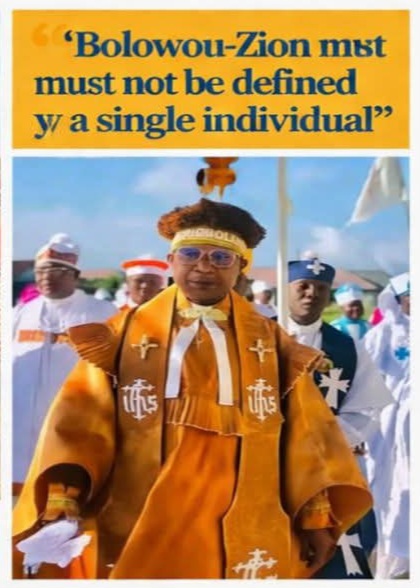
Press Release: 𝗕𝗼𝗹𝗼𝘄𝗼𝘂-𝗭𝗶𝗼𝗻 𝗖𝗼𝗺𝗺𝘂𝗻𝗶𝘁𝘆 𝗗𝗶𝘀𝘁𝗮𝗻𝗰𝗲𝘀 𝗜𝘁𝘀𝗲𝗹𝗳 𝗳𝗿𝗼𝗺 𝗣𝗶𝗽𝗲𝗹𝗶𝗻𝗲 𝗖𝗼𝗻𝘁𝗿𝗮𝗰𝘁 𝗖𝗼𝗻𝘁𝗿𝗼𝘃𝗲𝗿𝘀𝘆, Says “𝗔𝗻 𝗢𝗰𝗲𝗮𝗻 𝗖𝗮𝗻𝗻𝗼𝘁 𝗕𝗲 𝗗𝗲𝗳𝗶𝗻𝗲𝗱 𝗯𝘆 𝗮 𝗦𝗼𝗹𝗶𝘁𝗮𝗿𝘆 𝗪𝗮𝘃𝗲”
March 31, 2026
Bolowou-Zion, Niger Delta — The leadership of Bolowou-Zion Community, headquarters of the Cherubim and Seraphim Church of Zion, has issued a strongly worded press statement defending its integrity, distancing the community from ongoing controversies surrounding pipeline surveillance contracts, and affirming its support for Tantita Security Services Limited.
In the statement, the community emphasized that Bolowou-Zion must not be misrepresented or drawn into disputes driven by individual opinions or ambitions, warning against attempts to generalize personal views as the collective position of the community.
Describing Bolowou-Zion as “a consecrated ground and spiritual citadel,” the leadership stressed that the community transcends political or economic interests, serving instead as a unifying spiritual center for members across the Niger Delta and beyond—from Ondo to Edo, Delta to Bayelsa.
The statement strongly condemned efforts to attribute the opinions of individuals to the entire community, noting that such claims are “unjust, misleading, and philosophically flawed.” It reiterated that differing views on matters such as resource control or contract distribution remain personal positions and do not reflect the official stance of Bolowou-Zion.
Addressing the pipeline surveillance discourse, the community made it clear that it does not oppose the vision and mission of Tantita Security Services Limited. Instead, it expressed firm support for the organization, acknowledging its role in protecting critical national assets and fostering stability in the Niger Delta.
The leadership further praised the company’s leadership, describing them as “illustrious sons of the Ijaw Nation” who deserve collective prayers, recognition, and support for their contributions to regional development.
Calling for calm and responsible engagement, the statement urged stakeholders, government authorities, and the general public to exercise restraint, uphold truth, and avoid vilifying entire communities based on individual actions.
Bolowou-Zion reaffirmed its identity as a beacon of unity, peace, and spiritual heritage, emphasizing its commitment to the progress of the Niger Delta through cooperation, dialogue, and divine guidance rather than conflict.
The press statement was formally signed by key leaders of the community: Rev. Epistle Princewill Jemine, General Overseer of the C&S Church of Zion, Bolowou-Zion; Senior Boan. Ijawakpo Foloki, second-in-Command; and Senior Boan. M.K. Belele, Secretary of Bolowou Zion Community.
The community concluded by calling for truth, fairness, and unity to prevail over division, reinforcing its enduring commitment to harmony and collective progress.
𝘙𝘦𝘢𝘥 𝘧𝘶𝘭𝘭 𝘱𝘳𝘦𝘴𝘴 𝘴𝘵𝘢𝘵𝘦𝘮𝘦𝘯𝘵 𝘣𝘦𝘭𝘰𝘸 :
𝐏𝐑𝐄𝐒𝐒 𝐒𝐓𝐀𝐓𝐄𝐌𝐄𝐍𝐓
𝗗𝗘𝗙𝗘𝗡𝗗𝗜𝗡𝗚 𝗧𝗛𝗘 𝗦𝗔𝗡𝗖𝗧𝗜𝗧𝗬, 𝗨𝗡𝗜𝗧𝗬, 𝗔𝗡𝗗 𝗦𝗣𝗜𝗥𝗜𝗧𝗨𝗔𝗟 𝗜𝗗𝗘𝗡𝗧𝗜𝗧𝗬 𝗢𝗙 𝗕𝗢𝗟𝗢𝗪𝗢𝗨-𝗭𝗜𝗢𝗡 𝗖𝗢𝗠𝗠𝗨𝗡𝗜𝗧𝗬
In times marked by tension, speculation, and competing narratives, it becomes imperative that truth is neither overshadowed by assumption nor distorted by personal interests. A sacred community must never be reduced to a tool in the arena of individual ambition or public misrepresentation. It is therefore with a profound sense of spiritual duty, moral conviction, and unwavering clarity that we address the ongoing discourse surrounding the pipeline surveillance contract and the regrettable attempts to cast aspersions on the revered name of Bolowou-Zion community.
Bolowou-Zion is far more than a geographical entity or a social enclave. It is consecrated ground—a spiritual citadel and the administrative and prophetic headquarters of the Cherubim and Seraphim Church of Zion. This divine institution is not confined by territorial boundaries; its influence and spiritual lineage extend across the Niger Delta and beyond—from Ondo to Edo, Delta to Bayelsa, and into numerous other communities. The sons and daughters of Zion are united not by transient political interests, but by a sacred covenant; not by contracts or economic pursuits, but by a shared devotion to Christ and a commitment to divine purpose.
It is therefore both unjust and fundamentally flawed to attribute the personal opinions, aspirations, or actions of any individual, regardless of their status or origin, to the collective identity or official position of Bolowou-Zion community. A faith-based institution cannot and must not be reduced to the voice of a single individual, just as the vast ocean cannot be defined by a solitary wave, nor the sky by a passing cloud.
We recognize that in any progressive and dynamic society, differing perspectives will inevitably arise, particularly on matters relating to governance, economic opportunity, and resource control. Such diversity of opinion is neither abnormal nor undesirable. However, wisdom demands discernment—the ability to distinguish between individual expression and institutional doctrine, between temporal interests and eternal values. Any advocacy, including calls for decentralization or redistribution of contracts, remains solely the position of the individual expressing it and must not be misrepresented as the collective stance of Bolowou-Zion or the wider Zion family.
For the avoidance of doubt, Bolowou-Zion Community does not stand in opposition to the vision and mission of Tantita Security Services Limited. On the contrary, we recognize and respect the role the organization plays in safeguarding critical national assets and contributing to the stability and development of the Niger Delta. We further applaud the captains of the ship of Tantita Security Services Limited as illustrious sons of the Ijaw Nation—men whose efforts and leadership deserve not only acknowledgment but also our collective prayers and unwavering support. In unity and goodwill, we believe that collaboration, rather than contention, remains the surest path to progress for our people.
To judge an entire community based on the utterances or actions of a single individual is to abandon fairness and embrace prejudice. It disregards the collective identity painstakingly built through decades of spiritual labor, shared sacrifice, and unwavering unity. Such generalization is not only inaccurate—it is deeply unjust and harmful to the fabric of communal coexistence.
We therefore call on all stakeholders, community leaders, government authorities, and members of the public to exercise restraint, uphold the principles of truth and fairness, and resist the urge to generalize or vilify. Let engagements be guided by wisdom, mutual respect, and a commitment to justice. Let no narrative be driven by emotion at the expense of truth, nor by ambition at the expense of unity.
Bolowou-Zion remains steadfast in its commitment to peace, unity, and the holistic advancement of the Niger Delta—achieved not through conflict or division, but through cooperation, dialogue, and divine guidance. Our legacy is one of faith, and our future is anchored in righteousness.
May truth continue to prevail over falsehood, may understanding overcome misrepresentation, and may unity triumph over all forms of division.
E-signed:
𝗥𝗲𝘃. 𝗘𝗽𝗶𝘀𝘁𝗹𝗲 𝗣𝗿𝗶𝗻𝗰𝗲𝘄𝗶𝗹𝗹 𝗝𝗲𝗺𝗶𝗻𝗲
𝘎𝘦𝘯𝘦𝘳𝘢𝘭 𝘖𝘷𝘦𝘳𝘴𝘦𝘦𝘳, 𝘊&𝘚 𝘊𝘩𝘶𝘳𝘤𝘩 𝘰𝘧 𝘡𝘪𝘰𝘯, 𝘉𝘰𝘭𝘰𝘸𝘰𝘶-𝘡𝘪𝘰𝘯 𝘏𝘦𝘢𝘥𝘲𝘶𝘢𝘳𝘵𝘦𝘳𝘴 & 𝘔𝘪𝘺𝘦𝘯𝘬𝘪𝘳𝘪𝘨𝘣𝘰𝘭𝘰𝘮𝘰𝘮𝘸𝘦𝘪 𝘐𝘐 𝘰𝘧 𝘉𝘰𝘭𝘰𝘸𝘰𝘶 𝘡𝘪𝘰𝘯
𝗦𝗲𝗻𝗶𝗼𝗿 𝗕𝗼𝗮𝗻. 𝗜𝗷𝗮𝘄𝗮𝗸𝗽𝗼 𝗙𝗼𝗹𝗼𝗸𝗶
𝘚𝘦𝘤𝘰𝘯𝘥-𝘪𝘯-𝘊𝘰𝘮𝘮𝘢𝘯𝘥, 𝘉𝘰𝘭𝘰𝘸𝘰𝘶 𝘡𝘪𝘰𝘯 𝘊𝘰𝘮𝘮𝘶𝘯𝘪𝘵𝘺
𝗦𝗲𝗻𝗶𝗼𝗿 𝗕𝗼𝗮𝗻. 𝗠.𝗞. 𝗕𝗲𝗹𝗲𝗹𝗲
𝘚𝘦𝘤𝘳𝘦𝘵𝘢𝘳𝘺, 𝘉𝘰𝘭𝘰𝘸𝘰𝘶 𝘡𝘪𝘰𝘯 𝘊𝘰𝘮𝘮𝘶𝘯𝘪𝘵𝘺
Press Release
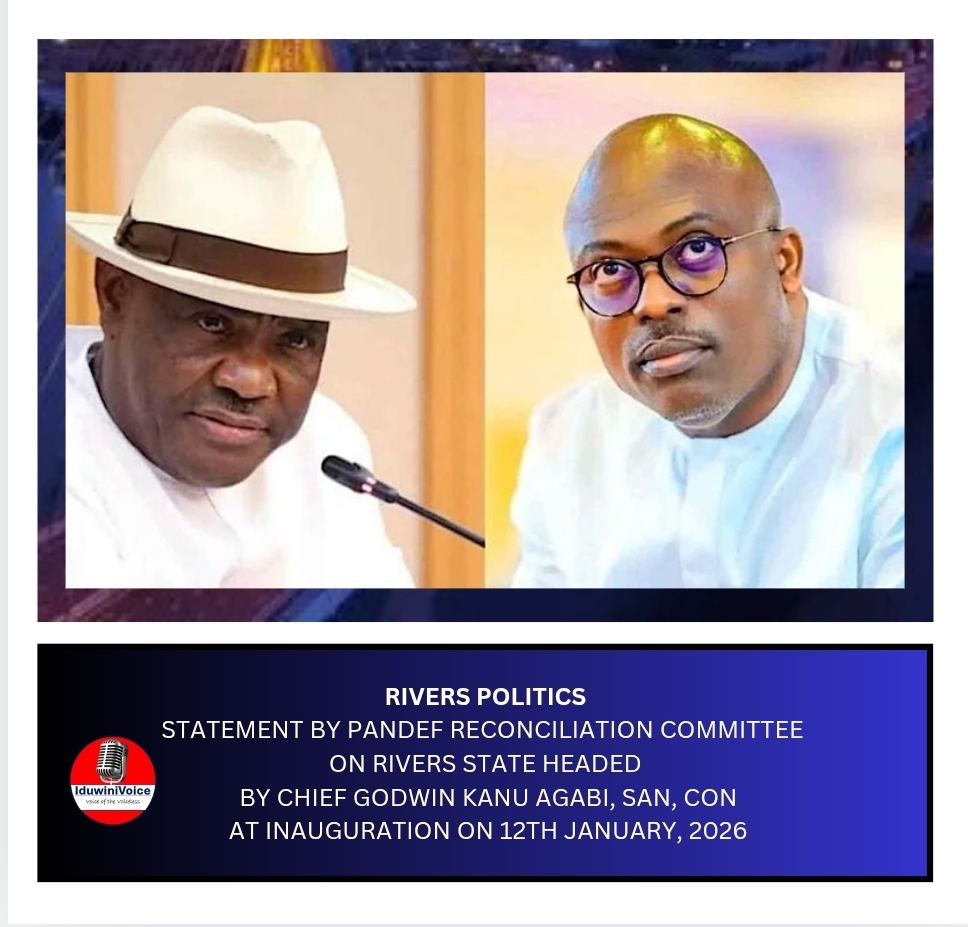
STATEMENT BY PANDEF RECONCILIATION COMMITTEE ON RIVERS STATE HEADED BY CHIEF GODWIN KANU AGABI, SAN, CON AT INAUGURATION ON 12TH JANUARY, 2026
IduwiniVoice
It is our privilege to serve on this Committee. For this privilege we are grateful to God and to His Excellency, Ambassador Godknows Igali, Chairman of the Board of Trustees of PANDEF and the other respected members of the Board of Trustees. I single out for particular mention His Royal Majesty, King Alfred Papapraye Diete Spiff, the former Governor of Rivers State and the Amayanabo of Twon Brass in Bayelsa State. He is a man whose commitment to the South-South and the nation as a whole has never been in doubt. He goes down in history as the first governor of Rivers State when that state included Bayelsa State. It is the sacrifices of men like him that bequeathed the States of the South-South to the people of that area. The duty of respect that we owe to a man like that demands that we take his intervention seriously.
We are appointed to explore ways of bringing the escalating political crisis in Rivers State to an end. This crisis has persisted for too long. If it continues any further, it will call into question the commitment of the parties involved to the interest of the people of Rivers State and of the nation that is compelled to share in the pains and anxieties of that State.
We cannot afford to stand by and do nothing or pass by on the other side as Rivers state, a state whose talents and resources have blessed and continue to bless the nation struggles with issues of political power. Let the parties involved not be as the Clam and the Oyster which left their abode in the depths of the sea and came to the sea shore to fight. They went on fighting even when they saw the fisherman coming. The fisherman picked them up, took them home and made a nice fine meal of Clam and Oyster. May it not be with Rivers State as it was with the Clam and the Oyster.
We trust that the Lord will touch the hearts of those to whom we address our appeal for peace and reconciliation. It is our firm conviction that this matter can be resolved amicably. That conviction is rooted in the fact that the parties to this dispute are one people who began as one. They played significant roles in assisting one another to the various offices that they hold now. If they have now offended one another, they must be humble enough to apologize and to forgive. It is in forgiving that true greatness can be found.
The resolution of this matter is something that the parties can handle themselves without the intervention of third parties. They must be willing to go the extra mile with one another, to turn the other cheek and to pray for one another. Let them not dismiss this as weak or sentimental as we often do when the name of the Lord is mentioned in politics or economics. The misconception that God has no place in our politics has harmed and continues to harm the nation. Whether we are governors or ministers or legislators, whoever we are, it is to God that we owe our appointments and promotions. Whether we are servants or slaves it is the Lord that we serve. And it is to him that we shall, in the end, render account. We urge the parties to proceed with caution. We urge them to make allowance for error. We appeal to them to proceed with a prayer for forgiveness just in case they may be wrong.
The Minister, His Excellency, Nyesom Wike, is my friend. He is my benefactor. He is a man I love. He is a man I respect. I bear witness to his courage and patriotism. The work he did as Governor of Rivers State and the work he is doing as Minister of the FCT have since immortalized him. The mighty hand of God is upon him. That great Hand demands that he should lead this reconciliation. I say the same thing about His Excellency Governor Fubara. I happen to have been a member of the team that defended the petition that arose from his election as governor. That is my bond with him. I trust him to respect that bond.
In a nation as diverse as ours, discordant voices will be heard from time to time. In the midst of those discordant voices, the President can be trusted to recognize the clear ring of truth when he hears it. That is the whole essence of the Presidential system in vesting the President with all executive power which he is trusted to exercise in order to calm the nation down.
We have great respect for the members of the House of Assembly of Rivers State and we have no doubt whatsoever that their motives are genuine and patriotic. We pray for a change of heart on their part. It is in forgiving the Governor whatever wrongs he has committed that they will demonstrate their restraint, their public spirit and their maturity.
This Committee is not appointed to sit in judgment over the parties. We have no competence to do so. Our duty is to appeal to the parties to be reconciled with one to another, and we now do so. We appeal to the parties to embrace reconciliation. We urge them, we beg them, we appeal to them. Sacrifices are called for. Make them and let there be peace.
Press Release
PRESS RELEASE: ADC Rivers State Women Call for Stronger Political Inclusion at 2025 Diaspora Strategic Women Convergence
Rivers State, Nigeria — Women leaders of the African Democratic Congress (ADC), Rivers State Chapter, have called for increased political inclusion, unity, and strategic participation of women in governance following their participation in the ADC Diaspora National Leader and Zonal Coordinators Strategic Women Convergence 2025.
The convergence, held under the theme “Women in Politics: Equality and Rights – Rise to the Challenge,” brought together women leaders across Nigeria and the diaspora to deliberate on gender equality, political rights, and women’s leadership in democratic governance.
Arising from the engagement, the ADC Rivers State Women announced the convening of a State and Local Government Area (LGA) Women’s Appraisal Meeting, particularly for members who participated in the convergence via the Zoom platform. The meeting aims to consolidate lessons learned, align strategies, and strengthen women’s political structures at the grassroots level.
Participants were inspired by strategic and motivational addresses delivered by distinguished women leaders, including Hon. Bose Rahila Adamu, Deputy Chairman/Woman Leader; Hon. Naomi Lasara Abel, MNIPR, National Woman Leader of ADC; Hon. Amb. Abiodun Omolara Williams, Deputy National Coordinator (Diaspora); Prof. Elizabeth Ogboli Nwasor; Ms. Franca Hamza Ogagbor of ADC America; Madam Lillian Modu, Secretary-General of ADC Diaspora (Americas); Amb. (Mrs.) Hannatu Gagara, Chairperson, ADC Plateau State; Mabel Oboh, Assistant Publicity Secretary, ADC South-South Zone; Barr. Mrs. Eremi G. Oruebo, State Legal Adviser, ADC Bayelsa State; and Hon. Helen Ataisi Clifford, ADC Rivers State Deputy Publicity Secretary.
In a communiqué issued at the end of the convergence, the women emphasized key resolutions, including the need for women to take proactive leadership roles, reject symbolic political participation, strengthen unity across party structures, build capacity and political resilience, break the culture of fear and silence, and institutionalize mentorship among women in politics.
The women reaffirmed their belief that sustainable national development cannot be achieved without the full and fair representation of women in leadership and decision-making processes. They stressed that women’s participation in politics leads to more inclusive policies, stronger governance, and societal transformation.
The ADC Rivers State Women also expressed appreciation to male leaders within the party who continue to support gender inclusion and women’s political empowerment. Special recognition was given to Hon. (Dr.) Kenneth C. Gbandi, Chairman of ADC Diaspora Network; H.E. Solomon Dalung, Coordinator (Diaspora), ADC; Prof. Elizabeth Ogboli Nwasor; Dr. Benjamin Chukwu (MBBCh, FMCS – Nig.); and Chief Peter Mozie, Chairman, ADC-DN America.
The convergence was moderated by Chief Amb. Tuklan and Macgodwin Iweajunwa, whose professionalism contributed to the success of the engagement.
Speaking on behalf of the Rivers State Women, Rt. Hon. Engr. Irene Kaladappa Jumbo, ADC Rivers State Woman Leader, stated that “the future of Nigerian politics must be inclusive, fearless, and driven by competent women who are prepared to lead with vision, courage, and integrity.”
Signed:
Rt. Hon. Engr. Irene Kaladappa Jumbo
ADC Rivers State Woman Leader
Hon. Helen Ataisi Clifford
ADC Rivers State Deputy Publicity Secretary
Mrs. Ogbonna Phoebe
ADC LGA Women Leader Coordinator, Rivers State
Hon. Joy Nwokoma
ADC LGA Women Coordinating Secretary