
Breaking
Warri Ijaw Leaders Defend INEC Ward Delineation, Commend INEC for a Thorough Job.

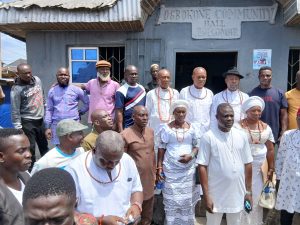
Says Ogbe-Ijoh-Warri deserved more than three wards in Warri-South Local Government Area.
By Favour Bibaikefie
Leaders of the Ogbe-Ijoh (Ijaw) community have addressed recent protests by Itsekiri groups over the Independent National Electoral Commission’s (INEC) fresh delineation of electoral wards in Warri South Local Government Area. In a press briefing held on April 11, 2025, Ogbe-Ijoh representatives reaffirmed their historical and legal presence in Warri South, citing court rulings and decades-old electoral structures. They condemned claims excluding them from the area and urged INEC to ignore such objections. Calling for at least five homogenous wards, they emphasized the need for fair representation and the creation of a dedicated Ijaw state constituency.
Read full Press Statement:
“PRESS BRIEFING BY THE OGBE-IJOH PEOPLE ON THE PROPOSED FRESH DELINEATION OF ELECTORAL WARDS/POLLING UNITS IN WARRI SOUTH LOCAL GOVERNMENT AREA OF DELTA STATE BY THE INDEPENDENT NATIONAL ELECTORAL COMMISSION (INEC) IN COMPLIANCE WITH THE SUPREME COURT JUDGMENT ON FRESH DELINEATION AND MATTERS THERETO
“Since the Independent National Electoral Commission (INEC) on the 4th of April, 2025 released the report of its Fieldwork on the proposed delineation of electoral wards and polling units in the Warri Federal Constituency of Delta State, the Ogbe-Ijoh (Ijaw) people have noticed with keen interest series of protests by the Itseikiri and their allies in both print and electronic media including arguing that, the Ogbe-Ijoh (Ijaw) people are not part of Warri South Local Government. This press briefing is to clear this ignorance and set the records straight.
It is important to note with specific reference to the Supreme Court ordered delineation that, the issue of whether the Ogbe-Ijoh (Ijaw) people are part of Warri South Local Government Area or not was raised at the INEC stakeholders meeting by the Itsekiris, reflected in the minutes of stakeholders meetings and it was dealt with by the stakeholders in the said meetings by resolving that from available intelligence reports, legal documents, physical communities on ground and existing electoral polling units, the Ogbe-Ijoh (Ijaw) people are integral part of Warri South Local Government, but denied electoral representation by not having homogenous electoral wards of their own, but balkanised into different polling units in different wards in Warri South LGA. The Itsekiris too admitted this fact.
It was on this basis that, at the stakeholders meeting of Ijaw, Itsekiri and Urhobo held on 8th of July, 2024 at Government House Annex, Warri preparatory to starting the Fieldwork in Warri South LGA, a team of INEC Field Officers were assigned to the Ijaw areas in Warri South LGA, just as INEC Field Officers were assigned to the Itsekiri and Urhobo areas. Furthermore, the INEC field officers assigned to the Ijaw areas were the only ones who covered the Ijaw areas covered by the proposed Ewein, Bulouama, Ogbe-Ijoh Warri Urban and part of GRA wards of Warri South LGA. The INEC field officers assigned to Itsekiri and Urhobo areas did not and could not have covered these areas because they are indigenous Ijaw communities, where the Ijaws resides to the knowledge of all persons and authorities. These facts are known to the Itsekiri leaders and especially those who participated in the INEC fieldwork, but are not telling the public.
“For historical purposes and to educate younger Itsekiri people who do not know the founding history of Warri, Ogbe-Ijoh is recorded as the first settlement in the present Warri Urban along the Ogbe-Ijoh-Warri River (otherwise known as the Warri anchorage) in Warri South Local Government Area of Delta State. Indeed, the present Warri started from Ogbe-Ijoh. In 1955, when the first local administrative structure was established and electoral delineation done in Warri Urban, the Ogbe-Ijoh (Ijaw) people were included in the Warri Urban District Council together with a section of Urhobo and Itsekiri as defined by Western Region Laws of Nigeria No 177 of 1955. The said law created four autonomous electoral wards for the Ijaw people of Ogbe-Ijoh, which were– Alders town B3, Ogbe-Ijoh Ward C1, Ogbe-Ijoh Ward C2 and Government Area F1. This structure with elected Ogbe-Ijoh Councillors remained operational till sometime in 1976, when the Olusegun Obasanjo’s Military Government introduced local Government reforms giving birth to the present local Government structure. The defunct Warri Urban District Council is today known as the Warri South Local Government Council.
“It is important to note that, before the introduction of Local Government administration, there were Seven (7) District Councils in the Warri area, including the Warri Urban District Council, which was only the Warri main City. But the Ode-Itsekiri District Council which was not part of the Warri Urban District Council was included to make up the present Warri South LGA.
“The introduction of Local Government Administration and the subsequent delineation of electoral wards in the area concerned led to the balkanization of the hitherto homogenous Ijaw fours in Warri South LGA into mere polling units in different wards mainly as minorities. The electoral wards that, the Ogbe-Ijoh people were balkanized into before the Supreme Court Ordered delineation of electoral wards were Pessu, GRA, Bowen and Okere wards. The Ogbe-Ijoh areas were balkanized into these electoral wards and thereby making them minorities and politically weak. Since the 1976 balkanization of our homogenous four electoral wards, we have always protested and made known to successive electoral bodies of the need to balance the lopsided electoral wards in Warri South Local Government without much success before a group of patriotic Ijaw men sought legal redress leading to the celebrated Supreme Court judgement in December 2nd, 2022.
“It is these Ijaw areas previously delineated in 1955 as Alder’s town B2, Ogbe-Ijoh C1, Ogbe-Ijoh C2 and Government area F1, that the INEC Field Officers assigned to the Ijaw areas visited and delineated as Bulou-Ama Ward 02, Ewein Ward 07 and Ogbe-Ijoh Warri Urban Ward 12 and the part of Ogbe-Ijoh areas in the GRA Ward 08. Hence, the delineation of electoral wards and polling units to cover the Ijaw areas in Warri Urban is not a new development, but has been in existence for decades even before those protesting were born. The recent exercise only seeks to correct an obvious injustice where the Ijaws in Warri South LGA are delineated into different polling units and denied representation in the Warri South LGA administration.
“We wish to state further that, contrary to the false impression been created by the Itsekiris, the Ijaw areas have always been separated from the Itsekiri areas in Warri Urban. It is for this reason that, the Chiefs Law of 1957, CAP 19, provides that, the authority of the Itsekiri monarch, the Olu of Warri excludes Ogbe-Ijoh Areas. The 1979 Bendel State Traditional Rulers and Chiefs Edict, B.S.L.N 44, described the Amaokosu of Ogbe-Ijoh as the prescribed authority of Ogbe-Ijoh lands and people in Warri metropolis. This meant that, all the lands of the Ijaw of Ogbe-Ijoh are excluded from claims by the Itsekiri people.
“Furthermore, the Delta State Traditional Rulers, Chiefs and Council Law, Vol. 3, now cap T3 Laws of Delta State, 2006 recognizes four Clans in Warri Metropolis: Itsekiri Kingdom, where the Olu is the prescribed authority, Okere-Urhobo Kingdom where the Orosuen of Okere-Urhobo is the prescribed authority, Agbassa Kingdom where the Ovie of Agbarha is the prescribed authority and the Ogbe-Ijoh Kingdom where the Amaokosu of Ogbe-Ijoh is the prescribed authority of Ogbe-Ijoh Kingdom in Warri metropolis.
The purpose of the above laws is to the effect that, the Ogbe-Ijoh Kingdom and their lands in Warri metropolis in Warri South Local Government Area are excluded from the claim of the Itsekiri people. This position has been confirmed by the Court of Appeal in Appeal No CA/AS/441/2016 in a judgement delivered on the 5th of June, 2023.
“In conclusion, we commend the Independent National Electoral Commission (INEC) for being able to commence the delineation process despite series of litigation against the Commission by the Itseikiri. We also commend the Commission in Warri South Local Government for being fair to all the ethnic nationalities and stakeholders. However, the Ogbe-Ijoh people state that, their areas should have been delineated into atleast five homogenous electoral wards. If the Ogbe-Ijoh people had four electoral wards as far back as 1955, it is only fair for the number to be increased decades after. We therefore call for the creation of more electoral wards for Ijaws in Warri Urban and also urge the Independent National Electoral Commission to disregard frivolous protests against the delineation exercise in Warri South LGA by the Itsekiris.
“We wish to call on the INEC for creation of additional wards and state Constituency for the Ijaws of Warri South. This is predicated on the ground that the Itsekiris and Urhobos already have their own Constituencies in the Warri South.”
Sign for Ogbe-Ijoh Kingdom:
Hon. Denbo-Denbofa Oweikpodor,
(Ijaw Focal Person)
Chief M. Keme,
Comrade Moses Fiyebor.





Breaking
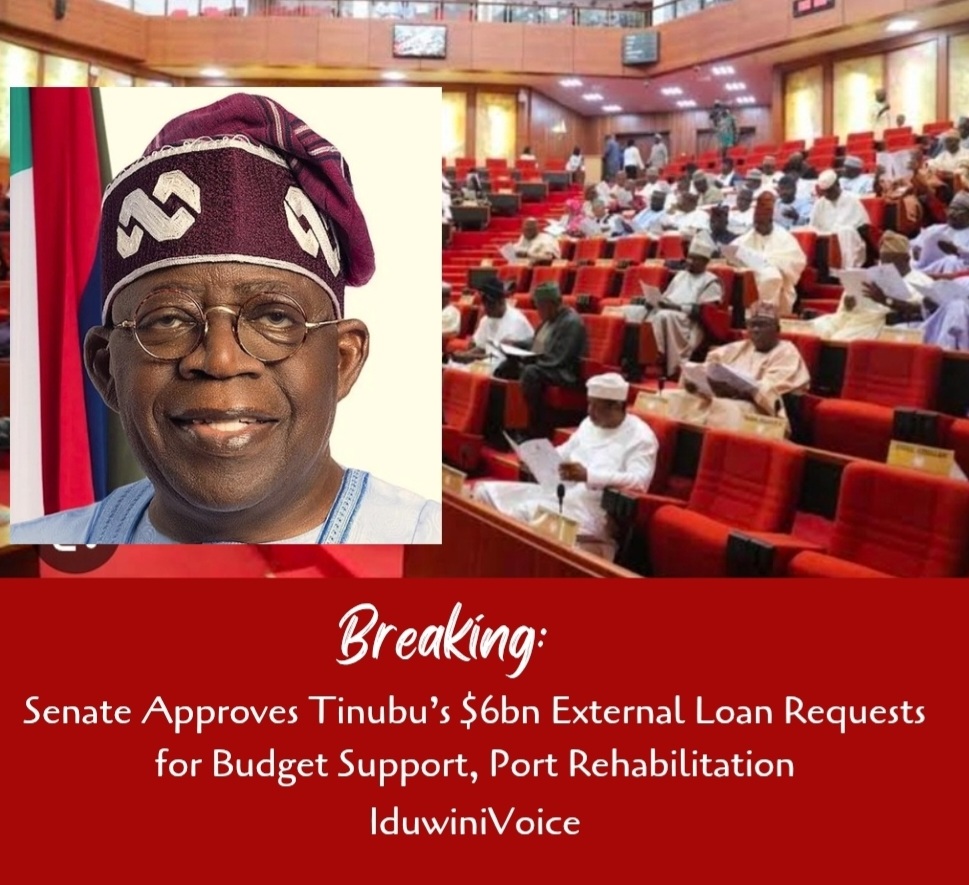
Senate Approves Tinubu’s $6bn External Loan Requests for Budget Support, Port Rehabilitation
By Favour Bibaikefie
The Nigerian Senate has approved President ’s request for two external loan facilities totaling $6 billion, aimed at supporting the 2026 budget and upgrading key maritime infrastructure across the country.
The approval followed the consideration of two executive communications earlier transmitted to the upper chamber and read during plenary by Senate President on Tuesday, March 31, 2026.
Breakdown of the facilities shows that the Federal Government secured a $5 billion loan from Abu Dhabi Bank to provide critical budgetary support. The fund is expected to help bridge fiscal gaps and enable the government meet pressing financial obligations.
The second facility, valued at $1 billion, is from Citi Bank, London, and is specifically designated for the rehabilitation and technical upgrade of Nigeria’s major seaports, including the Lagos Port Complex and Tin Can Island Port.
According to the presidency, the port modernisation initiative is designed to tackle longstanding operational inefficiencies, strengthen security, and boost non-oil exports. The government also aims to reposition Nigeria as a leading trade hub within the West African sub-region through improved port infrastructure.
Following deliberations, lawmakers gave their nod to the loan requests after reviewing the report of the Senate Committee on Local and Foreign Debts, chaired by Senator Aliyu Wammakko, which had earlier been mandated to examine the proposals.
Senate sources indicated that the approval was granted after assurances on the viability of the projects, expected economic returns, and the capacity of the government to manage the country’s debt profile responsibly.
The development marks a significant step in the Federal Government’s efforts to stabilise public finances and accelerate infrastructure renewal, particularly in the maritime sector, which remains a critical gateway for international trade and revenue generation.
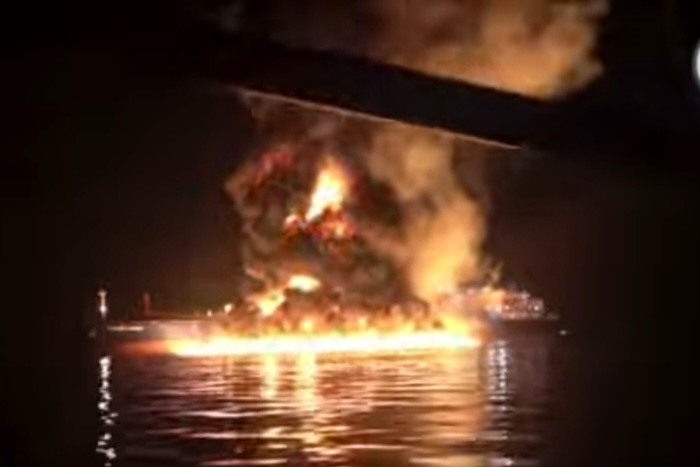
As Iran strikes Kuwaiti vessel Al-Salmi
By Ezinne
Tensions in the Persian Gulf have reached a boiling point after a giant Kuwaiti crude oil tanker, the Al-Salmi, was hit by an Iranian drone strike while anchored off the coast of Dubai early Tuesday, March 31, 2026. The attack follows a fresh ultimatum from US President Donald Trump, who warned that the United States would “obliterate” Iran’s energy grid and oil infrastructure if the Strait of Hormuz is not immediately reopened.
The Al-Salmi, which was fully laden with approximately 2 million barrels of crude oil, was struck on its starboard side shortly after midnight, sparking a major fire. Dubai maritime authorities confirmed that firefighting teams successfully extinguished the blaze after an hours-long operation. While all 24 crew members were reported safe and no oil spill has yet been confirmed, the Kuwait Petroleum Corporation (KPC) condemned the incident as a “direct, heinous attack.”
This escalation comes as President Trump utilized social media on Monday to threaten the destruction of Iran’s Kharg Island oil hub, power plants, and desalination facilities if a ceasefire deal is not reached “shortly.” The conflict, which began in late February, has already pushed global oil prices above $100 a barrel and gasoline prices in the US past $4 a gallon. As the US and Israel continue missile strikes on military and nuclear infrastructure within Iran, Tehran has retaliated by targeting commercial shipping and regional energy plants, raising fears of a total collapse in global energy security.
By Favour Bibaikefie
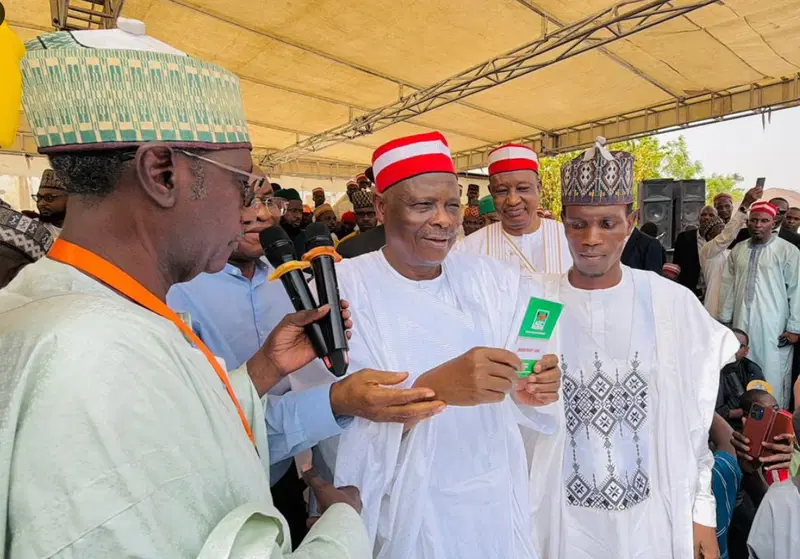
Nigeria’s political landscape witnessed a significant shift on Monday as formally defected to the African Democratic Congress (ADC), a move widely seen as a strategic recalibration ahead of the 2027 general elections.
Kwankwaso, a former governor of Kano State and presidential candidate of the New Nigeria Peoples Party (NNPP) in the 2023 elections, officially registered with the ADC in Kano, marking the end of his association with the NNPP and signalling a new phase in Nigeria’s opposition politics.
The high-profile defection event attracted key political figures across party lines, underscoring growing momentum toward a broad-based coalition aimed at challenging the ruling party in 2027. Among those reportedly present or aligned with the unfolding political realignment are prominent opposition figures believed to be exploring a unified front.
Strategic Realignment Ahead of 2027
Political analysts say Kwankwaso’s entry into the ADC represents more than a routine party switch; it reflects an emerging convergence of opposition forces seeking to avoid the fragmentation that defined the 2023 presidential election.
In that election cycle, the opposition vote was split among multiple candidates, including Atiku Abubakar of the Peoples Democratic Party (PDP), Peter Obi of the Labour Party, and Kwankwaso himself under the NNPP platform—an outcome that ultimately benefited the ruling All Progressives Congress.
With less than two years to the next electoral cycle, Monday’s development suggests a deliberate effort to consolidate political strength, particularly in northern Nigeria where Kwankwaso commands a formidable grassroots following through his Kwankwasiyya movement.
ADC Emerges as Coalition Platform
The ADC, hitherto considered a minor political platform, is increasingly positioning itself as a potential coalition vehicle for opposition leaders seeking a neutral ground free from entrenched internal rivalries associated with older parties.
Observers note that Kwankwaso’s defection may trigger a domino effect, encouraging other political heavyweights to reconsider their affiliations as consultations intensify across the opposition spectrum.
There are also indications that talks are ongoing among leading political actors on the possibility of presenting a consensus presidential candidate in 2027—a strategy aimed at mounting a more formidable challenge to the incumbent administration.
Implications for the Ruling Party
For the APC, Kwankwaso’s move introduces a fresh layer of complexity to the evolving political equation. While the ruling party maintains a strong national structure and incumbency advantage, a united opposition could significantly alter electoral dynamics, particularly in battleground states across the North-Central and North-West regions.
Political commentators argue that the success of the emerging coalition will depend largely on its ability to manage internal ambitions, agree on power-sharing arrangements, and present a coherent policy alternative to Nigerians.
Looking Ahead
As political activities gradually build toward 2027, Kwankwaso’s defection to the ADC may well be remembered as a defining moment in the early stages of coalition politics in Nigeria’s Fourth Republic.
Whether this realignment translates into a viable electoral force remains to be seen, but one point is clear: the race to 2027 has begun in earnest, and the battle lines are already being redrawn.