
Editorial
END OF YEAR MESSAGE FROM IDUWINIVOICE


From the Editor’s Desk: It’s Not Over Until the Final Whistle
IduwiniVoice
December 20, 2024
The year 2024 has been a journey—filled with its share of challenges, surprises, and triumphs. As we approach the final days of this year, it’s easy to feel disheartened, especially if our goals seem far from realized. But history reminds us that the most extraordinary victories often come when all hope appears lost.
One such example is the unforgettable semi-final football match between Nigeria and Brazil during the 1996 Atlanta Olympics. With less than 12 minutes left on the clock, Brazil, a football superpower boasting legends like Ronaldo, Rivaldo, Bebeto, and Roberto Carlos, led Nigeria 3-1. Defeat seemed inevitable. Many Nigerians, overwhelmed with despair, turned off their televisions. Tears flowed, and disappointment hung heavily in the air.
But what followed was nothing short of miraculous. Victor Ikpeba’s long-range strike in the 78th minute injected life into the game, narrowing the gap to 3-2. Then, in the dying moments of regulation time, captain Nwankwo Kanu delivered an equalizer that stunned the world. Moments into extra time, under the “Golden Goal” rule, Kanu struck again, securing Nigeria’s victory. What began as humiliation ended as triumph.
The Power of Persistence
The lesson from that night is clear: it’s never over until it’s over. Resilience, hope, and belief can transform even the bleakest situations into moments of glory.
As we reflect on the year so far, many of us may identify with the struggles of the Nigerian Dream Team in that match. Perhaps the year started with high hopes but became a series of setbacks and unfulfilled aspirations. But just as Nigeria turned the tide against Brazil, you too can turn things around in these final days of 2024.
There’s still time to:
Review what has worked and what hasn’t.
Re-strategize your approach to unresolved goals.
Relaunch with renewed energy and determination.
Keep faith alive and trust in the possibilities that remain.
Fire shots from all angles—take bold steps and make every effort count.
A Call to Hope
Life, like football, often saves its most thrilling moments for the end. The final whistle hasn’t blown yet on this year. The God of miracles can make the impossible possible, turning messes into messages and disappointments into celebrations.
In the words of that unforgettable game, “It is not over until it is over.” So, resist the pull of fatigue, no matter the past disappointments. Rise above the delays and keep pushing forward.
Let’s Finish Strong
As 2024 winds to a close, take courage from Nigeria’s historic comeback. The remaining days and weeks hold immense potential. With faith, effort, and perseverance, you too can finish well.
Compliments of the season to all. Together, let’s make the most of the closing moments of this year. We will end well!
© Peretengboro,
IduwiniVoice






By Ben. Binebai
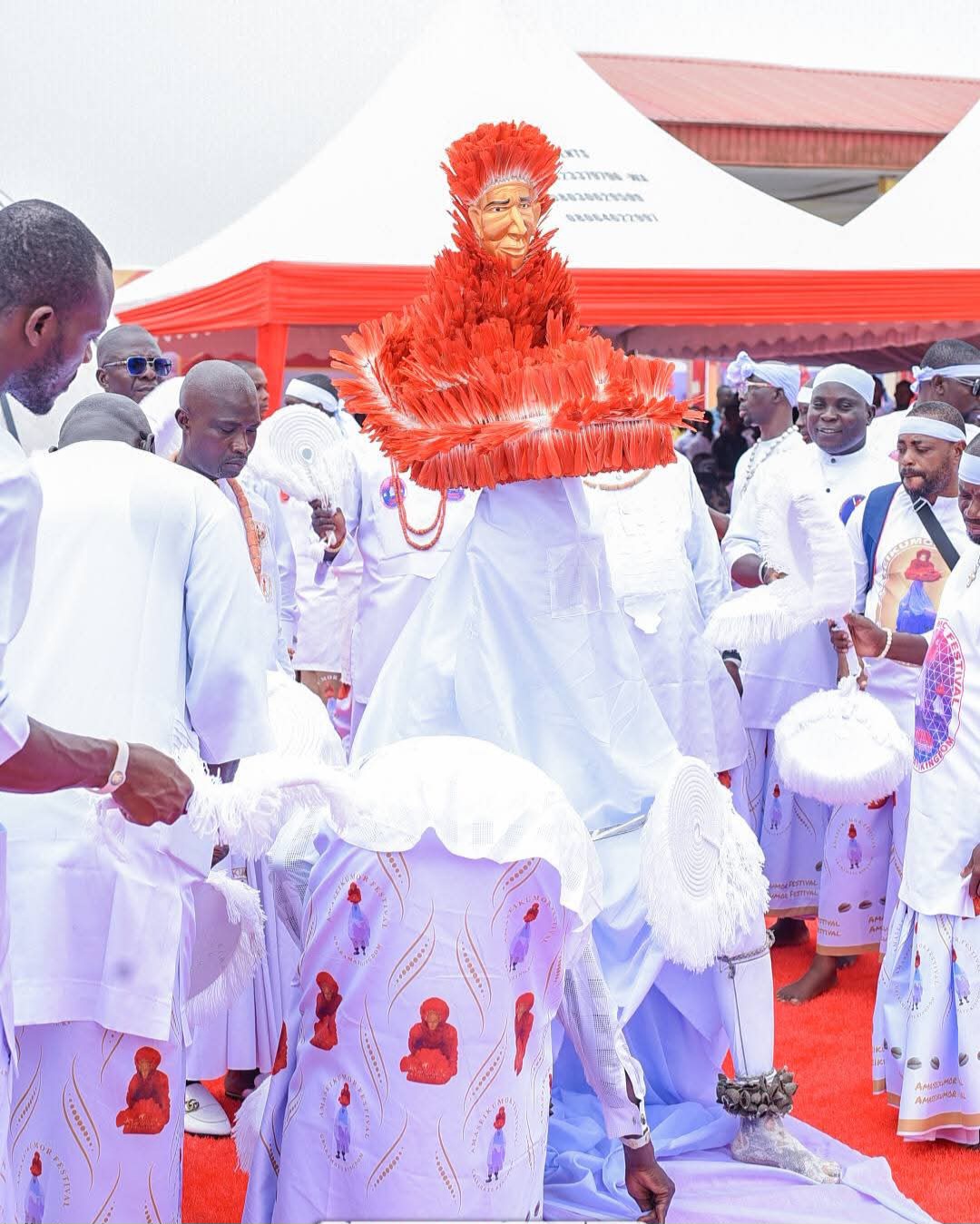
The Amaseikumor Festival is a magnificent tapestry of tradition, a veritable confluence where the sacred and the secular entwine in exquisite harmony. It is, in its quintessence, a festival of purity—an unblemished rite that scours the soul of the land. It is a festival of culture, wherein the ancient cadences of our forebears find renewed utterance; a festival of spiritual rejuvenation, where weary spirits are anointed anew at the altar of ancestral grace.
Amaseikumor is a festival that has its megastar hanging and shinning brighly in the sky, a festival of peace, of unity, and of prosperity—a trinity of virtues that, like a masterfully composed triad, adorns the communal soul. It is a festival of love and fraternity, a luminous bridge between man and the legendary animist beings who, from time immemorial, have watched over our creeks and forests. Indeed, it erects intertidal bridges—linking epochs, lineages, and realms—whilst standing as a clarion of cultural affirmation and religious awakening. Here, the covenant betwixt mortals and the divine is not merely remembered but vivified; a healthful and functional communion with the gods is both established and exalted.
The festival bears the imprimatur of the heavens, most memorably during its revival years. In the wondrous year of 2018, when I was accorded the rare and humbling privilege of delivering a lecture, the firmament itself bore witness: thunder intoned its celestial approbation, the heavens darkened in reverent solemnity, and delicate droplets—veritable tears of divine joy—descended upon the congregants. That epiphanic moment was greeted with an impromptu Ogele, as the gallant youths of Gbaramatu, moved by an ecstasy beyond articulation, gave voice to the rapture of the land.
As the parent festival of Gbaramatu, Amaseikumor is not merely a ritual observance; it is a living vestige heritage, a guiding star of identity, and a festival imbued with prodigious tourism potential. To behold it is to witness culture in its most numinous and unadulterated form—a grand pageant where myth, memory, and modernity dance in perennial embrace.
By: Editorial Team
The United Arab Emirates (UAE), often hailed as a beacon of modern development in the Middle East, is a federation of seven emirates—each with its own distinct history, ruler, and cultural identity. Since its unification in 1971, the UAE has stood as a rare example of how traditional monarchies can collaborate to build a stable and globally respected nation.
At the heart of the federation lies Abu Dhabi, the capital and largest emirate, known for its vast oil wealth and political influence. The Al Nahyan family, which leads Abu Dhabi, has played a central role in shaping the UAE’s national vision and foreign policy. The current President of the UAE traditionally comes from this emirate, underscoring its leadership within the union.
Dubai, the shining star of the federation, represents ambition and innovation. Under the leadership of the Al Maktoum family, Dubai has transformed from a desert outpost into a global hub for finance, tourism, and technology. Its breathtaking skyline, led by the Burj Khalifa, has become a symbol of Arab progress and resilience.
Moving beyond the two powerhouses, Sharjah distinguishes itself as the cultural and educational capital of the UAE. Led by the Al Qasimi family, it has preserved the emirates’ artistic heritage while promoting academic excellence through its numerous universities and museums.
The smaller emirates-Ajman, Umm Al-Quwain, Ras Al Khaimah, and Fujairah-each add unique character and strength to the federation. Ajman, the smallest, thrives on trade and manufacturing; Umm Al-Quwain offers a peaceful charm along its quiet shores; Ras Al Khaimah, nestled against the Hajar Mountains, is known for its natural beauty and growing industrial base; and Fujairah, facing the Gulf of Oman, plays a strategic maritime role in the region’s economy.
Despite their differences in size and resources, the seven emirates remain bound by shared values, mutual respect, and visionary leadership.Their collective success story reflects not only unity but also the ability to balance tradition with progress.
Over five decades after its founding, the UAE continues to prove that cooperation among monarchies can yield a modern, forward-looking state-one that honors its past while boldly stepping into the future. The federation’s model of governance offers an enduring lesson in leadership, stability, and nation-building in a region often defined by division.
Photo Credit: shuterstock
Editorial – IduwiniVoice
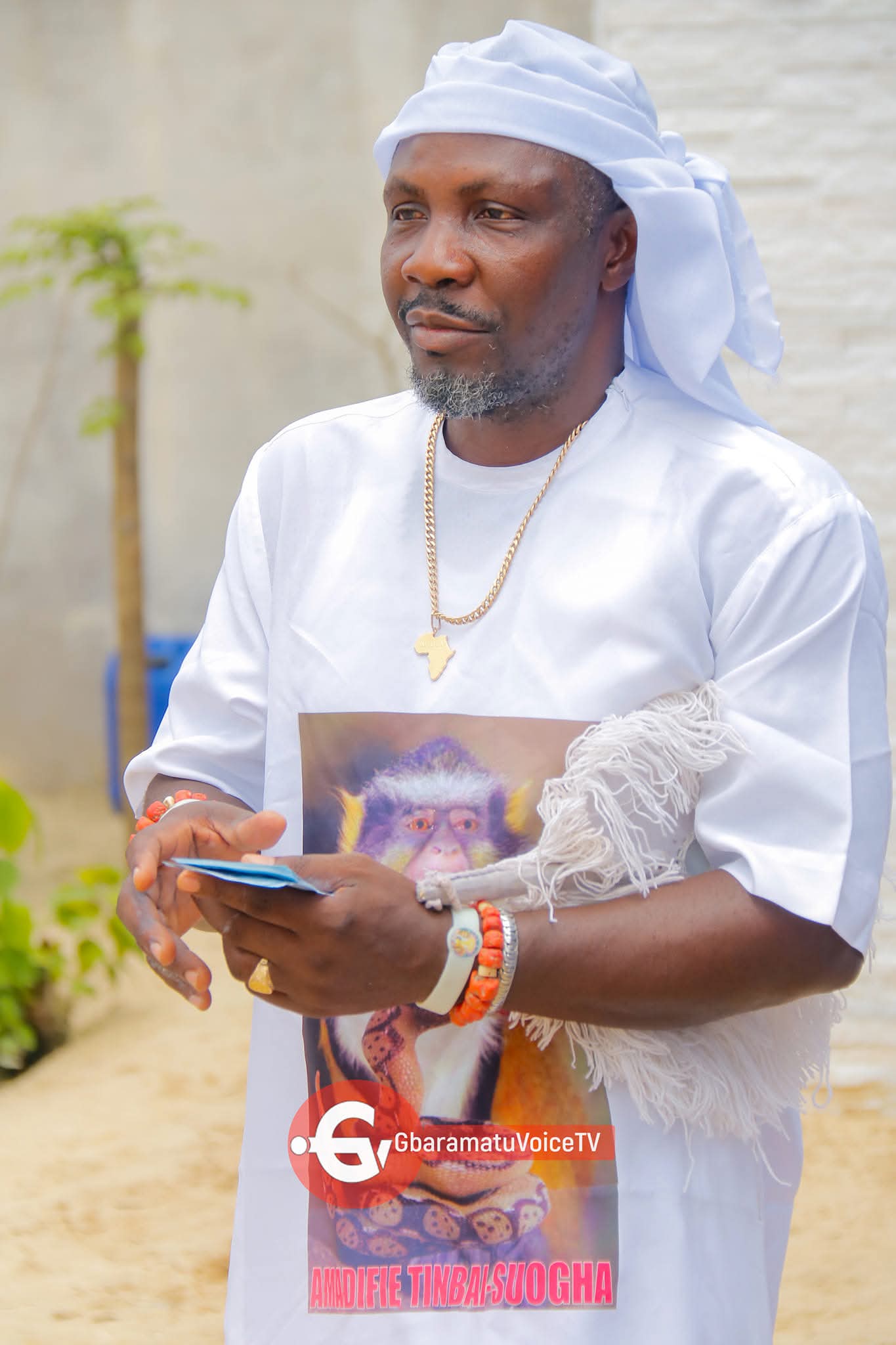
Government Oweizide Ekemupolo is 4th Century descendant of The progenitors of the Oru tribe, the archetypal Ijaws, who settled in the central Niger Delta and over time, who developed and spread to the entire Niger Delta. He his an embodiment of the ancient and modern ways and forces of the ijaw ancestral greats, ruled my ancient spiritual and human laws, a man and a superman.
Prior to 1600 AD, the Ijaws first and formally formed city-states on their island of abode in Central Niger Delta. The city-states were named Agadagba-bou, Isomou-bou, and Opugla-bou. The popular city-state was called Agadagba-bou, which, according to history, flourished for 400 years until it got abandoned in 1050 CE. That was the period Ijaw people migrated within the central Niger Delta and spread to the Western and Eastern Niger Delta.
Agadagba-bou, Isomou-bou, and Upugla-bou, which represented the Ijaw civilization at the historical island, long before it was named Wilberforce Island, had cultural, spiritual, linguistic, and occupational homogeneity.
They were all worshippers and believers of the sky God. The sky God that the Ijaws call today, even from ancient times, is Egbesu. It is believed that the Wilberforce Island was known as a forest named after Agadagba, the most powerful chief priest of Egbesu, who also doubled as the military general of the Izon nation.
Agadagba-bou, as a nomenclature, derives its bearing from Agadagba, the chief priest and generalissimo who once reigned on the Wilberforce Island. It is certain that the island hosted the Ijaw nation long before the time of Agadagba because Agadagba was appointed a chief priest and military general during his time by a potentate ruler of Ijaw nation.
In the primordial mists of time, Agadagba, the illustrious military general and chief priest of Egbesu, strode forth from the hallowed grounds of Agadagbabou, his footsteps echoing through the annals of Ijaw history. This revered figure, a paragon of martial prowess and spiritual wisdom, embodied the dual essence of his people, wielding the sword and the sacred staff with equal aplomb. The whispers of the ancients tell us that Agadagba’s reign predated the 1600 AD, a bygone era when the Ijaw nation thrived in harmony with the rhythms of the Niger Delta.
Agadagbabou, the cradle of Ijaw civilization, slumbers beneath the weight of centuries, its sacred soil serving as the final resting place of the ancestral spirits. Here, the venerable dead lie entombed, their ethereal essences lingering, awaiting the supplications of their descendants. Alas, the diaspora of the Ijaw people has occasioned a lamentable disconnection from these archetypal forebears, a severance that has hindered the unfettered flow of ancestral blessings, those numinous benedictions that are the birthright of every society.
For it is an immutable truth that the progress of a people is inextricably linked to the approbation of their ancestors.
The epochs have passed, and Agadagba’s terrestrial sojourn has long since drawn to a close, yet the imperishable essence of this legendary figure endures, awaiting reification in the mortal coil. Behold, 4.18 CENTURIES AFTER AGADAGBA, PRICESELY FOUR CENTURIES PLUS, in this our age, Government Oweizide Ekemupolo, a worthy scion of the Ijaw nation, has arisen, invested with the sacred mantle of Egbesu’s chief priest and military general. The symmetries are striking, the correspondences unmistakable: Ekpemupolo stands forth as the avatar of Agadagba, a reincarnation of the primordial hero, reborn to reclaim the lost patrimony of his people.
As we gaze upon Ekpemupolo, we behold the rekindled flame of Agadagba’s indomitable spirit, a fiery essence that refuses to be extinguished. The mythopoeic imagination whispers secrets in our ear, intimating that this modern-day embodiment of Ijaw valour and spirituality is, in truth, a Priest of the ancient mysteries, a hieratic vessel ordained to restore the pristine glory of Agadagbabou and reestablish the vital link between the living and the ancestral dead.
Thus, the epicycle of time turns full circle, as the reincarnated Agadagba, in the person of Ekpemupolo, strides forth to reclaim his rightful place within the sacred precincts of Ijaw tradition. The word is a witness to his spiritual and endeavours which catalyse a renaissance of the Ijaw spirit, rekindling the ancestral fires that burn bright within the collective unconscious of this venerable people, and guiding them toward a future illuminated by the radiant glow of their archetypal forebears.
As Tompolo’s efforts continue to bear fruit, Nigeria’s economic landscape is transformed, and the nation’s people reap the benefits of his tireless endeavours. His legacy will forever be etched in the annals of Nigerian history, a shining testament to the power of visionary leadership and unwavering dedication to the nation’s progress.
Benedict Binebai is a Professor of African Literature, a Social Conscientizer, and a Critic of outstanding repute.
(c) IduwiniVoice