
IduwiniVoice Social
JEHOVAH’S WITNESSES PROMOTE THE HAUSA LANGUAGE WITH NEW TRANSLATION OFFICE.

Jehovah’s Witnesses Promote the Hausa Language with New Translation Office.
June 15, 2024
By Warefa Pereke.
Jehovah’s Witnesses have remote translation offices scattered across the globe, which play a vital role in their mission to spread the Bible’s message in various languages. These offices are responsible for translating Bible-based literature, such as The Watchtower and Awake! magazines, into numerous languages.
The offices also undertake Language coordination projects, ensuring consistency and accuracy across all translations.
They adapt translations to suit local cultures, making the message more relatable and accessible.
Some remote translation offices (RTO) are located in:
– United States (New York, Florida, California)
– Europe (Germany, UK, France, Italy)
– Africa (South Africa, Nigeria, Ghana)
– Asia (Japan, China, India, Philippines)
– Latin America (Brazil, Mexico, Argentina)
– Australia (Sydney, Melbourne)
These offices enable Jehovah’s Witnesses to reach people worldwide in their native languages, facilitating a deeper understanding of the Bible’s message.
The Hausa language in Nigeria is not left out. On June 15, 2024, Jehovah’s witnesses inaugurated a new office building dedicated to Hausa translation in Jos, Plateau state, Nigeria
The purpose of the facility is to overcome language barriers by providing people with educational and Bible-based publications in Hausa, that will benefit an estimated 45 million speakers of Hausa in Jos, Plateau state.
The Hausa people are the largest ethnic group in Nigeria. They are mostly settled in the Northern part of the country. Of the more than 8,800,000 Jehovah’s witnesses around the world, more than 400,000 reside in Nigeria.
Since 1932, the difficult work of Hausa translation has been carried out by an accomplished group of local volunteers – mostly all native speakers – to ensure the highest quality translation possible.
A local spokesman for Jehovah’s witnesses, Paul Alozie said: “This initiative of translating free publications benefits the entire area because it allows for information to be available in Hausa.
He went further saying that this initiative contributes to the development and education of the approximately 45 million Hausa speakers in Nigeria, as well as aiding in the preservation of the language. Jehovah’s witnesses, he sàid, are excited about this linguistical contribution to society.
It is interesting to know that, unlike the automatic translation software, the translators take into consideration all the nuanced aspects of the culture to achieve a clear and natural translation.
While speaking to newsmen, Paul Alozie, the local spokesman to Jehovah’s witnesses, said: “This new translation facility will allow for greater collaboration and provide translators with the resources they needed in a centralised location.
An investigation into their activities showed that the new 5,190 square-meters facility is expected to accommodate 12 translators, beside others.
So far, the team has completed the translation of hundreds of printed books, brochures, and audio publications in addition to digital and video publications that can be downloaded, free of charge, from the Jehovah’s witnesses ‘ official website, jw.org.
For practical Bible-based content in over 1,070 languages, please visit jw.org for more information.
IduwiniVoice Social
INC Election: Delegate Gbegha Commends Electronic Voting Process, Urges INEC to Adopt Model
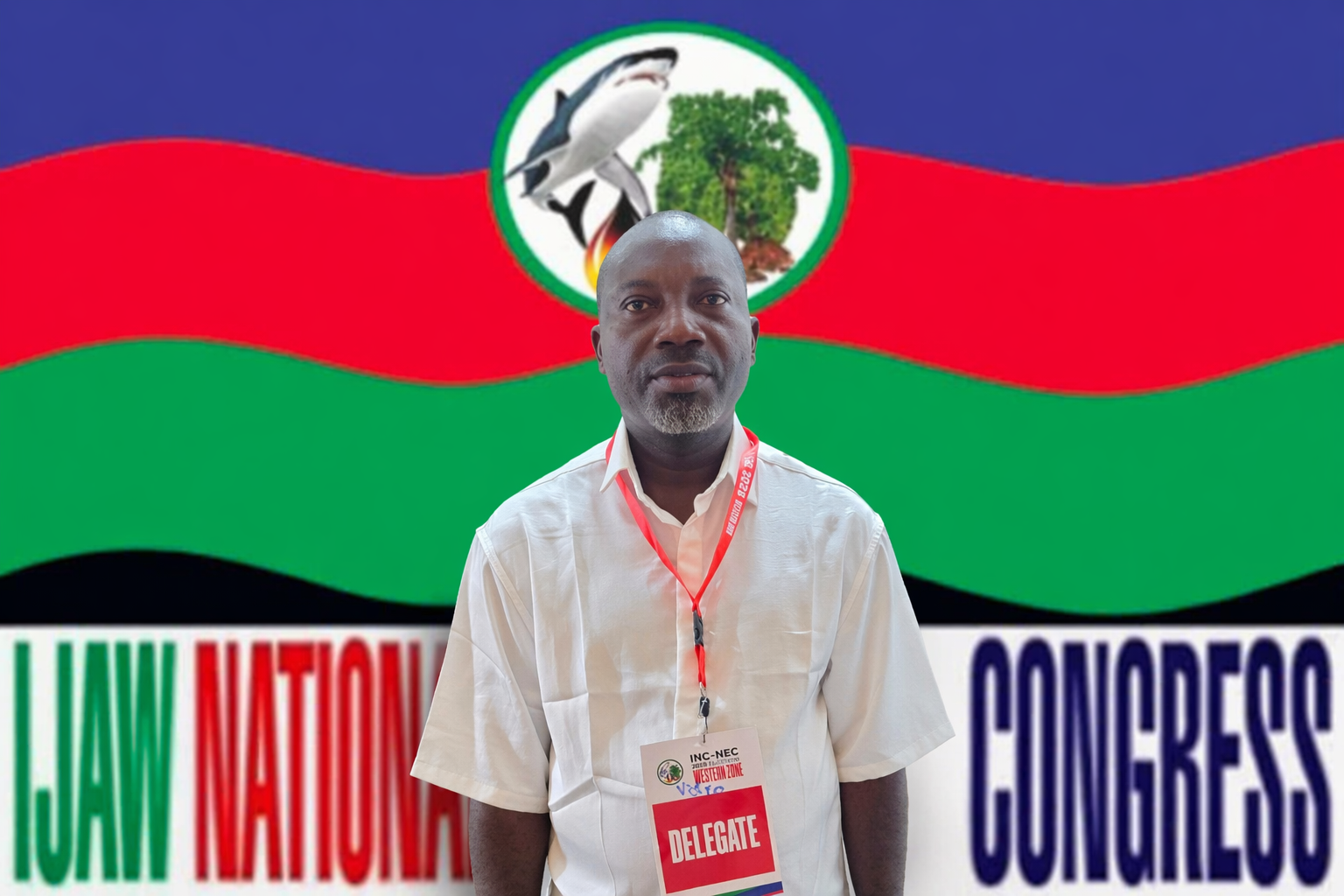
INC Election: Delegate Gbegha Commends Electronic Voting Process, Urges INEC to Adopt Model
By Favour Bibaikefie
WARRI — A voting delegate and former Chairman of Odimodi Community, Comrade Solomon Gbegha, has commended the National Electoral Committee of the Ijaw National Congress (INC) and the Prof. Benjamin Okaba-led executive for the successful conduct of the Congress’ national elections, describing the process as orderly, transparent, and technologically driven.
Gbegha, who participated in the exercise, praised the deployment of electronic voting, noting that it ensured credibility and efficiency throughout the election. He described the process as seamless and largely free of irregularities, stressing that it reflects the capacity of indigenous institutions to deliver credible electoral outcomes when properly managed.
According to him, the election demonstrated a high level of coordination and innovation, with real-time transmission of results enhancing transparency and trust among participants.
He further urged Nigeria’s electoral body, the Independent National Electoral Commission (INEC), to draw lessons from the INC model, particularly in the use of technology to strengthen the integrity of elections.
Gbegha maintained that adopting electronic voting and real-time result transmission could significantly improve the credibility of elections in the country, ensuring that every vote cast is accurately recorded and reflected in the final outcome.
The INC election, held on April 13, 2026, followed an earlier postponement from March 7, 2026, due to disputes among some candidates, which led to legal actions that temporarily halted the process.
Despite the initial setbacks, the Congress successfully conducted the rescheduled election during its 2026 National Elective Convention, with Hon. Chief (Barr.) McDonald Igbadiwei emerging victorious.
Observers have since described the exercise as a major milestone for the INC, highlighting its potential as a model for electoral reforms within and beyond the Niger Delta region.
IduwiniVoice Social
WHEN PAIN COMES FULL CIRCLE: A CAUTIONARY TALE ON MARRIAGE, SURVIVAL, AND MORAL COMPLEXITY
IduwiniVoice Social
In today’s increasingly complex social and economic climate, stories of broken homes and shifting moral boundaries are no longer rare—they are becoming reflections of a broader societal struggle.
A growing pattern has emerged among separated couples, particularly where infidelity played a role in the dissolution of marriage. In one such illustrative scenario, a woman, deeply hurt by her husband’s repeated acts of cheating, chose to leave her marriage with her children in pursuit of dignity, independence, and emotional peace.
Initially, her decision appeared justified. Like many single parents, she embraced the burden of providing for her children alone, working tirelessly to meet rising economic demands. However, despite her efforts, financial pressure mounted. School fees, daily expenses, and the weight of single parenthood began to take their toll.
In search of stability, she entered into a relationship with a wealthy married man—prioritizing survival over sentiment. What began as a means to an end soon placed her in a position she once despised: that of a “side partner” in another woman’s marriage.
Over time, a psychological shift occurred. The same behavior that once caused her deep pain began to appear more complex, even understandable. She found herself reflecting on her former husband’s actions, questioning whether the women involved in his infidelity might have been driven by circumstances similar to hers—economic hardship, responsibility, and survival.
Yet, this rationalization did not eliminate the emotional toll. The reality of her situation became clearer when the married man she depended on began to distance himself within the boundaries of his own home, prioritizing his wife and demanding discretion. The imbalance of power and emotional neglect resurfaced—this time from a different angle.
In a twist of fate, she reconnected with her former husband, who had since remarried. Occasional visits, financial support, and moments of nostalgia blurred boundaries, leading to renewed intimacy. The situation grew more complicated as she found herself entangled with two married men—one who had once betrayed her, and another who continued to do so with her involvement.
This narrative highlights a painful irony: a decision made in pursuit of dignity and justice can, under pressure, lead to circumstances that mirror the very pain one sought to escape.
Social analysts note that such situations are not isolated incidents but are indicative of broader systemic issues—economic instability, societal pressure, and the evolving definitions of morality and survival.
While the emotional impulse to leave a painful relationship is understandable, experts emphasize the importance of careful consideration, support systems, and long-term planning before making life-altering decisions. The consequences of such decisions often extend beyond immediate relief, shaping future realities in unexpected ways.
Ultimately, this story serves as a sobering reminder that life’s complexities rarely offer clear-cut answers. Choices made in moments of pain can echo far into the future, sometimes bringing individuals face-to-face with the very realities they once rejected.
As the saying goes, “it rains everywhere.” Challenges are universal, and no situation is entirely free from hardship. Yet, within these storms lies an opportunity for reflection, growth, and wiser decision-making.
Indeed, love remains a beautiful ideal—but navigating it requires not only emotion, but clarity, resilience, and foresight.

By Favour Bibaikefie
The Burutu Local Government Council in Delta State has announced the passing of Mrs. Alice Ayiba-Etare Takeme, mother of the Executive Chairman of the council, Hon. Chief Julius Takeme, PhD, JP.
The council disclosed the development in an official press statement issued on Wednesday and signed by the Secretary of Burutu Local Government Council, Barr. Roland Ombe., expressing deep grief over the loss.
In the announcement titled “BURUTU LOCAL GOVERNMENT COUNCIL – OFFICIAL ANNOUNCEMENT,” the council stated:
“The Burutu Local Government Council hereby announces, with deep sorrow and a profound sense of loss, the passing of Mrs. Alice Ayiba-Etare Takeme, beloved mother of the Executive Chairman of Burutu Local Government, Hon. Chief Julius Takeme, PhD, JP.”
According to the statement, Mama Takeme passed away on Tuesday, March 3, 2026, after a brief illness.
The council described the deceased as a woman of admirable virtues whose life reflected dedication to family and community.
“Mama Takeme died on Tuesday, March 3, 2026, after a brief illness. Until her death, She was a devoted mother and grandmother, whose life was marked by humility, strength and character.”
The statement further noted that her passing represents a significant loss not only to her immediate family but also to the wider Burutu community where she was highly respected.
“Her passing is not only a painful loss to the family of the Takemes but also to the entire Burutu Local Government Area where she was widely respected and admired.”
On behalf of the people and leadership of the council, the Burutu Local Government extended condolences to the chairman and the entire Takeme family.
“On behalf of the Government and people of Burutu Local Government Area, the Leadership and entire Council extend heartfelt condolences to the Executive Chairman, Hon. Chief Julius Takeme, Ph.D., JP, the Takeme family, and all the bereaved. We pray that the Almighty God grants the family the fortitude to bear this irreparable loss and also grants the departed eternal rest.”
The council added that details of the burial arrangements would be made public at a later date.
“Further details regarding the funeral arrangements will be communicated in due course.” the statement concluded.