
Editorial
THE UNFLAPPABLE WINGS OF ALLEN ONYEMA: THE AIR-KING OF AFRICA.


By Tobouke JEMINE
What lessons are there to learn from the success story of the King of Air Peace, Barrister Allen Onyema?The success story of this great Nigerian is based on certain principles of success he put into use, knowingly or unknowingly. And those rules, values and virtues that gave birth to the greatness of this man are not buried in the mouth of the needle. In his story, we shall find them.
He was born in March 1964 in the historic city of Benin, Nigeria. He came as the first of nine children born to Michael and Helen Onyema. He came from a humble background in Mbosi town in Ihiala Local Government Area of Anambra State. He studied Law at the University of Ibadan. He excelled in business, made his first millions at 25 and got married at 26 to Alice, an Igala woman from Kogi State. A father of proud children and a philanthropist to the core.
In the course of a conversation with Dr Ubong King on Dr King’s”Break the Rules” program, the Air Peace King said, “Don’t look down on anybody; God could use anybody to uplift you”. The practice of these words put the Air Peace King on the path of unimagined and unlimited success. Yes, the godly attitude of not looking down on the person next to you could go a long way in transforming your story overnight.
While he was nursing hope for a better future in Oshodi, Lagos State, he had some ‘garage boys’ who were his friends. One of them happened to belong to a family that had a large expanse of land that they wanted to sell. He helped this family to bring some buyers. And weeks later, the family called him and told him he should help them sell 400 plots of their land. He agreed.
A plot of the land was to be sold for #5,000. This was 1990. And the agreement was that whatever figure he added on top the said amount was his commission. He sold some plots, and used the money to pay for adverts in the then popular Concord Newspaper owned by MKO Abiola, and this marketing strategy boosted finances beyond his imagination.
In the process, he was wisely counselled to buy some of the property. And he wisely took the advice and bought 87 plots out of that family property. He stepped up his game by floating a real estate company called Allen Onyema & Company. In 1992, he resigned from his place of work in order to avoid conflict of interests and put in his best to his growing business empire.
Think big even while you are growing small. Allen floated a Law firm; established continental and intercontinental business links; got into business desls with Korean business entities; Imported electronics, and as he continued to provided solutions to the commercial needs of his environment, his financial pockets got deeper — just as he said, “If you become the first person to provide answer to a problem, you are on your way to becoming wealthy.”
But in 2003, his businesses suffered setbacks.He prayed to God and vowed to make a difference in the lives of people and community if God helped him to cross that rough sea. His petitions were answered. The sea returned to glassy calm. The fields became fruitful again, pointing us to the fact that, there is a divine factor in the success story of every man. This Truth stands even if that success does not recognize and appreciate it.
Why Air Peace? In 2007 , Allen looked and saw that his businesses were making billions for him, but felt lives were not being touched. Hence, he began to ponder on what to do to change empower lives. He saw that even those he empowered financially were coming off worse. He was counselled to go into aviation business, where he was told an airplane could employ, at least, one thousand people. Following that advice, he bought 3 airplanes, each from France, Germany and the US in 2013.
While celebrating this feat in London,he got to discover that the airplanes he bought could not fulfill his dream of employing three thousand people. They were executive jets for charter, and needed only a few “Beautiful girls” and some good pilots to run them. He was disappointed and angry. But when he was told that Boeing airplanes could do the dream, he flew to Texas,America to buy four Boeing airplanes.Then the unexpected happened. For almost almost two years, the Eagle of the Sky was denied license. But through persistence and dedication, he he flapped his wings and soared above the storms, and he has since being UNSTOPPABLE AND UNFLAPPABLE in the air.
Aside providing jobs for thousands of Nigerians, Africans and beyond the continent of Africa, the unshakable King of Air Peace has been very much involved in providing scholarships to the underprivileged, supporting communities with social amenities, promoting and advocating for a society free of conflicts and disharmony.
In 2019, Chief Allen evacuated hundreds of Nigerians who suffered Xenophobic attacks from black South Africans. For this cause, the House of Representatives invited him to address the House and recommended him for National Honours, which President Buhari did confered on him. And in the heat of COVID-19 lockdown, the Eagle of Air Peace also evacuated many Nigerians from Thailand , Malaysia, India and other parts of the world who were financially incapacitated to pay for tickets to return to their roots in Nigeria.
The Man is a legend in the making.


Editorial
Amaseikumor Festival: A Cultural Renaissance Rooted in Spiritual Heritage and Regional Influence
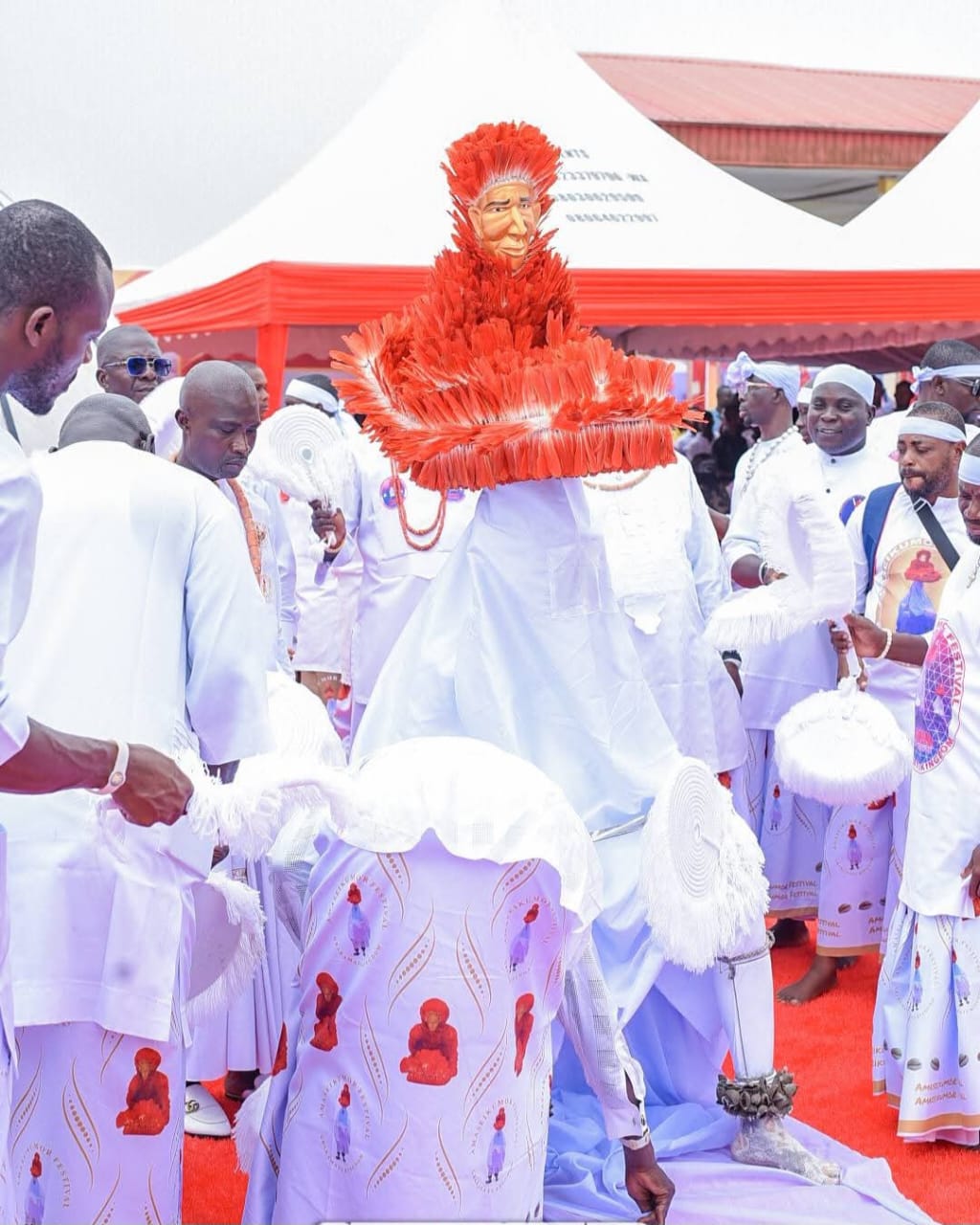
The grand finale of the 2026 edition of the Amaseikumor Festival, held on April 11 in the historic Ijaw city of Oporoza, once again reaffirmed the enduring relevance of cultural heritage as both a spiritual compass and a socio-economic catalyst. The week-long celebration, hosted in the traditional headquarters of the Gbaramatu Kingdom in Warri South West Local Government Area of Delta State, brought together a remarkable blend of tradition, spirituality, and modern influence.
For centuries, the Amaseikumor masquerade has stood as a profound symbol of Ijaw cosmology—representing purification, justice, and communal renewal. Its 2026 outing like every other, was not merely a festival but a reaffirmation of identity, echoing the deep-rooted sagacity and spiritual consciousness of the Gbaramatu kingdom and indeed, Ijaw people.
Cultural Significance Beyond Celebration
In recent years, the Amaseikumor Festival has evolved beyond a local cultural display into a major national and international attraction. It has significantly contributed to the resurgence of cultural tourism in the Niger Delta and beyond. Observers note that the festival aligns with broader efforts across Nigeria to preserve indigenous traditions while harnessing them for economic growth.
The masquerade, often described as “the cleanser of the Ijaw nation,” embodies a sacred mission. Its symbolic procession—accompanied by a subordinate “sweeper” masquerade—is believed to cleanse the land of negativity, including conflict, disease, and misfortune. This spiritual interpretation resonates strongly with adherents who view the festival as a divine intervention in societal affairs.
Convergence of Influence and Prestige
The 2026 edition witnessed an impressive gathering of dignitaries across sectors. Among notable attendees were the Governor of Delta State ably represented by his Deputy, Chief Monday Oyeme among many high-level dignitaries from the National Assembly, traditional institutions and more. It remains cogent on record that previous editions have attracted globally celebrated leaders like former Nigerian President Goodluck Jonathan, traditional rulers including His Imperial Majesty , Oba Enitan Ogunwusi, the revered Ooni of ancient Ife, political leaders, captains of industry, and globally recognized entertainers.
From the entertainment world, figures such as Davido and Nkem Owoh added glamour to the event, while business magnates and industry leaders underscored its economic relevance. This convergence of influence highlights the festival’s growing stature as a melting pot of culture, commerce, and leadership.
Spirituality and Socio-Economic Impact
Beyond the spectacle lies a deeply spiritual narrative that continues to shape the beliefs and aspirations of many. Devotees attribute personal and communal successes to the influence of the Amaseikumor tradition. Prominent figures such as Government Ekpemupolo, Dennis Otuaro, and Kestin Pondi are often cited as embodiments of the blessings associated with the cultural institution.
While such claims remain matters of faith, there is no denying the festival’s tangible contributions to local economies. Increased visitor inflow stimulates hospitality, transportation, and small-scale commerce, creating opportunities for residents and boosting regional visibility.
A Call for Sustained Cultural Investment and National Adoption
The Amaseikumor Festival stands as a compelling case for the preservation and promotion of indigenous heritage. As Nigeria continues to navigate “glocalization,” cultural assets like Amaseikumor offer a unique avenue for national branding, unity, and economic diversification. It is therefore a good time to call on the Federal Government through its Ministry of Culture and Tourism to adopt Amaseikumor as a “National Festival” taking advantage of not only its reach cultural brand but also the territorial ambience and serenity of the Niger Delta swamps and Atlantic coastlines to attract tourists from across the world.
Other stakeholders—state government, private sector, and cultural custodians—must therefore prioritize investment in infrastructure, security, and documentation to sustain and expand the festival’s impact. Proper structuring could elevate it to the status of globally recognized cultural festivals.
Road to Amaseikumor 2027
As the echoes of drums fade and the masquerade retreats into sacred seclusion, one message remains clear: Amaseikumor is more than a festival—it is a living tradition, a spiritual institution, and a beacon of cultural pride fro the blessedlyproud Ijaw people in general and the Gbaramatus in particular.
For those seeking authentic cultural reconnection, spiritual reflection, and a convergence of Nigeria’s finest across sectors, Oporoza remains an unmatched destination. With anticipation already building for the next edition, the legacy of Amaseikumor continues to grow—rooted in the past, thriving in the present, and poised for a global future.
Written by:
Prince (Dr.) Peretengboro Klintin Bibaikefie
Editor-in-Chief, IduwiniVoice
By Ben. Binebai
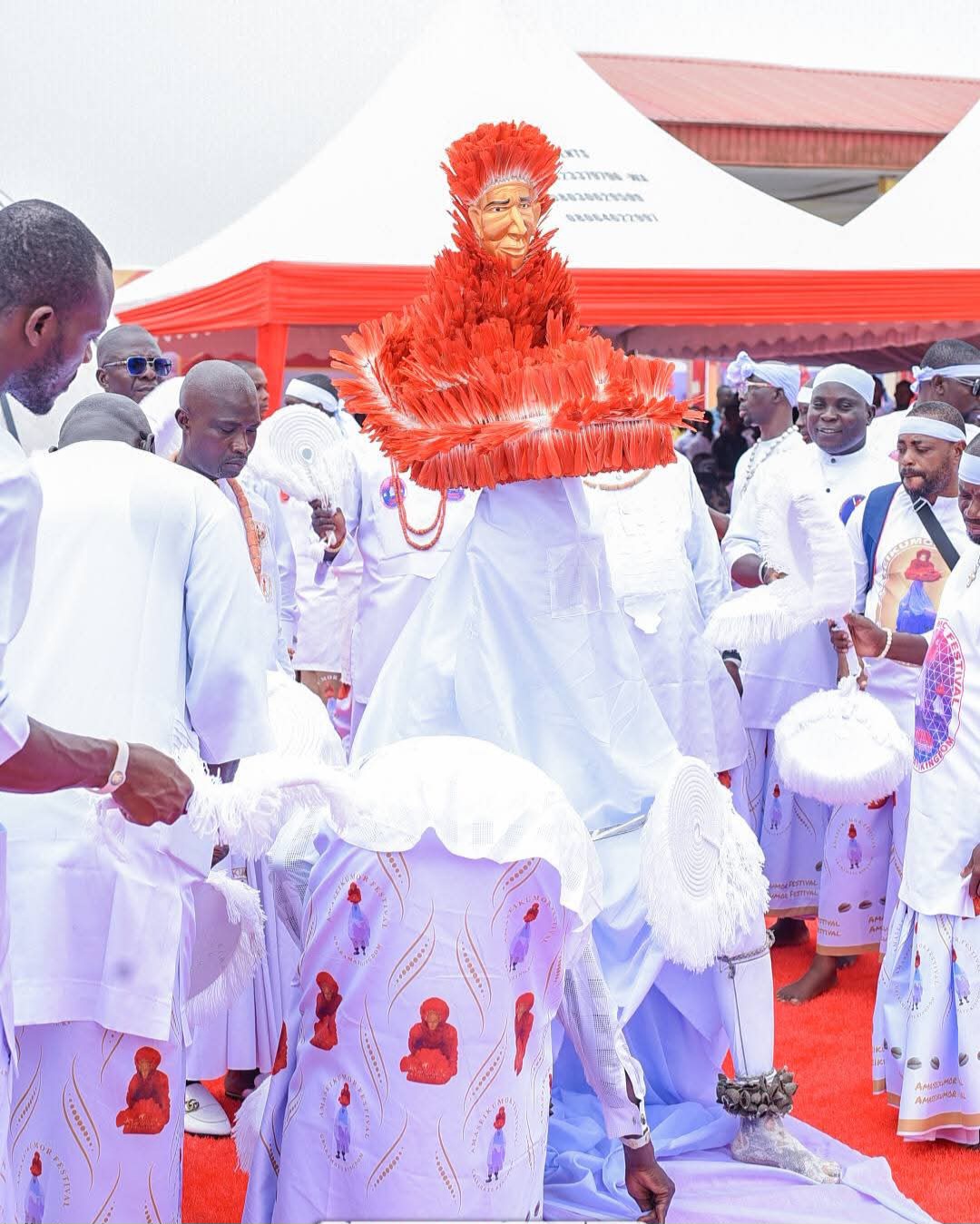
The Amaseikumor Festival is a magnificent tapestry of tradition, a veritable confluence where the sacred and the secular entwine in exquisite harmony. It is, in its quintessence, a festival of purity—an unblemished rite that scours the soul of the land. It is a festival of culture, wherein the ancient cadences of our forebears find renewed utterance; a festival of spiritual rejuvenation, where weary spirits are anointed anew at the altar of ancestral grace.
Amaseikumor is a festival that has its megastar hanging and shinning brighly in the sky, a festival of peace, of unity, and of prosperity—a trinity of virtues that, like a masterfully composed triad, adorns the communal soul. It is a festival of love and fraternity, a luminous bridge between man and the legendary animist beings who, from time immemorial, have watched over our creeks and forests. Indeed, it erects intertidal bridges—linking epochs, lineages, and realms—whilst standing as a clarion of cultural affirmation and religious awakening. Here, the covenant betwixt mortals and the divine is not merely remembered but vivified; a healthful and functional communion with the gods is both established and exalted.
The festival bears the imprimatur of the heavens, most memorably during its revival years. In the wondrous year of 2018, when I was accorded the rare and humbling privilege of delivering a lecture, the firmament itself bore witness: thunder intoned its celestial approbation, the heavens darkened in reverent solemnity, and delicate droplets—veritable tears of divine joy—descended upon the congregants. That epiphanic moment was greeted with an impromptu Ogele, as the gallant youths of Gbaramatu, moved by an ecstasy beyond articulation, gave voice to the rapture of the land.
As the parent festival of Gbaramatu, Amaseikumor is not merely a ritual observance; it is a living vestige heritage, a guiding star of identity, and a festival imbued with prodigious tourism potential. To behold it is to witness culture in its most numinous and unadulterated form—a grand pageant where myth, memory, and modernity dance in perennial embrace.
By: Editorial Team
The United Arab Emirates (UAE), often hailed as a beacon of modern development in the Middle East, is a federation of seven emirates—each with its own distinct history, ruler, and cultural identity. Since its unification in 1971, the UAE has stood as a rare example of how traditional monarchies can collaborate to build a stable and globally respected nation.
At the heart of the federation lies Abu Dhabi, the capital and largest emirate, known for its vast oil wealth and political influence. The Al Nahyan family, which leads Abu Dhabi, has played a central role in shaping the UAE’s national vision and foreign policy. The current President of the UAE traditionally comes from this emirate, underscoring its leadership within the union.
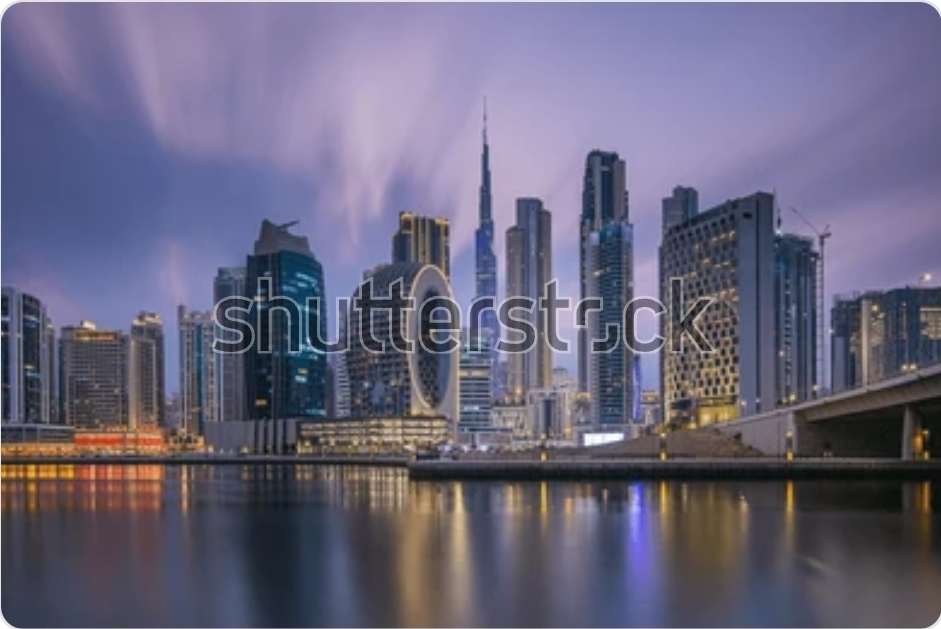
Dubai, the shining star of the federation, represents ambition and innovation. Under the leadership of the Al Maktoum family, Dubai has transformed from a desert outpost into a global hub for finance, tourism, and technology. Its breathtaking skyline, led by the Burj Khalifa, has become a symbol of Arab progress and resilience.
Moving beyond the two powerhouses, Sharjah distinguishes itself as the cultural and educational capital of the UAE. Led by the Al Qasimi family, it has preserved the emirates’ artistic heritage while promoting academic excellence through its numerous universities and museums.
The smaller emirates-Ajman, Umm Al-Quwain, Ras Al Khaimah, and Fujairah-each add unique character and strength to the federation. Ajman, the smallest, thrives on trade and manufacturing; Umm Al-Quwain offers a peaceful charm along its quiet shores; Ras Al Khaimah, nestled against the Hajar Mountains, is known for its natural beauty and growing industrial base; and Fujairah, facing the Gulf of Oman, plays a strategic maritime role in the region’s economy.
Despite their differences in size and resources, the seven emirates remain bound by shared values, mutual respect, and visionary leadership.Their collective success story reflects not only unity but also the ability to balance tradition with progress.
Over five decades after its founding, the UAE continues to prove that cooperation among monarchies can yield a modern, forward-looking state-one that honors its past while boldly stepping into the future. The federation’s model of governance offers an enduring lesson in leadership, stability, and nation-building in a region often defined by division.
Photo Credit: shuterstock