
Security
Security: Communities Suffer Loss of Lives and Properties to Banditry In Kaduna And FCT.

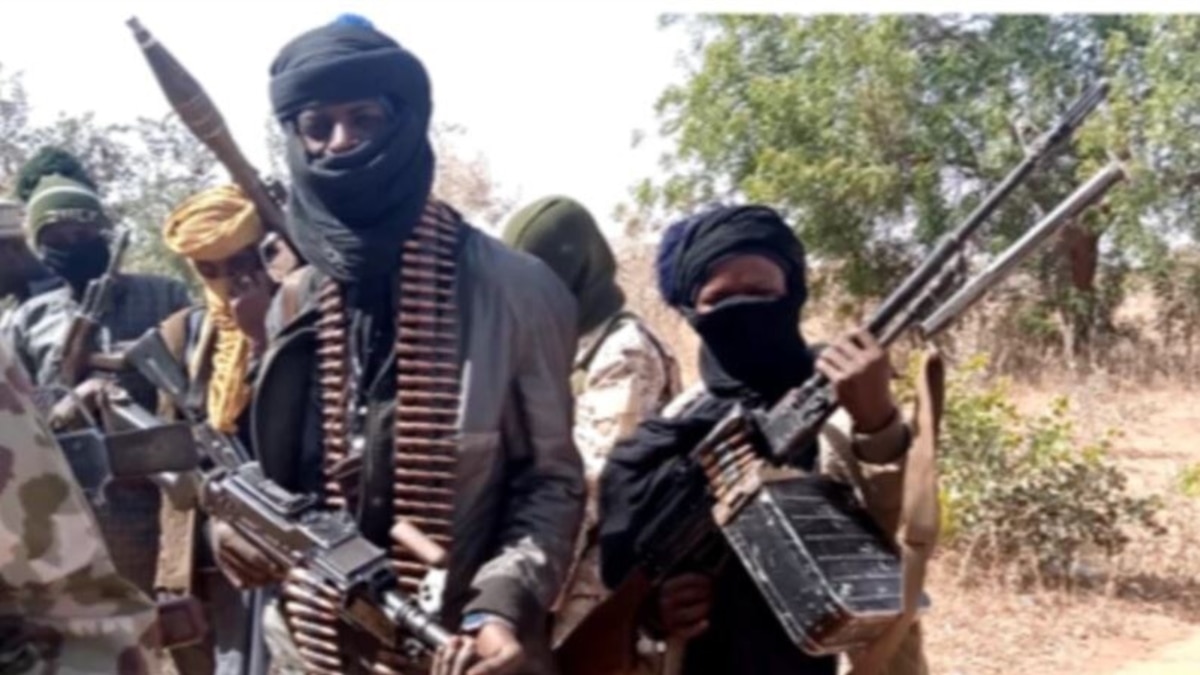
Security: Communities Suffer Loss of Lives and Properties to Banditry In Kaduna And FCT
By Tobouke JEMINE,
The night of Wednesday, April 3,2024, means hell to residents of Gashe community in Kachia Local Government Area of Kaduna, as gunmen attacked the community, killed the community leader,Mr Philibus Andrew, others and abducted several others. and the Federal Capital Territory (FCT).
A resident, Musa Bala, revealed to newsmen that the attacked was launched around 11pm, which resulted to the loss of lives and properties. Bala added that the gunmen burgled shops, and extended their attacks to Badeko village, a neighbouring village on the same day and whisked away 10 people.
Community source lamented the fact that security operatives stationed in nearby Bishini Junction, Katari and Nasarawa LEA Primary School could not come to the rescue of the victims who suffered the terror of the bandits for hours.
In like manner, gunmen in the early hours of yesterday, April 4, 2024, attacked residents of Gaba village in Bwari Area Council of the FCT,Abuja, killed one person, abducted three others and destabilized the serenity and security of the community.


Security
TANTITA CONTRACT: DETRACTORS LACK CAPACITY TO DELIVER, DRIVEN BY BIAS, ILLICIT CABAL INTERESTS — OKOH

By Favour Bibaikefie
Burutu — A respected stakeholder and political leader, Hon. Benard Okoh, has alleged that individuals agitating for the redistribution of the pipeline surveillance contract awarded to Tantita Security Services Nigeria Limited are motivated by deep-seated personal bias towards Tompolo and vested interests linked to illegal oil bunkering activities in the Niger Delta.
Okoh, who serves as Personal Assistant to the DESOPADEC Commissioner representing the Ijaw Ethnic Nationality, claimed that many of the critics lack both the operational capacity and grassroots network required to effectively manage critical oil infrastructure surveillance across the region.
According to him, “Those fighting to share Tompolo’s contract are simply expressing their bias against him. They are also agents of a cabal running illegal oil bunkering businesses, now fighting desperately to resume their illicit operations.”
He argued that if the agitations were genuinely driven by a common interest, proponents would have advocated for a comprehensive decentralisation of all pipeline surveillance contracts, rather than focusing solely on Tantita’s contract.
“They neither have the capacity nor the grassroots reach to do the job effectively. Their interest is not the economic wellbeing of Nigeria,” Okoh said.
The political aide further questioned the credibility of some of the agitators, alleging that a number of them have minimal ties to oil-producing communities and lack firsthand knowledge of the terrain.
“Some of these individuals do not even have oil facilities in their localities. Many of them allegedly diverted Amnesty stipends meant for their foot soldiers, a corrupt practice the current PAP Administrator corrected and is being attacked viciously by the same elements, while others have distanced themselves from their communities after benefitting from the Niger Delta crisis and subsequent Amnesty Programme,” he added.
He maintained that such individuals are ill-positioned to mobilise local youths and stakeholders toward safeguarding critical national assets, as Tompolo who leaves among his people is effectively doing.
Okoh, however, attributed the relative success of Tantita’s surveillance operations to the widespread acceptance and influence of its principal, High Chief (Dr.) Government Oweizede Ekpemupolo, popularly known as Tompolo.
“Tompolo’s longstanding connection with the creeks, youths, women, elders, and other stakeholders across the Niger Delta gives him a unique advantage. That leverage has made the job effective—something many of the contenders simply cannot replicate,” he stated.
He called on Nigerians to disregard what he described as “misguided and mismanaged agitations,” urging critics to seek alternative opportunities within the framework of federal patronage rather than targeting an existing contract held by a fellow Ijaw indigene.
“They are free citizens of Nigeria and can pursue other legitimate opportunities. It must not be the one currently in the hands of another Ijaw son. We aggitated for inclussion in the Oild Industry activities, that, we are gradually feeling now. We should direct our energies towards attracting more inclusion rather than maliciously seeking to split the only one in our hands. Do they think the job will be awarded to them if thw succeeded in making the Federal Government cancel Tompolo’s contract? Why are they not asking to share the same contract awarded to others who were neither warchest nor supported the armed aggitation in the Niger Delta if this is what they claim it is?” Okoh questioned.
The debate over pipeline surveillance contracts has continued to generate controversy in recent months, amid broader concerns over oil theft, environmental degradation, and the role of private security firms in safeguarding Nigeria’s petroleum infrastructure.
By Favour Bibaikefie
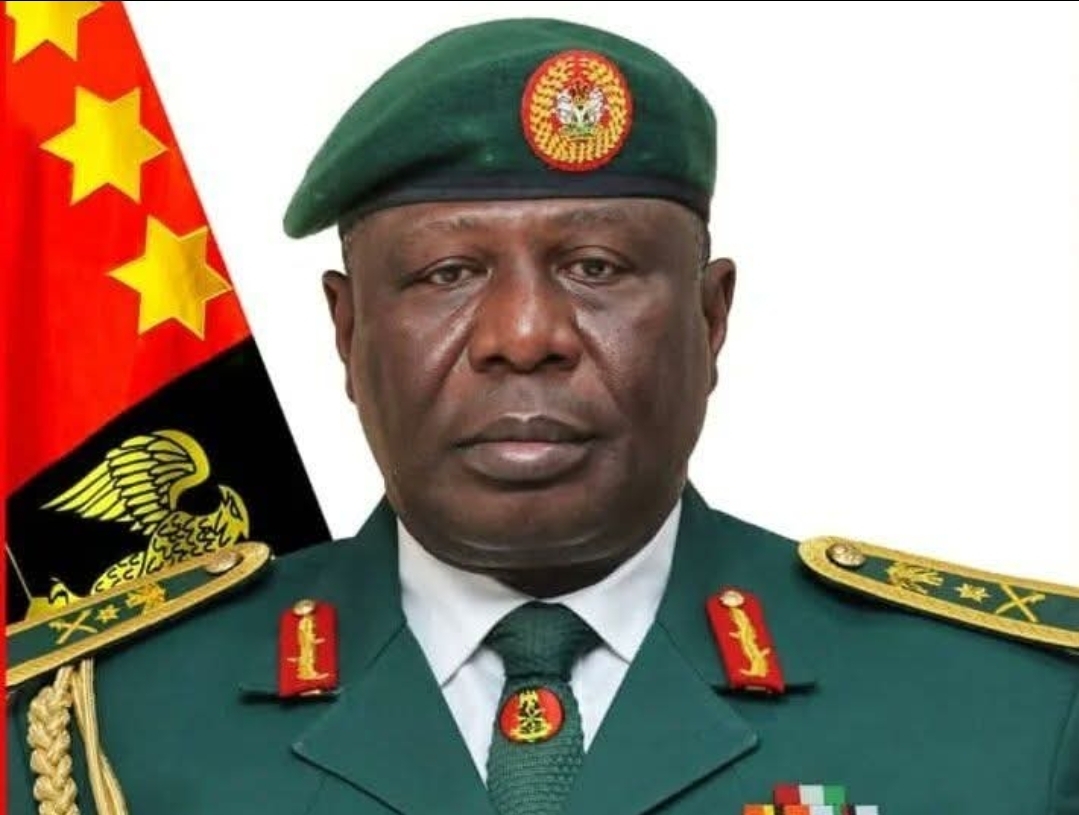
The Chief of Defence Staff (CDS), General Olufemi Oluyede, has issued a stern warning to military personnel deployed across the Niger Delta, cautioning them against involvement in oil theft and any act capable of undermining Nigeria’s critical oil infrastructure.
General Oluyede gave the warning during an operational engagement with troops and military commanders in the oil-rich region, where he emphasized the strategic importance of safeguarding national assets and maintaining the integrity of ongoing security operations.
According to the Defence Chief, the Armed Forces remain fully committed to protecting Nigeria’s oil and gas facilities, which serve as the backbone of the nation’s economy. He stressed that any compromise by personnel entrusted with this responsibility would amount to a betrayal of national trust.
“The protection of oil infrastructure is a sacred national duty,” Oluyede stated. “Any personnel found to be involved in oil theft or sabotage will face strict disciplinary measures in accordance with military regulations.”
He further warned that the military leadership would not tolerate any form of collusion between security personnel and criminal networks engaged in illegal oil bunkering, pipeline vandalism, or economic sabotage.
Military authorities have repeatedly identified oil theft as a major threat to Nigeria’s economic stability, with billions of naira reportedly lost annually due to illegal bunkering activities and pipeline vandalism. The Niger Delta, which accounts for the bulk of the country’s crude oil production, has remained a focal point of both economic activity and security operations.
A senior military officer familiar with ongoing operations noted that recent reforms and intensified surveillance have begun to yield positive results. “We are strengthening internal monitoring mechanisms to ensure accountability among our personnel while sustaining pressure on criminal elements,” the officer said.
Security analysts say the CDS’s directive signals renewed determination by the military high command to enforce discipline within its ranks while restoring public confidence in the Armed Forces’ role as protectors of national resources.
General Oluyede reassured Nigerians that the military remains resolute in its mission to secure the Niger Delta and support national economic recovery. He urged troops to remain professional and loyal to their constitutional responsibilities, emphasizing that their conduct directly impacts national stability and economic progress.
The warning comes amid ongoing federal efforts to curb oil theft, increase crude oil production, and stabilize revenue generation, which remains vital to Nigeria’s fiscal sustainability.
By Admin
Abuja – A proposal to create 31 additional states across Nigeria is currently under consideration by the House of Representatives Committee on Constitutional Review. According to the committee, the move aims to address concerns about representation, governance, and regional development across the country.
The proposed states are distributed across various geopolitical zones, with six states suggested for the North-Central region, four for the North-East, five for the North-West, five for the South-South, and seven for the South-West. The committee has indicated that the proposal is in line with Section 8(1) of the Nigerian Constitution, which outlines the requirements for state creation.
Proposed States by Region
North-Central
1. Benue Ala (Benue)
2. Okun (Kogi)
3. Okura (Kogi)
4. Confluence (Kogi)
5. Apa-Agba (Benue South Senatorial District)
6. Apa (Benue)
7. Federal Capital Territory, Abuja (as an autonomous state)
North-East
8. Amana (Adamawa)
9. Katagum (Bauchi)
10. Savannah (Borno)
11. Muri (Taraba)
North-West
12. New Kaduna (Kaduna)
13. Gurara (Kaduna)
14. Tiga (Kano)
15. Kainji (Kebbi)
16. Ghari (Kano)
South-East
17. Etiti (New)
18. Adada (Enugu)
19. Urashi (New)
20. Orlu (Imo)
21. Aba (Abia)
South-South
22. Ogoja (Cross River)
23. Warri (Delta)
24. Bori (Rivers)
25. Obolo (Rivers & Akwa Ibom), possibly a renamed Oil Rivers State
South-West
26. Toru-Ebe (Delta, Edo & Ondo)
27. Ibadan (Oyo)
28. Lagoon (Lagos & Ogun)
29. Ibeju (Ogun)
30. Ife-Ijesha (Ogun, Oyo & Osun)
31. Oke-Ogun (Ogun, Oyo & Osun)
Constitutional Process for State Creation
The proposal will require approval through a series of legislative steps. The Nigerian Constitution stipulates that for a new state to be established, it must be supported by at least a two-thirds majority in the National Assembly, the State House of Assembly, and local government councils in the affected areas. Additionally, a referendum will be conducted, with the final decision forwarded to the National Assembly for ratification.
This proposed restructuring has generated mixed reactions, with some viewing it as a step toward decentralization and regional autonomy, while others question its feasibility given Nigeria’s economic and political landscape.
What are your thoughts on this development? Share your views!