
News
Bolowou-Zion Distances Community from Pipeline Contract Dispute, Backs Tantita

Bolowou-Zion Distances Community from Pipeline Contract Dispute, Backs Tantita
By Favour Bibaikefie
The leadership of Bolowou-Zion Community in the Niger Delta has distanced itself from ongoing controversies surrounding pipeline surveillance contracts, warning against attempts to attribute individual opinions to the collective position of the community.
In a strongly worded statement issued on March 31, 2026, the community—headquarters of the Cherubim and Seraphim Church of Zion—defended its integrity and reaffirmed its support for , describing the firm’s role as critical to regional stability and national asset protection.
The statement emphasised that Bolowou-Zion should not be drawn into disputes driven by “individual ambition or misrepresentation,” insisting that the community’s identity transcends political and economic considerations.
Describing the community as a “consecrated ground and spiritual citadel,” the leadership said its influence extends across the Niger Delta and beyond, uniting members from various states under a shared spiritual heritage rather than material interests.
“A faith-based institution cannot be reduced to the voice of a single individual, just as an ocean cannot be defined by a solitary wave,” the statement noted, stressing that differing views on issues such as resource control or contract distribution remain personal and do not reflect the official stance of the community.
Addressing the ongoing pipeline surveillance discourse, the leadership clarified that Bolowou-Zion does not oppose the vision and operations of . Instead, it acknowledged the organisation’s contributions to safeguarding oil infrastructure and promoting stability in the Niger Delta.
The community further commended the leadership of the company, describing them as “illustrious sons of the Ijaw Nation” whose efforts deserve recognition and support.
While acknowledging that differing opinions are inevitable in a dynamic society, the statement urged stakeholders to distinguish between personal views and institutional positions, warning that generalising individual actions as communal decisions is both misleading and harmful.
The leadership also called on government authorities, community leaders and the public to exercise restraint and promote dialogue, fairness and mutual respect in addressing contentious issues.
“Let no narrative be driven by emotion at the expense of truth, nor by ambition at the expense of unity,” the statement added.
Reaffirming its commitment to peace and development, the community maintained that progress in the Niger Delta can only be achieved through cooperation, dialogue and shared purpose rather than division.
The statement was signed by Rev. Epistle Princewill Jemine, General Overseer of the C&S Church of Zion, Bolowou-Zion; Senior Boan Ijawakpo Foloki, second-in-command; and Senior Boan M.K. Belele, Secretary of the Bolowou-Zion Community.
Bolowou-Zion concluded by urging that truth, fairness and unity should prevail in ongoing engagements, reiterating its role as a beacon of spiritual identity and communal harmony in the region.









By Favour Bibaikefie
Amid growing debates over the future of pipeline surveillance operations in the Niger Delta, traditional rulers from Delta State have warned that any attempt to fragment existing security arrangements could reverse recent gains in oil production, environmental recovery, and regional stability.
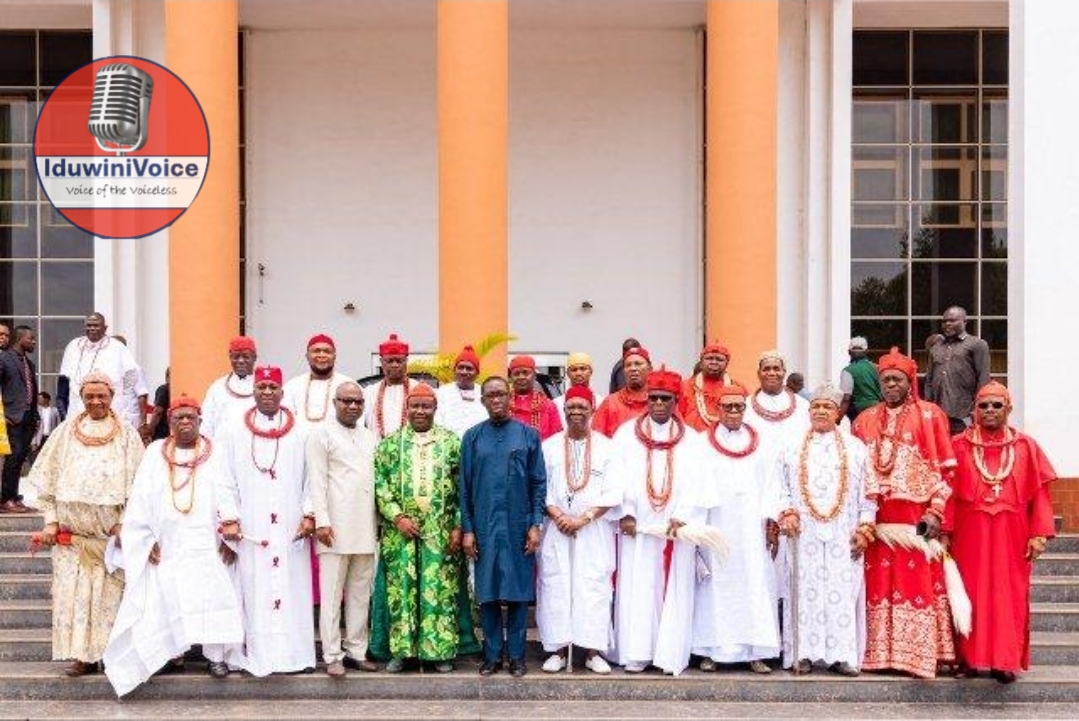
The caution formed the crux of deliberations at an enlarged meeting of monarchs drawn from Ijaw, Urhobo, Isoko and Ndokwa ethnic nationalities, held on Monday at the palace of the Ovie of Uvwie Kingdom, HRM Dr. Emmanuel E. Sideso Abe I, in Uvwie Local Government Area.
In a communiqué issued at the end of the meeting, the monarchs expressed strong reservations over calls for the decentralisation of the pipeline surveillance contract currently handled by Tantita Security Services Nigeria Limited, insisting that the arrangement is already structured to accommodate multiple stakeholders across ethnic lines.
“Our findings show that the contract is already decentralised, with various contractors handling different sections across ethnic nationalities,” the monarchs stated, warning that further fragmentation could disrupt coordination and weaken operational efficiency.
The royal fathers, numbering over 50, argued that stability in pipeline security architecture has been central to the significant rebound in Nigeria’s oil output, which they put at approximately 1.8 million barrels per day, alongside increased gas production and renewed investor confidence.
They noted that prior to the introduction of the current surveillance framework in August 2022, Nigeria’s oil production had plummeted to about 700,000 barrels per day due to widespread crude theft, illegal bunkering and sabotage.
Speaking at the meeting, a representative of the security firm, Barrister Emmanuel Jakpa, underscored the fragile nature of the progress recorded, cautioning that the improvements in oil output and environmental conditions could be short-lived if continuity is not maintained.
“This progress is not irreversible. If the right things are not sustained, we may return to the days of pollution and insecurity,” Jakpa warned.
Beyond production figures, the monarchs highlighted the broader socio-economic impact of improved security, noting that cleaner waterways and reduced pollution have revitalised traditional livelihoods such as fishing and farming, while also creating employment opportunities for youths engaged in surveillance activities.
They added that the decline in crimes including kidnapping, sea piracy, armed robbery and pipeline vandalism has contributed to a more peaceful environment across host communities.
While reaffirming their support for Tantita’s role in the region, the traditional rulers called for enhanced collaboration between the company and local institutions to consolidate the gains already achieved.
They emphasised the need for sustained engagement, transparency and community inclusion as critical factors in maintaining peace and preventing a relapse into instability.
The monarchs’ position comes at a time of heightened scrutiny of pipeline security contracts in the Niger Delta, with stakeholders weighing options to further optimise oil and gas infrastructure protection in one of Nigeria’s most strategic economic corridors.
Observers say the intervention by the traditional rulers underscores the delicate balance between policy reform and operational continuity in safeguarding the nation’s energy assets.

By Ezinne
The Cross River State Police Command has officially unveiled a comprehensive lineup of activities to mark the 2026 National Police Day. Speaking at the Command Headquarters in Calabar on Sunday, March 29, 2026, the Commissioner of Police, CP Rashid B. Afegbua, stated that this year’s celebration, themed “Community Partnership: Building Trust,” is designed to bridge the gap between law enforcement and the public.
The week-long celebration kicked off today, Monday, March 30, with statewide environmental sanitation exercises and a free medical outreach for residents at Millennium Park in Calabar. On Tuesday, March 31, the Command will host a walkathon starting from the State Headquarters to promote physical fitness and civil engagement. Midweek activities on Wednesday, April 1, will shift to Etim Edem Park for public sensitization campaigns focused on road safety and the prevention of electoral violence ahead of future polls.
A solemn highlight of the schedule is set for Thursday, April 2, when the Command will present welfare cheques to the families of fallen officers in recognition of their ultimate sacrifice. CP Afegbua emphasized that these initiatives, spearheaded by Inspector-General of Police Olatunji Rilwan Disu, are vital for fostering mutual cooperation. The activities will culminate in a grand ceremonial parade on April 7 at Eagle Square, Abuja, where Cross River will join other state commands for the national finale. Residents are encouraged to participate in the local events to help build a more secure and collaborative society.
News
Prof. Benedict Benebai Decries Lack of Unity, Peace in Ijaw Nation, Calls for Mega City Development

By Agregor Immaculate
A prominent Ijaw leader, Benedict Benebai, has intensified calls for unity, peace, and accelerated development, underscoring that collective cohesion remains vital to achieving meaningful progress in the region.
Speaking during a recent interview, Benedict Benebai expressed deep concern over growing divisions among the Ijaw people, warning that persistent disunity continues to erode their collective strength and political relevance. He urged leaders, youths, and key stakeholders to rise above differences and unite around a shared vision that advances the common good.
According to him, peace remains a fundamental prerequisite for sustainable development, noting that conflict and instability not only discourage investment but also significantly hinder economic growth. He therefore called for sustained dialogue, mutual tolerance, and strengthened cooperation among communities to foster a stable and secure environment capable of attracting both government and private sector support.
The Professor Benebai also highlighted the paradox of underdevelopment in the Niger Delta, despite its vast natural resources. He advocated for improved infrastructure, quality education, better healthcare systems, and increased economic opportunities for young people in the region.
In a major highlight of his address, Benedict Benebai proposed the development of an “Ijaw Mega City” — a visionary central urban hub aimed at driving economic growth, creating employment opportunities, and serving as a powerful symbol of unity and cultural pride for the Ijaw people. He noted that such an initiative could ease migration pressures on existing urban centers while strategically positioning the Ijaw nation as a formidable economic force.
“The future of the Ijaw people depends on our ability to unite as one, sustain peace, and build enduring structures that will benefit generations to come,” he said. The proposal has since ignited widespread discussions among stakeholders, many of whom regard it as an ambitious yet potentially transformative pathway to regional development, provided it is carefully planned and effectively implemented.
Observers, however, maintain that the success of the initiative will hinge largely on strong political will, active community participation, and sustained strategic investment.
Experts say the initiative’s success will be driven by political commitment, community engagement, and targeted strategic investment.
With unity, peace, and strategic investment, the Ijaw Mega City could become a cornerstone for regional development and cultural pride.