
International
130 NIGERIANS FACE US DEPORTATION;

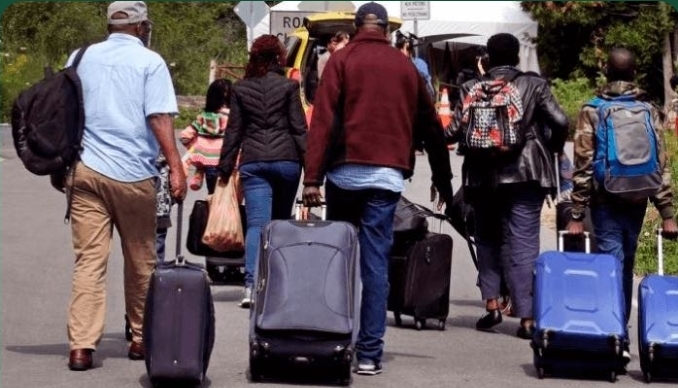
* DHS targets non-citizens for removal
By Ezinne
In a developing international story, at least 130 Nigerian nationals are currently facing deportation from the United States following an intensification of immigration enforcement. The move, confirmed by the U.S. Department of Homeland Security on Friday, March 27, 2026, is part of a broader nationwide campaign targeting foreign nationals with final removal orders or those classified under high-priority enforcement categories.
According to reports from U.S. Immigration and Customs Enforcement (ICE), the group includes individuals who have exhausted their legal appeals, as well as those detained during recent coordinated operations across several states. While some of the affected Nigerians are being removed due to visa overstays and administrative status violations, officials noted that a segment of the list includes individuals with prior criminal convictions for offenses ranging from identity theft to more serious felonies such as drug trafficking, illegal firearms possession, and violent assault cases.
The department explained that the move forms part of ongoing enforcement actions targeting individuals convicted of serious crimes.
The statement said, “The U.S. Department of Homeland Security is highlighting the worst of the worst criminal aliens arrested by the U.S. Immigration and Customs Enforcement (ICE).”
This latest wave of enforcement follows a series of policy shifts under the current U.S. administration aimed at accelerating the removal process for non-citizens on the “non-detained docket.” Legal advocates and diaspora groups have expressed concern over the speed of the proceedings, while the Nigerian government has been urged to ensure that the rights of its citizens are protected during the repatriation process. Diplomatic channels are reportedly being used to coordinate the logistics of the return flights, with the first group expected to arrive in Lagos or Abuja within the coming weeks








By Ezinne
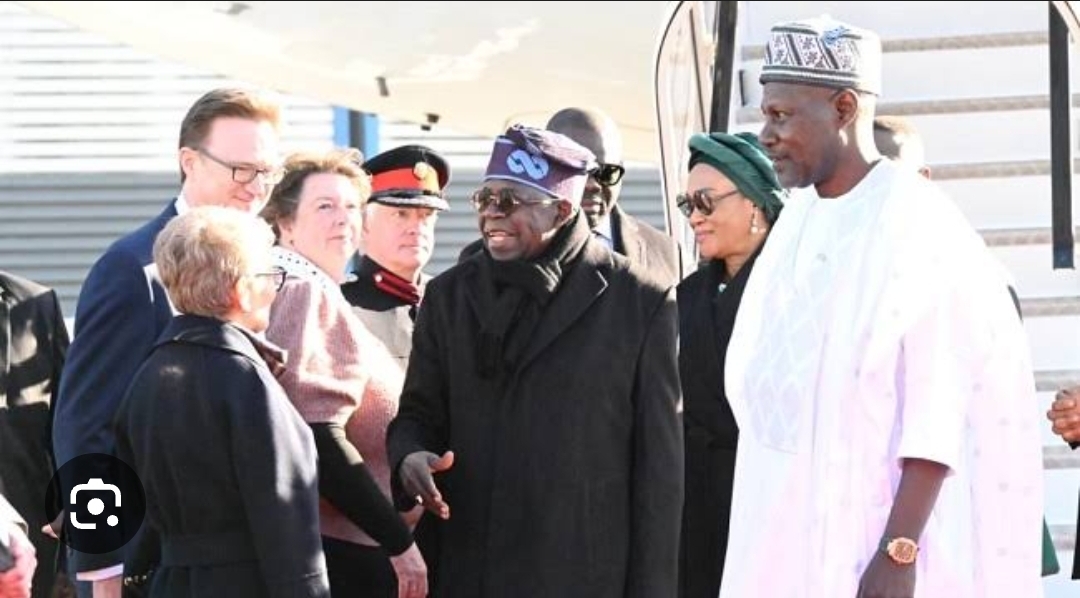
Following the departure of the Nigerian President; President Bola Ahmed Tinubu , and First Lady Senator Oluremi Tinubu, for the United Kingdom yesterday,
A historic moment in international diplomacy is unfolding at Windsor Castle today. King Charles III has officially welcomed Nigerian President Bola Ahmed Tinubu for the first state visit by a Nigerian leader to the United Kingdom in nearly four decades.
Under a clear spring sun, the President and First Lady Oluremi Tinubu were received with full military honors, marking a significant milestone in the long-standing relationship between the two nations.
The ceremonial welcome began as the Prince and Princess of Wales, William and Catherine, met the President at his hotel before escorting the Nigerian delegation to the Windsor town center.
Upon arrival at the castle, a 42-gun salute was fired by the King’s Troop Royal Horse Artillery. President Tinubu then joined King Charles to inspect the Guard of Honour, while the Band of the Welsh Guards played the Nigerian national anthem in the castle’s quadrangle.
Beyond the pageantry, the two-day visit is packed with high-level economic and security discussions. On the agenda are talks regarding a landmark 746-million-pound financing package aimed at the total structural and digital overhaul of Nigeria’s primary maritime gateways.
The deal, backed by UK Export Finance (UKEF), specifically targets the Lagos Port Complex (Apapa) and the Tin Can Island Port. The modernization roadmap includes the reconstruction of collapsing quays, the installation of automated cargo-handling cranes, and the implementation of a “Single Window” digital system to eliminate the notorious human-interface delays and corruption at the ports. This investment is projected to increase Nigeria’s port revenue by over 40% and slash cargo clearing times from weeks to just 48 hours. During the meeting at Windsor, the President and the King are also expected to discuss the “Commonwealth Climate Growth” initiative, with the UK pledging technical support for Nigeria’s blue economy.
The leaders are also expected to discuss trade, which hit a record 8.1 billion pounds last year, alongside critical cooperation on immigration and regional security. Later tonight, the King will host a grand state banquet in St George’s Hall, where both leaders are scheduled to deliver speeches.
The visit also includes a poignant cultural element, with the Royal Family showcasing a special exhibition of Nigerian artifacts from the Royal Collection.
The President and First Lady are also scheduled to lay a wreath at the tomb of the late Queen Elizabeth II in St George’s Chapel. This visit is particularly notable as it is the first time a Muslim leader has been hosted for a state visit during the holy month of Ramadan in nearly a century.
President Tinubu is expected to meet with Prime Minister Keir Starmer at 10 Downing Street tomorrow to conclude the signing of several new bilateral agreements.
This visit is being hailed as the most significant economic reset between the two countries in nearly four decades, moving the relationship from mere “aid” to a robust “trade partnership”.
International
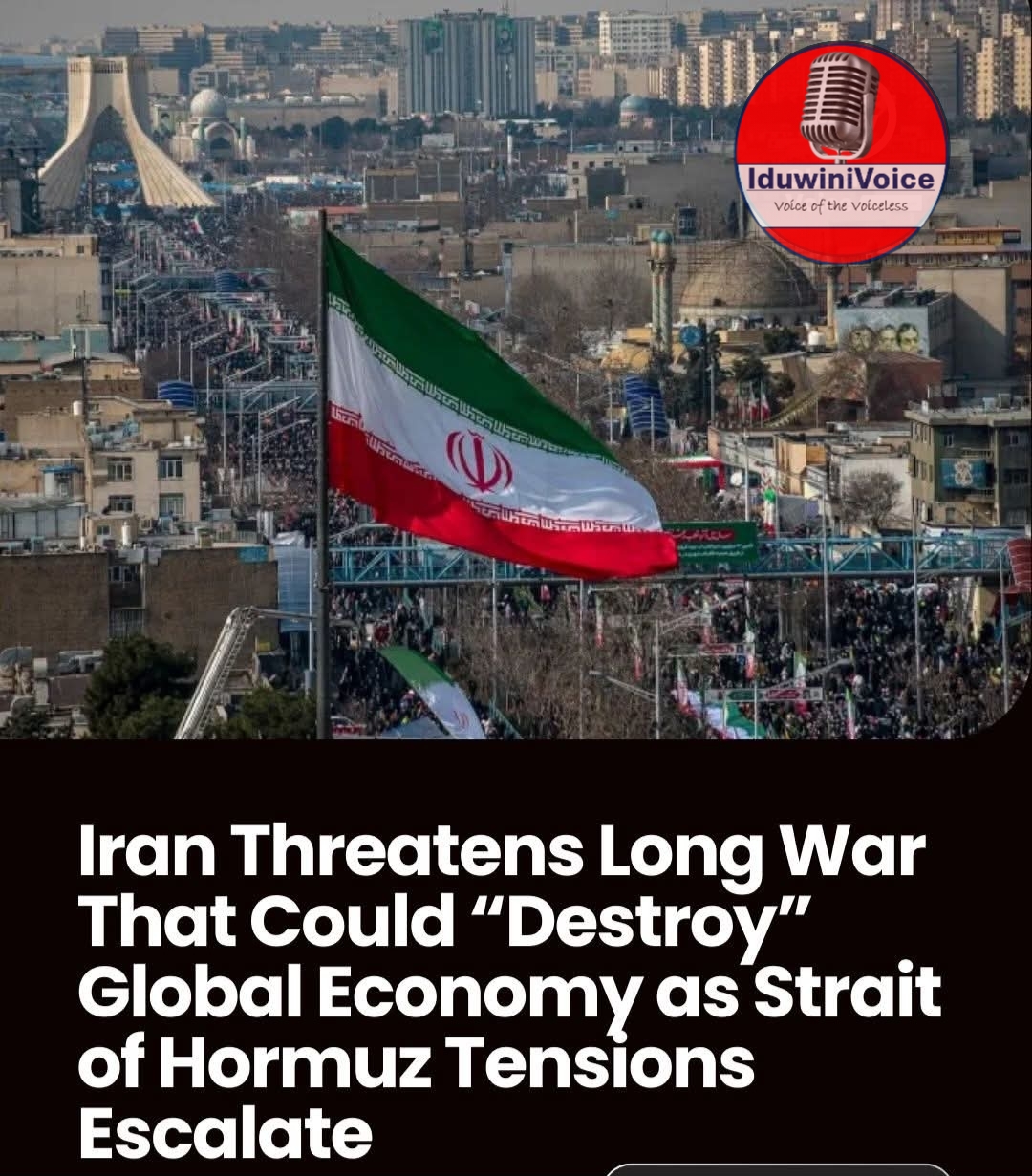
International: Iran Signals Readiness for Prolonged Conflict as Tensions Mount Around Strait of Hormuz
By Divine Perezide
Tensions in the Middle East escalated further on Wednesday as Iran warned it was prepared for a prolonged war of attrition, raising concerns about the potential impact of the conflict on global economic stability and international shipping routes.
The warning came after Iranian forces reportedly attacked two commercial vessels navigating near the Strait of Hormuz, one of the world’s most critical maritime corridors for energy supplies.
The vessels identified as the Liberian-flagged container ship Express Rome and the Thai bulk carrier Mayuree Naree were reportedly targeted after allegedly ignoring warnings issued by naval units of Iran’s Islamic Revolutionary Guard Corps (IRGC).
Authorities in neighbouring Oman confirmed that its naval forces rescued 20 crew members following the incident, while search operations continued for three other sailors believed to be missing.
The latest development has heightened fears of further instability around the Strait of Hormuz, a narrow waterway that serves as a vital global shipping route. Industry estimates indicate that nearly 20 percent of the world’s crude oil and liquefied natural gas supplies pass through the channel, making it one of the most strategically important maritime passages in international trade.
The maritime confrontation comes amid a broader military conflict that began on February 28, when joint forces from the United States and Israel reportedly launched air strikes on Iranian targets, an operation that Iran claims resulted in the death of its Supreme Leader, Ali Khamenei. The attack has since pushed the region into a wider military standoff.
Global energy markets have already begun reacting to the escalation. Oil prices surged sharply following the outbreak of hostilities, prompting the International Energy Agency (IEA) to announce plans to release about 400 million barrels of crude oil from strategic reserves in a bid to stabilize global markets and prevent supply shocks.
As the war entered its twelfth day, Iran’s Revolutionary Guard issued a further warning, indicating that economic centres and financial institutions linked to the United States and Israel could become targets if hostilities persist.
Despite the escalating rhetoric, United States President Donald Trump suggested that the conflict might be nearing its final phase. According to the US leader, only a limited number of strategic targets remained in Iran, raising the possibility of a swift conclusion to the military campaign.
However, international observers remain cautious. Analysts warn that any disruption to shipping through the Strait of Hormuz could severely impact global oil supply chains and international trade, potentially triggering wider economic consequences.
World leaders have begun calling for restraint. French President Emmanuel Macron and other international figures have urged immediate diplomatic efforts to safeguard freedom of navigation and prevent further escalation in the volatile region.
With tensions still rising and military threats continuing from both sides, the situation in the Middle East remains one of the most closely watched geopolitical crises in recent years, with significant implications for global security and energy markets.
International
SECURITY TENSION IN ABUJA: U.S. EMBASSY ISSUES ALERT OVER PLANNED PROTEST LINKED TO IRAN CRISIS
Visa Appointments Cancelled as Americans Advised to Avoid Public Gatherings
By Favour Bibaikefie
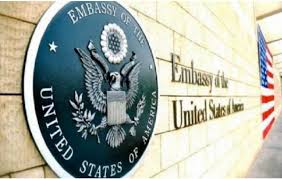
ABUJA — The United States Embassy in Nigeria has issued a security alert to its citizens residing in Abuja over intelligence reports indicating a possible protest in the Federal Capital Territory linked to the escalating tensions involving Iran.
In a security advisory released on Wednesday, the embassy warned that demonstrations could occur in parts of the capital city and potentially pose security risks around diplomatic facilities and other sensitive locations.
As a precautionary measure, the U.S. diplomatic mission announced the cancellation of all immigrant and non-immigrant visa appointments earlier scheduled for the day at its Abuja embassy.
The embassy urged American citizens to remain vigilant, avoid areas where protests may take place, and limit movement until the situation becomes clearer.
According to the advisory, U.S. nationals in Abuja were encouraged to stay indoors where possible, steer clear of large gatherings, and monitor local news outlets for updates regarding the evolving security situation.
The embassy also advised its citizens to keep mobile phones charged, maintain a low profile in public places, and review their personal security arrangements in case of sudden disruptions.
“Avoid crowds and demonstrations. Exercise caution if unexpectedly in the vicinity of large gatherings or protests,” the embassy cautioned in the notice.
The alert is believed to be connected to the growing geopolitical tension in the Middle East involving Iran, which has sparked demonstrations in several parts of the world.
Security analysts note that protests linked to international conflicts sometimes extend to foreign diplomatic missions, prompting embassies to issue precautionary advisories to their citizens.
While the embassy did not specify the exact location or organisers of the planned protest, observers say areas around diplomatic zones and government institutions in Abuja often attract demonstrations.
As of the time of filing this report, Nigerian security authorities had not released an official statement on the development. However, security agencies in the Federal Capital Territory are expected to monitor key locations to ensure that public order is maintained.
Despite the security alert, the U.S. Embassy indicated that other consular services remain operational, although adjustments may be made depending on how the situation unfolds.
Meanwhile, Americans living in Nigeria have been encouraged to enrol in the U.S. government’s Smart Traveler Enrollment Program (STEP), which provides real-time updates and security notifications during emergencies.
The development comes amid heightened global concern over the Middle East crisis, which continues to generate political reactions and public demonstrations in several countries.
Security experts say Nigerian authorities are likely to take precautionary steps to prevent any protest from escalating into violence, particularly around diplomatic premises in the capital city.