
2027
National Assembly Passes Revised Electoral Act Ahead of 2027 Elections

By Divine Perezide
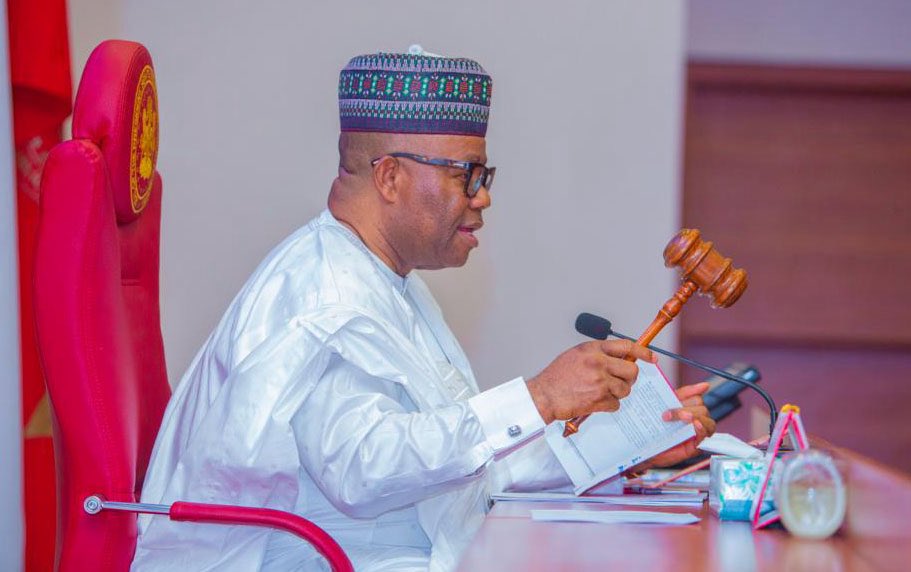
Abuja, Nigeria – In a major legislative development this week, the Nigerian National Assembly passed a reworked version of the Electoral Act, 2022 (Repeal and Re-Enactment) Amendment Bill 2026, moving the long-debated electoral reform bill closer to becoming law ahead of the 2027 general elections.
The passage came after days of intense debate among senators and members of the House of Representatives on several contentious provisions — most notably those governing the transmission of election results and the timetable for conducting polls.
During proceedings in the Senate, lawmakers rescinded an earlier version of the bill and went into detailed clause-by-clause consideration to harmonise differences with the House of Representatives. One notable amendment reduced the required notice period for elections from 360 days to 300 days to give the Independent National Electoral Commission (INEC) greater flexibility in setting dates without clashing with the Muslim holy month of Ramadan.
The Senate also retained a controversial clause that addresses how election results are transmitted. While the bill endorses electronic transmission to INEC’s results viewing portal (IReV), it allows for the use of manual documentation (Form EC8A) as a fallback if technology fails. Supporters of the provision argue it reflects practical realities, while critics say it could weaken reforms aimed at boosting transparency.
The House of Representatives initially experienced a rowdy and fractious session on Tuesday, as some opposition lawmakers protested aspects of the bill and even walked out of the chamber. Despite the tension, the lower house ultimately agreed to the Senate’s version after further negotiation.
President Bola Ahmed Tinubu signed the amended Electoral Act into law on Wednesday at the State House in Abuja, officially bringing the legislation into force ahead of the February-March 2027 election cycle. The signing was attended by principal officers of the National Assembly.
Backers of the amendment assert that the new Electoral Act will strengthen Nigeria’s democratic process by clarifying timelines, improving transparency mechanisms, and addressing long-standing legal ambiguities. Civil society groups, however, have called for vigilant implementation and monitoring to ensure that reforms translate into credible, transparent elections.

By Favour Bibaikefie
A socio-political group, the Warri South West Ijaw/Itsekiri Coalition for Good Governance (WSWIICGG), has called on Deacon (Amb.) Dr. Tekedor Clement Penasine to contest the Warri South West State House of Assembly seat in the next electoral cycle.
The coalition, made up of stakeholders from both Ijaw and Itsekiri ethnic nationalities, said its endorsement of Penasine was driven by a shared desire to promote unity, peace, and sustainable development within the constituency.
Dr. Penasine, who flew the flag of the All Progressives Congress (APC) in the 2023 State Assembly election, was described by the group as a bridge-builder with the capacity to foster reconciliation in a politically sensitive area long marked by ethnic divisions.
According to the coalition, his past engagements and efforts at promoting harmony between Ijaw and Itsekiri communities in Warri and its environs distinguish him as a credible candidate capable of delivering inclusive representation.
Speaking on behalf of the group, the Chairman, Comrade Tuoyo Matthew, alongside the Secretary, Mr. Tare Pamobowei, expressed confidence in Penasine’s leadership qualities, noting that the constituency requires a representative with courage, vision, and the ability to unite diverse interests.
They argued that previous representatives had not met the developmental expectations of the people, stressing that a new direction anchored on competence and collaboration had become necessary.
The group further described Penasine as “outspoken, bold, brave, influential, and intelligent,” attributes they said are essential for effective legislative representation.
Observers say the coalition’s move reflects a growing momentum among stakeholders in Warri South West to prioritise cohesion and collective progress, particularly in a constituency where ethnic relations have historically influenced political outcomes.
The endorsement is also being interpreted as part of broader efforts to strengthen inter-ethnic cooperation and reposition the area for accelerated development.
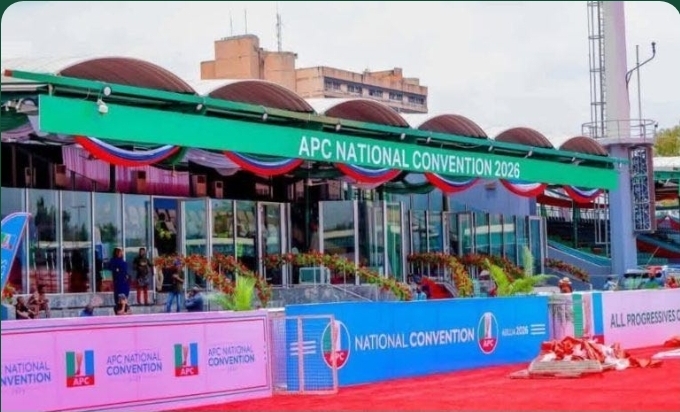
Delegates and press denied entry at Eagle Square
By Ezzine
The 4th Elective National Convention of the All Progressives Congress (APC) was marred by significant disorder at Eagle Square, Abuja, on Friday, March 27, 2026. Despite the high-profile nature of the event, hundreds of accredited delegates and journalists were reportedly locked out of the venue, leading to heated confrontations with security personnel.
The situation escalated early Friday morning as security forces, including the Department of State Services (DSS) and the Nigeria Police, implemented a total lockdown of the access gates leading to the main bowl. Many delegates, some of whom had traveled from far-flung states in the South-South and North-East, expressed frustration despite claims of prior accreditation, numerous attendees were unable to obtain the mandatory entry tags required for access, raising serious concerns about the planning and logistics of the high-profile event. Journalists from major national and international outlets also reported being physically barred from entering, despite possessing valid accreditation tags.One journalist, who identified herself as Seyi, recounted her ordeal, expressing disbelief at the disorganisation. She explained that repeated attempts to secure her accreditation through the Media and Publicity Committee yielded no results, leaving her and her colleagues locked out of a major national assignment.
The situation grew more tense as some frustrated delegates attempted to force their way through the metal detectors.
The confrontation reached a breaking point when security operatives deployed tear gas to push back surging crowds at the accreditation gates. One delegate, identified as Mallam Auwal Umar, recounted a harrowing scene where a colleague collapsed after inhaling the gas during the melee. Umar lamented the heavy-handed treatment, stating that such hostility was entirely unexpected at a national political event meant to foster party stakeholders’ unity.
A security officer on the scene, speaking on the condition of anonymity, defended the use of force. He maintained that security operatives were under “strict instructions” to admit only individuals with specific, verified identification tags. According to the officer, the deployment of tear gas became a “necessary measure” only after the crowd allegedly grew unruly and began to overwhelm the security perimeter.
The logistical failure has cast a long shadow over the convention’s core agenda. While the primary goal remains the formal ratification of the party’s leadership, the sight of disenfranchised delegates and the reported medical emergencies at the gate have raised serious questions about the overall execution of the event.
The APC National convention that was intended as a unified gathering of 8,453 delegates to ratify 30 members of the National Working Committee instead devolved into a scene of physical distress and administrative disarray.
Attention also remained on the anticipated arrival of Bola Ahmed Tinubu, who is expected to formally declare the convention open. However, the unfolding chaos has already cast a shadow over the exercise questioning the overall execution of the event.

New date, May 10 deadline for political parties
By Ezinne
The Independent National Electoral Commission (INEC) has officially extended the deadline for political parties to submit their electronic membership registers. In a statement released on Friday, March 27, 2026, the commission announced that the original closing date of April 21 has now been shifted to May 10, 2026, following intense pressure and concerns raised by party leaders.
The decision was reached after a high-level meeting between INEC officials and political party chairmen on Tuesday, March 24. Parties had expressed significant difficulties in meeting the initial timeline under the Revised Timetable for the 2027 General Elections, citing the technical demands of the new electronic registration system required by the Electoral Act 2026.
INEC National Commissioner and Chairman, Information and Voter Education Committee, Mohammed Kudu Haruna clarified that the adjustment is intended to align with Section 77(4) of the Act, which mandates that registers must be submitted at least 21 days before any primary election.
In addition to the register extension, INEC has also provided a wider window for the conduct of party primaries. Political parties are now permitted to hold their internal elections between April 23 and May 30, 2026. The commission emphasized that while the deadline has been moved to May 10, any party scheduling its primaries early in the window must ensure their register is submitted at least three weeks [21 days] prior to their specific date. This administrative shift is seen as a major relief for opposition parties that had previously protested the “tight” schedule, claiming it hindered their internal democratic processes. In view of this latest deadline, all political parties are expected to adhere to this timeline to ensure a smooth electoral process come 2027.