
News
LIGHT UP LETUGBENE – IMIENMENE CHARGES THE NIGER DELTA DEVELOPMENT COMMISSION (NDDC)

By Divine Perezide,
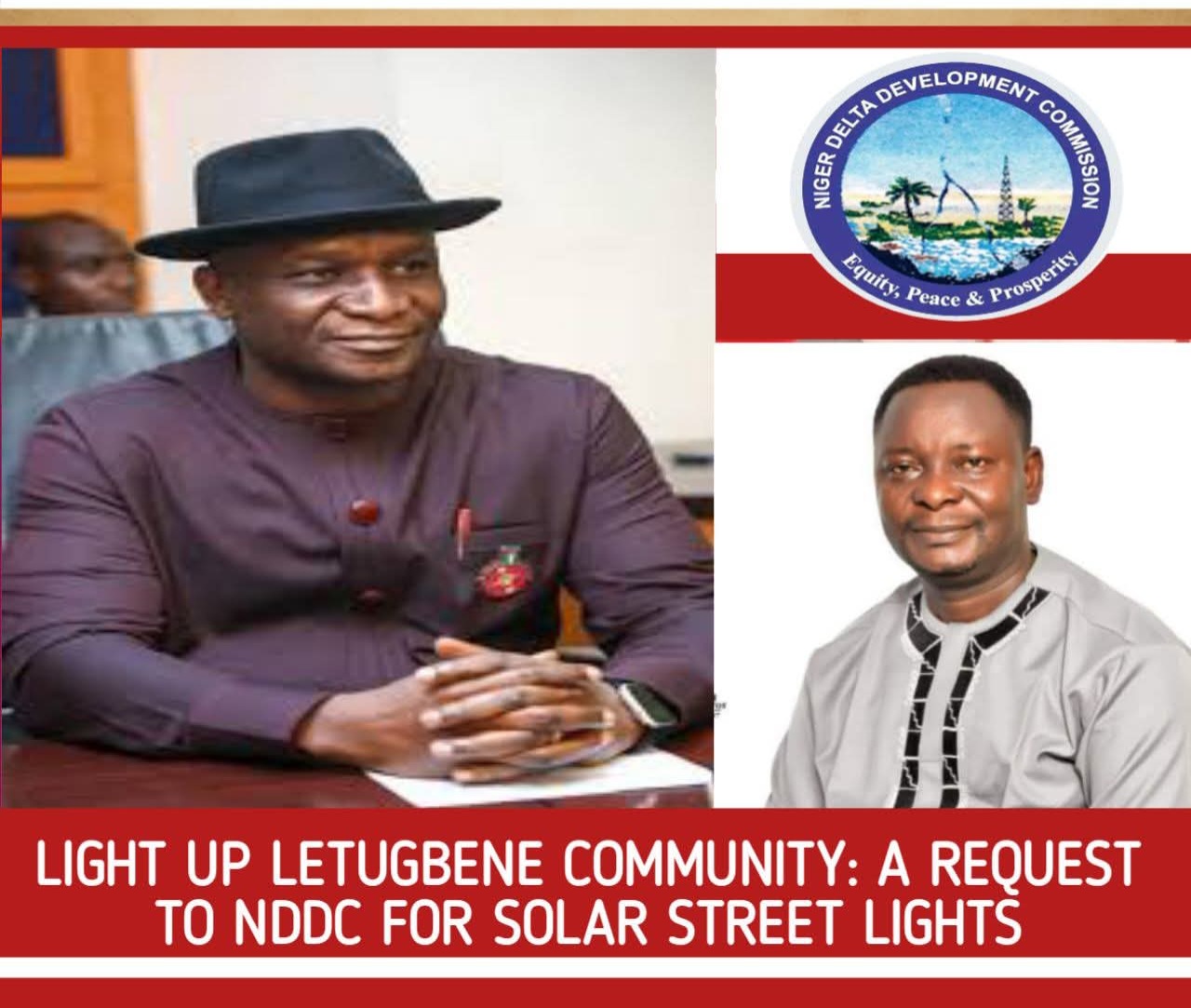
A prominent leader of Letugbene Community, H𝗼𝗻. 𝗔𝗽𝘀𝘁. 𝗦𝘁𝗲𝗽𝗵𝗲𝗻 𝗔𝗹𝗮𝗳𝗶𝗮 𝗜𝗺𝗶𝗲𝗺𝗲𝗻𝗲 has called on the Managing Director of the Niger Delta Development Commission (NDDC) to carry Letugbene Community along in its Street Light Project.
This was conveyed in an Open Letter addressed to Chief Dr. Samuel Ogbuku, the Managing Director of the interventionist agency.
IduwiniVoice can report that the NDDC has been on a sprea of street light installation in communities across the Niger Delta.
While admirers applaud the NDDC “Light Up Niger Delta” as a tangible campaign, critics believe the NDDC aught to be concentrating on capital projects such connecting the swampy creeks of the Niger Delta coastal communities to the city-centres.
However, most communities who are neither connected to the National Grid or have stand alone communal power generating sets believe that lighting up their streets in the night is definitely a great move.
Read the details of Imienmene’s request below:
𝗛𝗼𝗻. 𝗔𝗽𝘀𝘁. 𝗦𝘁𝗲𝗽𝗵𝗲𝗻 𝗔𝗹𝗮𝗳𝗶𝗮 𝗜𝗺𝗶𝗲𝗺𝗲𝗻𝗲
𝗟𝗲𝘁𝘂𝗴𝗯𝗲𝗻𝗲 𝗖𝗼𝗺𝗺𝘂𝗻𝗶𝘁𝘆
𝗘𝗸𝗲𝗿𝗲𝗺𝗼𝗿 𝗟𝗼𝗰𝗮𝗹 𝗚𝗼𝘃𝗲𝗿𝗻𝗺𝗲𝗻𝘁 𝗔𝗿𝗲𝗮
𝗕𝗮𝘆𝗲𝗹𝘀𝗮 𝗦𝘁𝗮𝘁𝗲
𝗡𝗶𝗴𝗲𝗿𝗶𝗮
𝗝𝘂𝗻𝗲 𝟮𝟲, 𝟮𝟬𝟮𝟱
𝗗𝗿. 𝗦𝗮𝗺𝘂𝗲𝗹 𝗢𝗴𝗯𝘂𝗸𝘂
𝗠𝗮𝗻𝗮𝗴𝗶𝗻𝗴 𝗗𝗶𝗿𝗲𝗰𝘁𝗼𝗿
𝗡𝗶𝗴𝗲𝗿 𝗗𝗲𝗹𝘁𝗮 𝗗𝗲𝘃𝗲𝗹𝗼𝗽𝗺𝗲𝗻𝘁 𝗖𝗼𝗺𝗺𝗶𝘀𝘀𝗶𝗼𝗻 (𝗡𝗗𝗗𝗖)
𝗣𝗼𝗿𝘁 𝗛𝗮𝗿𝗰𝗼𝘂𝗿𝘁
𝗥𝗶𝘃𝗲𝗿𝘀 𝗦𝘁𝗮𝘁𝗲
𝗡𝗶𝗴𝗲𝗿𝗶𝗮
Subject: 𝗥𝗲𝗾𝘂𝗲𝘀𝘁 𝗳𝗼𝗿 𝗜𝗻𝘀𝘁𝗮𝗹𝗹𝗮𝘁𝗶𝗼𝗻 𝗼𝗳 𝗦𝗼𝗹𝗮𝗿-𝗣𝗼𝘄𝗲𝗿𝗲𝗱 𝗦𝘁𝗿𝗲𝗲𝘁𝗹𝗶𝗴𝗵𝘁𝘀 𝗶𝗻 𝗟𝗲𝘁𝘂𝗴𝗯𝗲𝗻𝗲 𝗖𝗼𝗺𝗺𝘂𝗻𝗶𝘁𝘆
𝗗𝗲𝗮𝗿 𝗗𝗿. 𝗢𝗴𝗯𝘂𝗸𝘂,
I am writing in my capacity as a concerned indigene and stakeholder of the aforementioned community in Ekeremor Local Government Area of Bayelsa State, to express my deepest admiration for your leadership and the impactful initiatives you have championed as the Managing Director of the Niger Delta Development Commission (NDDC). Your commitment to the development of the Niger Delta region is truly commendable, and your efforts have brought hope and transformation to many communities.
As you continue to drive development in the heartbeat of Nigeria’s oil industry, I humbly request that you consider installing solar-powered streetlights in Letugbene. This oil-producing community has faced huge environmental, economic and social challenges due to oil exploration activities, and it is imperative that it benefits from the region’s resources.
The installation of solar-powered streetlights would be a game-changer for this community and its environs. Not only would it enhance security and reduce crime, but it would also promote economic activities, foster a productive nightlife, and elevate the overall quality of life for residents, and stimulate growth in the local economy.
Sir, it will interest you to know that Letugbene is an ideal location for the solar lights project due to its strategic position as the largest market hub in the entire Ekeremor Local Government Area. Its market serves as a commercial nerve center, attracting a large volume of economic activities. Hence, while installing solar lights will significantly improve safety and business operations, it is also necessary for the NDDC to consider building modern market structures in Letugbene to further enhance trading, boost commerce, and create a more enabling environment for business growth. Together, these projects would have a multiplier effect, driving economic activities and fostering deeper development in the area.
Given your track record of delivering impactful projects, the success of your “Light Up The Niger Delta” initiative, I am confident that the installation of solar-powered streetlights in Letugbene would be a success. Your leadership has shown that you are dedicated to the progress of the oil hub of Nigeria, and I believe that this project would be a significant step towards achieving that goal.
I am persuaded that the installation of solar-powered streetlights in this commercial community would be a worthy investment in the lives of the people and the development of the area. I look forward to seeing positive changes in this community and appreciate your consideration of this request.
Thank you for your time and attention to this matter.
Sincerely,
𝗛𝗢𝗡. 𝗔𝗣𝗦𝗧. 𝗦𝗧𝗘𝗣𝗛𝗘𝗡 𝗔𝗟𝗔𝗙𝗜𝗔 𝗜𝗠𝗜𝗘𝗠𝗘𝗡𝗘
(𝘍𝘰𝘳𝘮𝘦𝘳 𝘊𝘩𝘪𝘦𝘧 𝘞𝘩𝘪𝘱, 𝘌𝘬𝘦𝘳𝘦𝘮𝘰𝘳 𝟨𝘵𝘩 𝘓𝘦𝘨𝘪𝘴𝘭𝘢𝘵𝘪𝘷𝘦 𝘈𝘴𝘴𝘦𝘮𝘣𝘭𝘺, 𝘞𝘢𝘳𝘥 𝟣𝟤, 𝘉𝘢𝘺𝘦𝘭𝘴𝘢 𝘚𝘵𝘢𝘵𝘦, 𝘢𝘯𝘥 𝘔𝘋, 𝘎𝘢𝘭𝘭𝘢𝘯𝘵 𝘛𝘳𝘢𝘤𝘬 𝘎𝘭𝘰𝘣𝘢𝘭 𝘌𝘯𝘦𝘳𝘨𝘺 𝘓𝘵𝘥.)
08033916491, 08158996655.
NDDC
#DrSamuelOgbuku
#LetugbeneFederatedCommunity
#NigerDeltaDevelopmentCommission








By Charity Ebi
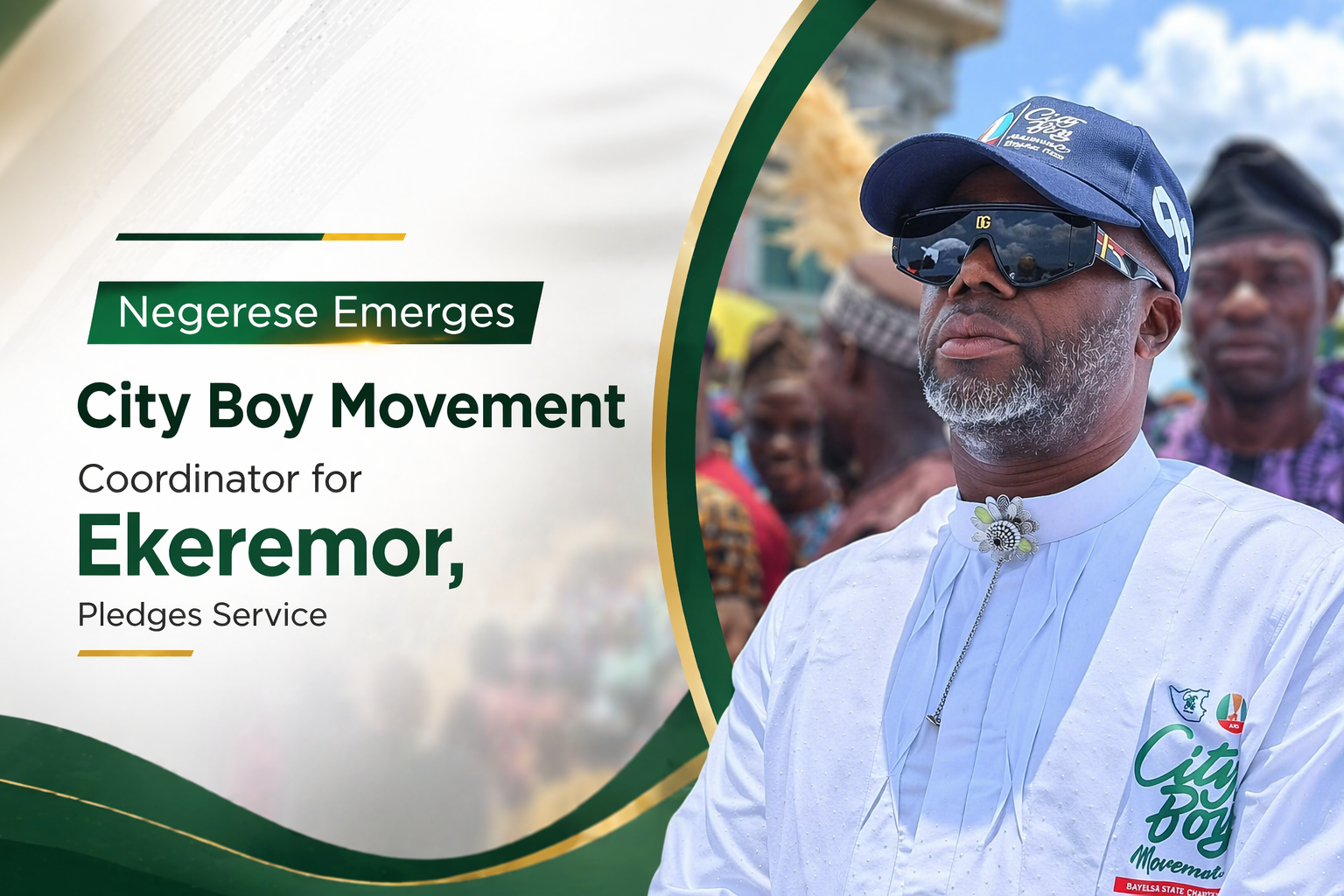
Hon. has formally assumed office as the Coordinator of the City Boy Movement (CBM) in Ekeremor Local Government Area of Bayelsa State, pledging dedication to service and community development.
Speaking following his inauguration, Negerese described his new role as a call to responsibility and commitment rather than a mere title. He assured residents that his leadership would focus on delivering impact and fostering hope across the local government.
He expressed gratitude to God for what he described as divine grace and acknowledged the support of key political leaders and stakeholders, including the Governor of Bayelsa State, , and his deputy, . He also appreciated the Minister of State for Petroleum Resources, , for his encouragement and backing.
The newly inaugurated coordinator further thanked the leadership of the City Boy Movement, particularly the State Director-General, , as well as members of the organisation for entrusting him with the responsibility.
Negerese paid special tribute to the people of Ekeremor, including youths, women, and elders, for their support and participation in the process leading to his emergence.
He pledged to work collaboratively with stakeholders to promote development, empower residents, and strengthen unity within the area, expressing optimism about building a more vibrant and progressive Ekeremor under his coordination.
By Favour Bibaikefie
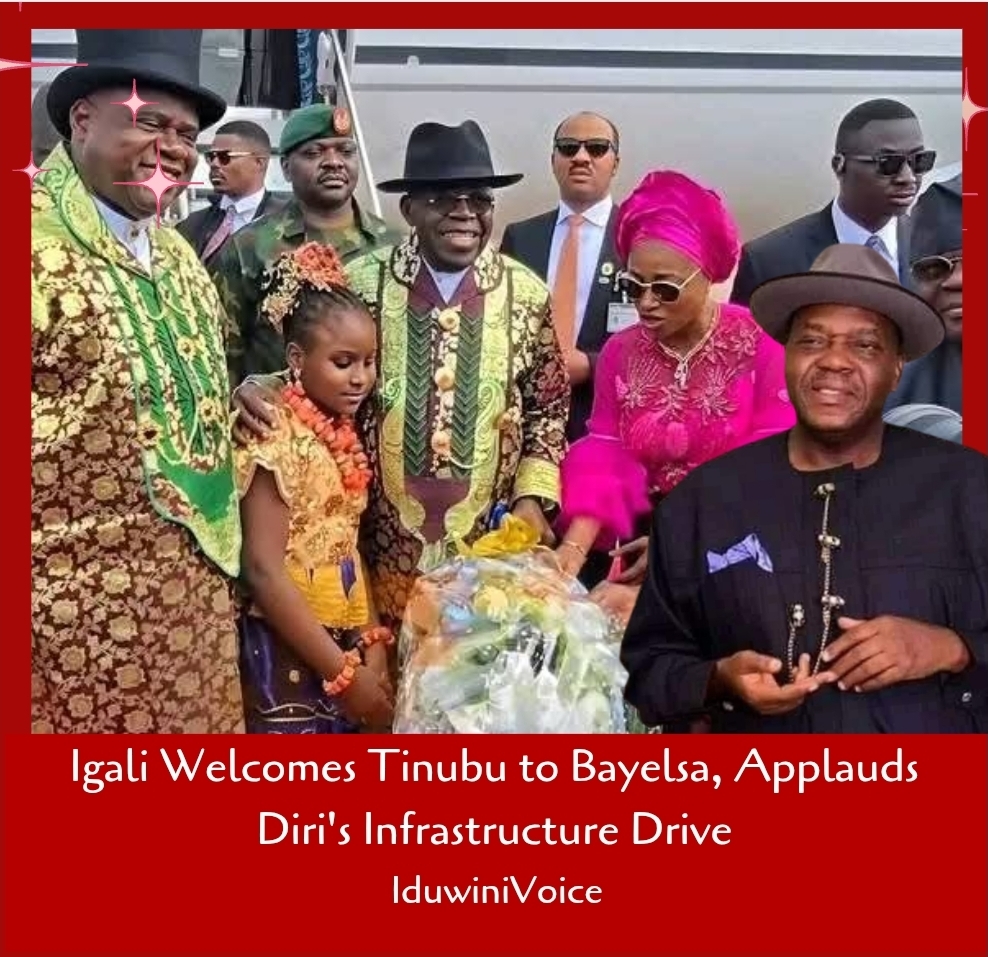
YENAGOA — Former Nigerian Ambassador to Sweden, Godknows Boladei Igali, has commended the visit of President Bola Ahmed Tinubu to Bayelsa State, describing it as a significant step in advancing development efforts in the Niger Delta.
In a statement released on Friday, Igali said the President’s presence in the state for the commissioning of major projects underscores the Federal Government’s renewed focus on infrastructural growth in the region. He characterized the visit as timely and impactful, noting that it reflects a broader commitment to addressing development needs in oil-producing communities.
The former envoy also praised the administration of Governor Douye Diri for delivering key projects designed to enhance living standards and stimulate economic activities across the state. According to him, the ongoing infrastructure initiatives represent meaningful progress in Bayelsa’s development trajectory.
The National Chairman of the Pan Niger Delta Fo observed that the newly completed projects are expected to improve connectivity, boost commercial activities, and open up employment opportunities, particularly for young people in the state.
Igali further urged residents to accord the President a warm reception, emphasizing the importance of unity and collective support for policies that drive national development.
President Tinubu’s visit includes the inauguration of several strategic projects executed by the state government, a move widely viewed by stakeholders as strengthening collaboration between the Federal Government and subnational authorities in fostering sustainable growth.
By Favour Bibaikefie
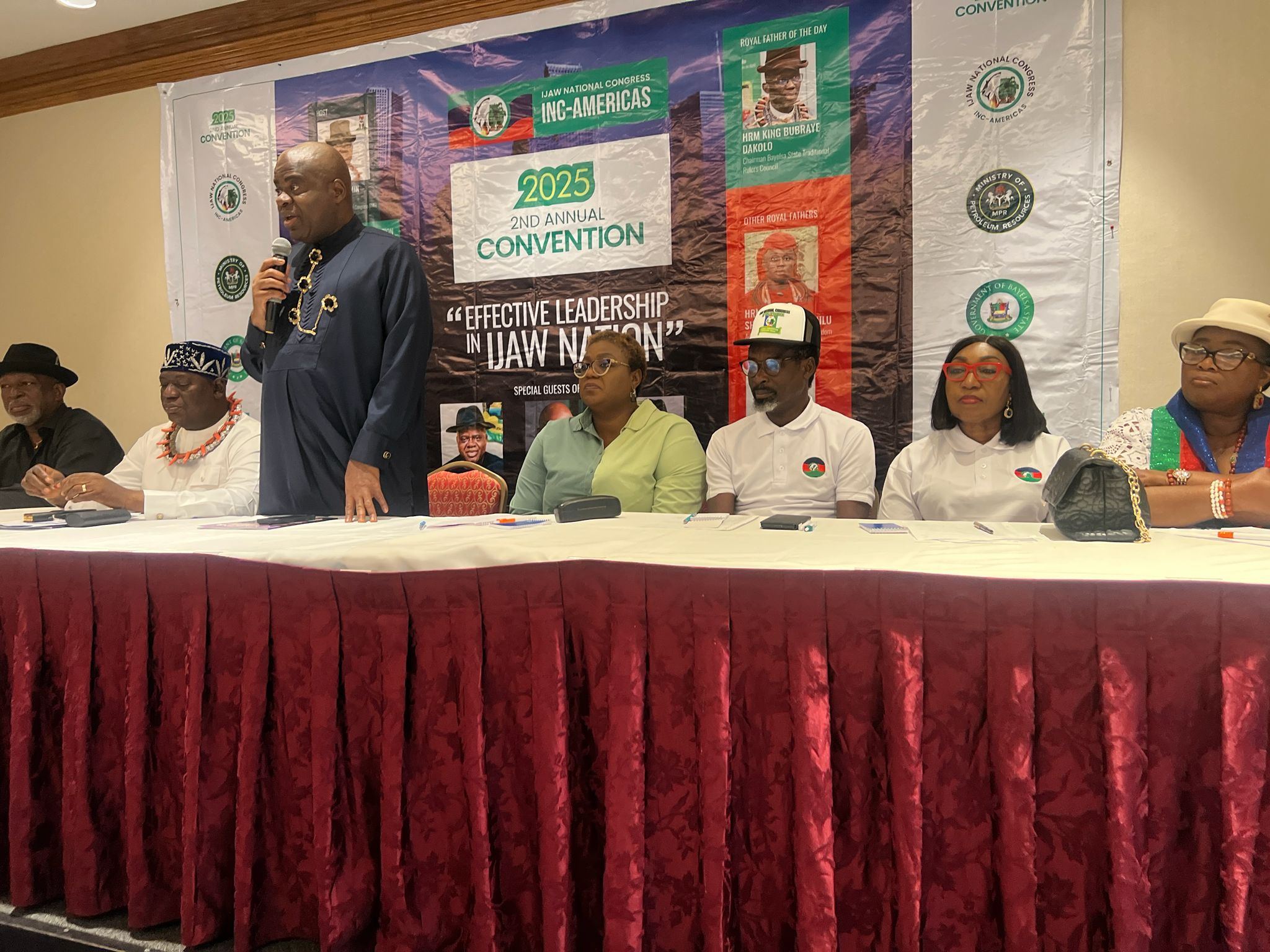
YENAGOA — The Ijaw National Congress (INC) has reaffirmed that its rescheduled national elections will hold on April 13, 2026, declaring its Electoral Committee (ELECO) fully prepared and cautioning against any directive capable of undermining the process.
The resolution followed an expanded National Executive Council (NEC) meeting held on April 9 at Ijaw House in Yenagoa, convened to assess the level of preparedness for the forthcoming elections.
INC NEC Affirms ELECO Readiness
In a communiqué issued at the end of the meeting, the NEC unanimously endorsed the report presented by ELECO, expressing satisfaction with the level of preparedness and affirming that the elections would proceed as scheduled.
The council stated that members “endorsed the report of the ELECO… that the rescheduled INC National elections should hold on the 13th of April 2026 as planned.”
It further noted that concerns raised at a stakeholders’ meeting convened by the Bayelsa State Government in March had been adequately addressed.
Affirmation of Electoral Independence
The NEC stressed the need to preserve the independence of the electoral body, directing that ELECO be allowed to carry out its responsibilities without interference.
According to the communiqué, ELECO is to “carry out its assignment without interference from other organs of Congress, except to receive logistics support from the NEC.”
The council also expressed confidence in the committee’s readiness, particularly in the preparation of both sensitive and non-sensitive election materials.
Clarifies CITRE’s Role
In a move seen as addressing internal governance concerns, the NEC clarified the constitutional role of the Conference of Ijaw Traditional Rulers and Elders (CITRE), describing it as an advisory organ in line with Article 14(D) of the INC 2019 Constitution.
It noted that CITRE’s functions in election matters are limited to clearing nominees and managing disputes arising from the electoral process, similar to the role of the Board of Trustees (BOT).
The NEC, however, reiterated its openness to constructive input from CITRE, BOT and other organs, provided such advice aligns with the overall interest of the Congress.
INC Discourages Misinformation
The council issued a strong advisory to the public and stakeholders to disregard any information or directive inconsistent with the official position of ELECO.
“The general public is therefore advised to discountenance any information or directive that runs contrary to the position of the ELECO…,” the communiqué stated.
NEC Attendance Across INC Structures
The meeting drew a wide representation of leadership across the INC structure, including NEC members, BOT officials, CITRE leaders, National Representative Committee (NRC) members, zonal executives and chapter representatives.
Among those in attendance were INC President, Prof. Benjamin Okaba; National Secretary, Engr. Ebiowei Wodu; Acting Chairman of CITRE (East), HRH (Gen. Rt.) B.A. Fipinimama; ELECO Chairman, HRM (Justice) Dr. F. F. Tabai; and ELECO Vice Chairman, HRM Seiyifa Koroye.
Others included ELECO Secretary, Dr. Otobo Choice Jamaica; former INC President, Prof. A.W. Obianime; National Legal Adviser, Bomo Tons Fetepigi Obhe; National Organising Secretary, Onengiyeofori Fenibo; and Leader of the NRC, HRH (Dr.) Anyanate Kio.
Also present were CITRE leader, HRH Okoko Stample Esau (PhD); BOT Vice Chairman, Chief M. Tiemo; BOT Secretary, Barr. Fidelis Agbiki; National Treasurer, High Chief Philip B. Agu; National Women Leader, Alali R. Danagogo; and Vice President, Rose Obuoforibo.
Chapter and zonal representatives included Barr. Agha Toru-Ibe (Benin City Secretary), Ephraim Gogo (Benin City Chairman), Tonye Harry (Lagos Chairman), A. Elayelagha (Lagos Secretary), Daniel Ebijor Tonibor (Abuja Chairman), Tete K. Friday (Abuja Assistant Secretary), Ajele Ayokeji Johnson (Akure Chairman), John Ebiofini (Akure Secretary), and Chief Bare Etolor (Chairman, Ijaw Elders Forum).
Others were HRH Akcheseinimie Micah Frank (BOT member), Princess Ebiseni Adesola Joyce (NRC Deputy Leader), Elder Gabriel Benamiensia (NRC Clerk), Karibo Lawrence (Eastern Zone Vice Chairman), God’swill Seke (Central Zone Secretary), Mrs. Peremo Isenali Opiali (National Welfare Secretary), and King Koma A. Eteko (CITRE Deputy Chairman).
The NEC’s resolution is widely interpreted as a strategic effort to consolidate authority within the INC and prevent internal divisions ahead of the elections.
By reaffirming ELECO’s independence and clarifying institutional roles, the leadership appears focused on ensuring a credible, transparent and conflict-free electoral process.
With the April 13 date now firmly set, attention will shift to the conduct of the elections and the ability of the Congress to sustain unity in the post-election period.