
Open Letter
RE: EXPOSING THE ITSEKIRI FRAUDULENT CLAIMS OF LAND OWNERSHIP IN WARRI AND THE URGENT NEED FOR INEC TO ANNOUNCE THE SUPREME COURT–ORDERED DELINEATION RESULT

OPEN LETTER TO THE FEDERAL GOVERNMENT, INEC AND THE NIGERIAN PUBLIC
RE: EXPOSING THE ITSEKIRI FRAUDULENT CLAIMS OF LAND OWNERSHIP IN WARRI AND THE URGENT NEED FOR INEC TO ANNOUNCE THE SUPREME COURT–ORDERED DELINEATION RESULT
From: Ijaw & Urhobo Stakeholders of Warri Federal Constituency
Date: [5/9/2025]
1. Introduction: Lies Cannot Stand Against Facts
For decades, the Itsekiri elite have sustained a political fraud: branding the Ijaw and Urhobo as “tenants” in Warri while projecting themselves as the sole landlords. This is a lie. The Constitution of Nigeria is clear:
S.14(2)(b): “the security and welfare of the people shall be the primary purpose of government.”
S.42(1): prohibits ethnic discrimination.
S.17(2)(a),(d): mandates equality of opportunity and forbids exploitation of one group by another.
When INEC delays the publication of the Supreme Court–ordered delineation result (SC/CV/1033/2023), it enables this fraudulent minority narrative to persist.
2. The Hussey College Land: The Truth the Itsekiri Hide
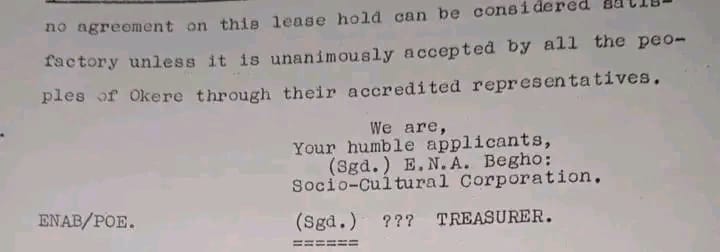
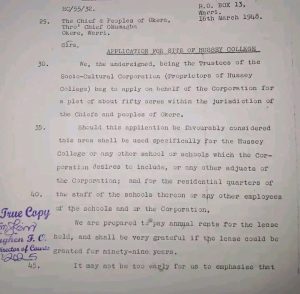
On March 16, 1948, Chief E.N. Begho, an Itsekiri leader, applied for land on behalf of the Itsekiri socio-cultural corporation to build Hussey College. Crucially:
The application was addressed to Chief Okumagba, the Urhobo head of Okere, thereby acknowledging Urhobo ownership.
In his letter, Chief Begho admitted that the land belonged to the Urhobo and expressed willingness to pay annual rent if granted.
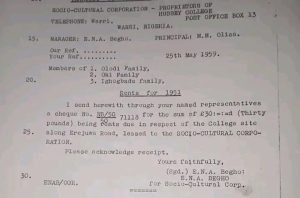
Chief Okumagba, on behalf of the Urhobo, approved the request. Hussey College was thus built on Urhobo land, with rent paid regularly to the Urhobo people.
These are not oral traditions. They are documented historical facts. The letter of request and rent receipts prove the Itsekiri were tenants, not overlords.
So, we ask: between Chief Okumagba, the landlord who granted land and Itshekiris, the tenant who requested it, who is truly the customary tenant in Warri Township?
3. The Broader Pattern of Fraudulent Claims
The Hussey College case is not isolated. It fits into a larger pattern of Itsekiri manipulations:
Pacheco Pereira (1485) recorded only Ijaws in the Benin River and Warri creeks, long before Ginuwa’s exile created the Itsekiri identity.
Dutch Records (1716) documented Ijaw naval power along these rivers, bypassing both the Olu and the Oba of Benin.
British Intelligence Reports (1932, 1938) warned against handing Ijaw and Urhobo lands to Itsekiri, stating clearly that Jekris (Itsekiri) had no customary rights over these territories.
Supreme Court cases such as E.E. Sillo v. Mid-West Governor (1973) and Shell v. Tiebo VII (1996) affirmed Ijaw and Urhobo land rights while dismissing Itsekiri claims.
Yet, despite overwhelming facts, Itsekiri propaganda continues, now aided by silence from INEC.
4. The Fraudulent Ward Allocation — 6–4–0
The Hussey College history and other records prove Itsekiri are not landlords. Yet, politically, they enjoy six wards in Warri Federal Constituency, while the Ijaw are given four and the Urhobo none. This “6–4–0” structure is a colonial fraud designed to inflate a minority.
The Supreme Court (SC/CV/1033/2023, Timinimi v. INEC) has already declared this structure unconstitutional and ordered a re-delineation. INEC has completed fieldwork, verified population data and visited our communities. The truth is ready. Only publication remains.
5. The Danger of Silence
By delaying, INEC is sustaining fraud, encouraging falsehood and endangering peace. Lies like the Itsekiri’s “landlord” claim are fuel for ethnic conflict. As Justice Nnamani declared: “Equity will not allow the law to be used as an instrument of fraud.”
The fraudulent history of Hussey College land exposes the Itsekiri as tenants, not landlords. If even their educational crown jewel was built on rented Urhobo land, how dare they call others tenants?
6. Our Demand: Announce the Truth Now
INEC: Announce the Supreme Court–ordered delineation result without delay.
Federal Government: Compel INEC to obey the Constitution.
Nigerian Public & International Community: Reject the Itsekiri propaganda machine and hold to documented history.
7. Conclusion: Truth vs Fraud
Ijaw & Urhobo: ancestral owners, majority and rightful landholders.
Itsekiri: 15th-century settlers, documented tenants, political fraudsters.
The Hussey College land proves the lie. The Constitution forbids discrimination. The Supreme Court has ruled. INEC has verified. The truth must be announced now.
As Thomas Paine once said: “A body of men holding themselves accountable to nobody ought not to be trusted by anybody.” INEC’s delay and the Itsekiri’s propaganda are frauds against history. We will not be silent.
Signed:
Chief Timothy Ovie (President)
Chief Ebikeke T. Goodstime
(Secretary)
Ijaw & Urhobo Stakeholders of Warri Federal Constituency
CC: National Assembly • NSA • Attorney-General • Niger Delta Governor’s Forum •UN • AU • EU • Amnesty International • Human Rights Watch • Global Media




Open Letter
PRESS STATEMENT BY THE COMMON MEN ASSEMBLY (CMA): TO THE PRESIDENT OF THE FEDERAL REPUBLIC OF NIGERIA ON PIPELINE SECURITY, NATIONAL STABILITY, AND THE STRATEGIC ROLE OF TANTITA
The Common Men Assembly (CMA) is a coalition of seasoned professionals drawn from diverse strategic sectors, including oil and gas engineering, pipeline integrity management, energy economics, maritime security operations, environmental risk assessment, and community conflict resolution within extractive regions.
Our membership includes experts with direct field experience in pipeline surveillance systems, asset protection architecture, crude oil logistics, and the socio-economic dynamics of host communities in the Niger Delta.
This position therefore reflects not merely a civic viewpoint, but a multidisciplinary technical assessment grounded in field realities, operational data, and national economic priorities.
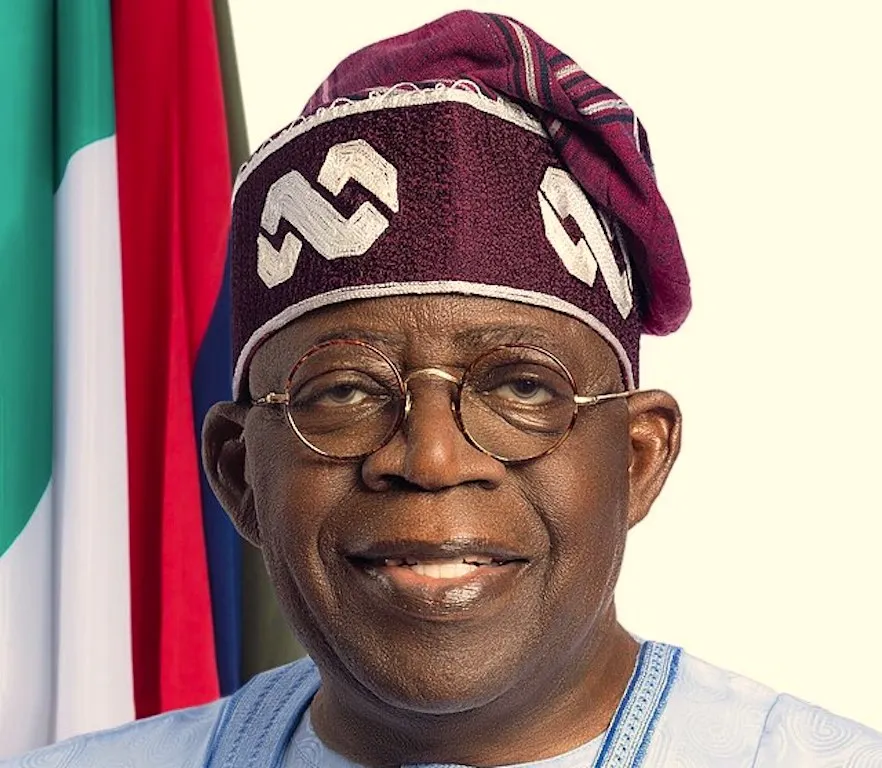
Your Excellency, Bola Ahmed Tinubu, GCFR, President and Commander-in-Chief of the Armed Forces of the Federal Republic of Nigeria,
The Common Men Assembly (CMA), humbly addresses Your Excellency with a position informed by expanded technical evaluation, economic assessment, and extensive field observation regarding Nigeria’s oil infrastructure protection system, with particular reference to the operational model currently driven by Tantita Security Services Nigeria Limited.
This submission is not driven by sentiment or narrow advocacy. It is grounded in verifiable field outcomes, practical security realities, and the overriding need to protect Nigeria’s economic backbone.
PRE-TANTITA ERA: A PERIOD OF SYSTEMIC LOSS AND ECONOMIC STRAIN
Before the introduction of the current surveillance framework in August 2022, Nigeria’s oil sector was operating under severe distress.
Available industry data indicates that:
National crude oil production dropped to as low as 1.0 to 1.2 million barrels per day, far below Nigeria’s OPEC quota of about 1.8 million barrels per day
The country was losing an estimated 400,000 to 700,000 barrels per day to crude oil theft and pipeline vandalism
This translated to billions of dollars in annual revenue losses, severely impacting federal allocations and state finances
Nigeria, at a point, lost its position as Africa’s leading oil producer
In the creeks and waterways of the Niger Delta, illegal bunkering became deeply entrenched:
Hundreds of illegal refining sites operated openly
Crude evacuation through illegal barges and vessels became routine
Pipeline breaches were frequent and often left unattended for extended periods
The economic consequences were immediate and far-reaching:
Sharp decline in foreign exchange earnings
Increased fiscal pressure on government budgets
Rising debt exposure to cover revenue shortfalls
Reduced investor confidence in Nigeria’s oil and gas sector
This period was not just a security failure, it was an economic emergency.
POST-TANTITA INTERVENTION: RESTORATION OF CONTROL AND CONFIDENCE
Following the engagement of Tantita Security Services, the trajectory began to change in measurable terms.
Within months of coordinated operations:
Oil production rebounded toward 1.5 to 1.7 million barrels per day
Reported crude oil theft volumes dropped significantly
Thousands of illegal refining sites were identified and dismantled
Surveillance presence across creeks and offshore corridors became more consistent and effective
Beyond raw numbers, the psychological shift was equally important:
Criminal networks lost operational confidence
Communities began aligning with lawful economic structures
Stakeholders regained trust in the system’s ability to function
The result has been:
Improved national revenue performance
Greater stability in budget projections
Renewed interest from investors and international partners
This transition from loss to recovery did not occur by coincidence, it reflects the impact of a coordinated and locally integrated security architecture.
TANTITA: A SECURITY FRAMEWORK THAT EVOLVED INTO A STABILISING SYSTEM
Under the leadership of High Chief Government Oweizide Ekpemupolo and Engr. Kestin Ebimorbowei Pondi, the operational structure of Tantita has grown beyond the scope of a conventional contractor into a coordinated stabilisation mechanism within the Niger Delta.
What distinguishes this system is the rare fusion of disciplined command structure, local intelligence integration, and community-level acceptance.
From a technical standpoint, this has been driven by:
A clearly defined and enforceable command hierarchy
Continuous intelligence flow sourced directly from host communities
Rapid intervention capabilities across land and maritime environments
Deep operational familiarity with difficult terrain
Structured inclusion of previously disruptive elements into formal surveillance architecture
One of the most impactful dimensions of this model is its employment structure. The system has created over 20,000 direct opportunities, alongside a broader indirect engagement network, effectively converting thousands of previously vulnerable youths into active stakeholders in national asset protection.
MEASURABLE IMPACT ON NATIONAL OUTPUT AND SECTOR CONFIDENCE
Since implementation, observable outcomes include:
1: Recovery of crude oil production toward stable levels 2: Decline in pipeline vandalism across major corridors 3: Disruption of organised crude oil theft operations 4: Reduction in illegal maritime evacuation activities
These gains translate into:
Increased government revenue
Improved fiscal stability
Strengthened investor confidence
COMMUNITY-INTEGRATED SECURITY MODEL
The current framework has established a community-linked security system through:
Large-scale youth engagement
Reintegration of former illegal operators
Direct collaboration with community leadership structures
Shared ownership of national assets
This has reduced hostility and improved cooperation across the region.
MULTI-DIMENSIONAL IMPACT BEYOND SECURITY
Economic Inclusion
Job creation at scale
Growth of local enterprise participation
Reduction in crime incentives
Environmental Protection
Shutdown of illegal refining operations
Reduction in oil spill incidents
Protection of ecosystems
Conflict Reduction
Mediation across communities
Reduced tensions over resource control
Improved trust between citizens and authorities
Security Collaboration
Intelligence sharing
Monitoring of critical corridors
Prevention of organised theft
PIPELINE SECURITY AS A CORE ECONOMIC PRIORITY
Pipeline security must be treated as a central economic variable.
Disruptions lead to:
Revenue losses
Reduced production capacity
Higher operational costs
Damage to international credibility
Security decisions in this sector are, in effect, economic policy decisions.
SYSTEMIC RISKS ASSOCIATED WITH DECENTRALISATION
A fragmented system is likely to:
Intensify community disputes
Weaken coordination
Increase internal conflicts
Expose infrastructure to sabotage
Such conditions historically enabled oil theft networks to flourish.
ADVISORY TO THE PRESIDENT
We respectfully advise:
Resist pressure driven by sectional interests
Prioritise evidence-based decision-making
Strengthen systems delivering measurable results
Maintain structured institutional oversight
STRATEGIC CAUTION
Altering the current structure may result in:
Return of large-scale oil theft
Renewed community conflicts
Decline in production
Economic instability And
Environmental degradation
FINAL WORD
The current system has delivered measurable stability and economic improvement.
Nigeria must not abandon a working model. Nigeria must protect proven results. Nigeria must prioritise national interest over competing pressures.
Signed:
Chief Jude Angodideke Chairman, Common Men Assembly (CMA)
Mr. Miepekumo Brialade Secretary General, Common Men Assembly (CMA)
Engr. Duopayoebiyo Akemotubo Spokesman/PRO (CMA)
Open Letter
AN OPEN LETTER: A WAKE UP CALL TO EFCC ON DELTA STATE’S MISSING N1.3 TRILLION 13% OIL DERIVATION FUNDS
20th October, 2025.
The Chairman
Economic and Financial Crime Commission (EFCC)
Headquarters
FCT-ABUJA
Dear Sir,
AN OPEN LETTER: A WAKE UP CALL TO EFCC ON DELTA STATE’S MISSING N1.3 TRILLION 13% OIL DERIVATION FUNDS
This open letter arises from the continued silence by the Economic and Financial Crimes Commission (EFCC) on the N1.3 trillion of the Delta State Oil Producing Areas Development Commission’s (DESOPADEC) funds that was unlawfully diverted by the former governor of Delta State, Sen. Dr. Arthur Ifeanyi Okowa, during his eight year tenure (2014–2023).
It would be recalled that the Mr. Ola Olukoyede-led EFCC had through its Port Harcourt Directorate operatives arrested the former governor in November 2024 over the alleged diversion of the N1.3 trillion, being proceeds of the 13 per cent derivation fund that accrued to the State during his eight-year tenure. In addition to this, was another unaccounted N40 billion he used to acquire shares in one of the major banks in the country representing eight per cent equity to float the offshore UTM Floating Liquefied Natural Gas.
Prior to Okowa’s arrest, representatives of oil and gas producing communities in the State, precisely on Thursday, June 22, 2023, beseeched the headquarters of the EFCC in Abuja in protest against the alleged misappropriation of the 13 per cent oil derivation fund by Okowa that belongs to the oil bearing communities and was meant for its rehabilitation and development. The said N1.3 trillion was from the 50% per cent legally prescribed allocation to DESOPADEC from the 13 per cent oil derivation fund, which the governor, through a holding account, utilised to deprive the oil-bearing communities.
During our protest, we submitted a copy of our petition on the issue to the EFCC, as was signed by representatives of the various ethnic nationalities among whom are: Chief Mulade Sheriff (representative of Ijaw Ethnic Nationality); Matthew Itsekure (Itsekiri Ethnic Nationality); Mr Osita Ijoma/Patience. A Ego (Ndokwa Ethnic Nationality); Mark Ikpuri (Urhobo Ethnic Nationality); and Chief John Etenero (Isoko Ethnic Nationality).
For the records, we would like to also state that Okowa’s premeditated action to siphon DESOPADEC’s funds began when, as governor, stampeded the State House of Assembly to change the law setting up the Commission through an executive bill which was read, deliberated on and passed in a single day, in August 2018 to deliberately include his communities as hosts in the commission.
We had appealed to the anti-graft agency to conduct a comprehensive probe of the former governor’s administration, particularly the 13 per cent oil derivation funds that accrued and were disbursed to the State between 2015 and 2023 when Okowa was governor. Unfortunately, after his (Okowa’s) arrest and release, nothing has been heard about the EFCC’s investigation. The world is watching!
We would like to remind the anti-graft agency that Deltans and Nigerians are interested to know what the outcome of its investigations are. The comment from the accused that the petition against his alleged diversion of the N1.3 trillion is politically motivated is laughable. It is an attempt to divert attention from the main issue at stake. This money is meant to develop the oil producing communities in Delta State that continue to suffer neglect of infrastructures and compensation for the loss of fishing rights among others.
The EFCC’s continued silence calls for concern, particularly from the oil bearing communities who are the victims of this cruelty by Okowa. The EFCC’s silence has prompted us to raise some likely questions such as:
i.) Is it because the sitting governor, Chief (Elder) Sheriff Oborevwori has joined the All Progressives Congress (APC), that is why the EFCC has compromised or halted their investigations?
ii.) Is it because there was an assignment to the former governor that if he could be able to woo the Delta State government to join the APC, then his ‘sins’ would be forgiven? It seems that it is a slogan that when you join the APC, your sins are forgiven!
iii) What message is the EFCC’s silence or inaction on the missing funds sending to Deltans and Nigerians? Are they encouraging others to loot, so that when they finish looting, they can move to the ruling party at the federal level and go scot-free? Is it a precedent that EFCC wants to set for Nigerians for the next generation to follow?
v) Is it a confirmation and truth that EFCC is a barking dog without teeth to bit because of political interference said by former President Olusegun Obasanjo?.
Quoting Olorogun Stephen K. Dieseruvwe from Bradford City, UK, “Without gainsaying, the utilization of the 13% Derivation Fund is meant for the development of oil producing communities. Based on the DESOPADEC Law, the state withholds 50%, and the other 50% meant for DESOPADEC was not fully disbursed in the eight years of Governor Okowa. It should be made abundantly clear that the governors in receipt of the 13% Derivation Fund, by law, do not have the right or prerogative to utilize the funds as they deem fit. If they do so, it will amount to misappropriation and mismanagement of the fund specifically meant for the development of oil producing communities. Without the oil exploration and exploitation from those communities, Delta State wouldn’t be one of the beneficiaries of the 13% Derivation Fund and would only be stuck with the statutory allocation component of FAAC allocations. It is unjust and inhuman to deprive oil producing communities of their rightful entitlement.”
Let me strongly appeal and charge the current EFCC leadership under Mr Olukayode to emulate the good legacies of former chairman Nuhu Ribadu who is currently enjoying Nigerians good will as National Security Adviser (NSA) under President Bola Ahmed Tinubu GCFR.
We are therefore calling on the EFCC to wake up to its responsibilities as an anti-graft agency. This is a wake up call to the EFCC to act.
A stitch in time, they say, saves nine!
Signed:
Chief (Comrade) Mulade B. Sheriff, PhD
(The Ibe-Sorimowei of Ancient Gbaramatu Kingdom,
Delta State).
IJAW YOUTH COUNCIL (IYC), WESTERN ZONE
The Ijaw Youth Council (IYC) Western Zone has raised an alarm of the Warri Area Command allegedly conniving with the Itsekiri ethnic nationality to oppress Ijaws in the city.
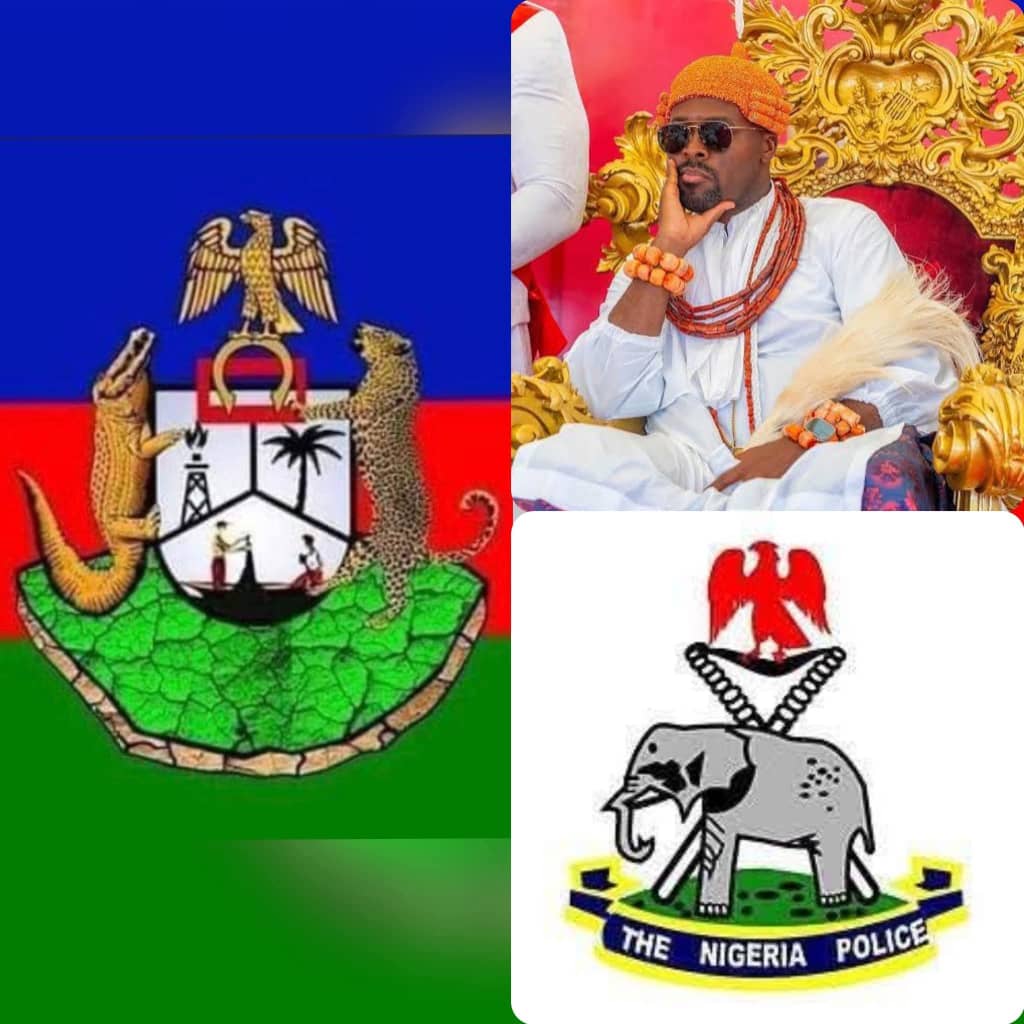
The alarm is sequel to the removal of banners bearing the image of HRM King Couple Oromoni, the Pere of Ogbe-Ijoh Warri Kingdom, by Itsekiri youths, in company of police officers from the command.
The development sparked protests by Ijaw youths, who marched to the Area Command demanding the retrieval of the banners and their immediate replacement.
Reacting to the incident, the Ijaw Youth Council (IYC) Western Zone, in a statement signed by the trio of Nicholas Tamaradenyefa Igarama – Chairman, Ebi Joshua Olowolayemo – Secretary, and Tare Magbei – Information Officer, accused the police of abetting to falsehood and threat to peace in Warri.
The Council fingered the Olu of Itsekiri – Ogiame Atuwatse III and the Warri South Council Chairman- Agbateyiniro Isaac Weyinmi, as masterminds of the condemnable act it described as a decoy to cause war.
“The attention of the Ijaw Youth Council has been drawn to an incident of police officers attached to the Warri Area Command conniving with the Itsekiri ethnic nationality to remove banners bearing the image of HRM Couple Oromoni, the revered king of Ogbe-Ijoh Kingdom.
“This condemnable act is masterminded by one Wayemi Agas, the Warri South Council Chairman, who perpetrated the act on the others of the Itsekiri hierarchy.
“As peace-loving and law-abiding citizens, we view this action as a direct provocation and a calculated attempt to ignite ethnic tension in Warri. The removal of our king’s image is not only an insult to the Ogbe-Ijoh Kingdom but also a violation of the fragile peace that stakeholders have struggled to sustain in the area.
“We call on the Delta State Government, security agencies, and well-meaning Nigerians to prevail on the Warri South Council Chairman and the Itsekiri leadership to desist from further acts capable of undermining peace.
“The Ogbe-Ijoh Kingdom has consistently maintained peaceful relations with its neighbors, despite repeated provocations. We will not be forced into conflict, but no one should mistake our commitment to peace as weakness. Any further attempt to desecrate the image or authority of our traditional ruler will be met with stiff resistance.
“We demand a public apology from those responsible and clear assurance from the Warri Area Command that such partiality and connivance will not be repeated.”
Signed
Comrade Nicholas Igarama – Chairman
Ebi Joshua Olowolayemo, Esq. – Secretary
Comrade Tare Magbei
Information Officer
@highlight