
Opinion
“INEC Delays Threatening Peace,” says Gbenekama

* Urged Swift Implementation of Ward 0Delineation Report
June 9, 2025
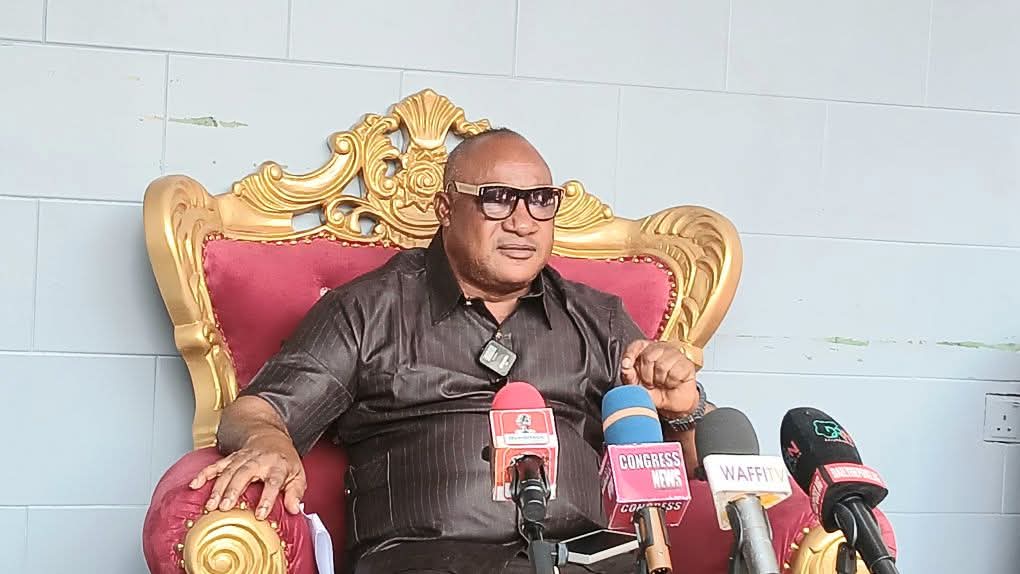
Chief (Dr) God’s power Gbenekama JP, the Fiywwei spokesperson of the Gbaramatu Kingdom, has raised concerns over the lingering delay by the independent National Electoral Commission (INEC) in implementing the Warri Federal Constituency Ward Delineation Report, warning that the continued inaction could jeopardize the fragile peace in the region.
The Ijaw leader made these remarks during a media engagement with members of the Ijaw Publishers ‘Forum (IPF) at his residence in Effurun, Delta State, on Monday.
Calling for urgency from the electoral body, Gbenekama stated that postponing the implementation of the ward Delineation exercise does not serve the interests of peace or stability in Warri and it’s environs
“These noises that the Federal Government is listening to is not in the favour of peace”, he said, referencing objections reportedly raised by some Itsekiri groups regarding the outcome of the delineation process.
The Fiyewei noted that despite these tensions, the region has remained relatively calm, thanks in part to effort by traditional rulers who continue to advocate for unity and stability.
“Niger Delta kings, especially the Pere of Gbaramatu Kingdom, has been going round the region with other kings to sustain the peace. Those that can sustain peace, if not properly handled, can bring about violence,” he cautioned.
He went further to criticize those opposing the delineation, describing their resistance as a reaction to the loss of unfair advantages.
“So, what the Itsekiri elements are saying shouldn’t be taken seriously. It is very clear that if you are enjoying something belonging to someone else with trickery and the truth comes out, you are bound to fight because food has been taken from your table.
“The Itsekiris are a sinking boat that is grappling for anything to stay afloat. We, Ijaw people of Gbaramatu, Ogbe-Ijoh, Egbema, Isaba, and Diebiri, are not taking them seriously because we are not ready to fight them. It is peace we want, and we will continue to maintain peace. ”
Reiterating his appeal to the federal government, Gbenekama urged for decisive action to enable INEC to finalise its work without further delays.
“The government should do what is necessary so that INEC can conclude their work. The delays of INEC work is not in the interest of peace,” he warned.
In a strong message of reconciliation, the Fiyewei extended an Olive branch to the Itsekiris, calling for mutual respect and coexistence.
“We are outstretching our hands of fellowship to the Itsekiri people, let them support what Aketekpe, Pere Oboro Gabaraun II, and other Ijaw monarchs are doing to maintain the peace in the Niger Delta.”
He also revealed that there are reports of plots to sabotage oil pipelines to undermine the credibility of High Chief Government Ekpemupolo (aka Tompolo) and his security outfitTantita Security Services Nigeria Limited.
“We have information that some elements are planning to attack pipelines to discredit Tompolo. Let it be said that nobody at this time can discredit Tompolo and Tantita. Many of the Ijaws and Itsekiris would have died if not for Tantita,” he asserted.
High Chief Gbenekama’s call comes amidst heightened anticipation over the electoral Wards delineation and reflects growing concerns from Niger Delta leaders about threats to the region’s delicate peace and development trajectory.






Opinion
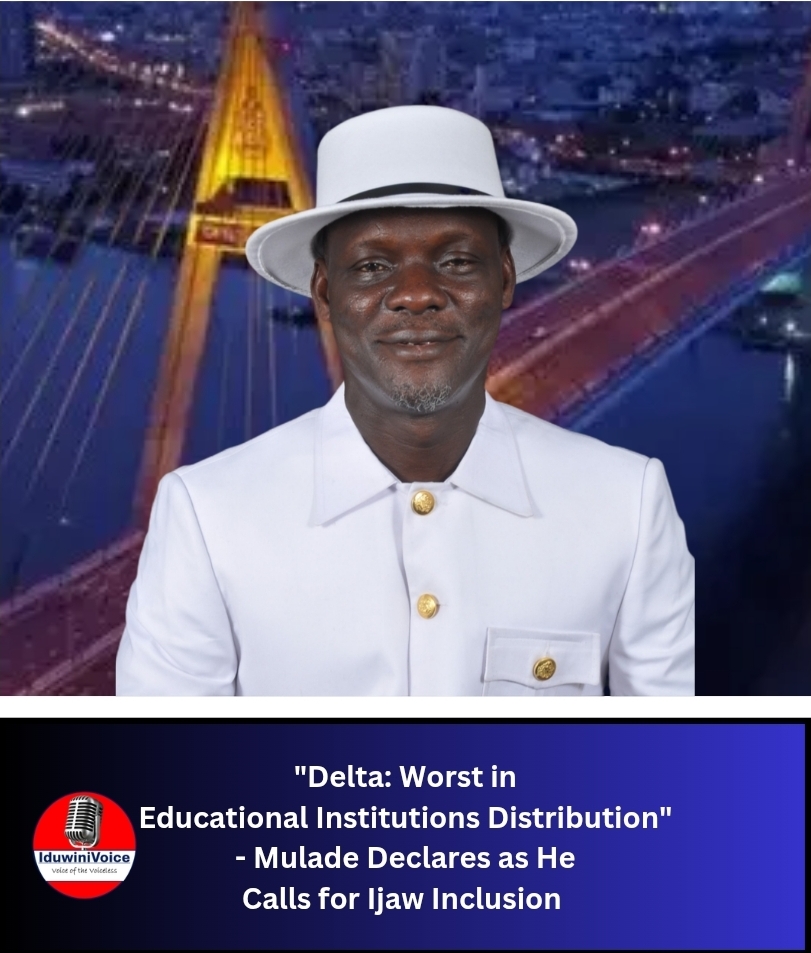
“Delta: Worst in Educational Institutions Distribution” – Mulade Declares as He Calls for Ijaw Inclusion
By: Favour Bibaikefie
A development Ijaw leader and development advocate, Comrade Mulade Sheriff, PhD, has accused the Delta State Government of systematic marginalisation and deliberate neglect of Ijaw communities, particularly in the area of educational development and institutional presence.
Mulade, who described the situation as “unjust, provocative and unacceptable in a democratic society,” said the continued exclusion of Ijaw areas from the siting of state-owned educational institutions represents a clear case of structural discrimination, despite the region’s enormous contribution to the economic survival of Delta State.
Dr. Mulade, “It is painful and unacceptable that a people whose land produces greater portion of wealth sustaining this state are treated as second-class citizens when it comes to development especially in the area of higher educational institutions. This is not only unfair; it is dangerous for the unity and future of Delta State.”
The Ijaw-born activist listed the existing state-owned tertiary institutions in Delta State and pointed out that almost all are concentrated outside Ijaw territories, reinforcing a long-standing pattern of exclusion as regards State-Owned Universities such as:
– Delta State University, Abraka;
– Southern Delta State University of Science and Technology, Ozoro; Southern Delta University of Science and Technology, Orerokpe Campus;
– Dennis Osadebay University, Asaba;
– University of Delta, Agbor;
– State-Owned Colleges of Education and Health Institutions:
– Federal College of Education (Technical), Asaba;
– College of Education, Edjeba Road, Warri;
– Delta State College of Physical Education, Mosogar;
– School of Midwifery, Asaba;
– State School of Nursing, Edjeba, Warri;
– College of Nursing Science, Sapele;
– Delta State-Owned Polytechnic Institutions:
– Delta State Polytechnic, Ogwashi-Uku;
– Delta State Polytechnic, Otefe-Oghara;
– Delta State Maritime Polytechnic, Burutu; (with the poorest infrastructure and lacks).
Mulade stressed that out of all these institutions, only one, the Delta State School of Marine Technology, Burutu is located in Ijaw land, a reality he described as “appalling, insulting and indefensible.”
“One institution for an entire ethnic nationality that contributes massively to Delta State’s oil wealth is not just marginalisation; it is a deliberate policy of neglect,” he declared.
The rights activists further lamented that while Ijaw communities bear the environmental burden of oil exploration including polluted rivers, destroyed farmlands and health risks, they are consistently denied the benefits of development, especially in education.
“Our youths are denied opportunities not because they lack potential, but because the government has refused to bring development to our doorsteps. This imbalance is breeding frustration, and must be corrected urgently,” Mulade warned.
The Ibe-Sorimowei of the ancient and oil-rich Gbaramatu Kingdom in Delta State, Chief Mulade Sheriff strongly appealed and called on Governor Sheriff Oborevwori to rise above politics, sentiment and take deliberate steps to correct the imbalance by prioritising the siting of new educational institutions in Ijaw areas, upgrading existing infrastructure and appoint qualified Ijaw sons and daughters as Vice-Chancellor and other principal officers in Delta educational architecture as compensation now.
“Governor Oborevwori must show that he is a governor for all Deltans, not for a select few. The Ijaw people deserve fairness, inclusion and respect. Educational development is not a favour; it is our right,” he stated.
He warned that continued neglect of Ijaw areas could deepen feelings of alienation and undermine the sense of belonging among the people.
Demand for Equity and Justice
Mulade concluded by calling on civil society groups, traditional rulers, youth organisations and stakeholders across Delta State to speak out against structural injustice and demand a more equitable distribution of development.
“This is not just an Ijaw issue; it is a justice issue. A state cannot develop sustainably when a significant part of its population is consistently excluded,” he said.
* As Group Gears Up to Endorse Governor Sheriff Oborevwori for 2027
By: Divine Perezide
Ahead of the 2027 general elections gradually inches closer, the political terain have seen a lot of endorsements at various levels. In Delta, there have been reports of a planned endorsement of governor Sheriff Oborevwori as the sole candidate by a group of Delta Ijaws. This has however, triggered reactions from many stakeholders, including a prominent Ijaw leader, peace and development advocate, Comrade (Chief) Mulade Sheriff, PhD, who has declared that Ijaw votes in 2027 would be determined by projects allocated, adequately funded to completion in the 2026 budget.
The renowned human and environmental rights activist made the declaration at a press briefing after an expanded stakeholders meeting in Warri on behalf of Ijaw Ethnic Nationality in the state.
According to the Ibe Sorimowei of the ancient Gbaramatu Kingdom, the adequate inclusion and funding of projects in the riverine areas will serve as critical consideration for political support, and riverine communities predominantly occupied by the Ijaws and Itsekiri ethnic nationalities.
While he commended the infrastructural development stride by governor Oborevwori in the upland areas, Mulade however lamented the absence of such infrastructural revolution in the riverine areas of the state despite the population density and huge revenue contributions to the state as host to multinational oil and gas companies.
He said, “I want to sincerely appreciate His Excellency, Rt. Hon. Sheriff Oborevwori, for the infrastructural development, which I described as infrastructural revolution in the state, particularly in the upland, and your proposed commissioning of the reconstructed Odimodi-Ogulagha road earlier constructed by SPDC in the 1980’s for their operational convenience and community residents.
“It is imperative to state that some Ijaw communities such as Ogulagha, Torugbene, Oporoza, Akugbene, Ojobo etc. are more densely populated than some local government headquarters in the upland, but they are deliberately deprived of development because of the so-called claim of terrain challenges.
“These communities host multinational oil and gas companies contributing immensely to the state revenue, but without any significant projects,” he lamented.
The Ibe-Sorimowei who reminded the governor of how the Ijaws adopted, supported and stood by him all through the election season, also gave the assurance of massive Ijaw votes come 2027, but one that must be backed by the governor’s commitment to development through massive projects inclusion for the area.
“We (the Ijaws) have created a conducive atmosphere to boost oil and gas production, making Delta the richest state; support security, douse restiveness and support economic stability. It is time for the governor to reciprocate through the 2026 budget with tangible legacy projects,” he asserted.
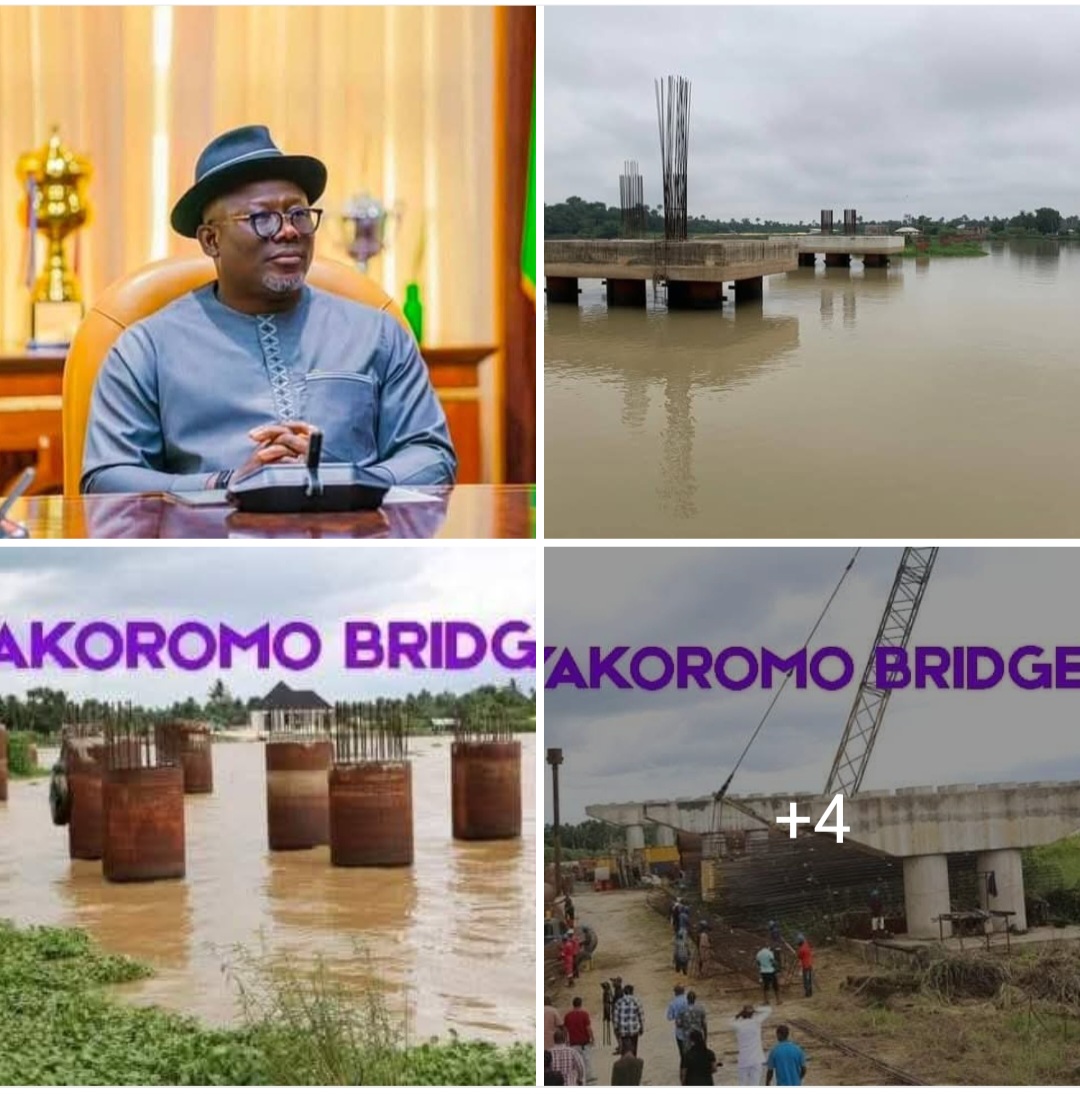
Speaking further he said, “Your Excellency, permit me to draw your attention to some expected critical projects that must be considered for the Delta Ijaw nation: the Ayakoromo bridge, Omadino-Okerenkoko-Kokodiagbene-Escravos road, Aladja-Ogbe-Ijoh Road, Ojobo-Torugbene road, among others.
“Build a first class Health Centre/General Hospital in riverine community, particularly at Ogulagha Town, to compensate the people for their huge contributions to the state revenue.
On education, he appealed that, “It is worthy of note that every ethnic group in Delta State hosts state university except the Ijaws and the Itsekiris. I want to strongly and sincerely appeal to His Excellency, Rt Hon Sheriff Oborevwori once again, to consider the upgrading of the Delta State Maritime Polytechnic, Burutu, which is a moribund polytechnic, to a campus of the Delta State University, Abraka. This will position the state to explore the blue economy opportunities. Equally too, the state government should, without delay, build a campus of Dennis Osadebe University at Koko to give sense of belonging to the Itsekiris with a special focus on agriculture for Deltans.
“The above mentioned projects constitutes significant live-wire for the Delta Ijaw, and will translate into votes come 2027. We can assure His Excellency, Rt Hon Sheriff Oborevwori, of 100 percent of the entire Ijaw votes come 2027.
“The consideration of revolutionary projects in the riverine areas in the 2026 budget will give a sense of belonging to the people for their huge contributions. Moreover, your commitment to development will write your name in gold, not just seeking their votes during elections.”
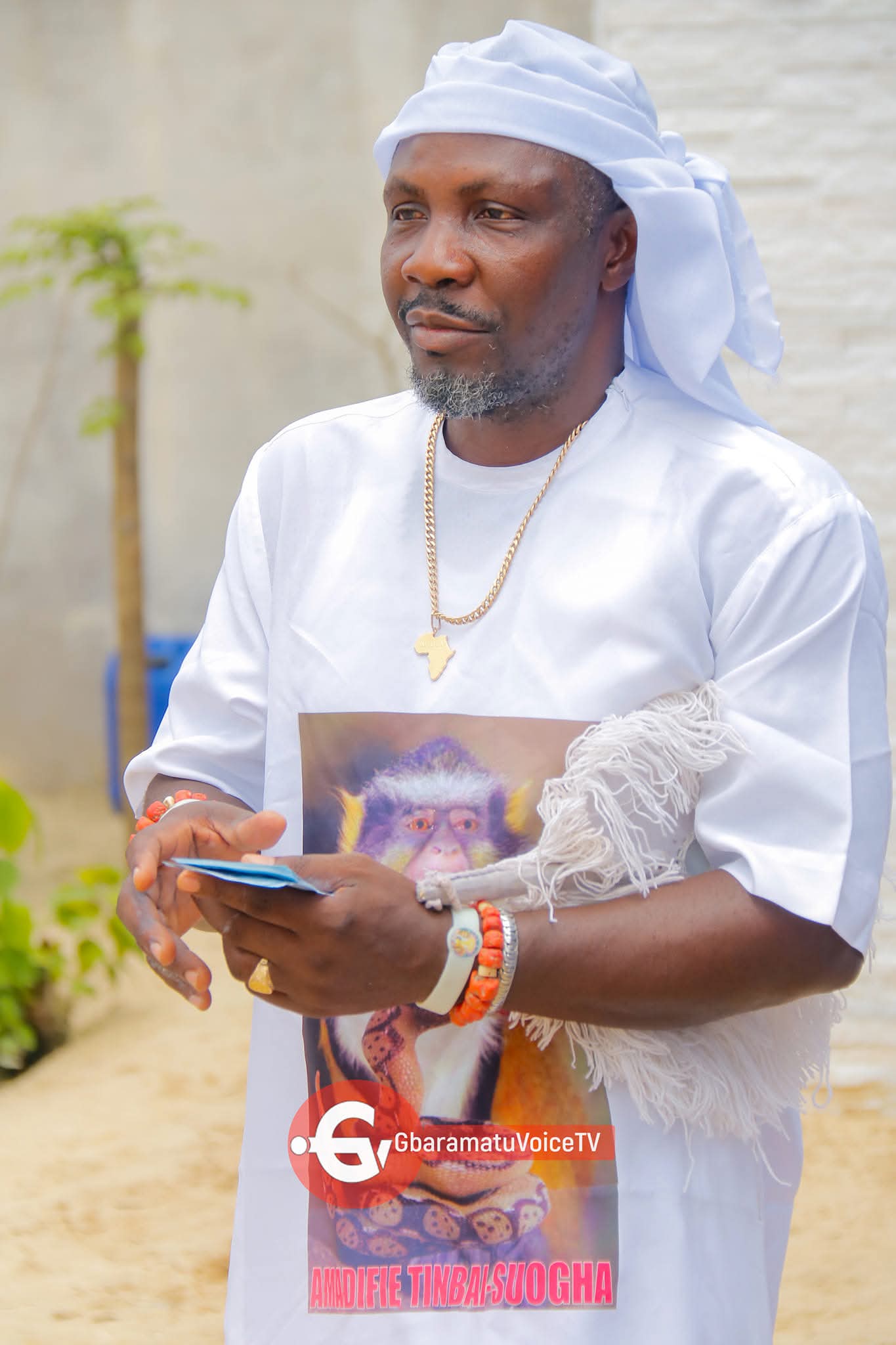
“Tompolo: A Movement of Transformation” – Prof. Binebai,
IduwiniVoice
Renowned Delta-born Professor of Professor of Drama, Dramatic Theory and Criticism, and an Auratorial god, Prof. Benedict Binebai has yet described High Chief Dr. Government Oweizide Ekpemupolo, popularly known as Tompolo as ‘A Movement of Transformation”
In his words, “Tompolo is a multifaceted entity, a veritable institution that defies categorisation, embodying a dynamic force that permeates various aspects of society. As an agency, it represents a powerful catalyst for change, driving progress and innovation in its wake. As a model, Tompolo exemplifies excellence, demonstrating a paradigm of leadership that is at once inspiring and aspirational. His influence extends far beyond the realm of politics, permeating the cultural, religious, and spiritual spheres, where he fosters a sense of unity and shared purpose.
“As a movement, Tompolo is a seismic force, shaking the foundations of complacency and stagnation, and galvanising individuals to strive for a brighter future. His impact is felt across generations, as he empowers young and old alike to become agents of positive change in their communities. In the realm of politics, Tompolo’s leadership has been characterised by a commitment to justice, equality, and the empowerment of the marginalised. His vision for a more equitable society has inspired countless individuals to work towards a common goal, forging a sense of solidarity and shared humanity.
“Culturally, Tompolo has been a luminary, celebrating the rich diversity of Nigerian heritage while promoting a sense of national identity and pride. His influence has helped to preserve traditional values while embracing modernity, creating a unique blend of old and new. Spiritually, Tompolo’s message of hope and redemption has resonated with people from all walks of life, offering a sense of solace and comfort in times of uncertainty. His leadership has embodied a sense of compassion and empathy, inspiring a new generation of spiritual leaders to follow in his footsteps.
“In every sense, Tompolo is a transformative force, a shining example of what can be achieved through dedication, perseverance, and a commitment to the greater good. He is an impeccable movement because his philosophy, his love for society, his cultural activism, his religiosity and leadership grace and skill which is human centered is attracting a large followership, particularly in the Nigerian Delta, where his impact is deeply felt.”
This assertions resonates well with popular sentiments held not just across the Delta of Nigeria but far beyond. Tompolo’s increasing popularity waxes stronger on the pillars of his dedication to homemade ijaw naturality, largeheartedness, stern capability in securing critical national economic assets and the environment, and above all, a detribalized collaborative efforts with other critical stakeholders within and outside the Niger Delta for peace, stability, infrastructural development, and economic process.
(c) IduwiniVoice