/home/iduwiniv/public_html/wp-content/themes/zox-news/parts/post-single.php on line 153
">
Warning: Undefined array key 0 in /home/iduwiniv/public_html/wp-content/themes/zox-news/parts/post-single.php on line 153
Warning: Attempt to read property "cat_name" on null in /home/iduwiniv/public_html/wp-content/themes/zox-news/parts/post-single.php on line 153
READ FULL TEXT OF PRESIDENT TINUBU’S INAUGURAL SPEECH.

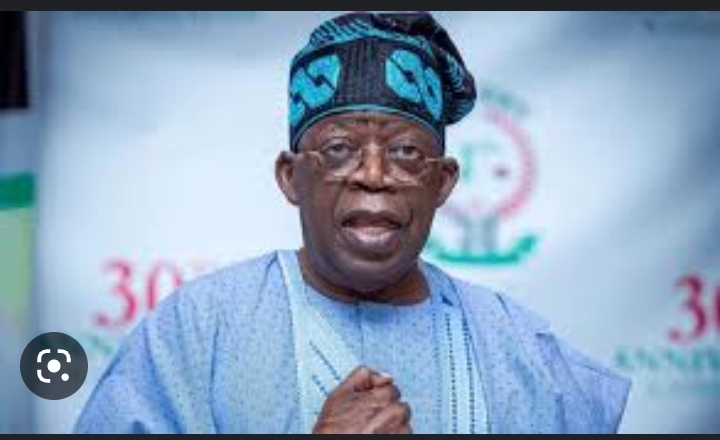
My Fellow Citizens,
I stand before you honoured to assume the sacred mandate you have given me. My love for this nation is abiding. My confidence in its people, unwavering. And my faith in God Almighty, absolute. I know that His hand shall provide the needed moral strength and clarity of purpose in those instances when we seem to have reached the limits of our human capacity.
This day is bold and majestic yet bright and full of spirit, as is our precious nation.
As a nation, we have long ago decided to march beyond the dimness of night into the open day of renewed national hope.
We must now decide whether to stick to the work required to create a better society or to hide in the shadows of our untapped potential. I can think of only one solution. We are too strong a country and too firmly rooted as a people to deprive ourselves of our greatest potential. Millions of people have prayed for this country, and our collective sacrifices have influenced its journey.
We have faced challenges that might have caused other societies to disintegrate. The hope of a brighter future, however, merges with our enhanced ability to shape that future at this SUBLIME moment because we have carried the great load to get there. We have more solidly established this country as a democracy in both word and deed, surprising many but not ourselves
Our political heritage today emphasizes a smooth transition from one government to another. This transfer of power is a representation of our faith in God, our steadfast belief in representative government, and our confidence in our ability to remake this country into the kind of society it was always meant to be. Permit me to now address President Muhammadu Buhari, my predecessor. You have been a trustworthy, patriotic leader who has done your best for the country you adore, Mr. President. You are a deserving friend and partner, to put it more personally. I hope History treats you well.
Critics of Nigeria have been spreading the myth that our country will disintegrate or possibly perish for many years.
However, here we are. We have made mistakes along the way, but our tenacity and diversity have seen us through. Sometimes our burdens may cause us to stoop, but they will not ever cause us to fall. As the most populous country in Africa, the Black Race’s best hope, and its most steadfast defender, we stand out instead. As citizens, we therefore vow that Nigeria shall endure so long as this earth endures, as one unified people committed to one undivided national cause. The torch of human growth is now in our hands as Fate and Destiny come together. We cannot allow it to slip. We raise this flame aloft in order for it to shine on every home and in every heart that claims to be Nigerian. We raise this beam because it illuminates our way with kindness, unity, and peace. May this brilliant light never go out.
Although we will rule on your behalf, we will never be in charge of you. We will talk and consult, but we will never give orders. We will be inclusive of everyone and never disparage someone for possessing opinions that differ from our own. This nation needs to be further repaired and healed, not torn apart and damaged. In keeping with this, allow me to make a few observations about the election that led to this point. It was a competitive battle. Additionally, it was won fairly. Nigeria has not held an election of higher caliber since the establishment of the Fourth Republic. The result reflected the people’s wishes. However, despite winning, I am no more a Nigerian than my rivals. They are not any less patriotic as a result. They will always be considered my fellow citizens. And I shall treat them accordingly. They stand for significant constituencies and issues that wisdom would be foolish to dismiss. They have brought legal action on their behalf. They have the right to seek legal remedies, and I fully support them in exercising this right. The foundation of the rule of law is this.
Our founding ancestors valiantly sacrificed themselves more than 60 years ago to establish Nigeria as an independent country. The work done by those who came before us must never wither, but must instead blossom and give birth to a better world. Let us move forward with the mission they started and believed in. Let us renew our commitment to making Nigeria, regardless of creed, ethnicity, or place of origin, the indispensable home for each and every one of us. Thank you to all of my fans. I reach out across the aisle to folks who cast different ballots. I beg you to understand it in terms of brotherhood and national connection. Political overtones have vanished in my opinion. Nigerians are all I can see. May we sustain these excellent ideas as the new Nigerian standard.
My fellow citizens, The Nigerian ideal I am referring to is more comprehensive than only an increase in economic and other statistics. Although these items are significant, they can never fully communicate our story. Our goal is to make changes to our way of life that foster our humanity, promote kindness toward one another, and appropriately honor our group’s efforts to address the social issues that seek to divide us. We have a nation on paper thanks to our constitution and laws. By deepening the ties of economic cooperation, social solidarity, and cultural understanding, we must work harder to bring these beautiful documents to life. Let us cultivate a spirit of justice and equity among us. The South must recognize that good for the North advances its own interests in addition to seeking good for itself. The South must be seen similarly by the North. You are all my people, whether you come from the twisting creeks of the Niger Delta, the wide northern savannah, the boardrooms of Lagos, the humming capital of Abuja, or the bustling markets of Onitsha. As your president, I will act impartially toward everyone and with compassion for everyone.
My team will make critical details of our initiative public in the days and weeks to come. Today, allow me to briefly describe a few programs that embody our vision of progressive good governance in support of the Nigerian ideal: The simple guiding ideas for our administration are as follows:
1. Nigeria will be impartially administered in accordance with the law and the constitution.
2. We will protect the country from terrorism and all other types of criminal activity that put the peace and stability of both our nation and our area in danger.
3. We will restructure our economy to promote growth and development by generating jobs, ensuring food security, and putting an end to severe poverty.
4. Women and young people will take center stage in our administration.
5. To deter corruption and increase the efficacy and efficiency of the various anti-corruption institutions, our administration will continue to adopt proactive measures such promoting a credit culture. SECURITY Our administration’s main goal must be security because, in an environment of instability and violence, neither prosperity nor justice can triumph. Both our security DOCTRINE and its ARCHITECTURE will need to be changed if we are to effectively combat this threat. In order to enhance our investment in security professionals, we must do more than simply hire additional people. We will offer greater instruction, gear, salary, and firepower
OUR ECONOMY
In terms of the economy, our goals are to drastically lower unemployment and increase GDP growth. The following actions are what we plan to take to achieve this: First, there will be a budgetary reform that stimulates the economy without causing inflation. Second, industrial policy would make use of all available fiscal tools to support domestic manufacturing and reduce reliance on imports. Third, both homes and businesses will be able to obtain and afford electricity. Networks for transmission and distribution should be strengthened, and power generation should nearly double. States will be urged to create local sources as well. I want to let both domestic and foreign investors know that our government would look into all of their grievances regarding excessive taxation and other investment-inhibiting measures.
We will make sure that international corporations and investors return their hard-earned dividends and profits to their native countries. JOBS My administration must provide our youth with worthwhile opportunities. We will keep our promise from the campaign to create a million new employment in the digital sector. Additionally, our government will collaborate with the National Assembly to draft a comprehensive Jobs and Prosperity measure. This legislation would grant our administration the freedom to pursue labor-intensive infrastructure upgrades, support light industry, and enhance social services for the underprivileged, old, and vulnerable. Agriculture Commodity exchange boards must guarantee minimum prices for specific crops and animal products in order to protect rural incomes. There will be a national program for storage and other facilities to cut waste and spoiling.
To boost production and engage in value-added processing, agricultural centers will be established across the country. The livestock industry will be made aware of the best contemporary techniques and the measures taken to lessen the industry’s ongoing disputes over land and water resources. These steps will increase food availability while lowering its price. Farmers would make more money while paying less on average in Nigeria. More on President Tinubu Inaugural Speech INFRASTRUCTURE The Buhari administration’s work on infrastructure will continue. Priority should be given to developments in the national rail, road, and port networks.
FUEL SUBSIDY
We applaud the outgoing administration’s decision to phase out the fuel subsidy system, which has progressively favored the wealthy over the poor. In the context of depleting resources, subsidies can no longer be used to justify their ever-rising prices. Instead, we will reinvest the money in better public infrastructure, healthcare, education, and employment opportunities that will significantly better millions of people’s lives. FINANCIAL POLITICS A comprehensive spring cleaning is required for monetary policy. To achieve a single exchange rate, the Central Bank must work. As a result, money will be diverted from arbitrage into significant investments in the machinery, tools, and employment that drive the actual economy. To promote consumer spending and investment in ways that support the economy at a greater level, interest rates must be decreased. Despite any conceptual virtues, considering the number of unbanked Nigerians, the CBN overly implemented the currency swap. A review of the policy is required. My administration will treat both currencies as legal money in the interim. INTERNAL POLICY
Please allow me to make a few foreign policy thoughts given the world we live in. It is urgently concerning that some countries in our near neighborhood have turned away from democracy and the catastrophe in Sudan. The peace and security of the African continent and the West African subregion must thus be my top priority in terms of foreign policy. To put an end to ongoing crises and prevent new ones, we will collaborate with ECOWAS, the AU, and other willing partners in the international community. We will restructure our foreign policy to more actively lead the regional and continental search for collective prosperity while we contain challenges to peace.
Conclusion
The proudest day of my life is right now. However, I do not own this day. You, the Nigerian people, are the rightful owners. Nigeria proclaims on this day that it belongs among the major democracies of the globe. Nigeria will live there forever. We have arrived at this unique time thanks to the progression of our past and the promise of the future. So that the Nigerian ideal turns into and always stays the Nigerian reality, I want you to work with me to make Nigeria a more ideal country and democracy. Because I am the President of the Federal Republic of Nigeria and I go by the name Bola Ahmed Tinubu, I can confidently state that these things are within our immediate reach. Godspeed, and may He also bless our cherished country.







Warning: Undefined array key 0 in /home/iduwiniv/public_html/wp-content/themes/zox-news/parts/post-single.php on line 493
Warning: Attempt to read property "cat_ID" on null in /home/iduwiniv/public_html/wp-content/themes/zox-news/parts/post-single.php on line 493
By Divine Perezide
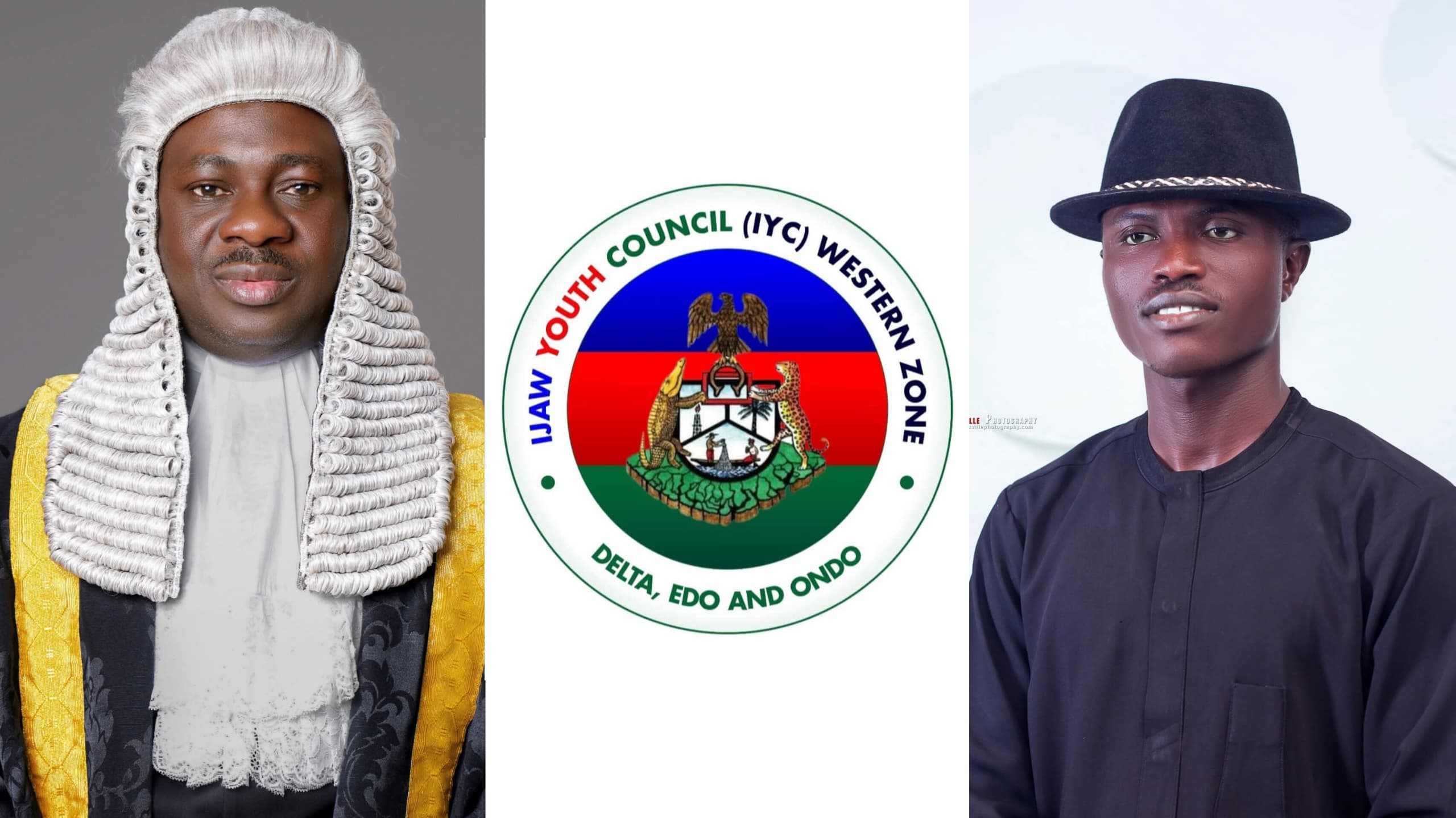
WARRI — The Ijaw Youth Council (IYC), Western Zone, has backed the Speaker of the Delta State House of Assembly, Rt. Hon. Emomotimi Dennis Guwor, over his recent assertion that Ijaws occupy six local government areas in Delta State, describing the claim as factual and widely acknowledged.
Guwor had made the statement during a gathering in Bomadi where Ijaw leaders hosted Delta State Governor, Sheriff Oborevwori. The event also featured the endorsement of President Bola Ahmed Tinubu and Governor Oborevwori as preferred candidates for the 2027 presidential and governorship elections by Ijaw stakeholders in the state.
The Speaker, while presiding over the adoption of a motion moved by Julius Pondi and seconded by Preyor Oboro, noted that the political stance reflected the position of Ijaws residing across six local government areas in Delta.
However, the comment has drawn criticism from sections of the Itsekiri ethnic nationality, who challenged the accuracy of the claim and described it as misleading.
Reacting to the controversy, the IYC Western Zone dismissed the criticisms, insisting that the Speaker’s statement aligns with demographic and political realities.
Speaking in Warri, the IYC Western Zone Information Officer, Tare Magbei, said the backlash was driven by political opposition and ethnic bias.
Magbei maintained that Ijaws have undisputed dominance in Burutu and Bomadi Local Government Areas, while constituting the majority population in Patani, Warri South-West, and Warri North, and maintaining a minority presence in Warri South.
He described attempts to discredit the Speaker as “deliberate efforts to misinform the public,” adding that the issue has been unnecessarily politicised due to the approaching election cycle.
According to him, “what the Speaker stated reflects the obvious realities known to residents of Delta State,” noting that stirring ethnic sentiments for political gain could undermine peaceful coexistence in the region.
The IYC spokesman further warned that disputing such claims could heighten tensions, emphasizing that the Ijaw people have historically demonstrated restraint and commitment to peaceful relations with neighbouring ethnic groups.
He urged political actors to prioritise issue-based engagement rather than what he termed campaigns of calumny targeted at public office holders, including the Speaker.
The development underscores growing political realignments ahead of the 2027 elections, as stakeholders across Delta State continue to position themselves within the broader dynamics of ethnic representation and electoral strategy.
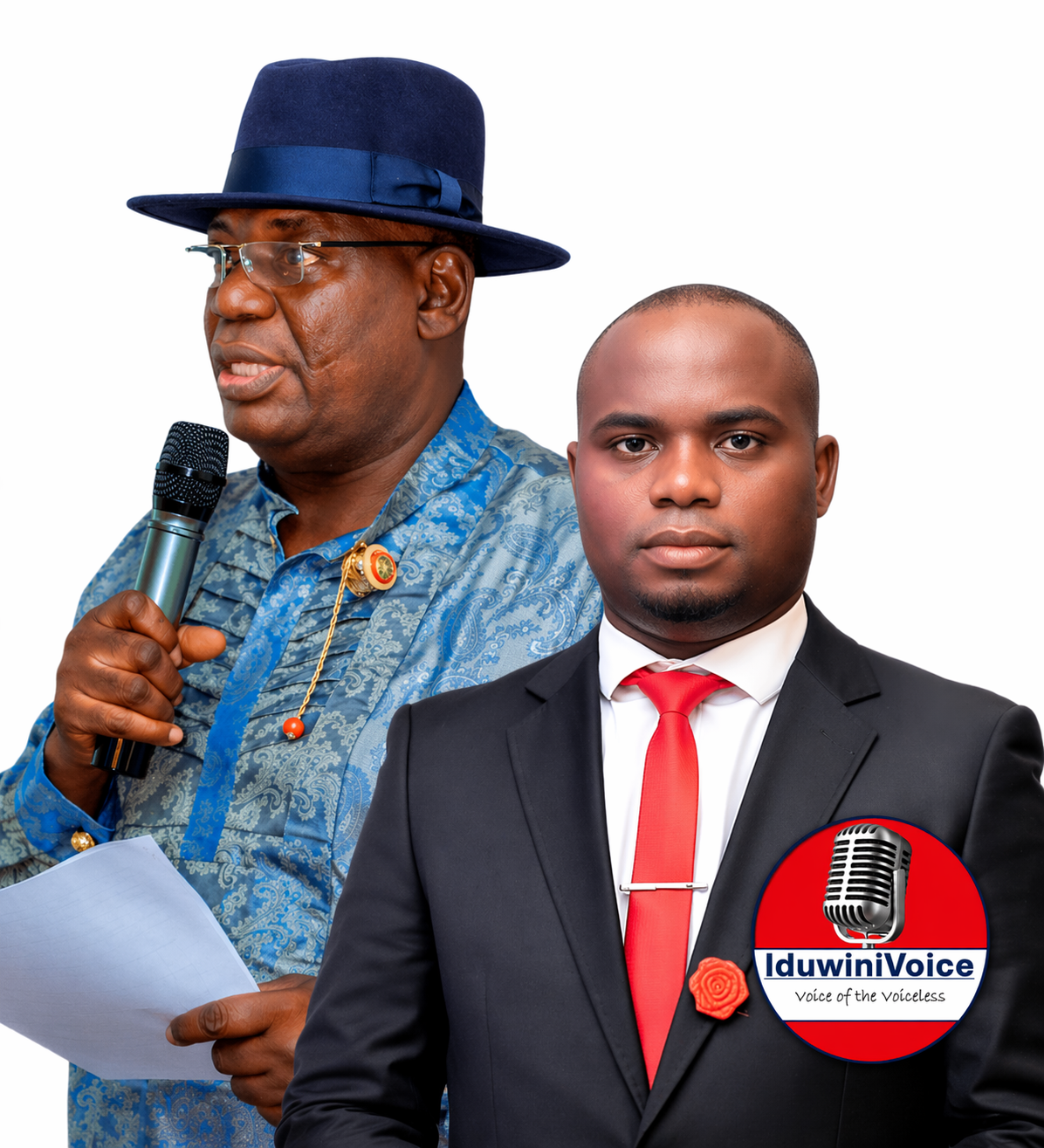
By Favour Bibaikefie
YENAGOA — IduwiniVoice Media Limited has lauded the leadership of Prof. Benjamin Okaba, outgoing President of the Ijaw National Congress (INC), for overseeing what it described as a historic and credible electoral process, with particular emphasis on the successful deployment of a fully electronic voting system.
In a congratulatory message signed by its Chief Executive Officer/Editor-in-Chief, Prince (Dr.) Peretengboro Klintin Bibaikefie, the media organisation commended Okaba for demonstrating “leadership, intellectual capacity and sagacity” throughout his tenure, noting that his insistence on conducting elections ahead of the constitutional deadline preserved the integrity of the council.
The statement stressed that the decision to avoid any form of interim or ad-hoc leadership structure “saved the Ijaw nation from a familiar pitfall that could have weakened its governance framework,” describing the move as a bold commitment to democratic principles.
Of particular significance, the organisation highlighted the introduction and execution of a fully electronic voting system, which it said marked a turning point in the conduct of internal elections within the Ijaw nation.
According to IduwiniVoice, Okaba’s “provision of necessary resources for the deployment of a totally electronic voting system is astutely exemplary,” adding that the process ensured transparency, efficiency, and credibility throughout the April 13, 2026 elections.
The media outfit further noted that the seamless conduct of the poll, characterized by real-time voting and result transmission, has set a new benchmark not only for socio-cultural organisations but also for national electoral bodies. It described the innovation as “a credible lesson” for the Independent National Electoral Commission (INEC), urging that such technology be scaled up and replicated in Nigeria’s general elections to enhance public trust and electoral integrity.
IduwiniVoice also used the opportunity to commend the peaceful transition process initiated by the outgoing leadership, noting that Okaba’s readiness to hand over power to a successor reflects a rare commitment to democratic values in a region where leadership continuity is often contested.
The statement added that, “in a world where privileged individuals often cling to power, Prof. Okaba has once again demonstrated that greed, selfishness, and sit-tight tendencies are not reflective of the true character of an Ijaw son.”
As the INC prepares for a new phase under incoming leadership, the organisation wished the outgoing president a smooth transition and success in his future endeavours, applauding his “true patriotism and unwavering service to the Ijaw nation.”
The April 13 election, widely regarded as one of the most technologically driven in the history of the INC, has continued to attract commendation from stakeholders across the Niger Delta, with observers citing the electronic voting model as a pathway for broader electoral reforms in Nigeria.
Editorial
Amaseikumor Festival: A Cultural Renaissance Rooted in Spiritual Heritage and Regional Influence
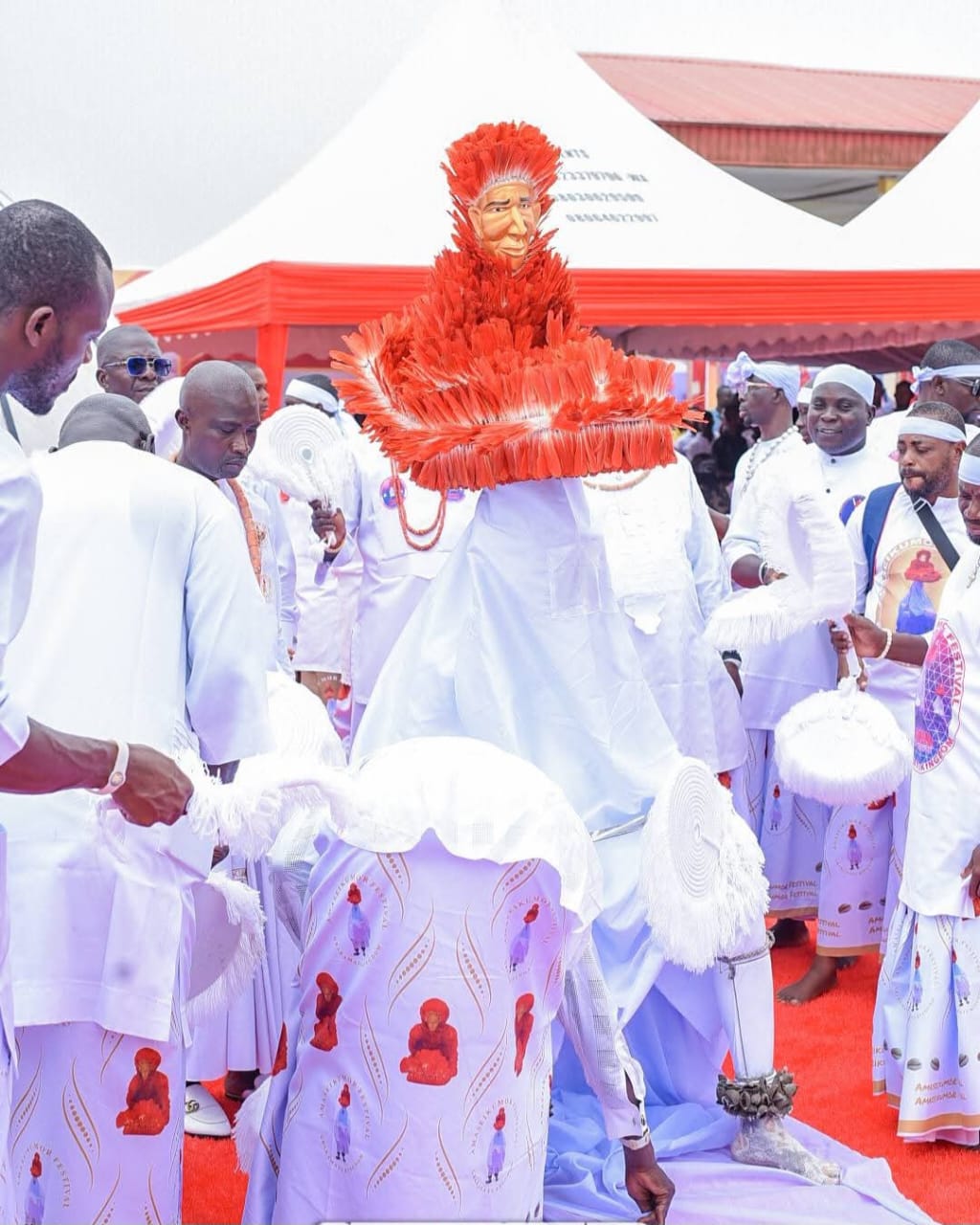
The grand finale of the 2026 edition of the Amaseikumor Festival, held on April 11 in the historic Ijaw city of Oporoza, once again reaffirmed the enduring relevance of cultural heritage as both a spiritual compass and a socio-economic catalyst. The week-long celebration, hosted in the traditional headquarters of the Gbaramatu Kingdom in Warri South West Local Government Area of Delta State, brought together a remarkable blend of tradition, spirituality, and modern influence.
For centuries, the Amaseikumor masquerade has stood as a profound symbol of Ijaw cosmology—representing purification, justice, and communal renewal. Its 2026 outing like every other, was not merely a festival but a reaffirmation of identity, echoing the deep-rooted sagacity and spiritual consciousness of the Gbaramatu kingdom and indeed, Ijaw people.
Cultural Significance Beyond Celebration
In recent years, the Amaseikumor Festival has evolved beyond a local cultural display into a major national and international attraction. It has significantly contributed to the resurgence of cultural tourism in the Niger Delta and beyond. Observers note that the festival aligns with broader efforts across Nigeria to preserve indigenous traditions while harnessing them for economic growth.
The masquerade, often described as “the cleanser of the Ijaw nation,” embodies a sacred mission. Its symbolic procession—accompanied by a subordinate “sweeper” masquerade—is believed to cleanse the land of negativity, including conflict, disease, and misfortune. This spiritual interpretation resonates strongly with adherents who view the festival as a divine intervention in societal affairs.
Convergence of Influence and Prestige
The 2026 edition witnessed an impressive gathering of dignitaries across sectors. Among notable attendees were the Governor of Delta State ably represented by his Deputy, Chief Monday Oyeme among many high-level dignitaries from the National Assembly, traditional institutions and more. It remains cogent on record that previous editions have attracted globally celebrated leaders like former Nigerian President Goodluck Jonathan, traditional rulers including His Imperial Majesty , Oba Enitan Ogunwusi, the revered Ooni of ancient Ife, political leaders, captains of industry, and globally recognized entertainers.
From the entertainment world, figures such as Davido and Nkem Owoh added glamour to the event, while business magnates and industry leaders underscored its economic relevance. This convergence of influence highlights the festival’s growing stature as a melting pot of culture, commerce, and leadership.
Spirituality and Socio-Economic Impact
Beyond the spectacle lies a deeply spiritual narrative that continues to shape the beliefs and aspirations of many. Devotees attribute personal and communal successes to the influence of the Amaseikumor tradition. Prominent figures such as Government Ekpemupolo, Dennis Otuaro, and Kestin Pondi are often cited as embodiments of the blessings associated with the cultural institution.
While such claims remain matters of faith, there is no denying the festival’s tangible contributions to local economies. Increased visitor inflow stimulates hospitality, transportation, and small-scale commerce, creating opportunities for residents and boosting regional visibility.
A Call for Sustained Cultural Investment and National Adoption
The Amaseikumor Festival stands as a compelling case for the preservation and promotion of indigenous heritage. As Nigeria continues to navigate “glocalization,” cultural assets like Amaseikumor offer a unique avenue for national branding, unity, and economic diversification. It is therefore a good time to call on the Federal Government through its Ministry of Culture and Tourism to adopt Amaseikumor as a “National Festival” taking advantage of not only its reach cultural brand but also the territorial ambience and serenity of the Niger Delta swamps and Atlantic coastlines to attract tourists from across the world.
Other stakeholders—state government, private sector, and cultural custodians—must therefore prioritize investment in infrastructure, security, and documentation to sustain and expand the festival’s impact. Proper structuring could elevate it to the status of globally recognized cultural festivals.
Road to Amaseikumor 2027
As the echoes of drums fade and the masquerade retreats into sacred seclusion, one message remains clear: Amaseikumor is more than a festival—it is a living tradition, a spiritual institution, and a beacon of cultural pride fro the blessedlyproud Ijaw people in general and the Gbaramatus in particular.
For those seeking authentic cultural reconnection, spiritual reflection, and a convergence of Nigeria’s finest across sectors, Oporoza remains an unmatched destination. With anticipation already building for the next edition, the legacy of Amaseikumor continues to grow—rooted in the past, thriving in the present, and poised for a global future.
Written by:
Prince (Dr.) Peretengboro Klintin Bibaikefie
Editor-in-Chief, IduwiniVoice