
News
Iduwini Voice Newspaper Makes Historic Debut at MBB Event Center.


By Warefa Pereke.
March 31, 2025.
Thousands of Dignitaries and Media Outfits Witnessed the Unveiling of Iduwini Voice Newspaper.
March 29, 2025, will be etched in the annals of history as the day Iduwini Voice Newspaper was officially launched at the prestigious MBB Event Center. The highly anticipated event, drew thousands of dignitaries, media personalities, and enthusiasts from across the region to MBB event Center, Refinery Road Effurun, Delta State.
The launch ceremony, which commenced at 11:00 am, was a testament to the meticulous planning and organization of the Media team. The MBB Event Center was transformed into a vibrant hub of activity, with attendees eagerly awaiting the unveiling of Iduwini Voice Newspaper.
In his welcome address, The Editor-in-Chief and CEO of Iduwini Voice Newspaper, Dr. Peretengboro Clintin Bibaikefie, outlined the publication’s vision and mission, emphasizing its commitment to factual reporting, balanced analysis, and investigative journalism.
“Permit me to say that the idea of Iduwini Voice stemmed from a revolutionary vision that tasked me heavily in a deep ‘wilderness of the mind,’ thronging hard to come up with a catchy, fancy, and contemporary brand name, but kept being guided back to my root…For too long, our stories have been told by others – often with bias, misrepresentation, or outright immission, often intended to manipulate the powers that be against us Africans, Nigerians, Niger Deltans, and Ijaws in particular. The Iduwini Voice was founded on the principle of authenticity, truth, and empowerment. We believe that everyone has a story to tell, but not everyone has the platform to tell it. This is why we boldly adopted the slogan: “Voice of the Voiceless.””
“We will strive to provide our readers with accurate, timely, and engaging content, while also promoting the values of fairness, justice, and equality,” he said.
In his lecture delivered at the occasion of Iduwini Voice Newspaper/TV launch, entitled: “The Digital Tide And The Upsurge of Avant-Garde Journalism”, Professor Benedict Ebimotimi Binebai explored the remarkable journey of Iduwini Voice Newspaper and its impact on the media world. “Iduwini Voice delves into the vision of creativity and innovation that have made it a beacon of Avant-Garde storytelling. Iduwini Voice brings stories from the grassroots, amplifying the voices of marginalized communities. It helps to preserve the cultural heritage and traditions of the Niger Delta region, and conducts in-depth investigations into issues like corruption, human rights abuses, and environmental degradation,” he said.
In his keynote address, The Father of the Day, Professor Benjamin Ogele Okaba, President Ijaw National Congress, said that as the Ijaw Nation demonstrates its dedication to the development of the media industry, Iduwini Voice Newspaper will become a leading voice in Nigerian journalism, promoting transparency, accountability, and good governance.
The chief Launcher, Chief Dr. Julius Takeme JP (Phd), The Olotu of Obotebe Kingdom, and Chairman, Burutu Local Government Council, pressed on the need for the Ijaws to support any Ijaw cause financially and otherwise. “We are proud to launch Iduwini Voice Newspaper, a platform that will provide a voice for the voiceless, promote transparency, and hold leaders accountable,” he stated.
Chief Comrade Cheriff Mulade, Director-General, Center For Peace and Environmental Justice (CEPEJ), who Chaired the occasion, emphasized the importance of a free and independent press in promoting democracy and good governance. He expressed his commitment to supporting the growth and development of the media industry in Niger Delta.
The event featured a range of activities, including a discussion on the role of the media in promoting democracy, a presentation on the history and significance of Iduwini Voice Newspaper, and a tour of the publication’s state-of-the-art facilities.
As the curtains drew to a close with a vote of thanks offered by Barrister Sam Ikporukpo, attendees were treated to a spectacular display of music, dance, and other performances, showcasing the rich diversity of the Niger Delta region.
Other dignitaries present were Pastor Adonis Osarobo, the Zonal Pastor of the Redeemed Christian Church of God, Later Rain Zone, Spiritual Father of the Day, Hon. Julius Pondi, Chairman of the House Committee on Environment & Member Representing Burutu Federal Constituency, House of Representatives, Abuja, Comrade Newworld Endoro, Chairman, Odimodi Community, Hon. Dennis Yenbri Bibaikefie, Mr. Akin Benikrukru, PIA Chairman, Iduwini Host Community Development Board, Delta State.
Others were Comrade Isaiah Tamaraunimi Ingo, SA to the NDDC Chairman, Comrade Ozobo Austin,
Publisher of Cogress Newspaper & President, Ijaw Publishers’ Forum (IPF), Mr. Cletus Opukeme,
Publisher of Daily Watch Newspaper,
Also present were Arex Ambrose Akemotubo, CEO, WaffiTv & Auditor of Delta State PDP, Jacobs Brakere Abai, CEO of Gbaramatuvoice, Comrade Mike Ugedi, CEO of Delta Events Tv,
Ekpegha Tamaraupreye,
Publisher of South-South Daily, and a host of others.
In an interview with Media personnel after the lunching, the Editor-in-chief of the Ezon Efie Media outfit, Engr. Warefa Pereke, said that with its lunch, Iduwini Voice Newspaper has set a new standard for journalism in Nigeria, and its commitment to truth, fairness, and accountability is expected to resonate with readers across the Nigeria”.
PHOTO CAPTION: Dignitaries and guests at the launch of Iduwini Voice Newspaper at the MBB Event Center on March 29, 2025.
News
The Legendary Ikoli’s Legacy Rekindled as Eselemo Highlights Ijaw Roots of Nigerian Journalism at IPF Inauguration
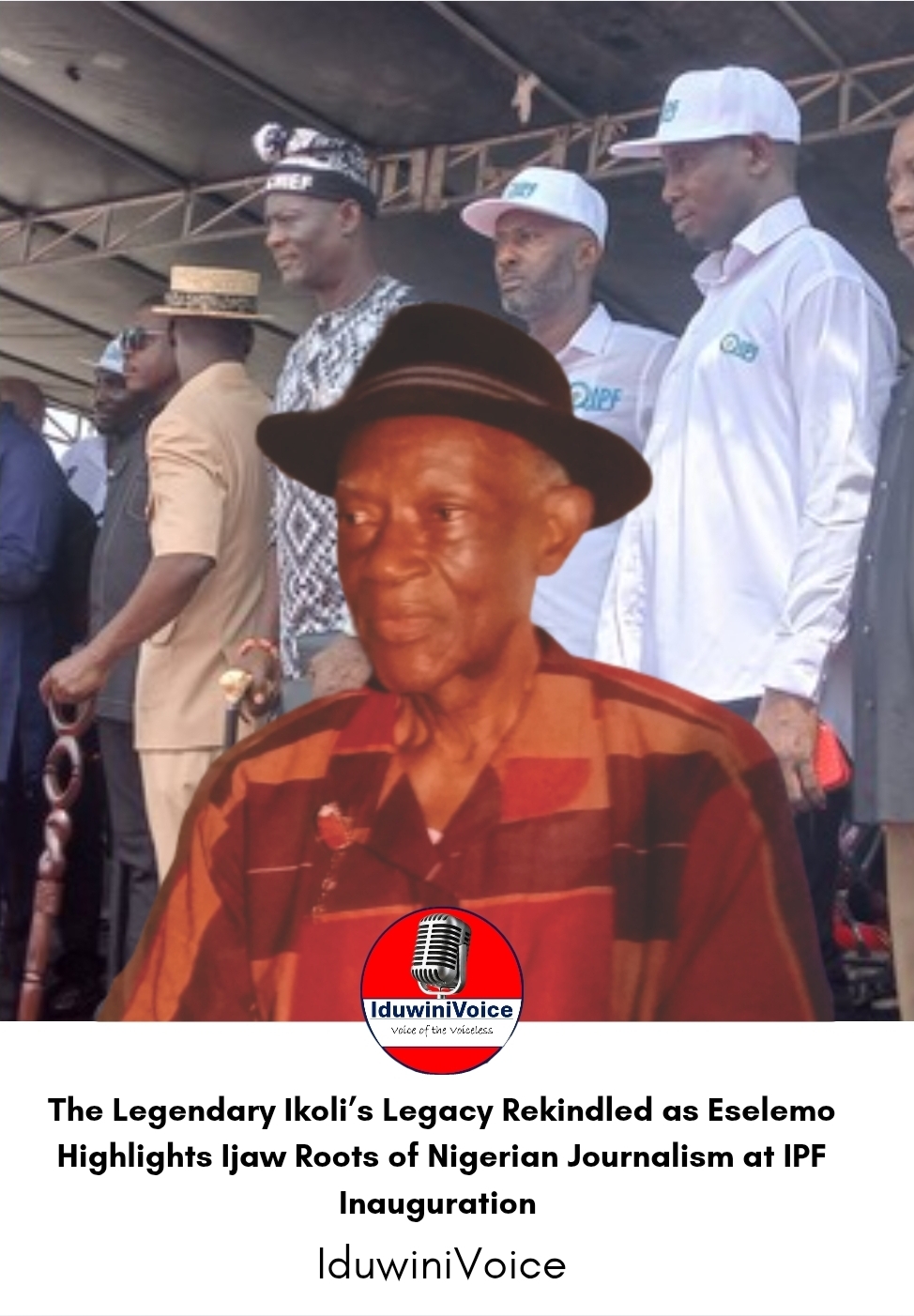
By Favour Bibaikefie
WARRI — The enduring legacy of Ernest Sisei Ikoli took centre stage last Thursday in Warri as prominent Ijaw leader, Prince Collins Eselemo, a politician, foremost Ijaw nationalist and an advocate for Resource Control, declared that Nigerian journalism was built on foundations laid by Ijaw pioneers.
Speaking at the inauguration of the new National Executive Council of the Ijaw Publishers’ Forum (IPF), Eselemo asserted that the history of journalism in Nigeria cannot be told without acknowledging Ikoli’s towering contributions.
Ikoli, born in 1893 in Twon-Brass, present-day Bayelsa State, is widely recognised as one of the founding figures of modern Nigerian journalism. He became the first editor of the Daily Times of Nigeria in 1926, shaping public discourse during the colonial era through bold editorials and nationalist advocacy.
At the IPF second inauguration ceremony held last week at Ogbe-Ijoh, Warri, Eselemo maintained that Ikoli’s role in the nationalist struggle and media development underscores what he described as the intellectual heritage of the Ijaw people. He noted that Ikoli’s early association with John Payne Jacksonat the Lagos Weekly Record helped sharpen a nationalist press culture that later influenced a generation of political leaders.
Historical records show that Ikoli founded The African Messenger in 1921 before later editing The Daily Service, the mouthpiece of the Nigerian Youth Movement (NYM), which he co-founded alongside Hezekiah Oladipo Davies and J.C. Vaughan. The NYM later attracted nationalist figures including including Nnamdi Azikiwe and Obafemi Awolowo.
As president of the NYM, Ikoli was elected into the Legislative Council in 1942 and 1946, where he advocated educational reforms and greater Nigerian representation in governance. His philosophy of “one Nigeria, one Africa, one destiny” reflected a pan-African outlook that transcended ethnic lines.
Eselemo’s remarks at the IPF ceremony come amid renewed conversations about the contributions of minority ethnic groups to Nigeria’s political and media history. He urged contemporary publishers to emulate Ikoli’s courage, professionalism and commitment to truth.
Ikoli was awarded the Officer of the Order of the British Empire (OBE) in 1954 and lived to witness Nigeria’s independence on October 1, 1960, before passing away weeks later on October 21.
Today, his memory is preserved through scholarly works, the Bayelsa State “Earnest Ikoli Press Centre, and the Ernest Sisei Ikoli Foundation in Lagos, reinforcing Eselemor’s argument advanced in Ogbe-Ijoh, Warri — that the story of Nigerian journalism remains incomplete without acknowledging its Ijaw pioneers.
News
Ajapa Field MOU: Ogulagha Stakeholders Call for Review, Transparency and Alignment with Current Realities

By Charity Ebi
OGULAGHA, DELTA STATE — Nearly two decades after a Memorandum of Understanding (MOU) was signed between Britannia-U Nigeria Limited and Ogulagha Kingdom in Burutu Local Government Area, stakeholders in the oil-bearing community are calling for a comprehensive review of the agreement to reflect present-day economic and industry realities.
The 2007 MOU, tied to operations at the Ajapa Marginal Field, was introduced as a framework for peace, development and mutual benefit. However, community representatives say that while the agreement may have appeared workable at inception, its fixed financial structure has been overtaken by inflation, rising oil revenues and evolving governance standards within Nigeria’s petroleum sector.
Addressing journalists on behalf of stakeholders, Mr. Jude Iyelagha stressed that the concerns being raised should not be misconstrued as an attack on the integrity of Ogulagha’s traditional or political leadership.
“This is not an attempt to indict or insult the credibility of our revered leaders,” Iyelagha clarified. “Rather, it is an encouragement for leaders to revisit the well-documented terms, review them in line with current realities, and ensure they are fully implemented for the benefit of our people.”
Modest Provisions, Expanding Industry
Under the MOU, provisions reportedly included annual allocations for community drugs, scholarships for secondary and tertiary students, training slots at the Petroleum Training Institute (PTI), allowances for trainees, incentives for science teachers and sitting allowances for kingdom committee meetings.
While these figures may have been considered reasonable in 2007, stakeholders argue that their real value has significantly diminished over time due to inflation. Crucially, the sums were fixed and not indexed to oil prices, production output or inflationary trends.
Using conservative production estimates common to marginal fields in the Niger Delta, observers note that annual gross revenues from such operations could run into tens of billions of naira. When juxtaposed with community allocations that reportedly totalled only a few million naira annually at inception, the proportional disparity becomes a central point of concern.
For residents, the issue is less about confrontation and more about fairness.
Development Expectations in a Resource-Rich Area
Ogulagha Kingdom remains one of the oil-producing hubs in Delta State. Yet stakeholders point to ongoing challenges including limited healthcare facilities, youth unemployment, fragile road networks, environmental vulnerability and constrained access to higher education funding.
Community leaders argue that development in oil-bearing areas should translate into tangible infrastructure such as modern health centres, shoreline protection projects, potable water systems, vocational training hubs and structured employment pipelines.
“The frustration is not hostility towards investment,” a stakeholder noted. “It is about proportionality and visible impact.”
Shareholding Claims and Transparency Concerns
Beyond the MOU, a more complex issue has emerged. Leaders within the kingdom assert that Ogulagha may not only be a host community but also a registered shareholder in the Ajapa Marginal Field structure, allegedly documented with the Corporate Affairs Commission.
If such shareholding exists, corporate law provides for certain rights, including access to audited financial statements, notice of Annual General Meetings and entitlement to dividends where declared.
Stakeholders claim that consistent access to production data, audited accounts and dividend clarity has not been fully established, raising questions about governance participation.
Again, Iyelagha emphasised that the intention is not to cast aspersions.
“We believe in dialogue and institutional engagement. What we are asking for is clarity, transparency and alignment with statutory expectations where applicable,” he said.
Petroleum Industry Act and Changing Standards
Analysts observe that the Petroleum Industry Act (PIA) has introduced more structured host community frameworks and governance mechanisms. Agreements executed before the reform era, they argue, may require review to align with contemporary standards of transparency and proportionality.
Stakeholders maintain that revisiting the 2007 framework would not only protect the long-term interests of the kingdom but also strengthen investor-community relations.
Company Response Awaited
Efforts to obtain official comments from Britannia-U Nigeria Limited were unsuccessful at the time of filing this report. The company’s response, when received, will be reflected in subsequent updates.
For now, the central appeal from Ogulagha stakeholders is measured and deliberate: a call for leaders to examine documented agreements, align them with present realities, and ensure that promises made translate into visible, sustainable benefits for the kingdom.
As one community voice put it, “Oil is finite, but our people and our future must endure.”
By Favour Bibaikefie
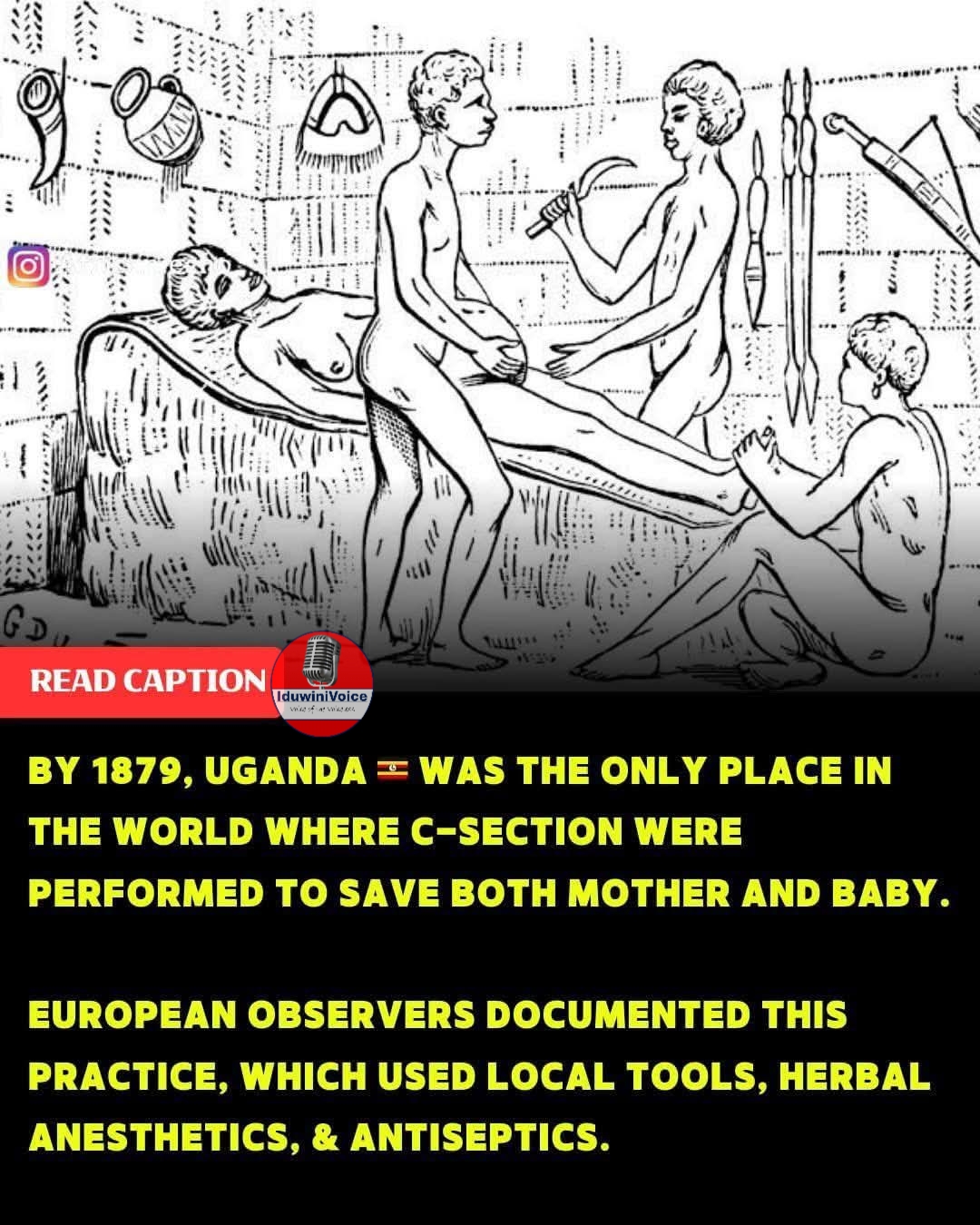
Historical medical records have revealed that indigenous surgeons in the Buganda Kingdom of present-day Uganda were successfully carrying out cesarean sections as early as 1879 — a period when the procedure was still considered highly risky in many parts of Europe.
The account was documented by British medical practitioner and explorer Robert William Felkin, who witnessed and later published details of the operation in the Edinburgh Medical Journal in 1884 under the title “Notes on Labour in Central Africa.”
According to Felkin’s observations, the procedure involved the use of banana wine as a cleansing agent, herbal preparations to manage pain, and cauterization with heated metal to control bleeding. Both mother and child reportedly survived the surgery — an outcome that drew significant attention from European medical circles at the time.
Felkin described the process as orderly and deliberate, noting that the practitioners demonstrated familiarity with anatomy, sterilization methods available to them, and post-operative care. The documentation challenged prevailing 19th-century assumptions that advanced surgical knowledge was absent in African societies before colonial contact.
Medical historians note that cesarean sections in Europe during the mid-1800s were often fatal due to infection and limited antiseptic knowledge. Antiseptic surgical techniques only became widely accepted in Europe toward the late 19th century following developments associated with figures such as Joseph Lister.
Scholars argue that the Buganda example illustrates a broader pattern of indigenous scientific knowledge that predated colonial rule. In his work, historian highlighted the complexity of African societies prior to European intervention, disputing narratives that framed the continent as lacking innovation or structured knowledge systems.
Experts say the 1879 account underscores the need for a more balanced historical perspective — one that acknowledges Africa’s contributions to medicine, technology, and empirical science long before formal Western medical institutions expanded into the continent.
The rediscovery and renewed discussion of such records continue to prompt debates about how global scientific history is written — and whose knowledge systems are recognized.
Source: African Echo