Editorial
KING CHARLES III AND HOPE OF A NEW ERA.

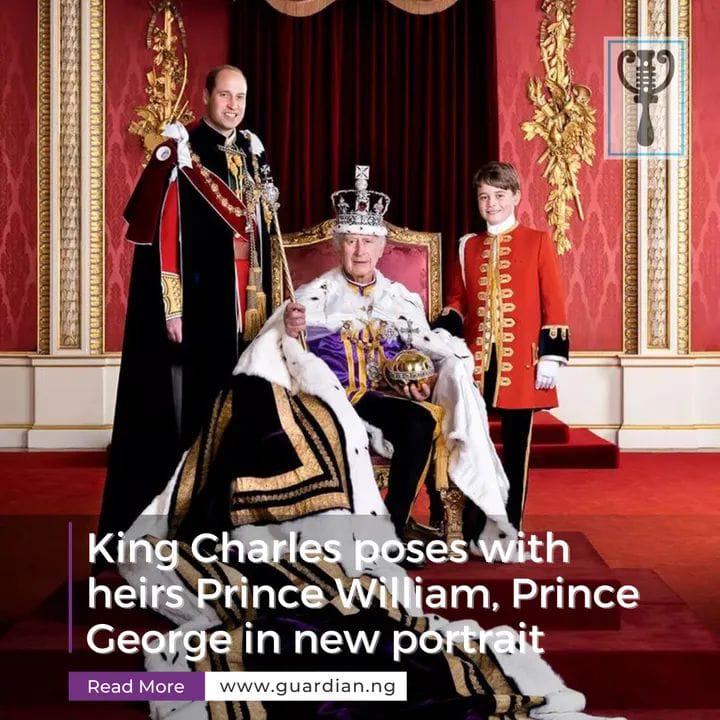
By: Godknows Igali
Reminiscent of the time of his forebear, William the Conqueror in 1066 till modern era, Great Britain’s monarch, King Charles III, was coronated in the same Westminster Abbey in Central London on Saturday, April 6, 2023. Accompanied by perhaps one of the most colourful military parades ever seen in modern history, the new British sovereign mounted the 700 years old throne; grotesquely seating atop a not too Christianly “stone of destiny”. Although, Nigeria’s President Muhammadu Buhari was amongst 2200 royals and world leaders invited to join the show-off of pageantry and opulence at the medieval era church, which interestingly is also a graveyard of some of humanity’s most impactful persons, for the first time, millions of people around the world watched the ancient religious ceremonials.
2. The last time when a king, being his grandfather, King George VI, was coronated in same venue was in 1936 and the realm was an empire, perhaps the largest political dominion in the world of that day. But during the seventy years reign of his mother, Queen Elizabeth II, that great political entity splintered into at least fifty-six independent nations now held tenuously together by a loose contrivance of sorts known as ‘The Commonwealth of Nations’. So today, King Charles is coronated over a lonesome United Kingdom, safe for few voluntary dependencies which still owe direct fealty to the crown atop his head.
3. The question on the minds of diplomats and global watchers, therefore, is what lies beyond the rather idealistic ceremonials and pomp. That is, what does this royal ascension holds for Great Britain, which by all sums is still a great world power, and for the wider human community. This is more especially, as his mother enjoyed tremendous respect and weight on virtually every area of human experience and reality during her long reign.
PRIMAEVAL REFLECTIONS RECALLED
4. At the passing of the last British monarch, Queen Elizabeth 11, we had in a piece in October 2022, entitled “Why the World Stood Still for Elizabeth,” auspicated on the times that lie ahead.
5. Amongst other things, we had stated inter alia:
“The removal of the crown and sceptre
as well as the orb which were atop the Queen’s casket at the final commendation service at Windsor Castle signified the fact that it was totally over with her”.
“However, this in no way signifies the end of the seeming British imperial hold around the world, as dim as it may be”.
“No doubt that, at the age of 73 years (now 74 years), King Charles III is well prepared for the job; as he had the privilege to be tutored not only by his mother, by his father, Prince Philip and grandmother, Queen Mother, Mary. Furthermore, he was one of the first royals ever to obtain formal university education as he graduated from the University of Cambridge and also served in the Air Force and Navy, rising to very top levels”.
*”His entire life had been a product of protocol, regimentation, and confined preparations for rulership and leadership”.*
“However, the new king is also a man of his own mind. Perhaps due to his training in history and archaeology, he has also shown great interest in the conservation of historical monuments and architecture. Even more astounding is his work on the environment as he became a global champion for conservation, biodiversity, and fight against climate change and supported such non-classical interest as support for homoeopathy and alternative medicine”.
6. Indeed we had also stated further:
“Despite these modernist credentials, some continue to hold the view that his role as a monarch would be obscured by his mother’s long and celebratory rule, which had received the best of global appreciation”.
“Domestically, the royal family has its own bits of negative appreciation, particularly from so-called anti-monarchists, liberals and republicans, including many who posit that the monarchy is anachronistic and a drain to tax payers. Besides that, the British royal family with all its enormous wealth, which the Forbes Magazine places at $28 billion, is exempt from payment of taxes”
“But then, others argue that besides its symbolic worth, which makes it the centre point of British identity, the existence of the royal family and the monarchy is a major income earner for Britain. Indeed, some argue that, on average, the royal family rakes in about £2 billion earnings from tourism annually”.
7. Our conclusion then was that:
“Whatever the case, King Charles, who is known for his reformist ideas, seems to have started touching the right chords by his display of candour and leadership during the ceremonies leading to his mother’s interment. The openness and modernist twist to the hitherto ancient rites foretell a disposition towards formal modernisation of the monarchy to be in tune with what the public and the entire world want to see in the new dawn”
“Of particular note, King Charles III has to think of pragmatic strategies and personal charm to continue to keep the Commonwealth together. More importantly, maintain the titular headship of the other independent countries, especially in the Caribbean where his mother was Head of State and seem poised to follow the Barbados example, which in 2021, shook off the colonial hangover”. (Igali:2022)
PEEP INTO TOMORROW
8. On Coronation Day, the visuals of temporal power such as the orb, the sceptre and the three hundred and sixty years old St Edwards Crown, all of which were taken away at the last minute before his mother was intered were returned back to King Charles. Thus, symbolising his full imbuement with all human power, allowed by the laws of his country. Perhaps foreseeing his great responsibilities ahead, he had said as part of the ceremonials the words, which by the way never existed in the past, “I come not to be served, but to serve.
9. Though his powers are largely honorific, there is no doubt that his influence on both domestic and world affairs is enormous. It is therefore more likely that this new king who is an undisputed primus inter pares amongst world leaders will bare his fangs in various thematic issues more decidedly than his predecessors.
10. Domestically, he will have to evolve the right stratagems for containing a small but rising wing of anti-monarchy movement, all of which were sufficiently visible during the coronation extravaganza. Similarly, amongst other members of the Union, that is Scotland, Northern Ireland and Wales, the political movement and notions advocating for sovereign states continue to assume a skyward drift. This has to be handled with great swerve and tact in other to keep the house together.
11. However, following the recent decision of Barbados which transitioned to a Republic on 30th November, 2021, and existing moves by others such as Belize to follow suit, the new King has to work harder to maintain the status quo which confers a lot of prestige on his country’s fading imperial status. In the rest of the realm, there is equal amount of agitation for breakaway by the other sixteen sovereign states such as Jamaica, Antigua and Barbuda, Australia, St Vincent and the Grenadines and others where the king will still be titular Head of State. Perhaps if the new King smells the coffee right, he may draw parallels with his late mother experience. Her inheritance on coronation day was a big empire but confronted by a fervour for decolonisation, she timeously yielded to grant independence to all who so desired.
12. For the rest of the Commonwealth, King Charles will need to adopt needed paternalistic outlook to keep this important, symbolic gathering knit and together into the future. At a time of great demand for common global citizenry, there will be the need to put a human face to the Commonwealth by making its constituent populations, some of whom are amongst the world’s poorest, have more beneficial lure. So beyond sports, cultural exchanges and high-level political interactions, other areas that pertain to social welfare, i.e. health, sanitation, fight against hunger and poverty as well as preferential entry access in terms of visas for qualified persons could be given more accent, Certainly these will ignite in a more profound manner, renewed spirit of common destiny.
13. The King assumes reign at a time that is also very much akin to when his mother found herself in the same role. In her case, it was season of “Cold War” and “Détente”; defined by tension and strained nerves between the super powers. The geo-strategic space is no less certain nowadays. For one, the war in Ukraine which is a major snare on modern civilization, still remains inflamed. Similarly, the relative ease in East-West rivalry which had occurred in the past 40 years and created a propitious atmosphere for more enthusiastic global discourse and engagement, now seems to be degenerating back to antimony and contention. So, there will be a great moral burden on the King as it was at the time of his mother to lend some level of quiet persuasive leverage for dialogue, and greater resort to harmonised thoughts.
14. This is same with respect to the various problematic themes such as climate change, fight against poverty and the question of human migration; all of which the King had previously shown particular interest and engrossment. Also gaining incandescent proportion is the question of uproar over so-called atrocious legacy of British colonial adventures. In some cases, there are rather chivalrous demands for reparations. Not that all these are new, but the progress in knowledge dissemination have helped to accentuate their importance. Needless *to* rehash that and other matters would compete for the new King’s attention
15. While all join to herald “God save the King”, what is certain is that, like rains which come just before spring, many await, that the reign of King Charles’ would be a harbinger for a safer, happier and prosperous world for all.

Editorial
Amaseikumor Festival: A Cultural Renaissance Rooted in Spiritual Heritage and Regional Influence
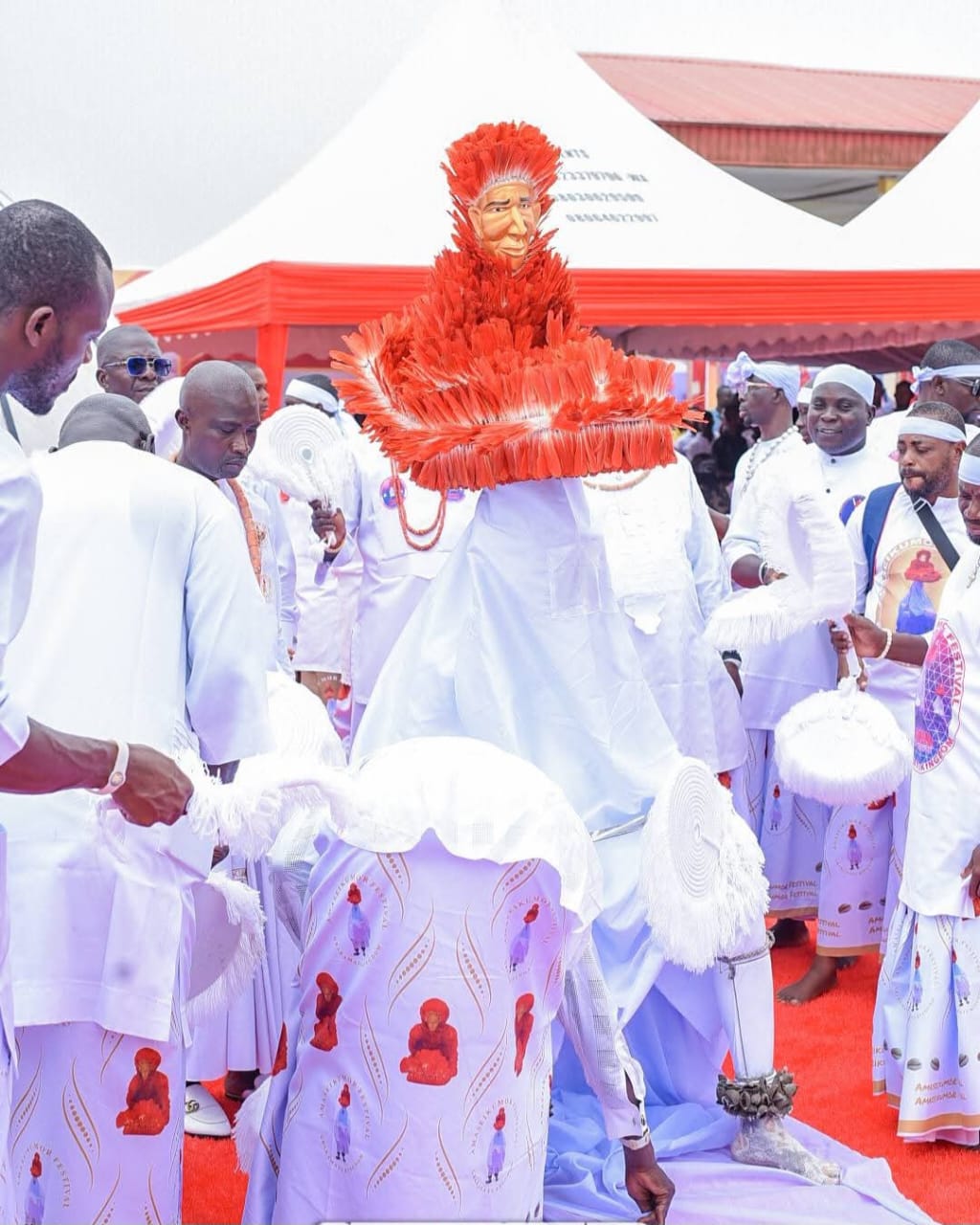
The grand finale of the 2026 edition of the Amaseikumor Festival, held on April 11 in the historic Ijaw city of Oporoza, once again reaffirmed the enduring relevance of cultural heritage as both a spiritual compass and a socio-economic catalyst. The week-long celebration, hosted in the traditional headquarters of the Gbaramatu Kingdom in Warri South West Local Government Area of Delta State, brought together a remarkable blend of tradition, spirituality, and modern influence.
For centuries, the Amaseikumor masquerade has stood as a profound symbol of Ijaw cosmology—representing purification, justice, and communal renewal. Its 2026 outing like every other, was not merely a festival but a reaffirmation of identity, echoing the deep-rooted sagacity and spiritual consciousness of the Gbaramatu kingdom and indeed, Ijaw people.
Cultural Significance Beyond Celebration
In recent years, the Amaseikumor Festival has evolved beyond a local cultural display into a major national and international attraction. It has significantly contributed to the resurgence of cultural tourism in the Niger Delta and beyond. Observers note that the festival aligns with broader efforts across Nigeria to preserve indigenous traditions while harnessing them for economic growth.
The masquerade, often described as “the cleanser of the Ijaw nation,” embodies a sacred mission. Its symbolic procession—accompanied by a subordinate “sweeper” masquerade—is believed to cleanse the land of negativity, including conflict, disease, and misfortune. This spiritual interpretation resonates strongly with adherents who view the festival as a divine intervention in societal affairs.
Convergence of Influence and Prestige
The 2026 edition witnessed an impressive gathering of dignitaries across sectors. Among notable attendees were the Governor of Delta State ably represented by his Deputy, Chief Monday Oyeme among many high-level dignitaries from the National Assembly, traditional institutions and more. It remains cogent on record that previous editions have attracted globally celebrated leaders like former Nigerian President Goodluck Jonathan, traditional rulers including His Imperial Majesty , Oba Enitan Ogunwusi, the revered Ooni of ancient Ife, political leaders, captains of industry, and globally recognized entertainers.
From the entertainment world, figures such as Davido and Nkem Owoh added glamour to the event, while business magnates and industry leaders underscored its economic relevance. This convergence of influence highlights the festival’s growing stature as a melting pot of culture, commerce, and leadership.
Spirituality and Socio-Economic Impact
Beyond the spectacle lies a deeply spiritual narrative that continues to shape the beliefs and aspirations of many. Devotees attribute personal and communal successes to the influence of the Amaseikumor tradition. Prominent figures such as Government Ekpemupolo, Dennis Otuaro, and Kestin Pondi are often cited as embodiments of the blessings associated with the cultural institution.
While such claims remain matters of faith, there is no denying the festival’s tangible contributions to local economies. Increased visitor inflow stimulates hospitality, transportation, and small-scale commerce, creating opportunities for residents and boosting regional visibility.
A Call for Sustained Cultural Investment and National Adoption
The Amaseikumor Festival stands as a compelling case for the preservation and promotion of indigenous heritage. As Nigeria continues to navigate “glocalization,” cultural assets like Amaseikumor offer a unique avenue for national branding, unity, and economic diversification. It is therefore a good time to call on the Federal Government through its Ministry of Culture and Tourism to adopt Amaseikumor as a “National Festival” taking advantage of not only its reach cultural brand but also the territorial ambience and serenity of the Niger Delta swamps and Atlantic coastlines to attract tourists from across the world.
Other stakeholders—state government, private sector, and cultural custodians—must therefore prioritize investment in infrastructure, security, and documentation to sustain and expand the festival’s impact. Proper structuring could elevate it to the status of globally recognized cultural festivals.
Road to Amaseikumor 2027
As the echoes of drums fade and the masquerade retreats into sacred seclusion, one message remains clear: Amaseikumor is more than a festival—it is a living tradition, a spiritual institution, and a beacon of cultural pride fro the blessedlyproud Ijaw people in general and the Gbaramatus in particular.
For those seeking authentic cultural reconnection, spiritual reflection, and a convergence of Nigeria’s finest across sectors, Oporoza remains an unmatched destination. With anticipation already building for the next edition, the legacy of Amaseikumor continues to grow—rooted in the past, thriving in the present, and poised for a global future.
Written by:
Prince (Dr.) Peretengboro Klintin Bibaikefie
Editor-in-Chief, IduwiniVoice
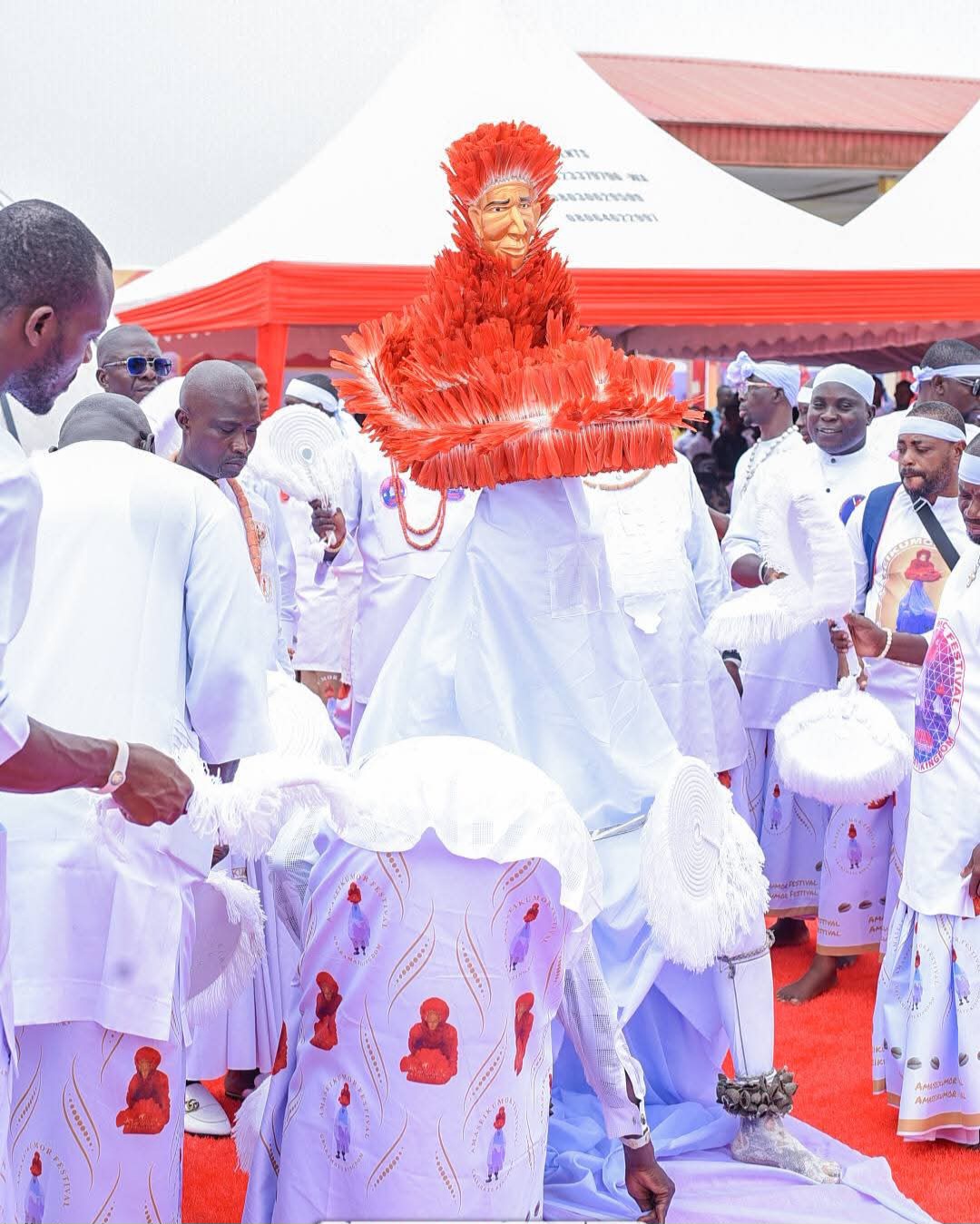
By Ben. Binebai
The Amaseikumor Festival is a magnificent tapestry of tradition, a veritable confluence where the sacred and the secular entwine in exquisite harmony. It is, in its quintessence, a festival of purity—an unblemished rite that scours the soul of the land. It is a festival of culture, wherein the ancient cadences of our forebears find renewed utterance; a festival of spiritual rejuvenation, where weary spirits are anointed anew at the altar of ancestral grace.
Amaseikumor is a festival that has its megastar hanging and shinning brighly in the sky, a festival of peace, of unity, and of prosperity—a trinity of virtues that, like a masterfully composed triad, adorns the communal soul. It is a festival of love and fraternity, a luminous bridge between man and the legendary animist beings who, from time immemorial, have watched over our creeks and forests. Indeed, it erects intertidal bridges—linking epochs, lineages, and realms—whilst standing as a clarion of cultural affirmation and religious awakening. Here, the covenant betwixt mortals and the divine is not merely remembered but vivified; a healthful and functional communion with the gods is both established and exalted.
The festival bears the imprimatur of the heavens, most memorably during its revival years. In the wondrous year of 2018, when I was accorded the rare and humbling privilege of delivering a lecture, the firmament itself bore witness: thunder intoned its celestial approbation, the heavens darkened in reverent solemnity, and delicate droplets—veritable tears of divine joy—descended upon the congregants. That epiphanic moment was greeted with an impromptu Ogele, as the gallant youths of Gbaramatu, moved by an ecstasy beyond articulation, gave voice to the rapture of the land.
As the parent festival of Gbaramatu, Amaseikumor is not merely a ritual observance; it is a living vestige heritage, a guiding star of identity, and a festival imbued with prodigious tourism potential. To behold it is to witness culture in its most numinous and unadulterated form—a grand pageant where myth, memory, and modernity dance in perennial embrace.
By: Editorial Team
The United Arab Emirates (UAE), often hailed as a beacon of modern development in the Middle East, is a federation of seven emirates—each with its own distinct history, ruler, and cultural identity. Since its unification in 1971, the UAE has stood as a rare example of how traditional monarchies can collaborate to build a stable and globally respected nation.
At the heart of the federation lies Abu Dhabi, the capital and largest emirate, known for its vast oil wealth and political influence. The Al Nahyan family, which leads Abu Dhabi, has played a central role in shaping the UAE’s national vision and foreign policy. The current President of the UAE traditionally comes from this emirate, underscoring its leadership within the union.
Dubai, the shining star of the federation, represents ambition and innovation. Under the leadership of the Al Maktoum family, Dubai has transformed from a desert outpost into a global hub for finance, tourism, and technology. Its breathtaking skyline, led by the Burj Khalifa, has become a symbol of Arab progress and resilience.
Moving beyond the two powerhouses, Sharjah distinguishes itself as the cultural and educational capital of the UAE. Led by the Al Qasimi family, it has preserved the emirates’ artistic heritage while promoting academic excellence through its numerous universities and museums.
The smaller emirates-Ajman, Umm Al-Quwain, Ras Al Khaimah, and Fujairah-each add unique character and strength to the federation. Ajman, the smallest, thrives on trade and manufacturing; Umm Al-Quwain offers a peaceful charm along its quiet shores; Ras Al Khaimah, nestled against the Hajar Mountains, is known for its natural beauty and growing industrial base; and Fujairah, facing the Gulf of Oman, plays a strategic maritime role in the region’s economy.
Despite their differences in size and resources, the seven emirates remain bound by shared values, mutual respect, and visionary leadership.Their collective success story reflects not only unity but also the ability to balance tradition with progress.
Over five decades after its founding, the UAE continues to prove that cooperation among monarchies can yield a modern, forward-looking state-one that honors its past while boldly stepping into the future. The federation’s model of governance offers an enduring lesson in leadership, stability, and nation-building in a region often defined by division.
Photo Credit: shuterstock