
News
Full Speech as Gov. Diri Present 2025 Budget

By Admin
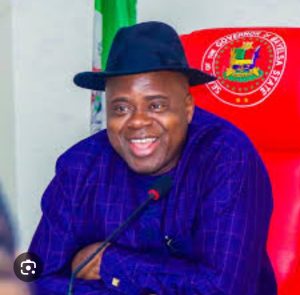
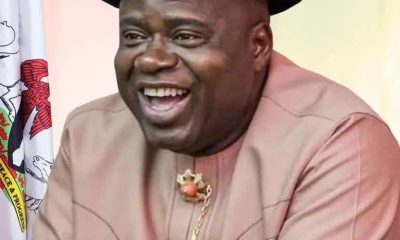
The Governor of Bayelsa State, Sen. Douye Diri has presented the 2025 appropriation bill to the Bayelsa State House Assembly. Read the full text of Gov. Diri’s speech below:
“AN ADDRESS BY HIS EXCELLENCY, SENATOR DOUYE DIRI, GOVERNOR OF BAYELSA STATE ON THE OCCASION OF THE PRESENTATION OF THE 2025 BUDGET TO THE BAYELSA STATE HOUSE OF ASSEMBLY ON THURSDAY, 31ST OF OCTOBER, 2024.
“Mr. Speaker, Honourable members, once again, I am delighted to be in this hallowed chamber for the presentation of the 2025 Budget Estimates of our income projections and the associated expenditures, based on our development priorities and aspirations.
“Mr. Speaker, as you are aware, this presentation is in fulfillment of section 121 of the Constitution of the Federal Republic of Nigeria 1999 as amended.
“Let me therefore use this opportunity to commend you and Honourable members, for your mature disposition to duty, and unalloyed support to our government in the discharge of your duties. It is an expression of the spirit of team work, which we should abide with in our efforts to build the State of our dream.
“Mr. Speaker, on assumption of office in our first term, we christened our administration ‘The Prosperity Government’, which had been the guiding principle of the economic policies, programmes and development priorities.
“Undoubtedly, these initiatives and the resultant projects yielded good success, which explains the emphatic endorsement of our government for second term by people of the state.
“Following the gains and experiences of our First Tenure, we are committed to advancing the socio-economic and infrastructure development of our State.
Consequently, we have instituted a new mantra tagged the “ASSURED Agenda” with seven pillars to serve as beacon to enhance our economic growth, social development, infrastructure advancement, environmental sustainability, cultural preservation and good governance.
“As a responsive, transparent and inclusive government, we have continued to encourage citizens’ participation in our budgeting process through stakeholder engagement and public interactive sessions to fashion out our development priorities.
“I therefore wish to review some our activities in the outgoing year.
“OVERVIEW OF THE YEAR 2024 BUDGET IMPLEMENTATION
Mr. Speaker, in reviewing the year 2024 budget implementation, I wish to state that a total of ₦489,443,632,374.00 (Four Hundred and Eighty-Nine Billion, Four Hundred and Forty-Three Million, Six Hundred and Thirty-Two Thousand, Three Hundred and Seventy-Four Naira) and a supplementary budget of ₦270,800,000,000.00 (Two Hundred and Seventy Billion, Eight Hundred Million Naira) was approved for the 2024 fiscal year.
“Let me state that in the course of the implementation of the 2024 budget, there were some extraneous moments triggered by global and national challenges on the economy. However, our performance is over 70% as at the third quarter of 2024. We have made significant strides in almost every sector of our economy.
“Permit me Mr. Speaker to highlight some very critical programmes and projects that we have executed
“Works and Infrastructure:
Our government has continued to demonstrate faithful devotion to roads and other critical infrastructure in the State. In tandem with our promise to connect all the LGA headquarters by road, we have continued with the construction of the Senatorial Roads.
“The 21km first phase of the Nembe-Brass Road with 10 bridges is progressing as planned and has reached an advanced stage. I am pleased to report that the 620m Angiama-Oporoma Bridge is over 50% completed. While waiting for the engineering timelines for the bridge, we have gone ahead with the construction work to Otuan and Oporoma across the River Nun.
“We have also started the Glory Drive Phase III that will link Imgbi Road with a bridge crossing the Epie Creek.
“Similarly, the Commissioners’ and Legislators’ quarters and connecting roads within the New Yenagoa City is near completion.
“Other ongoing roads and infrastructure projects include the Ogu–Ayama– Okodi Road; the Sabagreia – Polaku Road; Toru-Orua-Bolu-Orua-Kabeama- Ebeni Road among others.
“Furthermore, in this 2024 fiscal year, we have completed a number of internal roads in Yenagoa and its environs as part of our deliberate policy to give a facelift to our State capital. We are also constructing internal roads in our communities. There is at least one road in each of the State’s constituencies and several wards.
“Education
In the education sector, our government has consistently invested in infrastructure and human development. We have continued the building of technical colleges in the LGAs, and improved the facilities and amenities in the existing ones. Our goal is to increase students’ intake into technical, vocational and science-based schools, and reduce the over-reliance on paper qualification.
“In the year under review, we have completed and remodeled a number of new school buildings.
“In our efforts to improve on the standard of education in the state, we have strengthened the application of technology for our education delivery through the BayelsaPRIME project and also employed more staff (both teaching and non-teaching) to cover our manpower gaps in our primary and secondary schools.
“We have ensured that all programmes in our tertiary institutions are fully accredited. We have also increased grants to our tertiary institutions to meet with the existing realities.
“Mr. Speaker, it is worthy of note that the contractor for the NDU 10,000-seater convocation arena has been mobilized to site.
“Civil Service
We have continued to place the welfare of workers as top priority. In this outgoing year, we have also met the welfare obligation for serving and retired civil servants, and we shall not relent on it. A new minimum wage of N80,000 has been approved, effective November 1, 2024. We have also provided the sum of Seven Billion Naira for the payment of outstanding gratuities and also increased the monthly pensions forthwith.
“Agriculture
Our efforts at developing the agricultural sector of our economy is also worth mentioning here. Mr. Speaker, in the outgoing year, our government provided support in different dimensions to ensure that the agriculture potential of the State are harnessed, and benefits derived from it.
Consequently, we have continued the training of youths in various agricultural techniques and value chain activities within and outside the country.
“Furthermore, the State is in collaboration with the World Bank for the construction of 80km rural roads under the Rural Access and Mobility Project (RAMP) across the State. The designs for these projects have been completed by the State Government. The roads when completed will boost agricultural production/activities and enhance food security.
“Social and Economic Programmes
As part of our socio-economic development activities, our government in conjunction with development partners supported over 400,000 poor and vulnerable households through monthly cash transfers and grants in agriculture, micro, small and medium scale enterprises. We have also embarked on intervention projects in over 300 communities across the 105 wards of the State.
“Sports Development
Mr. Speaker, this government recognizes that our youths are full of energy, which should be put to proper use. Therefore, we have invested heavily in sports development. These investments have also been yielding the desired results.
“Mr. Speaker, as recounted above, our achievements in the outgoing year is an open book, which well-meaning Bayelsans have continued to applaud.
“The 2025 Budget Estimates
Mr. Speaker, Hon Members, permit me at this point to present to you the 2025 budget estimates christened: “Budget of ASSURED Prosperity.
“Let me begin by saying that implementing the 2025 budget will require some level of efficiency and synergy in government activities across Ministries, Departments, and Agencies (MDAs). Importantly, the overall outcome of the 2025 budget will significantly depend on the level of fiscal and monetary policy coordination. Therefore, our team, particularly the Ministry of Budget and Economic Planning is charged to ensure fiscal discipline, transparency, accountability and proper coordination in our implementation processes.
“To kick start a properly coordinated development drive, the three-year Medium-Term rolling plan of the MDAs as expressed in the Medium-Term Sector Strategies are consistent with the philosophy and objectives of our ASSURED Agenda.
“Owing to our desire to pursue a robust development, as enunciated in the ASSURED Agenda, we have consciously crafted this 2025 budget in such a manner that we are mobilizing funds for human capital and infrastructural development initiatives, covering the seven broad areas of the ASSURED Agenda, which are: Agricultural Revolution and Blue Economy, Sports and Youth Development, Security and Peace, Urban Renewal and Rural Development, Robust Healthcare Delivery, Energy Generation, Economic Growth and Tourism, and Diversifying Education Towards Innovation and Technology, by ensuring that our recurrent expenditure is kept within limits.
“However, we have taken care to ensure that the personnel cost, by way of salaries, pensions and gratuity are met timely and fully.
“Following the Executive Retreat earlier this year, government has drawn up a comprehensive development Roadmap for the State, which will be a guide to all our socio-economic and infrastructural development activities.
“Details of the 2025 Budget Estimates
Mr. Speaker, Hon Members, I now wish to present to you a total Budget size of Six Hundred and Eighty-Nine Billion, Four Hundred and Forty Million, Three Hundred and Forty-Eight Thousand, Nine Hundred and Sixteen Naira, Thirty Kobo (₦689,440,348,916.30) only for the 2025 fiscal year.
“Therefore, the revenue breakdown is as follows:
“Opening Balance: 14,200,000,000
“Statutory Allocation: 17,000,000,000
“VAT 57,000,000,000
“13% Derivation + Refund: 138,804,511,503.72
“Refund on Excess Crude: 29,062,795,619.25
“Exchange Gains: 103,073,041,793.33
“IGR: 39,000,000,000
“Grants 39,400,000,000
“Other Capital Receipts
(Electronic Money Transfer,
Signature Bonus, Cash Calls, Loans etc): 141,400,000,000
“Total ₦689,440,348,916.30
“The Total expenditure for the year 2025 is therefore broken down as follows:
“Personnel Cost 91,961,743,951.04
“Pensions and Gratuity including Contributory Pension 19,324,076,910.66
“CRFC Transfers 3,346,460,935.00
“Total Personnel Cost 108,338,020,204.04 (13.3%)
“Overhead Cost 79,650,869,203.67 (11.55%)
“Grants, Contributions and Subsidies 9,147,130,796.33
“10% Contribution to SUBEB 2,500,000,000.00
“RDAs 4,500,000,000.00
“Public Debt Servicing 52,944,847,915.95
“Total Recurrent Expenditure 263,375,129,712.64 (38.2%)
“Capital Expenditure 404,761,958,243.47
“Planning Reserve 21,303,260,960.18
“Total Capital Expenditure 426,065,219,203.65 (61.8%)
“Mr. Speaker, in this 2025 fiscal year, we are laying the foundation of the ASSURED Agenda, and therefore pursue vigorously the Roadmaps to a prosperous Bayelsa State.
Consequently, our expenditure breakdown in some of the sectors is as follows:
“Works and Infrastructure
Construction of Nembe/Brass Road, Yenagoa-Oporoma-Ukubie Road, Ogu–Ayama–Okodi Road, Sabagreia – Polaku Road, Toru-Orua-Bolu-Orua-Kabeama- Ebeni Road, internal roads, Ultra-Modern State Secretariat, among others. The sum of 178,761,088,407.32 is allocated.
“Education
The construction of additional science, technical and vocational colleges, construction of the NDU convocation arena, provision of school infrastructure, instructional materials, subventions to tertiary institutions and others. The sum of 47,111,696,194.40 is allocated.
“Sports
The construction of an ultra-modern stadium in Yenagoa, upgrading of stadia, competitions, athletes and talent development programmes. The sum of 37,850,000,000.00 is allocated.
“Urban & Housing Development
The construction of 1000 housing units across the eight LGAs. The sum of 13,680,000,000.00 is allocated.
“Energy/Power
Investment in gas systems, upgrade of various substations, provision of transformers, extension of feeders, 1mega watts pilot off-grid solar farms to complement power supply, distribution of network extensions. The sum of 14,450,000,000.00 is allocated.
“Agriculture 16,650,000,000.00
“Security19,000,000,000.00
“Healthcare 19,194,188,466.06
“Community Development10,200,000,000.00
“Mr. Speaker, in our efforts at improving the management of funds, we carefully crafted this budget in a manner of 61.8 to 38.2 per cent ratio between the capital and recurrent expenditures. This is to enable us achieve projected dividends as encapsulated in the ASSURED Agenda.
“Once again, I hereby direct the State Ministry of Budget and Economic Planning to ensure strict adherence with the above ratio in the course of the implementation of this budget.
“Furthermore, I like to thank the good people of Bayelsa State for their peaceful disposition, which has made our State attractive to many.
The hopes and aspirations of our people rest on our prudent resource management and I urge this Honourable House to scrutinize this budget estimates with your characteristic diligence, not leaving out your statutory oversight functions.
The Governor concluded as follows; “Mr. Speaker, Hon Members, permit me now to lay before you the 2025 Budget of Assured Prosperity for your kind consideration and timely passage.”
His Excellency Gov. Douye Diri thanked the house for their time and audience.





By Favour Bibaikefie
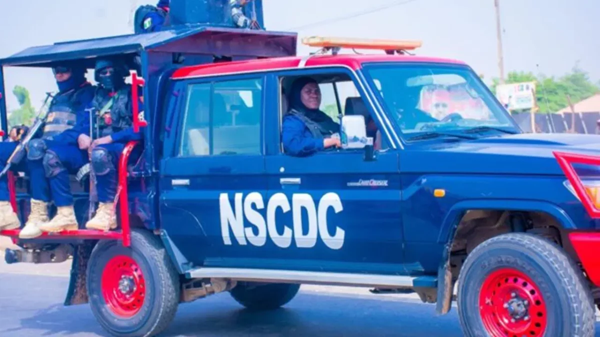
LAGOS — Operatives of the Nigeria Security and Civil Defence Corps have uncovered a suspected baby factory in Badagry area of Lagos State, rescuing 28 persons during a late-night raid.
Authorities said those rescued included 18 adults and 10 children. Among the adults were 17 pregnant women, while one case involving a suspected miscarriage was also recorded. Two persons were arrested in connection with the operation.
The Lagos State Commandant of the NSCDC, Adedotun Keshinro, disclosed that the raid followed weeks of intelligence gathering and surveillance.
According to him, the facility, located in Okuju-Ilado, Badagry, was made up of several apartments and had been monitored for about three weeks before security operatives moved in around midnight on Wednesday.
Keshinro alleged that the operators targeted vulnerable pregnant women by offering them financial inducements. He further claimed that the women were made to sign agreements and were subsequently restricted from leaving the premises freely.
Investigators also suspect that the syndicate used a fake social media profile to attract unsuspecting victims before moving discussions to private channels.
However, one of the arrested suspects denied wrongdoing, insisting that the women came willingly and that no unlawful activity took place.
A woman rescued from the premises reportedly told officials that she entered the facility voluntarily after being abandoned by the man responsible for her pregnancy.
Some community leaders in the area said residents had observed unusual movements around the compound but did not know the true nature of activities there until the security operation was carried out.
The NSCDC said both suspects and rescued victims would be transferred to the appropriate anti-human trafficking agency for further investigation and necessary action.
By Tama Peretengboro
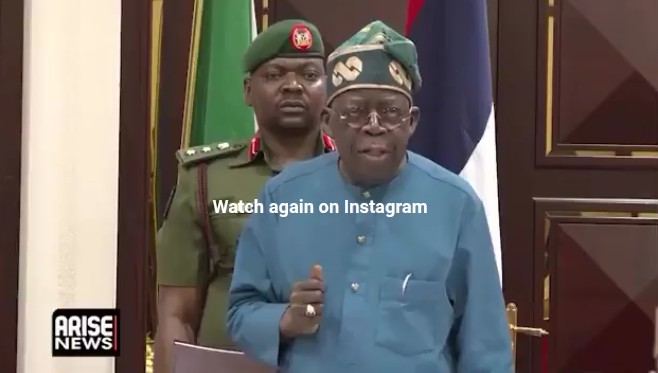
ABUJA — President Bola Ahmed Tinubu has stirred public discussion after making a remark in which he said he “took over leadership from myself” and described the late Muhammadu Buhari as being inseparable from his own political identity.
The statement, made during a public appearance captured in a viral video, quickly generated widespread reactions across political and social circles, with many Nigerians debating the meaning and context of the President’s comments.
Observers said the remarks appeared to underscore Tinubu’s close political association with Buhari and the continuity of governance between both administrations. Others interpreted the comments as an attempt to highlight the shared vision and alliance that existed between the two leaders during Buhari’s tenure.
Since assuming office in May 2023, Tinubu has repeatedly acknowledged Buhari’s role in the formation and electoral success of the All Progressives Congress, as well as the political transition that brought the ruling party to power.
The resurfaced clip has since fueled fresh commentary online, with supporters defending the statement as symbolic and critics questioning its phrasing.
As of the time of filing this report, the Presidency had not issued any formal clarification regarding the viral video.
See video: https://www.instagram.com/reel/DXOOaYSCG23/?igsh=MTF6MzJlOWptanJlYQ==
By Divine Perezide
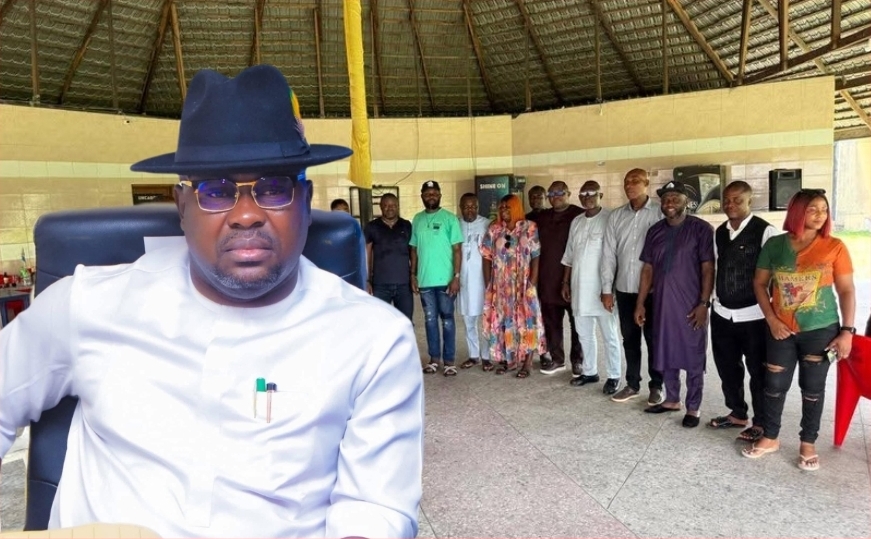
BURUTU — The member representing Burutu State Constituency I in the Delta State House of Assembly, Hon. Alapala Anthony Ebitonmo, has officially announced his intention to seek re-election in the 2027 polls.
Hon. Alapala made the declaration while addressing executives of the All Progressives Congress in Burutu Local Government Area, shortly after the release of the Independent National Electoral Commission timetable and the party’s schedule for the May 16 State Houses of Assembly primaries.
During the meeting, the lawmaker expressed gratitude to party leaders and members for their support during the 2023 general elections, particularly commending members in Burutu LGA for their steadfastness throughout the legal disputes that followed the polls.
He recalled that after his initial victory was overturned by the Court of Appeal, party loyalists remained committed until he eventually emerged victorious in the rerun election.
Speaking on his stewardship, Alapala said his administration had recorded notable progress despite the challenges that marked the early period of his tenure. He noted that the political developments in Delta State, including the alignment of major political blocs and the emergence of Rt. Hon. Sheriff Oborevwori as leader of the APC in the state, had created a more favourable atmosphere for governance.
The legislator stated that several constituency projects are ongoing across the six wards of Burutu North, stressing that grassroots development remains central to his agenda.
On human capital development, he disclosed that more than 50 constituents are currently serving in various appointments under his office, with beneficiaries drawn from all six wards to promote fairness and inclusion.
He further revealed that over 20 students from the constituency have benefited from scholarship opportunities facilitated through his office, while more than 790 students are receiving regular stipends under the Alapala Ebitonmo Students’ Support Scheme.
According to him, the initiative was introduced to reduce financial hardship among students and encourage academic success.
Hon. Alapala also said he had assisted several indigenes of Burutu North in securing empowerment opportunities as well as pensionable employment.
Reaffirming his commitment to public service, the lawmaker assured party stakeholders that if re-elected, he would build on the achievements already recorded and deliver greater democratic dividends to the people.
He also pledged continued loyalty to the APC and its guiding principles.