
News
FG, Labour Agree on How to Crash Transport Fares, Food Prices

FG, Labour Agree on How to Crash Transport Fares, Food Prices
By Victor AhiumaYoung, Johnbosco Agbakwuru & Gift ChapiOdekina, ABUJA
The Federal Government and Organised Labour, yesterday, agreed on modalities to crash transport fares and prices of essential commodities, especially foodstuffs.
This came on a day the House of Representatives asked the Federal Government to reverse the recent petrol price hike and take immediate steps to stabilise petrol and cooking gas prices through targeted interventions, such as temporary price relief measures, tax reductions, or subsidies on LPG for low-income households.
Rising from the meeting held in the Office of the Secretary to Government of the Federation, SGF, last night, the government also agreed to summon a meeting with state governors to ensure the N70,000 new minimum wage fully commenced nationwide in October.
Sources at the meeting told Vanguard that, among others, government and Labour also agreed to continue engagement and discussions to thaw frosty relationship that had existed before now.
“Government promised to release over 2,000 Compressed Natural Gas, CNG, conversion kits in the first instance. It also promised to release 45 CNG buses to Labour to complete the 90 earlier promised organised labour.
“As part of efforts at crashing transport fares across the country, the Federal Government will hold a meeting with state governors to fully embrace the CNG buses. This will also affect the cost of foodstuffs as it will reduce the costs of transporting food items from different locations to consumers drastically. These are parts of efforts to cushion the effects of the subsidy removal on the citizens.
“The government also promised to summon a meeting of the economic council to impress it upon state governors to ensure the new minimum wage takes off across the country this month.
“It also promised to incorporate labour into the economic council, so labour will participate and monitor economic policies of government, instead of government throwing policies at labour and Nigerians that may result in agitation or protest.
“They agreed that it is better to ‘jaw-jaw than war-war’, meaning, there will be continuous dialogue between government and labour.
“The government also promised to hasten and complete the refineries. They said almost five refineries are about to be completed,’’ a source told Vanguard last night.
The sources equally said “government promised to pay all outstanding arrears and wage awards to workers and inaugurate all the boards labour has representatives.”
One of the sources said “all these are promises, but the good thing is that it was agreed that the meeting will be a continuous process.”
Another source also said the issue of government not honouring agreement was raised, adding that government admitted that it did not do well in that regard and promised to change.
Asked if labour was satisfied with the meeting, the source said: “It is not about satisfaction but a way forward from the past where government was not discussing with organised labour.
‘’If this trend or practice continues, there is every possibility that disagreements between government and labour will reduce.”
The joint National Executive Council, NEC, meeting between the two Labour centres, NLC and TUC, he said, was to brief members about the outcome of the meeting with government.
Recall that among government’s representatives at the meeting were Mallam Nuhu Ribadu, the National Security Adviser, NSA; Nkeiruka Onyejeocha, Labour Minister; and Wale Edun, Minister of Finance and Coordinating Minister of the Economy.
Others include Alhaji Mohammed Idris, Information Minister; Heineken Lokpobiri, Petroleum Resources Minister, Ekperikpe Ekpo, Minister of State for Petroleum Resources (Gas), and representatives of the Nigerian National Petroleum Corporation Limited, NNPCL.
Also present at the joint meeting were the President of NLC, Mr Joe Ajaero; Deputy President, Kabiru Ado Sani; the General Secretary, Mr Emma Ugboaja; Deputy President of the TUC, Dr. Tommy Etim Okon; the Secretary General, Nuhu Toro; and the President of the Nigeria Union of Teachers, NUT, who is also a deputy president of NLC.
Addressing newsmen at the end of the meeting, the Minister of Information and National Orientation, Alhaji Mohammed Idris said the Federal Government will continue to engage with organized labour and not wait until there was tension on any issue before doing so.
Fielding questions on whether the meeting with the labour had anything to do with minimum wage, the minister said: “These are just general discussions. Government is always desirous of engaging with Labour, this is one of such engagements.
‘’We will continue to interact with them. We won’t wait until there is tension about anything before we engage Labour.
“This is a renewed commitment on behalf of government to continue to engage Labour on a number of issues. These engagements have been very fruitful and we will continue to engage with them.”
On what was discussed at the meeting, Idris said: “A lot of things were discussed. But like I said, this is work in progress, this is something that isn’t a one-off thing, but we have not reached anything that we think we can tell Nigerians now, but what is more important is that, there is going to be continuous engagement between us and labour for the good of the country.”
Asked if the meeting had to do with the recent hike in fuel price, he said: “This is our continuous engagement with labour for the good of the country. You know that labour is an important component of this country, all of them are our brothers and sisters.
‘’Government is there for everyone, including labour, so we will continue to engage labour for the good of the country.”
Meanwhile, the House of Representatives has asked the Federal Government to reverse the recent petrol price hike and take immediate steps to stabilise petrol and cooking gas prices through targeted interventions, such as temporary price relief measures, tax reductions, or subsidies on LPG for low-income households.
It also called on the Nigerian National Petroleum Corporation Limited, NNPCL, Ministry of Petroleum Resources and other relevant agencies to expedite the repair/maintenance of domestic refineries and increase local refining capacity as a stop-gap measure to reduce dependence on imported refined petroleum products.
The lawmakers further urged the Central Bank of Nigeria, CBN, to implement monetary policies that would mitigate the adverse effects of fuel price hikes on inflation, particularly with regards to essential goods and services.
These resolutions were sequel to the adoption of a motion of urgent public importance moved by the House Minority Leader, Kingsley Chinda and 111 other lawmakers.
Debating the motion, the Deputy Minority Leader, Aliyu Madaki, said Nigeria, as an oil-producing nation, has historically relied on petroleum products and cooking gas, LPG, as essential sources of energy for both domestic and industrial purposes.
He expressed concern that in recent months, the prices of petrol and cooking gas have skyrocketed and continued to so do, creating an unsustainable financial burden on ordinary Nigerians and exacerbating the cost of living.
He said: “The House is worried that escalating fuel and gas prices are impacting the cost of transportation, food, essential goods and healthcare, further increasing inflation and pushing many families into deeper financial hardship.
“Further concerned that businesses, particularly small and medium-sized enterprises, SMEs, are struggling to manage their operational costs due to increased fuel prices, thus threatening economic stability and job security.
“Acknowledging that the federal government has previously announced plans to repair domestic refineries and boost local refining capacity to address some of these issues but has yet to deliver significant results in this regard;
“The rising cost of petrol and cooking gas poses a significant threat to the livelihood of millions of Nigerians and unchecked inflationary pressure caused by the increased prices can lead to social unrest, increased poverty rates, and negative long-term economic effects.
“Unless urgent and pragmatic steps are taken to control the rising cost of petrol and cooking gas, the nation will go into economic crisis, leading to negative outcomes, such as increased crime rate and mortality rate.’’
The House unanimously adopted the motion, urging the federal government to explore alternative energy sources and diversify the country’s energy mix to reduce reliance on petrol and gas, as well as promote renewable energy solutions sustainable and affordable in the long term.
The lawmakers also encouraged state governments to adopt policies that alleviate the financial burden on their citizens, such as waiving taxes or levies on transportation and goods affected by high fuel costs.
The House further mandated its special adhoc committee investigating fuels price increase to investigate and report back within two weeks for further legislative action.
Culled: Vanguard News

By Favour Bibaikefie
LAGOS — Operatives of the Nigeria Security and Civil Defence Corps have uncovered a suspected baby factory in Badagry area of Lagos State, rescuing 28 persons during a late-night raid.
Authorities said those rescued included 18 adults and 10 children. Among the adults were 17 pregnant women, while one case involving a suspected miscarriage was also recorded. Two persons were arrested in connection with the operation.
The Lagos State Commandant of the NSCDC, Adedotun Keshinro, disclosed that the raid followed weeks of intelligence gathering and surveillance.
According to him, the facility, located in Okuju-Ilado, Badagry, was made up of several apartments and had been monitored for about three weeks before security operatives moved in around midnight on Wednesday.
Keshinro alleged that the operators targeted vulnerable pregnant women by offering them financial inducements. He further claimed that the women were made to sign agreements and were subsequently restricted from leaving the premises freely.
Investigators also suspect that the syndicate used a fake social media profile to attract unsuspecting victims before moving discussions to private channels.
However, one of the arrested suspects denied wrongdoing, insisting that the women came willingly and that no unlawful activity took place.
A woman rescued from the premises reportedly told officials that she entered the facility voluntarily after being abandoned by the man responsible for her pregnancy.
Some community leaders in the area said residents had observed unusual movements around the compound but did not know the true nature of activities there until the security operation was carried out.
The NSCDC said both suspects and rescued victims would be transferred to the appropriate anti-human trafficking agency for further investigation and necessary action.
By Tama Peretengboro
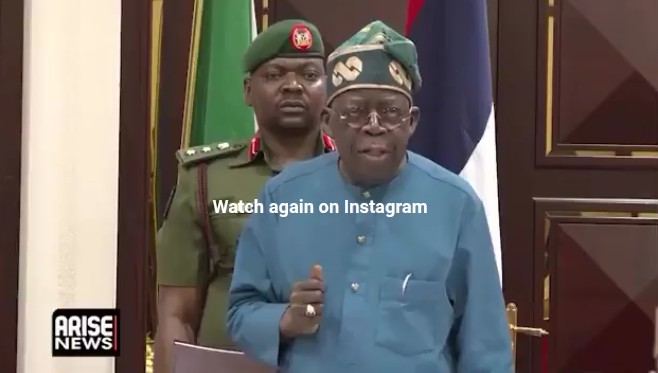
ABUJA — President Bola Ahmed Tinubu has stirred public discussion after making a remark in which he said he “took over leadership from myself” and described the late Muhammadu Buhari as being inseparable from his own political identity.
The statement, made during a public appearance captured in a viral video, quickly generated widespread reactions across political and social circles, with many Nigerians debating the meaning and context of the President’s comments.
Observers said the remarks appeared to underscore Tinubu’s close political association with Buhari and the continuity of governance between both administrations. Others interpreted the comments as an attempt to highlight the shared vision and alliance that existed between the two leaders during Buhari’s tenure.
Since assuming office in May 2023, Tinubu has repeatedly acknowledged Buhari’s role in the formation and electoral success of the All Progressives Congress, as well as the political transition that brought the ruling party to power.
The resurfaced clip has since fueled fresh commentary online, with supporters defending the statement as symbolic and critics questioning its phrasing.
As of the time of filing this report, the Presidency had not issued any formal clarification regarding the viral video.
See video: https://www.instagram.com/reel/DXOOaYSCG23/?igsh=MTF6MzJlOWptanJlYQ==
By Divine Perezide
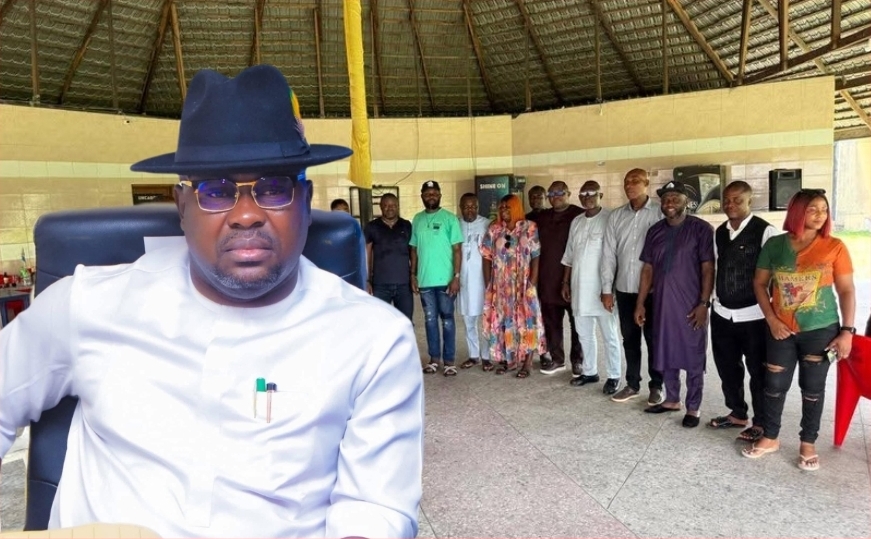
BURUTU — The member representing Burutu State Constituency I in the Delta State House of Assembly, Hon. Alapala Anthony Ebitonmo, has officially announced his intention to seek re-election in the 2027 polls.
Hon. Alapala made the declaration while addressing executives of the All Progressives Congress in Burutu Local Government Area, shortly after the release of the Independent National Electoral Commission timetable and the party’s schedule for the May 16 State Houses of Assembly primaries.
During the meeting, the lawmaker expressed gratitude to party leaders and members for their support during the 2023 general elections, particularly commending members in Burutu LGA for their steadfastness throughout the legal disputes that followed the polls.
He recalled that after his initial victory was overturned by the Court of Appeal, party loyalists remained committed until he eventually emerged victorious in the rerun election.
Speaking on his stewardship, Alapala said his administration had recorded notable progress despite the challenges that marked the early period of his tenure. He noted that the political developments in Delta State, including the alignment of major political blocs and the emergence of Rt. Hon. Sheriff Oborevwori as leader of the APC in the state, had created a more favourable atmosphere for governance.
The legislator stated that several constituency projects are ongoing across the six wards of Burutu North, stressing that grassroots development remains central to his agenda.
On human capital development, he disclosed that more than 50 constituents are currently serving in various appointments under his office, with beneficiaries drawn from all six wards to promote fairness and inclusion.
He further revealed that over 20 students from the constituency have benefited from scholarship opportunities facilitated through his office, while more than 790 students are receiving regular stipends under the Alapala Ebitonmo Students’ Support Scheme.
According to him, the initiative was introduced to reduce financial hardship among students and encourage academic success.
Hon. Alapala also said he had assisted several indigenes of Burutu North in securing empowerment opportunities as well as pensionable employment.
Reaffirming his commitment to public service, the lawmaker assured party stakeholders that if re-elected, he would build on the achievements already recorded and deliver greater democratic dividends to the people.
He also pledged continued loyalty to the APC and its guiding principles.