
News
Electoral Fraud: What we must do for INEC to work


Electoral Fraud: What we must do for INEC to work
 hi
hi
By Dayo Johnson,Regional Editor, South West; Samuel Oyadongha; Rotimi Ojomoyela; Egufe Yafuborghi; Chioma Onuegbu; James Ogunnaike; Laolu Elijah; Steve Oko; Daniel Abia; Adeola Badru & Ibrahim Hassan-Wuyo
To whom much is given, much is expected. Nigerians had invested their trust in the electoral umpire, the Independent National Electoral Commission, INEC to conduct a credible election in the country. Everything the Commission needed, including funds, had always been provided.
And Nigerians would sacrifice their precious time to cast their votes on the election date hoping their votes would count. But the electoral commission had always failed to live up to their expectations. Nigerians had hoped that INEC would have repented of its evil ways and would use the September 21 Edo State governorship election to redeem its image.
But 25 observer groups who monitored the election, in their reports accused INEC officials of manipulating the election. They specifically fingered collation officers at the Local Government and State Collation Centres for altering the figures that were obtained from the polling units.
The groups in a joint statement also said, “We reject the result declared because there are two sets of result sheets. One was taken to the field, and another to APC in Edo North, some parts of Edo South, and Edo Central. We observed that the military and police disrupted the collation of results at the wards and local government collation centres, including intimidation of INEC officials that collated results contrary to the provisions of the Electoral Act and INEC guidelines. There is a significant concern about the credibility of the results collation process.
“We reject the result of the election which declared the All Progressive Congress Candidate, Senator Monday Okpebholo. There was militarization and use of impunity at wards, local governments and state collation centres. INEC, Military and police have clearly violated the provision of Electoral Act 2022 concerning the collation of results in the governorship election.”
Nigerians in their reactions have expressed total disappointment with the conduct of the Edo governorship election saying it is sad that INEC hasn’t repented from its evil ways. Some have however proffered solutions on how to ensure future elections are credible and the votes of the people will begin to count.
While some called for a constitutional amendment making it mandatory for electronic voting and electronic transmission, and a law barring the President from appointing INEC chairman, others suggested readopting the Option A4 system to avert the manipulative tendencies of INEC officials.
Perpetrators of electoral fraud must be punished —Aborisade
Femi Aborisade, Human rights activist on his part said: ”Future elections may be protected against manipulation by electoral officials only if those suspected to have manipulated the results are made to suffer the consequences for their action. It is impunity that is responsible for electoral officials manipulating results. The critical challenge is whether the system will permit the culprits to be brought to justice. The non-governmental observers, including YIAGA, made a case against the appointment of the INEC Commissioner who conducted the election, arguing that by his relationship with some prominent personalities, he could not be trusted to be concerned with organizing a free and fair election in Edo State. They also decried the shifting of the counting of votes at some local governments to the central collation centre, which was contrary to the electoral law and guidelines issued by INEC. The INEC did not bother. Therefore, impunity, including not acting by the predetermined electoral procedure, is at the root of the votes of the electorate not counting in the emergence of those who rule. Nigeria’s democracy has thus become the democracy of the few and mighty politicians who have captured not only political power but also the wealth of society which they use in compromising institutions and their officers.
We may resort to Option A4 system —Clarkson
Amaebi Clarkson, a legal practitioner and former Spokesperson of the Movement for the Survival of Ijaw Ethnic Nationality in the Niger Delta, MOSIEND, said: “The Edo poll has clearly shown that no amount of electronic intervention in our electoral process will cure election malpractices and manipulation unless we have reorientation of our value system as a people. This can only be done if we get the leadership question right because any positive change in the behavioural pattern of a people comes from the top and not the bottom. The president asking the losers to go to court in the face of such brazen manipulation of election results speaks volumes. It is frustrating that despite the huge resources allocated to INEC and the reforms on paper, it cannot conduct an acceptable election. We may need to look inward and readopt Option A4 system if it can give us any reprieve.”
Nigerians must begin to defend their votes to the last collation centre —Rev Hayab
Rev Joseph John Hayab, former Chairman CAN Kaduna State: ”It is very sad to see that INEC has not repented or learned any tangible lesson from the past electoral malpractices that were committed. INEC has not only again shown that it is Nigeria’s democracy’s biggest enemy but has confirmed that the will of the people does not matter as long as some INEC officials get cheap money from desperate politicians. A political leader who knows his or her victory is not from the people will never listen to the people or serve the people. INEC has failed to keep the trust of the people and the nation who are bigger than the few money bag politicians. The serious consequence of this unpatriotic action by some politicians and some greedy and selfish INEC staff is that we will continue to suffer together from leaders who have no legitimacy and are disconnected from the people. It is now left for the Nigeria public to unite and begin to defend their votes in future elections up to the last collation center since it is so glaring that you cannot find justice during election from INEC to the courts”.
Former Attorney General of Akwa Ibom and Senior Advocate of Nigeria, SAN, Uwemedimo Nwoko, asserted that Nigeria will never witness free and fair elections under the present crop of leaders in the country. His words, “I think for now Nigeria should just forget about free and fair elections or free and fair judiciary because it won’t work. If we want to be honest with ourselves, there’s no point hoping against hope, no need for us wasting our time. What is the moral pedigree of the present crop of leaders? What is their legal pedigree, what do they have to show in terms of decency in life? I will say it anywhere, Nigerians cannot have free and fair elections with the present crop of leaders and the judiciary will continue to be a victim. Our justices are individuals and we have people who know how to connive and threaten justices. This is not just about bribing them, people go to justices’ houses and threaten them to bend their will”
We must all turn a new leaf—Elder Ambakederimo
Elder Joseph Ambakederimo, Convener, South South Reawakening Group, said: “It is unfortunate that our electoral process is not improving, our elections are getting worse and from what I have seen, it is not going to get better because those shouting about manipulation are also involved, they were just out maneuvered. There was a time in this country when picking the ticket of a political party to contest the general election is as good as winning the poll. There were high profile assassinations and attempted assassinations then. Until all of us turn a new leaf there is nothing anyone can do about what is going on with our elections.”
Continued voter education necessary—Pastor Nwokocha
Pastor Innocent Nwokocha, Executive Director, Initiative For Ideal Development And Emancipatory Leadership In Nigeria “IDEAL-NIGERIA said: “The simple empirical approach cum solution to the whole of this nauseating situation that is fast eating up the electoral confidence of the masses on the electoral umpire and the leadership structure across board is continued voter education and by extension, the strengthening of the entire civil space. The level of corruption in the country now has fast gained traction and momentum. This can only be attributed to weak style of leadership and the increasing and uncontrollable quest for power. Unfortunately, too, the government in power in Nigeria does not have quick fix solutions at hand as it seems obviously embedded in the whole of the shenanigans constituting the rounds. It is high time all Nigerians rose to the occasion and challenged this sepulchral charade .”
Only the judiciary can correct the anomalies—Chief Osuoha
Also, Chief Ikechukwu Osuoha , two time Commissioner for Housing, Abia State, and the Deputy National Legal Adviser of the Peoples Democratic Party, PDP called for resistance to a drift towards one party state. Osuoha who described the Edo election as a charade and open display of impunity by the ruling party, however, said that “only the Judiciary can correct the anomalies.” He acknowledged the erosion of public confidence in the Nigeria judiciary but added that “there are still few judicial officers who are still standing. What happened in Edo was a disgrace to our democracy. But shall we resort to violence? No! So, we still have to look up to the judiciary. The judiciary remains the hope of the common man, and that’s why as a party, we have resolved to go to court. There are still some judicial officers who are not compromised and we believe we will always get justice in the end “
Indicted electoral officials must be prosecuted—David-West
Mr David-West Bekinwariye David, Chairman, Civil Liberties Organisation, CLO, Bayelsa State chapter said: “For our future elections not to be manipulated, we must as a people ensure that electoral officials who collect money from politicians to manipulate the process are prosecuted and sent to prison and the case must be disposed of on time.”
Hon Stephen Adewale, former Ondo SDP state chairman: “It’s unfortunate that our electoral system has been one stride forward, two steps backwards since 1999. What transpired in Edo State brings the question of autonomy to the forefront, particularly for sensitive agencies like INEC. As long as the country’s election umpire remains accountable to the president, no progress will be made. In addition, opposition parties can help improve our electoral system by ensuring that political infrastructure exists in every polling unit. In Edo State, like in other recent elections, the APC was able to present a polling unit agent in each polling unit. Even the ruling party in Edo State, the PDP, was unable to do this. As a result, the lack of polling unit agents from opposition parties makes it easier for the party with the most foot soldiers on the ground and the electoral umpire in its pocket to manipulate the election results. And by the time the aggrieved opposition parties decide to approach the court to contest the election results, they will have wasted the court’s time because they will not have genuine evidence from each polling unit to back up their claims due to a lack of reliable polling unit agents in each polling unit.
Edo election the worst in recent times — Peretei
Kennedy Peretei, Ondo state Publicity Secretary of People’s Democratic Party:
“The truth is that the present democratic dispensation is a product of the struggle of Nigerians through a process that caused loss of lives. The soldiers were forced to return to the barracks. Therefore, a civilian government ( with questionable credibility) cannot return to the dark ages. The Edo election was the very worst in recent times and those who rigged the election are asking the victims to approach the Courts, as if the Judiciary is dependable. What I know is that the people are already on edge and will resist any further attempt to subvert their wishes. If you ask me how? l will say, those who make peaceful change impossible, make violent change, inevitable”
There must be positive change of attitude by the electorates —Comrade Olaposi
National Secretary of the New Nigeria People’s Party (NNPP), Comrade Oginni Olaposi Sunday said that, “Positive change of attitude by the electorates in Nigeria is needed to have the new Nigeria of our dreams as far as the electoral system is concerned in Nigeria. The sellers and buyers of votes are all culpable and nearly all Nigerian political parties and politicians engage in these illegal practices. The law enforcement agencies like EFCC and Police must ensure that both sellers and buyers of votes are prosecuted and committed to prison to serve as deterrent to others. INEC should also be very ready to perform an impartial role as unbiased umpire. There must be a level playing ground for all political parties and politicians. Any INEC officer(s) that compromises to manipulate election results should be arrested and prosecuted to serve as a deterrent to other corrupt officials. Lastly, until proper orientation is done and imbibed by Nigerians, the performance index of INEC will continue to be below average. Every Nigerian must be ready to vote for candidates of his or her choice without requesting for money or financial inducement.
The security architecture needs improvement—Ogunsuyi
Lanre Ogunsuyi, public analyst: “The electoral process is not a perfect exercise and a strong security framework is necessary to prevent unpatriotic activities. There is clearly inadequate voter education on the importance of voting and the detrimental effects of vote buying and selling. The lack of accountability and transparency in public office, coupled with the financial incentives, intensifies competition. Public offices should be less financially lucrative. The security architecture needs improvement, especially in violence prevention. Civil societies and the media require funding for election duties. There are no perfect elections; victories are often secured by the highest bidder. People are poor and hungry.”
INEC must fish out bad eggs within it— Balogun
Moruff Balogun, Immediate past Vice Chairman, Nigeria Bar Association, Ijebu Ode Branch: ”It is not within the contemplation of the law to have elections that will be holistically acceptable by all and sundry as credible and threat-free. Even the Electoral Act, 2022 does not contemplate that. If the elections are substantially conducted and hitch free, it is credible enough in the eye of the law. We are not unmindful that there are bad eggs in INEC; we have seen cases where INEC personnel were terribly involved in electoral malpractices in connivance with political parties. INEC authorities should be bold enough to fish out these scavengers within the commission before it is too late”.
Deola Abegunrin, a legal practitioner in Oyo State said, “except the electorates change, we should not expect any overnight miracle. We, the people should have attitudinal change so that things will work out. The Judiciary is doing its best.”
Similarly, Babalade Omoyefa, a politician said, “all of us are guilty, from the politicians to the electorates. When you are seeking an appointment into any political office, several people put pressure on you to spend for them. Once you do that, they are ready to go to any length to ensure that their candidates win the election”.
Ayodele Alake, Public Affairs analyst argued that: “the politicians, electorates and the judiciary are culpable even including the so called civil societies. Almost all our hands are soiled. There’s so much hunger in the country and when people are hungry, they will jump at anything that will put food on their tables. This is where the larger portion of the blame goes to the leaders of the country. If they provide all necessary amenities for the citizenry, the urge to be corrupt will be minimised. But, when people are starved, they do unimaginable things during elections and that’s when you see the electorates queuing for loaves of bread during elections”.
Pastor Olabode James, Joint Fellowship Pentecostal church: “the fear of God is lacking in the minds of our people. When you fear God, you will think twice before you sell your votes. There is so much impunity in the system, anybody can just do anything. Where the fear of God is lacking, you should expect anything to happen. That’s what is playing out in the country today. Until we see God as the only provider, people will continue to engage in shady activities.”
Barr Shogbeye Eli, All Progressives Congress, APC, chieftain
“In view of the fast eroding confidence of Nigerians on the country’s electoral process, we must amend the constitution to remove the power of appointing INEC chairman from the President. It is not enough to cancel an election because of electoral fraud. There must be severe punishment for electoral offenders as well. The law should be made not to be a respecter of anybody. Whoever is involved in electoral crime must face severe consequences according to law. Nigeria is also ripe enough to consider the e-mail voting system as one of the surest ways of correcting electoral fraud. E-mail voting will also save Nigerians from the stress of queuing up for hours on election day.
Only electronic voting and transmission can guarantee credible polls —Dr Arabambi
Dr Abayomi Arabambi, National Publicity Secretary of Labour Party (LP) argued that electronic voting, and electronic transmission are the only factors that can guarantee free, fair elections in Nigeria.
He said, “As Nigerians, we can only ensure future elections’ success if the National Assembly can amend the 1999 Constitution to allow electronic voting and electronic transmission of results from polling units. When the Constitutional amendment is done, any elections that fail to abide by it should be rendered invalid and another election should be conducted in such circumstances.
This will assist all political parties to monitor polls process online and winners will know themselves by the conclusion of the elections and any form of manipulation through falsifications or alteration of results will be eliminated completely. Also, this will make our votes count and props up leaders that will serve their people and not god fathers. Also, elected officials across all political parties will be aware that they are responsible to the electorate only and that any attempt to undermine or under perform will spell doom for them in the next general elections as the people owe the right to either retain them or vote them out”.
Culled: Vanguard News







By Favour Bibaikefie
LAGOS — Operatives of the Nigeria Security and Civil Defence Corps have uncovered a suspected baby factory in Badagry area of Lagos State, rescuing 28 persons during a late-night raid.
Authorities said those rescued included 18 adults and 10 children. Among the adults were 17 pregnant women, while one case involving a suspected miscarriage was also recorded. Two persons were arrested in connection with the operation.
The Lagos State Commandant of the NSCDC, Adedotun Keshinro, disclosed that the raid followed weeks of intelligence gathering and surveillance.
According to him, the facility, located in Okuju-Ilado, Badagry, was made up of several apartments and had been monitored for about three weeks before security operatives moved in around midnight on Wednesday.
Keshinro alleged that the operators targeted vulnerable pregnant women by offering them financial inducements. He further claimed that the women were made to sign agreements and were subsequently restricted from leaving the premises freely.
Investigators also suspect that the syndicate used a fake social media profile to attract unsuspecting victims before moving discussions to private channels.
However, one of the arrested suspects denied wrongdoing, insisting that the women came willingly and that no unlawful activity took place.
A woman rescued from the premises reportedly told officials that she entered the facility voluntarily after being abandoned by the man responsible for her pregnancy.
Some community leaders in the area said residents had observed unusual movements around the compound but did not know the true nature of activities there until the security operation was carried out.
The NSCDC said both suspects and rescued victims would be transferred to the appropriate anti-human trafficking agency for further investigation and necessary action.
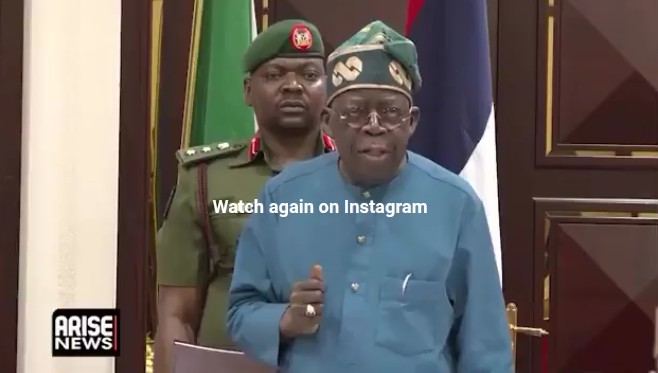
By Tama Peretengboro
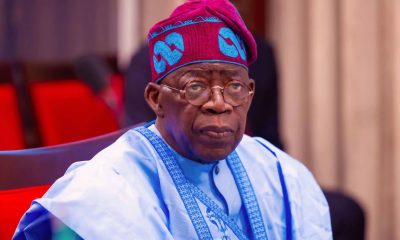
ABUJA — President Bola Ahmed Tinubu has stirred public discussion after making a remark in which he said he “took over leadership from myself” and described the late Muhammadu Buhari as being inseparable from his own political identity.
The statement, made during a public appearance captured in a viral video, quickly generated widespread reactions across political and social circles, with many Nigerians debating the meaning and context of the President’s comments.
Observers said the remarks appeared to underscore Tinubu’s close political association with Buhari and the continuity of governance between both administrations. Others interpreted the comments as an attempt to highlight the shared vision and alliance that existed between the two leaders during Buhari’s tenure.
Since assuming office in May 2023, Tinubu has repeatedly acknowledged Buhari’s role in the formation and electoral success of the All Progressives Congress, as well as the political transition that brought the ruling party to power.
The resurfaced clip has since fueled fresh commentary online, with supporters defending the statement as symbolic and critics questioning its phrasing.
As of the time of filing this report, the Presidency had not issued any formal clarification regarding the viral video.
See video: https://www.instagram.com/reel/DXOOaYSCG23/?igsh=MTF6MzJlOWptanJlYQ==
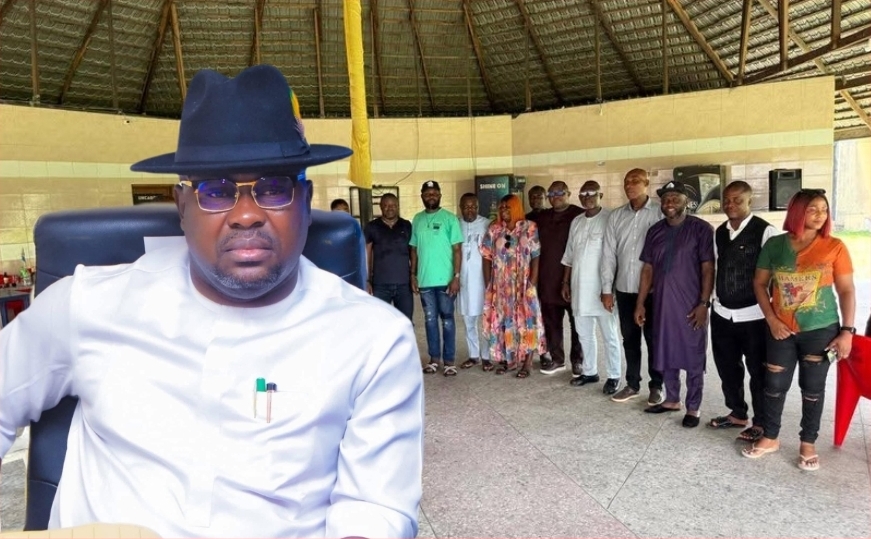
By Divine Perezide
BURUTU — The member representing Burutu State Constituency I in the Delta State House of Assembly, Hon. Alapala Anthony Ebitonmo, has officially announced his intention to seek re-election in the 2027 polls.
Hon. Alapala made the declaration while addressing executives of the All Progressives Congress in Burutu Local Government Area, shortly after the release of the Independent National Electoral Commission timetable and the party’s schedule for the May 16 State Houses of Assembly primaries.
During the meeting, the lawmaker expressed gratitude to party leaders and members for their support during the 2023 general elections, particularly commending members in Burutu LGA for their steadfastness throughout the legal disputes that followed the polls.
He recalled that after his initial victory was overturned by the Court of Appeal, party loyalists remained committed until he eventually emerged victorious in the rerun election.
Speaking on his stewardship, Alapala said his administration had recorded notable progress despite the challenges that marked the early period of his tenure. He noted that the political developments in Delta State, including the alignment of major political blocs and the emergence of Rt. Hon. Sheriff Oborevwori as leader of the APC in the state, had created a more favourable atmosphere for governance.
The legislator stated that several constituency projects are ongoing across the six wards of Burutu North, stressing that grassroots development remains central to his agenda.
On human capital development, he disclosed that more than 50 constituents are currently serving in various appointments under his office, with beneficiaries drawn from all six wards to promote fairness and inclusion.
He further revealed that over 20 students from the constituency have benefited from scholarship opportunities facilitated through his office, while more than 790 students are receiving regular stipends under the Alapala Ebitonmo Students’ Support Scheme.
According to him, the initiative was introduced to reduce financial hardship among students and encourage academic success.
Hon. Alapala also said he had assisted several indigenes of Burutu North in securing empowerment opportunities as well as pensionable employment.
Reaffirming his commitment to public service, the lawmaker assured party stakeholders that if re-elected, he would build on the achievements already recorded and deliver greater democratic dividends to the people.
He also pledged continued loyalty to the APC and its guiding principles.