
News
FG, Dangote Reach Agreement on Petrol Supply

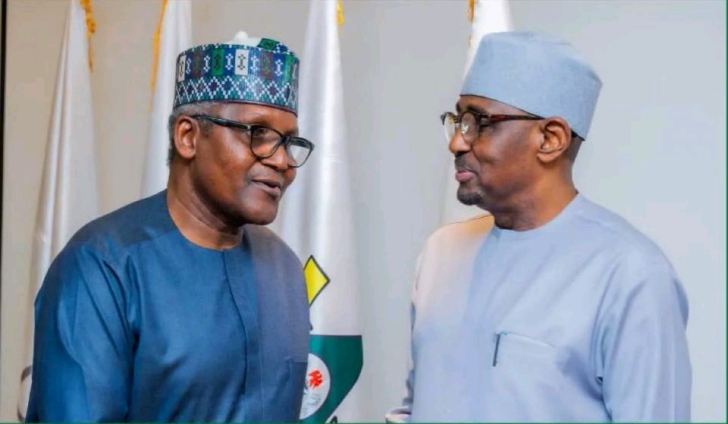
FG, Dangote Reach Agreement on Petrol Supply
By Tobouke JEMINE
The Federal Government announced on Friday that it has reached an agreement with Dangote Refinery on petrol supply, pricing, and distribution. The partnership is expected to alleviate the acute petrol shortage across Nigeria.
According to Zacch Adedeji, Chairman of the Federal Inland Revenue Service (FIRS) and member of the Presidential Committee on the Sale of Crude Oil and Refined Products, loading of the first batch of petrol from Dangote Refinery will commence on Sunday, September 15.
The agreement reached is that NNPC Limited will remain the sole off-taker of petrol from Dangote Refinery; other marketers will purchase petrol from NNPC; Dangote Refinery will supply PMS and diesel of equivalent value to the domestic market, paid for in Naira; diesel will be sold in Naira by Dangote Refinery to interested off-takers; NNPC will commence supplying 385,000 barrels of crude oil to Dangote Refinery on October 1, 2024, paid for in Naira.
This agreement when implemented means easing petrol shortage across Nigeria, enable government to continue paying subsidies on petrol, and boost domestic fuel production.
Adedeji emphasized that all agreements have been finalized, paving the way for the commencement of petrol supply from Dangote Refinery.
By Divine Perezide
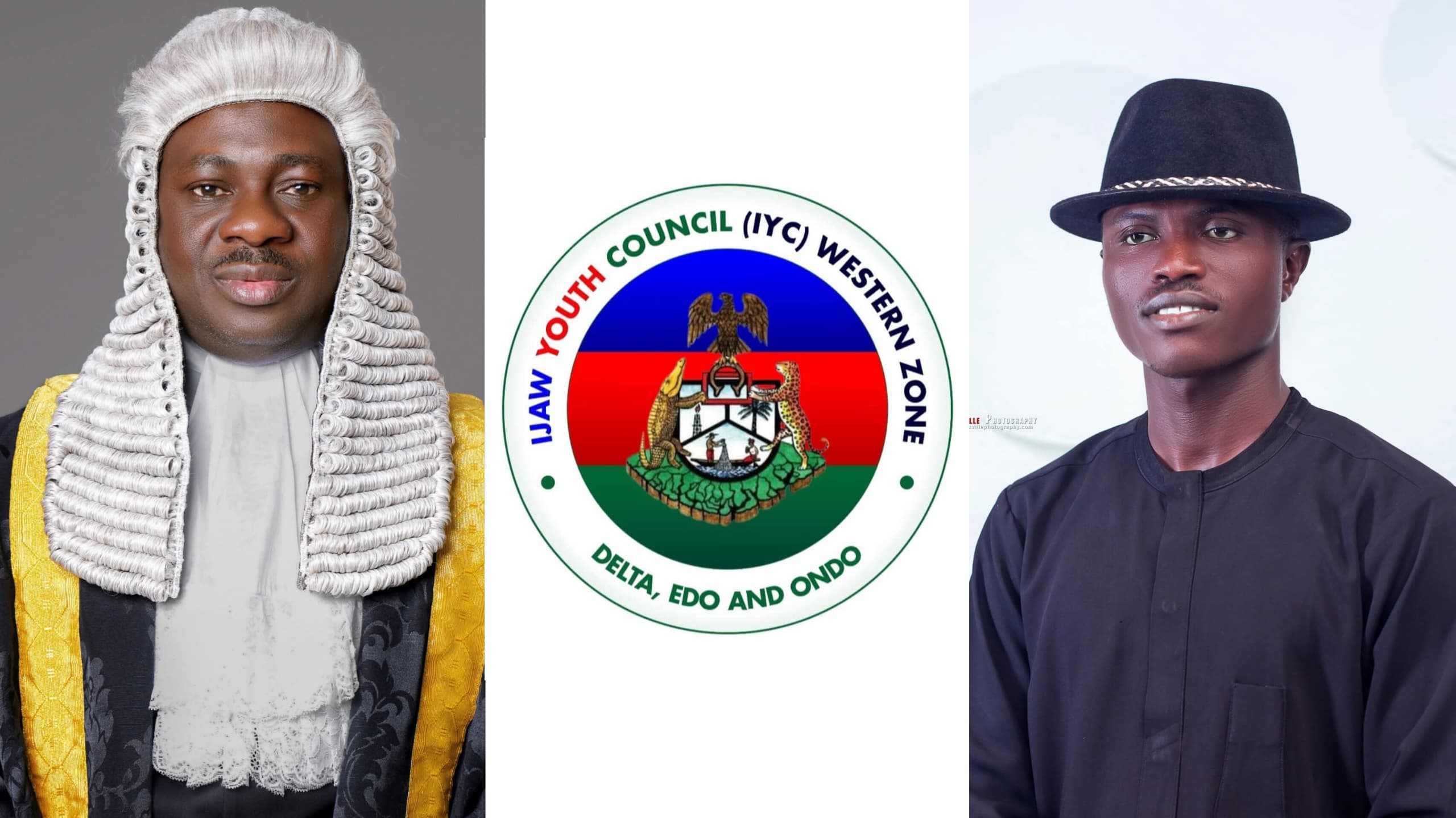
WARRI — The Ijaw Youth Council (IYC), Western Zone, has backed the Speaker of the Delta State House of Assembly, Rt. Hon. Emomotimi Dennis Guwor, over his recent assertion that Ijaws occupy six local government areas in Delta State, describing the claim as factual and widely acknowledged.
Guwor had made the statement during a gathering in Bomadi where Ijaw leaders hosted Delta State Governor, Sheriff Oborevwori. The event also featured the endorsement of President Bola Ahmed Tinubu and Governor Oborevwori as preferred candidates for the 2027 presidential and governorship elections by Ijaw stakeholders in the state.
The Speaker, while presiding over the adoption of a motion moved by Julius Pondi and seconded by Preyor Oboro, noted that the political stance reflected the position of Ijaws residing across six local government areas in Delta.
However, the comment has drawn criticism from sections of the Itsekiri ethnic nationality, who challenged the accuracy of the claim and described it as misleading.
Reacting to the controversy, the IYC Western Zone dismissed the criticisms, insisting that the Speaker’s statement aligns with demographic and political realities.
Speaking in Warri, the IYC Western Zone Information Officer, Tare Magbei, said the backlash was driven by political opposition and ethnic bias.
Magbei maintained that Ijaws have undisputed dominance in Burutu and Bomadi Local Government Areas, while constituting the majority population in Patani, Warri South-West, and Warri North, and maintaining a minority presence in Warri South.
He described attempts to discredit the Speaker as “deliberate efforts to misinform the public,” adding that the issue has been unnecessarily politicised due to the approaching election cycle.
According to him, “what the Speaker stated reflects the obvious realities known to residents of Delta State,” noting that stirring ethnic sentiments for political gain could undermine peaceful coexistence in the region.
The IYC spokesman further warned that disputing such claims could heighten tensions, emphasizing that the Ijaw people have historically demonstrated restraint and commitment to peaceful relations with neighbouring ethnic groups.
He urged political actors to prioritise issue-based engagement rather than what he termed campaigns of calumny targeted at public office holders, including the Speaker.
The development underscores growing political realignments ahead of the 2027 elections, as stakeholders across Delta State continue to position themselves within the broader dynamics of ethnic representation and electoral strategy.
By Favour Bibaikefie
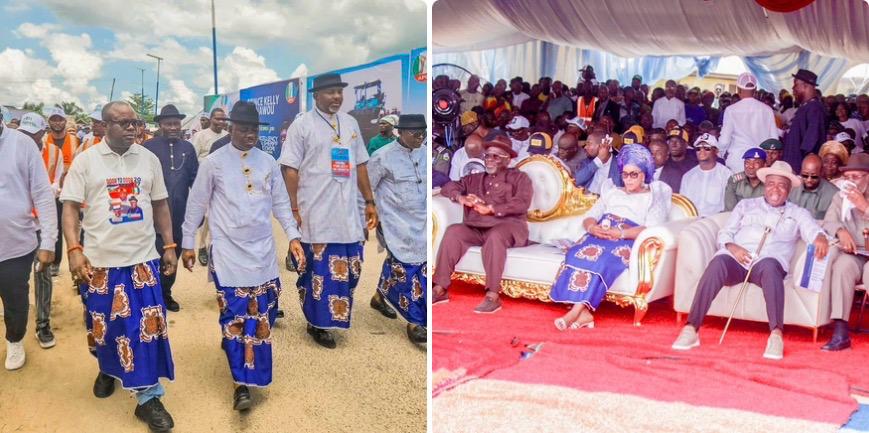
BOMADI, DELTA STATE — Prominent Ijaw leaders, traditional rulers and political stakeholders have thrown their weight behind President Bola Ahmed Tinubu and Delta State Governor Sheriff Oborevwori for second terms in office, ahead of the 2027 general elections.
The endorsement was announced at a large gathering held in Bomadi, headquarters of Bomadi Local Government Area, during a grand reception organised by Delta Ijaw political leaders in honour of the governor.
The event drew thousands of Ijaw indigenes and key figures from across the Niger Delta, including the Administrator of the Presidential Amnesty Programme, Dennis Brutu Otuaro, who led the mobilisation efforts alongside other stakeholders.
The motion for endorsement was formally moved by a member of the House of Representatives, Hon. Julius Pondi, and seconded by Delta State lawmaker Hon. Kenneth Oboro. It was subsequently ratified through a voice vote presided over by the Speaker of the Delta State House of Assembly, Emomotimi Dennis Guwor.
Also present was Bayelsa State Governor, Douye Diri, who commended the Delta State administration for its development-focused approach in Ijaw communities.
In recognition of his contributions, traditional rulers under the Delta Ijaw Traditional Rulers Forum conferred the chieftaincy title “Izonebimiewei”—meaning “the man who does good for the Ijaw people”—on Governor Oborevwori. The monarchs described the honour as a reflection of his infrastructural strides and commitment to the welfare of riverine communities.
Among the royal fathers in attendance were the Ebenana-owei of Ogulagha Kingdom, HRM Joseph Timiyan; Pere of Akugbene-Mein Kingdom, HRM Pere Kalanama VIII; and several other paramount rulers across Ijaw kingdoms in Delta State.
Addressing the gathering, Governor Oborevwori expressed appreciation for the honour and reaffirmed his administration’s commitment to inclusive development. He noted that significant investments—running into hundreds of billions of naira—had already been made in infrastructure and social development across Ijaw areas.
According to him, the continued support of the Ijaw people would be reciprocated through further projects and political inclusion.
Speaking at the event, Otuaro urged the people to sustain their support for the current administration at the federal level, citing ongoing development initiatives in the Niger Delta. He pointed to key interventions, including large-scale infrastructure projects and strengthened institutional support for regional agencies.
He emphasized that continuity in leadership would consolidate the gains recorded so far, urging members of the PBAT Door-to-Door Movement 2027 to intensify grassroots mobilisation efforts.
The Chairman of the Central Organising Committee, Hon. Funkekeme Solomon, explained that the reception was convened as a demonstration of appreciation for the governor’s developmental achievements in Ijaw communities.
The event also witnessed a strong turnout of supporters aligned with the pro-Tinubu campaign structure, further underscoring the growing political momentum ahead of the next electoral cycle.
The endorsement marks a significant political statement from the Ijaw bloc in Delta State, signalling early alignment and strategic positioning ahead of the 2027 elections.
By Charity Ebi
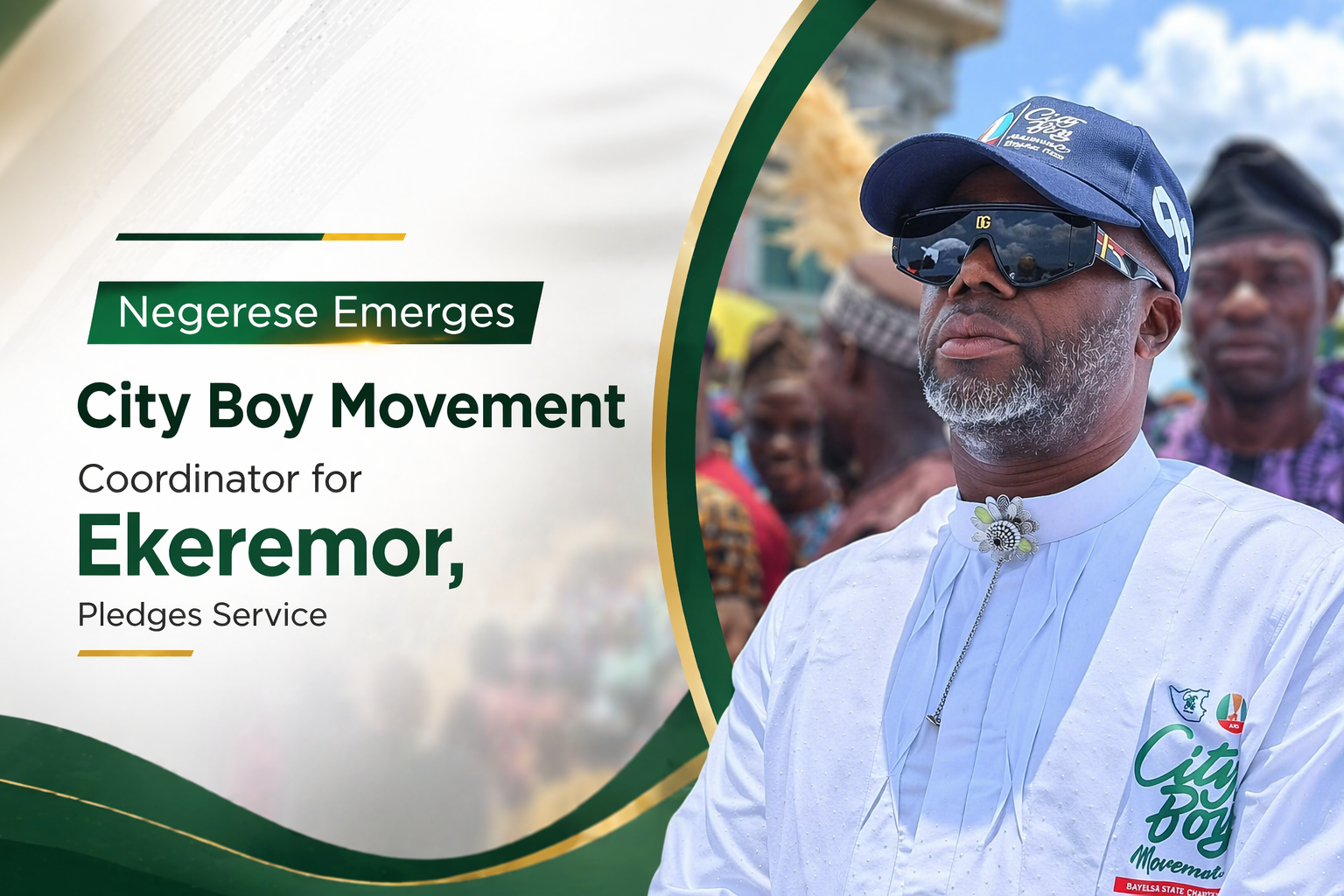
Hon. has formally assumed office as the Coordinator of the City Boy Movement (CBM) in Ekeremor Local Government Area of Bayelsa State, pledging dedication to service and community development.
Speaking following his inauguration, Negerese described his new role as a call to responsibility and commitment rather than a mere title. He assured residents that his leadership would focus on delivering impact and fostering hope across the local government.
He expressed gratitude to God for what he described as divine grace and acknowledged the support of key political leaders and stakeholders, including the Governor of Bayelsa State, , and his deputy, . He also appreciated the Minister of State for Petroleum Resources, , for his encouragement and backing.
The newly inaugurated coordinator further thanked the leadership of the City Boy Movement, particularly the State Director-General, , as well as members of the organisation for entrusting him with the responsibility.
Negerese paid special tribute to the people of Ekeremor, including youths, women, and elders, for their support and participation in the process leading to his emergence.
He pledged to work collaboratively with stakeholders to promote development, empower residents, and strengthen unity within the area, expressing optimism about building a more vibrant and progressive Ekeremor under his coordination.