
News
Edwin Accuses IOCs of Plotting Failure of Dangote Refinery

Edwin Accuses IOCs of Plotting Failure of Dangote Refinery
By Tobouke JEMINE
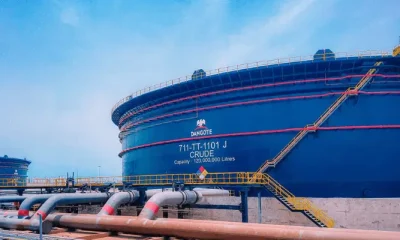
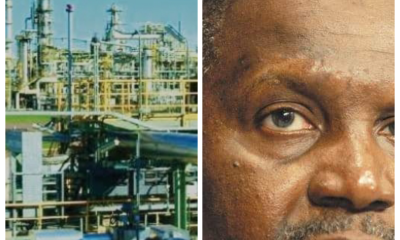
Devakumar Edwin, the Vice President of Oil and Gas at Dangote Industries Limited, has accused International Oil Companies (IOCs) in Nigeria of deliberately obstructing the operations of the Dangote Oil Refinery and Petrochemicals.
He claims that IOCs are inflating the premium price of local crude, making it more expensive than the global market price. This pricing strategy forces the refinery to import crude from distant countries like the United States, incurring significantly higher costs.
Edwin also criticized the Nigerian Midstream and Downstream Petroleum Regulatory Authority (NMDPRA) for issuing licences indiscriminately to marketers, which leads to the importation of substandard refined products into Nigeria.
He expressed these concerns with Energy Editors during a training program organized by the Dangote Group.
He said: “The Federal Government issued 25 licences to build refineries and we are the only one that delivered on promise. In effect, we deserve every support from the government. It is good to note that from the start of production, more than 3.5 billion litres, which represents 90 per cent of our production, have been exported.
‘’We are calling on the Federal Government and regulators to give us the necessary support in order to create jobs and prosperity for the nation.
“While the Nigerian Upstream Petroleum Regulatory Commission, NUPRC, is trying its best to allocate the crude for us, the IOCs are deliberately and willfully frustrating our efforts to buy the local crude.
‘’It will be recalled that NUPRC, recently met with crude oil producers as well as refineries owners in Nigeria in a bid to ensure full adherence to Domestic Crude Oil Supply Obligations, DCSO, as enunciated under section 109(2) of the Petroleum Industry Act, PIA.
“It seems the IOCs’ objective is to ensure that our Petroleum Refinery fails. It is either they are deliberately asking for ridiculous/humongous premium or, they simply state that crude is not available.
‘’At some point, we paid $6 over and above the market price. This has forced us to reduce our output as well as import crude from countries as far as the US, increasing our cost of production…
“It appears the objective of the IOCs is to ensure Nigeria remains a country which exports crude oil and imports refined petroleum products. They (IOCs) are keen on exporting the raw materials to their home countries, creating employment and wealth for their countries, adding to their GDP, and dumping the expensive refined products into Nigeria, thus making us to be dependent on imported products.
‘’It is the same strategy the multinationals have been adopting in every commodity, making Nigeria and Sub-Saharan Africa to be facing unemployment and poverty, while they create wealth for themselves at our expense.
‘’This is exploitation – pure and simple. Unfortunately, the country is also playing into their hands by continuing to issue import licences at the expense of our economy and at the cost of the health of Nigerians who are exposed to carcinogenic products.
“In spite of the fact that we are producing and bringing out diesel into the market, complying with ECOWAS regulations and standards, licences are being issued, in large quantities, to traders who are buying the extremely high sulphur diesel from Russia and dumping it in the Nigerian market.
‘’Since the US, EU and UK imposed a price cap scheme from February 5, 2023, on Russian petroleum products, a large number of vessels are waiting near Togo with Russian ultra-high sulphur diesel and, they are being purchased and dumped into the Nigerian market.
“In fact, some of the European countries were so alarmed about the carcinogenic effect of the extra high sulphur diesel being dumped into the Nigerian market that countries like Belgium and the Netherlands imposed a ban on such fuel being exported from its country into West Africa recently.
‘’It is sad that the country is giving import licences for such dirty diesel to be imported into Nigeria, when we have more than adequate petroleum refining capacity locally…
‘’It would be recalled that in May, Belgium and Netherland adopted new quality standards to halt the export of cheap, low-quality fuels to West Africa, harmonising its standards with those of the European Union.
‘’These measures synchronise fuel export standards with the European domestic market, specifically targeting diesel and petrol with high sulphur and chemical content. Historically, these fuels, with sulphur content reaching up to 10,000 ppm, were exported at reduced rates to countries lsuch as Nigeria and other West African consumers.
Belgium’s Minister of Environment, Zakia Khattabi, announced that his country followed the Netherland, which in April 2023, also prohibited the export of low-quality petrol and diesel to West Africa via the ports of Amsterdam and Rotterdam.
‘’Khattabi emphasised that the Netherlands’ decision to restrict dirty fuel exports had redirected the trade to Belgium, now used by oil producers and traders to export gasoline with excessively high levels of benzene and sulphur.
“He said for far too long, toxic fuels have been departing from Belgium to destinations, including Africa. They cause extremely poor air quality in countries such as Ghana, Nigeria, and Cameroon and are even carcinogenic.
‘’In September 2017, an investigation by an international organisation, Public Eye, revealed that polluted and toxic fuels were being exported on a large scale from the ports of Rotterdam and Amsterdam for export to African markets.
‘’As much as a quarter of the petrol and diesel available in West Africa originates from the ports of Amsterdam, Rotterdam, and Antwerp. These fuels contain sulphur and other pollutants, such as cancer-causing benzene, in quantities up to 400 times the limits permitted in Europe. The Netherlands and Belgium were enjoined to enforce regulations to shield millions of Africans from exposure to toxic fuels.
‘’The decision of the Nigerian Midstream and Downstream Petroleum Regulatory Authority, NMDPRA, to grant licenses indiscriminately for the importation of dirty diesel and aviation fuel has made the Dangote refinery to expand into foreign markets.
‘’The refinery has recently exported diesel and aviation fuel to Europe and other parts of the world. The same industry players fought us for crashing the price of diesel and aviation fuel, but our aim, as I have said earlier, is to grow our economy.’’
He noted that because the refinery met the international standards as well as complied with stringent guidelines and regulations to protect the local environment, it had been able to export its products to Europe and other parts of the world.
While appealing to the federal government and the National Assembly to urgently intervene for speedy implementation of the PIA and to ensure the interest of Nigeria and Nigerians were protected, he said: “Recently, the government of Ghana, through legislation, has banned the importation of highly contaminated diesel and PMS into the county.
‘’It is regrettable that in Nigeria, import licences are granted, despite knowing that we have the capacity to produce nearly double the amount of products needed in Nigeria and even export the surplus. Since January 2021, ECOWAS regulations have prohibited the import of highly contaminated diesel into the region.”
Source: Vanguard News





By Favour Bibaikefie
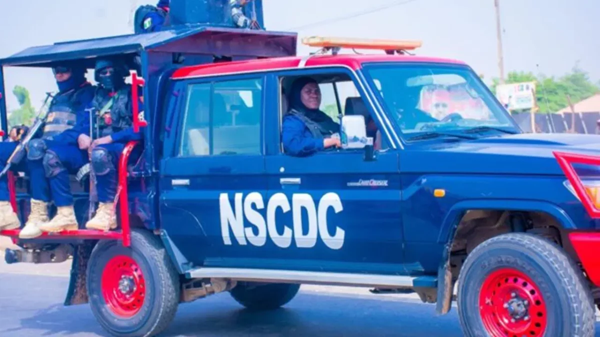
LAGOS — Operatives of the Nigeria Security and Civil Defence Corps have uncovered a suspected baby factory in Badagry area of Lagos State, rescuing 28 persons during a late-night raid.
Authorities said those rescued included 18 adults and 10 children. Among the adults were 17 pregnant women, while one case involving a suspected miscarriage was also recorded. Two persons were arrested in connection with the operation.
The Lagos State Commandant of the NSCDC, Adedotun Keshinro, disclosed that the raid followed weeks of intelligence gathering and surveillance.
According to him, the facility, located in Okuju-Ilado, Badagry, was made up of several apartments and had been monitored for about three weeks before security operatives moved in around midnight on Wednesday.
Keshinro alleged that the operators targeted vulnerable pregnant women by offering them financial inducements. He further claimed that the women were made to sign agreements and were subsequently restricted from leaving the premises freely.
Investigators also suspect that the syndicate used a fake social media profile to attract unsuspecting victims before moving discussions to private channels.
However, one of the arrested suspects denied wrongdoing, insisting that the women came willingly and that no unlawful activity took place.
A woman rescued from the premises reportedly told officials that she entered the facility voluntarily after being abandoned by the man responsible for her pregnancy.
Some community leaders in the area said residents had observed unusual movements around the compound but did not know the true nature of activities there until the security operation was carried out.
The NSCDC said both suspects and rescued victims would be transferred to the appropriate anti-human trafficking agency for further investigation and necessary action.
By Tama Peretengboro
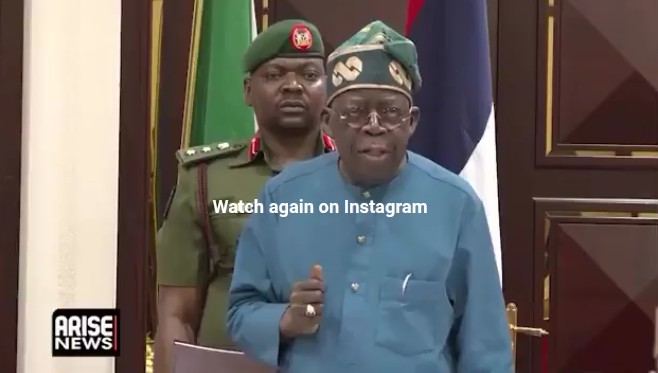
ABUJA — President Bola Ahmed Tinubu has stirred public discussion after making a remark in which he said he “took over leadership from myself” and described the late Muhammadu Buhari as being inseparable from his own political identity.
The statement, made during a public appearance captured in a viral video, quickly generated widespread reactions across political and social circles, with many Nigerians debating the meaning and context of the President’s comments.
Observers said the remarks appeared to underscore Tinubu’s close political association with Buhari and the continuity of governance between both administrations. Others interpreted the comments as an attempt to highlight the shared vision and alliance that existed between the two leaders during Buhari’s tenure.
Since assuming office in May 2023, Tinubu has repeatedly acknowledged Buhari’s role in the formation and electoral success of the All Progressives Congress, as well as the political transition that brought the ruling party to power.
The resurfaced clip has since fueled fresh commentary online, with supporters defending the statement as symbolic and critics questioning its phrasing.
As of the time of filing this report, the Presidency had not issued any formal clarification regarding the viral video.
See video: https://www.instagram.com/reel/DXOOaYSCG23/?igsh=MTF6MzJlOWptanJlYQ==
By Divine Perezide
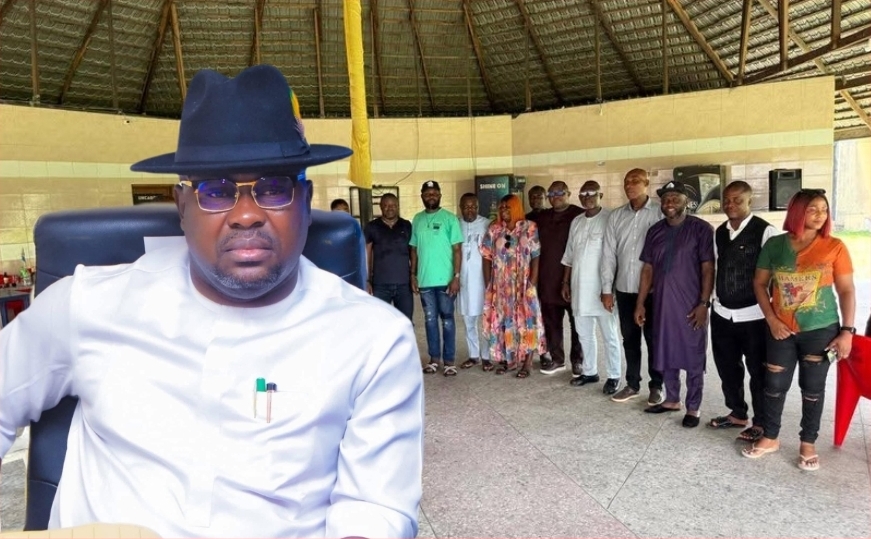
BURUTU — The member representing Burutu State Constituency I in the Delta State House of Assembly, Hon. Alapala Anthony Ebitonmo, has officially announced his intention to seek re-election in the 2027 polls.
Hon. Alapala made the declaration while addressing executives of the All Progressives Congress in Burutu Local Government Area, shortly after the release of the Independent National Electoral Commission timetable and the party’s schedule for the May 16 State Houses of Assembly primaries.
During the meeting, the lawmaker expressed gratitude to party leaders and members for their support during the 2023 general elections, particularly commending members in Burutu LGA for their steadfastness throughout the legal disputes that followed the polls.
He recalled that after his initial victory was overturned by the Court of Appeal, party loyalists remained committed until he eventually emerged victorious in the rerun election.
Speaking on his stewardship, Alapala said his administration had recorded notable progress despite the challenges that marked the early period of his tenure. He noted that the political developments in Delta State, including the alignment of major political blocs and the emergence of Rt. Hon. Sheriff Oborevwori as leader of the APC in the state, had created a more favourable atmosphere for governance.
The legislator stated that several constituency projects are ongoing across the six wards of Burutu North, stressing that grassroots development remains central to his agenda.
On human capital development, he disclosed that more than 50 constituents are currently serving in various appointments under his office, with beneficiaries drawn from all six wards to promote fairness and inclusion.
He further revealed that over 20 students from the constituency have benefited from scholarship opportunities facilitated through his office, while more than 790 students are receiving regular stipends under the Alapala Ebitonmo Students’ Support Scheme.
According to him, the initiative was introduced to reduce financial hardship among students and encourage academic success.
Hon. Alapala also said he had assisted several indigenes of Burutu North in securing empowerment opportunities as well as pensionable employment.
Reaffirming his commitment to public service, the lawmaker assured party stakeholders that if re-elected, he would build on the achievements already recorded and deliver greater democratic dividends to the people.
He also pledged continued loyalty to the APC and its guiding principles.