
News
OPEN LETTER TO THE CHAIRMAN, AGGE FEDERATED COMMUNITY, MR. FUNPUWEI AYERE ON THE NEED TO WORK WITH A BLUEPRINT FOR AGGE DEVELOPMENT

OPEN LETTER TO THE CHAIRMAN, AGGE FEDERATED COMMUNITY, MR. FUNPUWEI AYERE ON THE NEED TO WORK WITH A BLUEPRINT FOR AGGE DEVELOPMENT
Mr Chairman,
May it please you that I want to start this missive with a brief story.
In 2016, I was deployed to Kwara State by the National Youth Service Commission (NYSC) to serve my fatherland, but I declined it, because I wanted to serve in Bayelsa State. In 2017, my desire to serve in Bayelsa State came to pass. But there was a challenge. I was posted to Yenagoa, and Yenagoa was not my choice. I wanted to serve in the land that now host the bones and dust of my mother beneath the solid crust of the earth — AGGE.
I was posted to a Ministry in Yenagoa that was perfect for my academic background, an environment where my professional skills would have been further honed and sharpened. But I ignored that offer and insisted on going to the land of my mother’s birth to serve. I very much wanted to contribute to the progress of the students in the community in my own little way.
I met my uncle, the late Chief Enio Joseph Alla and explained the reasons I wanted to serve in Agge. He endorsed my reasons. Fortunately, the NYSC head office in Yenagoa was behind his own office — a minute or two away from his office. I drafted the letter of redeployment right in his office and went to the NYSC head office. The NYSC Coordinator of Bayelsa State, a woman, welcomed us, and upon my uncle’s explanation of the purpose of the visit, she took the letter, and without even going through the content approved my request and appended her signature.
First, I told that story to point out the fact that we are concerned about the progress and development of Agge. Second, to prove that we have experienced Agge enough, even after the one year national service, to know some of the problems and challenges the community is facing.
So it is in alignment with the spirit of communal patriotism that I am crafting this open letter to you to remind you of things you know far better than myself. I am just a concerned youth expressing his concerns about his motherland, with the hope that things could be better if we all show some practical concern about fixing the problems of our community.
Mr Chairman, to not make the mistake of taking much of your time with “so long a letter”, I want to quickly and humbly suggest that, there is an urgent need for the Community Executive, Chiefs and Stakeholders to organize a communal confab to constructively discuss and chart the way forward for the community. We need unity of vision and purpose for Agge to move forward. We should be concerned that Agge is not where it ought to be. We should not be complacent seeing that Agge is ranking low in many ways.
It is time we come up with a Blueprint for the Development of Agge. And in such a Blueprint, should be stated, among others, these noble aspirations and projects:
1). SANDFILLING AND EMBANKMENT OF AGGE SHORELINES :
This fight should be renewed. We should mount pressure on the government, NDDC and our political representatives to attend to this pressing need. If we do nothing about it now, one day, we will wake up to find our community under the bitter and briny waters of the Atlantic Ocean.
2). LOBBY/AGITATE FOR THE ESTABLISHMENT OF AGGE DEEP SEAPORT:
This is one project that will change the story of Agge community forever. If it comes to pass, Agge is blessed forever.We should not expect others to fight this fight. Agge community should get involved. The traditional leadership should get involved. We should lobby, write letters, address the press and do everything within the ambit of the law and civic responsibility to actualize this seaport.
3). CONSTRUCTION OF PIPE BORNE WATER PLANTS, OR ESTABLISHMENT OF NOTHING LESS THAN THREE BOREHOLES IN EVERY IDUINMU (QUARTERS):
Now, this is what can be done even without the government. What is Agge doing with her monthly income from Sterling Oil and the Ilaje and Ghanaian fisher men and women? What developmental projects is the leadership of the community pursuing and doing with her monthly income? We should be accountable.
4). ESTABLISHMENT OF A GENERAL HOSPITAL OR RENOVATION, EQUIPMENT AND STAFFING OF THE NON-PERFORMING HEALTH CENTER:
We have political office holders representing us at the local and state government levels; we should pay them communal visit and appeal to them to use their offices to influence the establishment of a general hospital or renovate, equip and staff the existing health facility in the community.
5). TRAINING AND EQUIPPING AGGE INDIGENES WITH VARIOUS VOCATIONAL SKILLS BIANNUALLY:
This is one noble project we can negotiate with Sterling Oil to execute. It realization will definitely be of a great help to the many youths who are going about without skill in their hands and without dignified job to their existence.
6). ESTABLISHMENT OF GOOD AND QUALITY NETWORK MAST IN AGGE:
The recent attempt made in this regard is appreciated, but from all indications, it is not functioning well. There are not much difficulties having network mast established in a community. Hence, we should endeavor to work more to realize this important project in our dear community.
7). AGITATION FOR POLITICAL OFFICES TO BE ZONED TO AGGE:
Politics matters. Agge people should get involved in active politics, engage in political negotiation and keep building political bridges across communities, wards and constituencies in order to fly high in the political firmament of Bayelsa State.
8). THE EDUCATION COMMITTEE SHOULD BE UP TO ITS FUNCTIONS:
The Education Committee of Agge should be charged to be up to its purpose and tasks. Agge community needs some kind of strict rules and regulations to protect the Educational Structure of the community otherwise, the schools some communal patriots fought hard to bring to Agge will go into extinction. And let me also add that, in conjunction with Sterling Oil we should establish scholarship for deserving students in the community.
These thoughts or suggestions are not new to you, what might be unfamiliar are the sure channels through which these things can be achieved. And that is part of the reasons why a convention of a communal confab is necessary.
It is said that human progress is not automatic; it comes from the deliberate, consistent and strategic actions and sacrifices of patriotic and dedicated individuals. This Truth must be lived out if Agge must experience transformation.
Upon our individual and collective shoulders rest the task of building the great and developed Agge we are dreaming of.
If not you, who? If not me, who? If not now, then when? Let’s get to work. Let’s champion the cause of our dear community.
May God send help to Agge, and may God grant you the grace to make a difference.
Thanks and God bless.
© Tobouke JEMINE
22/04/2024




By Favour Bibaikefie
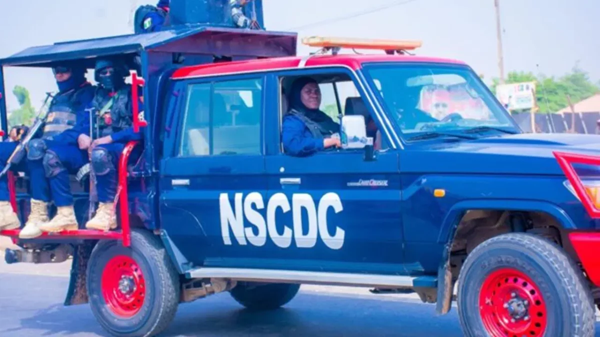
LAGOS — Operatives of the Nigeria Security and Civil Defence Corps have uncovered a suspected baby factory in Badagry area of Lagos State, rescuing 28 persons during a late-night raid.
Authorities said those rescued included 18 adults and 10 children. Among the adults were 17 pregnant women, while one case involving a suspected miscarriage was also recorded. Two persons were arrested in connection with the operation.
The Lagos State Commandant of the NSCDC, Adedotun Keshinro, disclosed that the raid followed weeks of intelligence gathering and surveillance.
According to him, the facility, located in Okuju-Ilado, Badagry, was made up of several apartments and had been monitored for about three weeks before security operatives moved in around midnight on Wednesday.
Keshinro alleged that the operators targeted vulnerable pregnant women by offering them financial inducements. He further claimed that the women were made to sign agreements and were subsequently restricted from leaving the premises freely.
Investigators also suspect that the syndicate used a fake social media profile to attract unsuspecting victims before moving discussions to private channels.
However, one of the arrested suspects denied wrongdoing, insisting that the women came willingly and that no unlawful activity took place.
A woman rescued from the premises reportedly told officials that she entered the facility voluntarily after being abandoned by the man responsible for her pregnancy.
Some community leaders in the area said residents had observed unusual movements around the compound but did not know the true nature of activities there until the security operation was carried out.
The NSCDC said both suspects and rescued victims would be transferred to the appropriate anti-human trafficking agency for further investigation and necessary action.

By Tama Peretengboro
ABUJA — President Bola Ahmed Tinubu has stirred public discussion after making a remark in which he said he “took over leadership from myself” and described the late Muhammadu Buhari as being inseparable from his own political identity.
The statement, made during a public appearance captured in a viral video, quickly generated widespread reactions across political and social circles, with many Nigerians debating the meaning and context of the President’s comments.
Observers said the remarks appeared to underscore Tinubu’s close political association with Buhari and the continuity of governance between both administrations. Others interpreted the comments as an attempt to highlight the shared vision and alliance that existed between the two leaders during Buhari’s tenure.
Since assuming office in May 2023, Tinubu has repeatedly acknowledged Buhari’s role in the formation and electoral success of the All Progressives Congress, as well as the political transition that brought the ruling party to power.
The resurfaced clip has since fueled fresh commentary online, with supporters defending the statement as symbolic and critics questioning its phrasing.
As of the time of filing this report, the Presidency had not issued any formal clarification regarding the viral video.
See video: https://www.instagram.com/reel/DXOOaYSCG23/?igsh=MTF6MzJlOWptanJlYQ==
By Divine Perezide
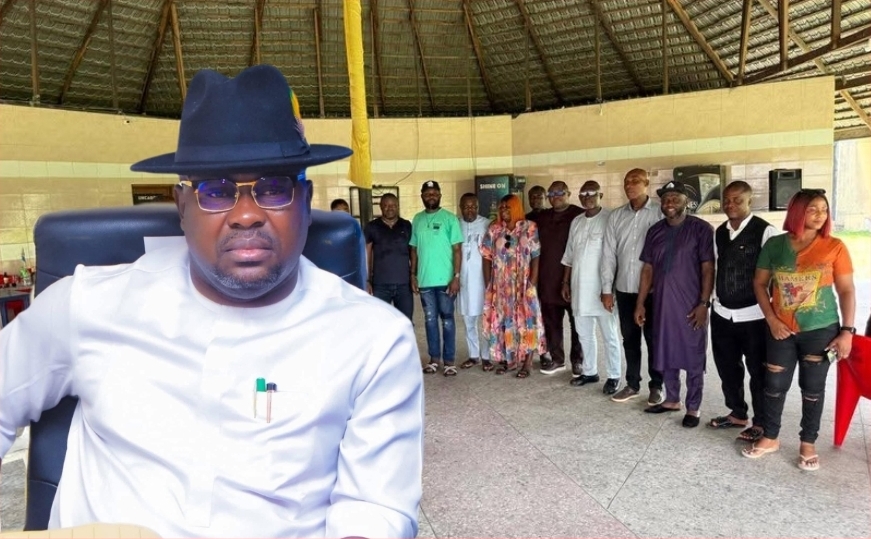
BURUTU — The member representing Burutu State Constituency I in the Delta State House of Assembly, Hon. Alapala Anthony Ebitonmo, has officially announced his intention to seek re-election in the 2027 polls.
Hon. Alapala made the declaration while addressing executives of the All Progressives Congress in Burutu Local Government Area, shortly after the release of the Independent National Electoral Commission timetable and the party’s schedule for the May 16 State Houses of Assembly primaries.
During the meeting, the lawmaker expressed gratitude to party leaders and members for their support during the 2023 general elections, particularly commending members in Burutu LGA for their steadfastness throughout the legal disputes that followed the polls.
He recalled that after his initial victory was overturned by the Court of Appeal, party loyalists remained committed until he eventually emerged victorious in the rerun election.
Speaking on his stewardship, Alapala said his administration had recorded notable progress despite the challenges that marked the early period of his tenure. He noted that the political developments in Delta State, including the alignment of major political blocs and the emergence of Rt. Hon. Sheriff Oborevwori as leader of the APC in the state, had created a more favourable atmosphere for governance.
The legislator stated that several constituency projects are ongoing across the six wards of Burutu North, stressing that grassroots development remains central to his agenda.
On human capital development, he disclosed that more than 50 constituents are currently serving in various appointments under his office, with beneficiaries drawn from all six wards to promote fairness and inclusion.
He further revealed that over 20 students from the constituency have benefited from scholarship opportunities facilitated through his office, while more than 790 students are receiving regular stipends under the Alapala Ebitonmo Students’ Support Scheme.
According to him, the initiative was introduced to reduce financial hardship among students and encourage academic success.
Hon. Alapala also said he had assisted several indigenes of Burutu North in securing empowerment opportunities as well as pensionable employment.
Reaffirming his commitment to public service, the lawmaker assured party stakeholders that if re-elected, he would build on the achievements already recorded and deliver greater democratic dividends to the people.
He also pledged continued loyalty to the APC and its guiding principles.