
News
Devastating Morocco Earthquake Claims Over 2,800 Lives, Survivors Seek Shelter Under Open Skies.

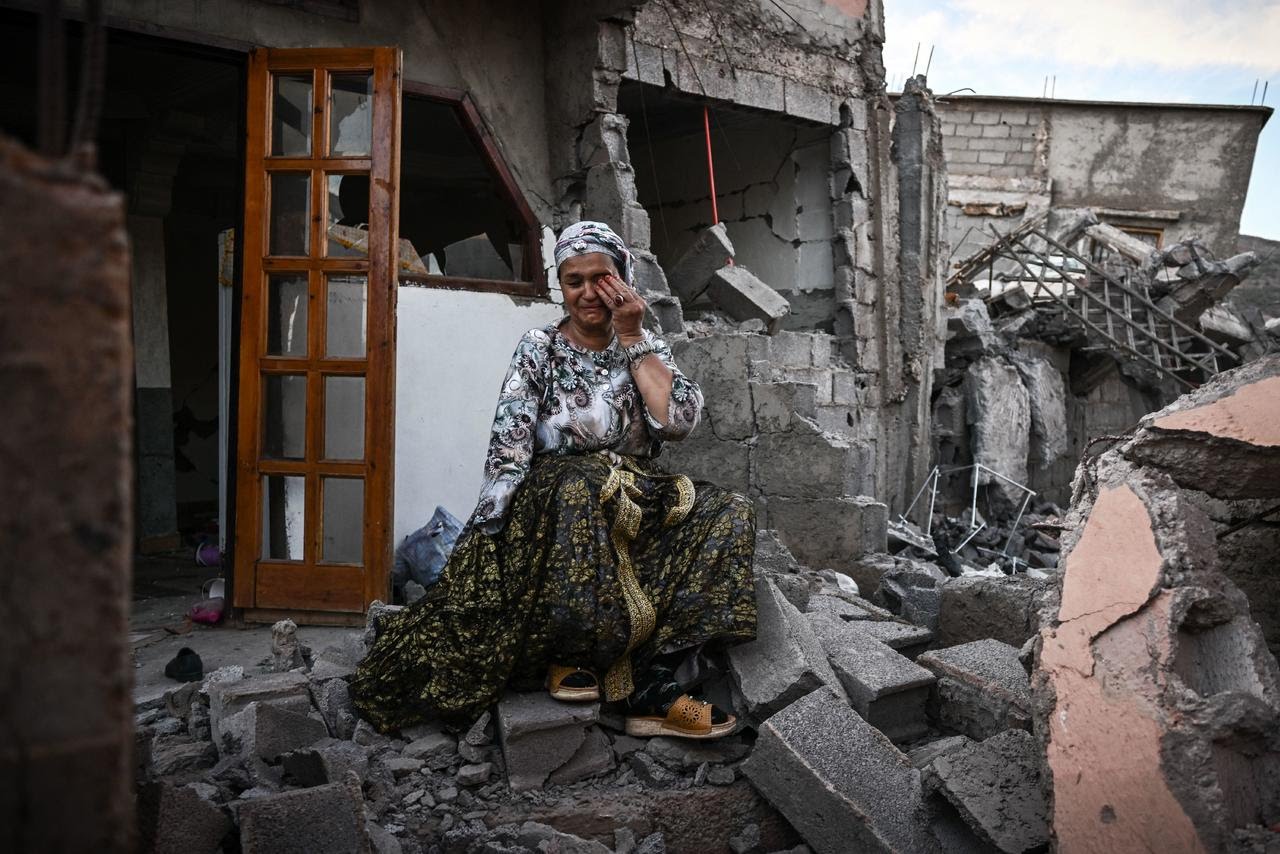
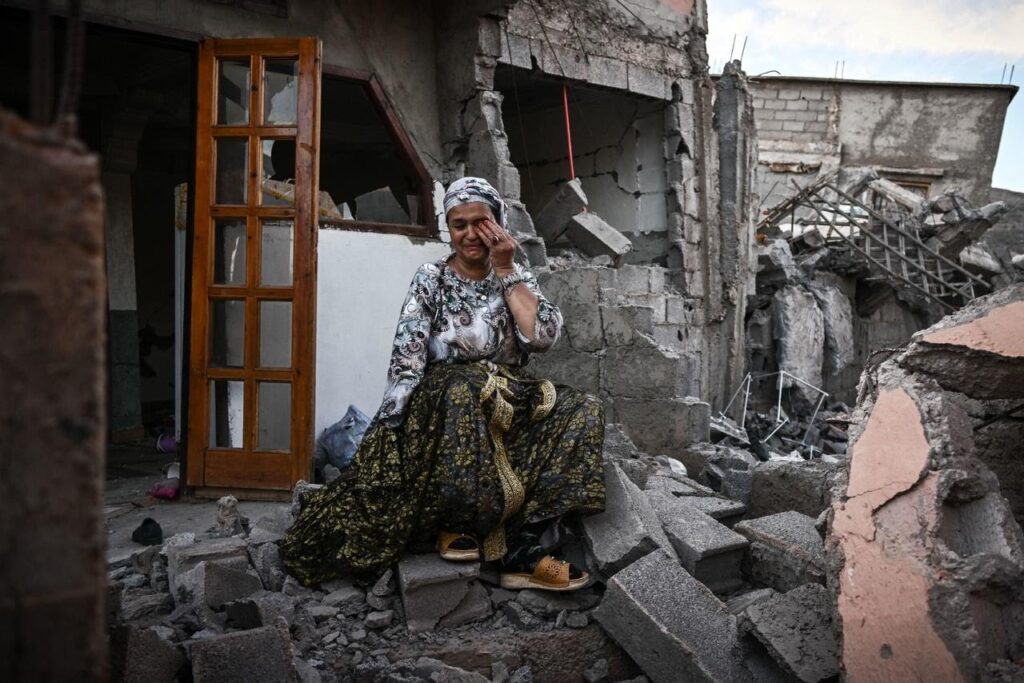
Devastating Morocco Earthquake Claims Over 2,800 Lives, Survivors Seek Shelter Under Open Skies.
TINMEL, Morocco – In the aftermath of Morocco’s most powerful earthquake in more than a century, residents in ravaged regions found themselves camping outdoors for a fourth consecutive night on Monday. The quake, measuring 6.8 on the Richter scale, struck late Friday night in the High Atlas Mountains, reducing the region’s traditional mud brick homes to rubble and pushing the death toll to surpass 2,800.
International rescue teams from Spain, Britain, and Qatar have united with Moroccan authorities in a relentless quest to locate survivors amidst the devastation.
Late on Monday, state TV reported the grim news that the death toll had climbed to 2,862, with an additional 2,562 individuals injured. Due to the challenging terrain of the quake-stricken areas, there remains uncertainty regarding the number of people still missing.
Tinmel, a village that bore the brunt of the earthquake’s fury, witnessed the destruction of nearly every residence, rendering its entire population homeless. The scent of death emanates from numerous animals entombed beneath the debris.
Mouhamad Elhasan, 59, recounted the tragic moment when the earthquake struck as his family dined together. His 31-year-old son was struck by a collapsing neighbor’s roof as he fled outside, eventually succumbing to the rubble. Elhasan’s frantic search for his son ended in heartbreak, a painful reminder of the peril that unfolded.
Residents of Tinmel and neighboring villages demonstrated remarkable resilience, pulling survivors from the rubble using their bare hands.
In Tikekhte, where few structures remain standing, 66-year-old Mohamed Ouchen recounted the heroic efforts of residents who rescued 25 people, including his sister, through manual labor. “We were busy rescuing. Because we didn’t have tools, we used our hands,” he said. “Her head was visible, and we kept digging by hand.”
Footage captured in the remote village of Imi N’Tala, filmed by Spanish rescuer Antonio Nogales of the aid group “Bomberos Unidos Sin Fronteras” (United Firefighters Without Borders), depicted men and dogs navigating treacherous terrain strewn with debris.
“The level of destruction is… absolute,” Nogales struggled to articulate the magnitude of the devastation. “Not a single house has remained intact.” Despite the enormity of the damage, rescue teams, accompanied by search dogs, maintained hope of discovering survivors.
The epicenter of the quake, located approximately 72 km (45 miles) southwest of Marrakech, caused damage to historic buildings in the city’s UNESCO World Heritage Site. The 12th-century Tinmel Mosque, a site of historical significance, also bore the brunt of the tremor’s force.
However, the more modern areas of Marrakech, including a location near the airport scheduled for IMF and World Bank meetings next month, were mostly unaffected by the disaster.
The Moroccan government intends to proceed with these meetings, expecting over 10,000 attendees.
Rescue efforts are ongoing, with some survivors initially criticizing the slow response. Tent camps began appearing by Monday night, providing shelter to those spending their fourth night outdoors.
The army is reinforcing search-and-rescue teams, supplying essential items like water, food, tents, and blankets. A major road from the High Atlas Mountains to Marrakech was congested as relief vehicles and volunteers headed to the hardest-hit areas.
Morocco has received aid from Spain, Britain, the United Arab Emirates, and Qatar, all sending search-and-rescue specialists and resources. Algeria allocated three planes for rescue personnel and aid transport, while other countries’ relief offers may also be accepted by the Moroccan government in the future
Source: Reuters







By Charity Ebi
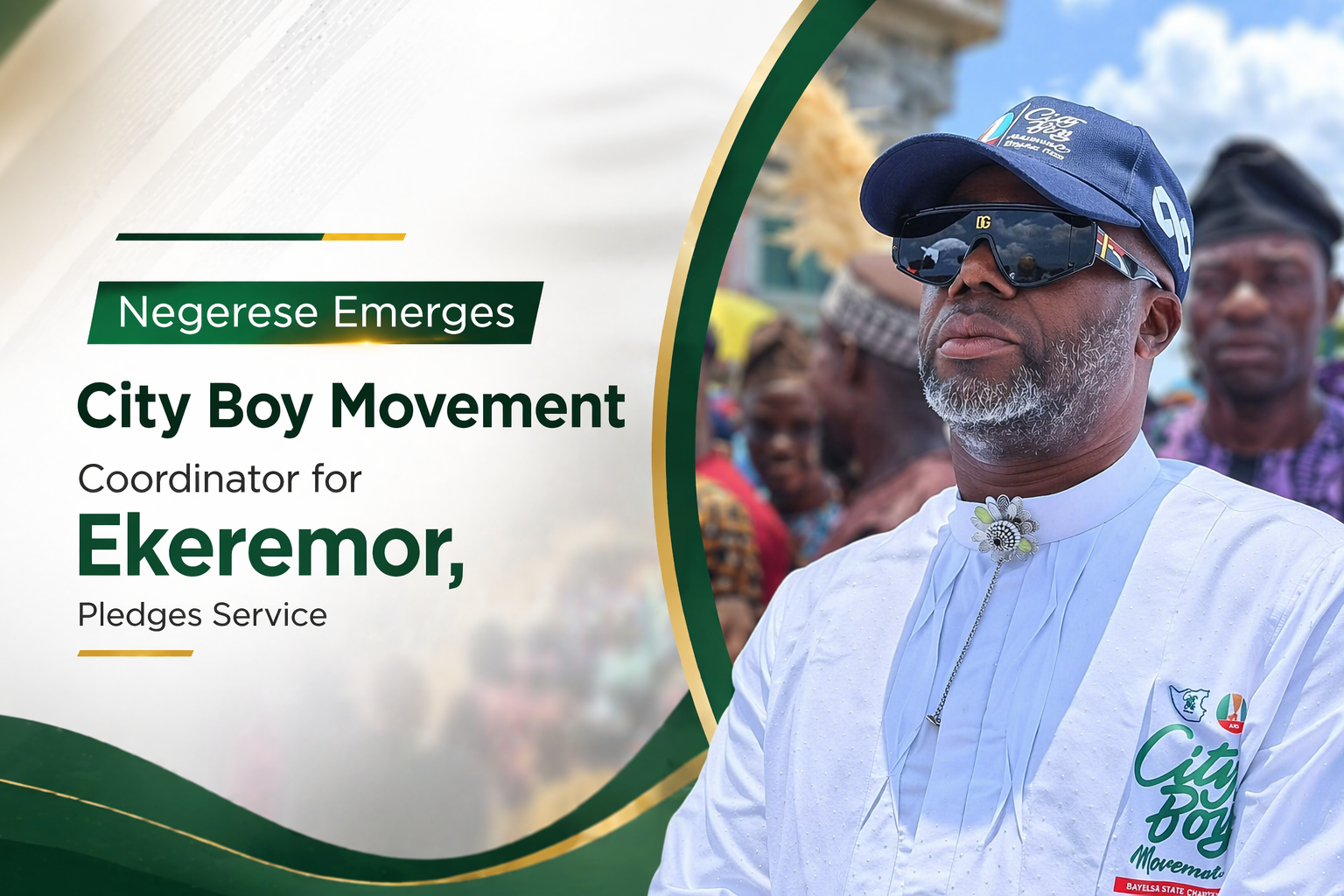
Hon. has formally assumed office as the Coordinator of the City Boy Movement (CBM) in Ekeremor Local Government Area of Bayelsa State, pledging dedication to service and community development.
Speaking following his inauguration, Negerese described his new role as a call to responsibility and commitment rather than a mere title. He assured residents that his leadership would focus on delivering impact and fostering hope across the local government.
He expressed gratitude to God for what he described as divine grace and acknowledged the support of key political leaders and stakeholders, including the Governor of Bayelsa State, , and his deputy, . He also appreciated the Minister of State for Petroleum Resources, , for his encouragement and backing.
The newly inaugurated coordinator further thanked the leadership of the City Boy Movement, particularly the State Director-General, , as well as members of the organisation for entrusting him with the responsibility.
Negerese paid special tribute to the people of Ekeremor, including youths, women, and elders, for their support and participation in the process leading to his emergence.
He pledged to work collaboratively with stakeholders to promote development, empower residents, and strengthen unity within the area, expressing optimism about building a more vibrant and progressive Ekeremor under his coordination.

By Favour Bibaikefie
YENAGOA — Former Nigerian Ambassador to Sweden, Godknows Boladei Igali, has commended the visit of President Bola Ahmed Tinubu to Bayelsa State, describing it as a significant step in advancing development efforts in the Niger Delta.
In a statement released on Friday, Igali said the President’s presence in the state for the commissioning of major projects underscores the Federal Government’s renewed focus on infrastructural growth in the region. He characterized the visit as timely and impactful, noting that it reflects a broader commitment to addressing development needs in oil-producing communities.
The former envoy also praised the administration of Governor Douye Diri for delivering key projects designed to enhance living standards and stimulate economic activities across the state. According to him, the ongoing infrastructure initiatives represent meaningful progress in Bayelsa’s development trajectory.
The National Chairman of the Pan Niger Delta Fo observed that the newly completed projects are expected to improve connectivity, boost commercial activities, and open up employment opportunities, particularly for young people in the state.
Igali further urged residents to accord the President a warm reception, emphasizing the importance of unity and collective support for policies that drive national development.
President Tinubu’s visit includes the inauguration of several strategic projects executed by the state government, a move widely viewed by stakeholders as strengthening collaboration between the Federal Government and subnational authorities in fostering sustainable growth.
By Favour Bibaikefie
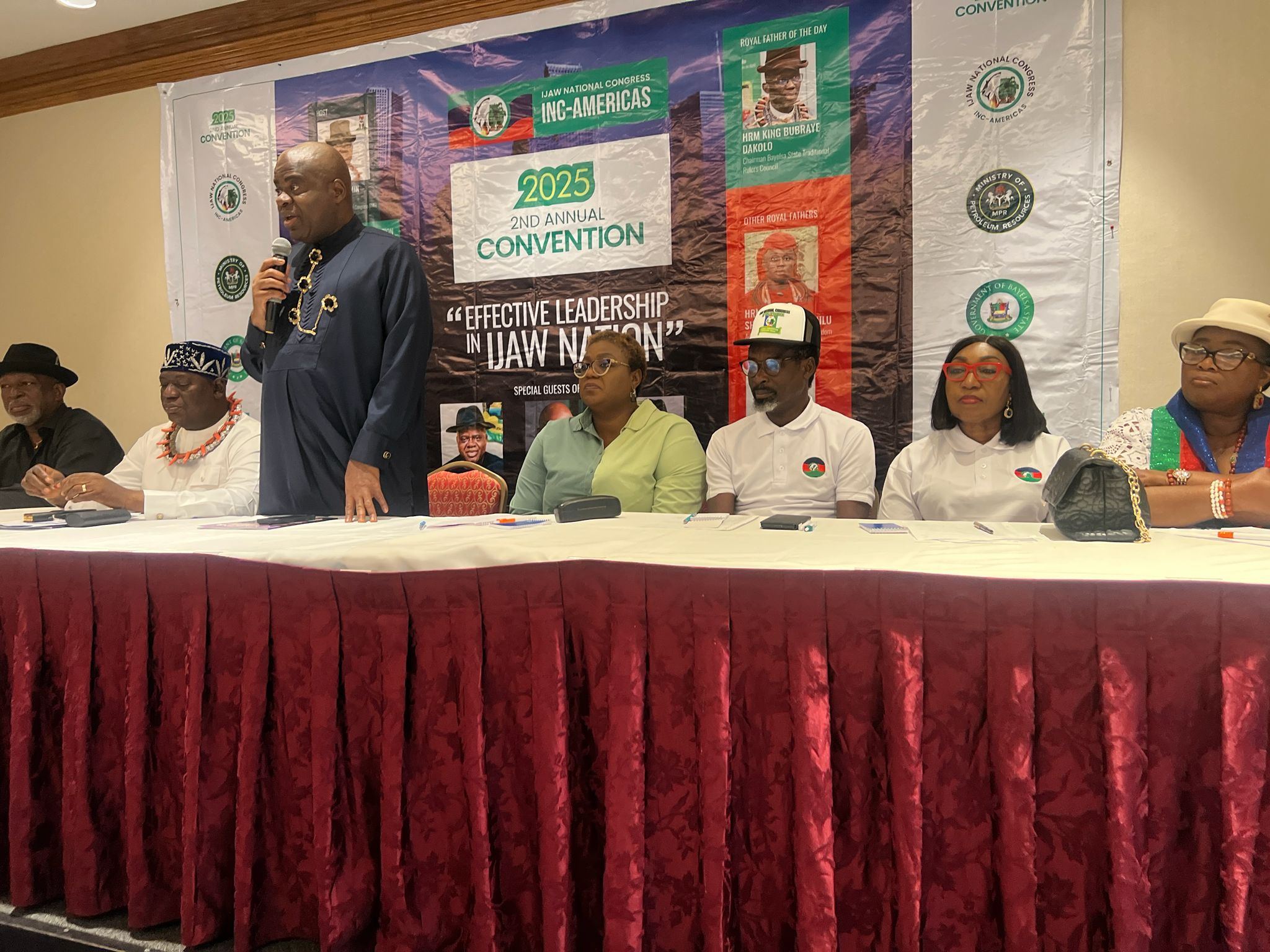
YENAGOA — The Ijaw National Congress (INC) has reaffirmed that its rescheduled national elections will hold on April 13, 2026, declaring its Electoral Committee (ELECO) fully prepared and cautioning against any directive capable of undermining the process.
The resolution followed an expanded National Executive Council (NEC) meeting held on April 9 at Ijaw House in Yenagoa, convened to assess the level of preparedness for the forthcoming elections.
INC NEC Affirms ELECO Readiness
In a communiqué issued at the end of the meeting, the NEC unanimously endorsed the report presented by ELECO, expressing satisfaction with the level of preparedness and affirming that the elections would proceed as scheduled.
The council stated that members “endorsed the report of the ELECO… that the rescheduled INC National elections should hold on the 13th of April 2026 as planned.”
It further noted that concerns raised at a stakeholders’ meeting convened by the Bayelsa State Government in March had been adequately addressed.
Affirmation of Electoral Independence
The NEC stressed the need to preserve the independence of the electoral body, directing that ELECO be allowed to carry out its responsibilities without interference.
According to the communiqué, ELECO is to “carry out its assignment without interference from other organs of Congress, except to receive logistics support from the NEC.”
The council also expressed confidence in the committee’s readiness, particularly in the preparation of both sensitive and non-sensitive election materials.
Clarifies CITRE’s Role
In a move seen as addressing internal governance concerns, the NEC clarified the constitutional role of the Conference of Ijaw Traditional Rulers and Elders (CITRE), describing it as an advisory organ in line with Article 14(D) of the INC 2019 Constitution.
It noted that CITRE’s functions in election matters are limited to clearing nominees and managing disputes arising from the electoral process, similar to the role of the Board of Trustees (BOT).
The NEC, however, reiterated its openness to constructive input from CITRE, BOT and other organs, provided such advice aligns with the overall interest of the Congress.
INC Discourages Misinformation
The council issued a strong advisory to the public and stakeholders to disregard any information or directive inconsistent with the official position of ELECO.
“The general public is therefore advised to discountenance any information or directive that runs contrary to the position of the ELECO…,” the communiqué stated.
NEC Attendance Across INC Structures
The meeting drew a wide representation of leadership across the INC structure, including NEC members, BOT officials, CITRE leaders, National Representative Committee (NRC) members, zonal executives and chapter representatives.
Among those in attendance were INC President, Prof. Benjamin Okaba; National Secretary, Engr. Ebiowei Wodu; Acting Chairman of CITRE (East), HRH (Gen. Rt.) B.A. Fipinimama; ELECO Chairman, HRM (Justice) Dr. F. F. Tabai; and ELECO Vice Chairman, HRM Seiyifa Koroye.
Others included ELECO Secretary, Dr. Otobo Choice Jamaica; former INC President, Prof. A.W. Obianime; National Legal Adviser, Bomo Tons Fetepigi Obhe; National Organising Secretary, Onengiyeofori Fenibo; and Leader of the NRC, HRH (Dr.) Anyanate Kio.
Also present were CITRE leader, HRH Okoko Stample Esau (PhD); BOT Vice Chairman, Chief M. Tiemo; BOT Secretary, Barr. Fidelis Agbiki; National Treasurer, High Chief Philip B. Agu; National Women Leader, Alali R. Danagogo; and Vice President, Rose Obuoforibo.
Chapter and zonal representatives included Barr. Agha Toru-Ibe (Benin City Secretary), Ephraim Gogo (Benin City Chairman), Tonye Harry (Lagos Chairman), A. Elayelagha (Lagos Secretary), Daniel Ebijor Tonibor (Abuja Chairman), Tete K. Friday (Abuja Assistant Secretary), Ajele Ayokeji Johnson (Akure Chairman), John Ebiofini (Akure Secretary), and Chief Bare Etolor (Chairman, Ijaw Elders Forum).
Others were HRH Akcheseinimie Micah Frank (BOT member), Princess Ebiseni Adesola Joyce (NRC Deputy Leader), Elder Gabriel Benamiensia (NRC Clerk), Karibo Lawrence (Eastern Zone Vice Chairman), God’swill Seke (Central Zone Secretary), Mrs. Peremo Isenali Opiali (National Welfare Secretary), and King Koma A. Eteko (CITRE Deputy Chairman).
The NEC’s resolution is widely interpreted as a strategic effort to consolidate authority within the INC and prevent internal divisions ahead of the elections.
By reaffirming ELECO’s independence and clarifying institutional roles, the leadership appears focused on ensuring a credible, transparent and conflict-free electoral process.
With the April 13 date now firmly set, attention will shift to the conduct of the elections and the ability of the Congress to sustain unity in the post-election period.