
IduwiniVoice Diaspora
FG Secures 10 Diplomatic Approval; UK, US, and France Among Nations Granting Consent

By Ezinne
The Federal Government has reached a significant milestone in its effort to restore Nigeria’s full diplomatic presence abroad, securing official agréments for ambassador-designates from 10 countries. The Ministry of Foreign Affairs confirmed the development on Monday, March 30, 2026, noting that these formal consents are a prerequisite before the newly appointed envoys can officially assume their duties in their host nations.
According to a statement by the Ministry’s spokesperson, Kimiebi Ebienfa, the 10 countries that have already granted approval include the United Kingdom, United States, France, Ireland, Qatar, Benin Republic, Ethiopia, Djibouti, Senegal, and Sierra Leone.
This breakthrough follows a prolonged period during which many of Nigeria’s foreign missions were managed by chargés d’affaires due to the recall of all career and non-career ambassadors in late 2023.
In addition to securing these approvals, the government has elevated 19 Foreign Service Officers to the rank of Ambassadors-in-Situ, a career-defining promotion aimed at strengthening the internal professional structure of Nigeria’s diplomatic corps. While the 10 major approvals mark a steady step forward, the Ministry clarified that responses from dozens of other countries—including Germany and Mexico—are still being awaited.
The Presidency has directed the Ministry of Foreign Affairs to finalize the logistics for an upcoming induction ceremony for the confirmed envoys. Once this orientation is complete and the remaining agréments are received, the ambassadors will be formally dispatched to their respective stations to begin their tours of duty.











New costs for residence and citizenship
By Ezinne
The Canadian government has announced a significant upward adjustment in processing fees for permanent residence and citizenship applications, a move that will impact thousands of Nigerians and other foreign nationals seeking residency in the country, even others currently in the “Japa” pipeline. Immigration, Refugees and Citizenship Canada (IRCC) confirmed that the new price which is part of a routine review aimed at maintaining reliable services while keeping up with inflation will be implemented in two distinct phases, starting today, March 31, 2026.
The first phase, which takes effect today, March 31, specifically targets the Right of Citizenship fee for adult applicants, which has risen from $119.75 to $123.00. While the adult citizenship grant processing fee remains unchanged at $530, the total outlay for Nigerians applying for Canadian citizenship now stands at $653.00 per adult.
The second and broader phase of the hike is scheduled for April 30, 2026. This update will affect nearly all permanent residence (PR) categories. The Right of Permanent Residence Fee (RPRF) will increase from $575 to $600. For those applying under high-skilled programs such as Express Entry or the Provincial Nominee Program (PNP), the principal applicant fee will jump from $950 to $990. Business immigration applicants face the steepest increase, with fees rising by $85 from $1,810 to reach $1,895. Similarly, the Family Class category will see a $25 increase, from $545 to $570.
”Fees for Protected Persons, along with those applying under Humanitarian and Compassionate Grounds or Public Policy Measures, will climb from $635 to $660. Additionally, the cost for Permit Holders will see a $15 increase, moving from $375 to $390.”
IRCC stated that these biennial adjustments are required under the Service Fees Act to keep pace with inflation and cover the rising costs of program delivery. Crucially, officials warned that the RPRF is charged based on the payment date, not the application date; therefore, any applicant who has already submitted a file but delayed their RPRF payment until after April 30 will be required to pay the new $600 rate.
By Favour Bibaikefie
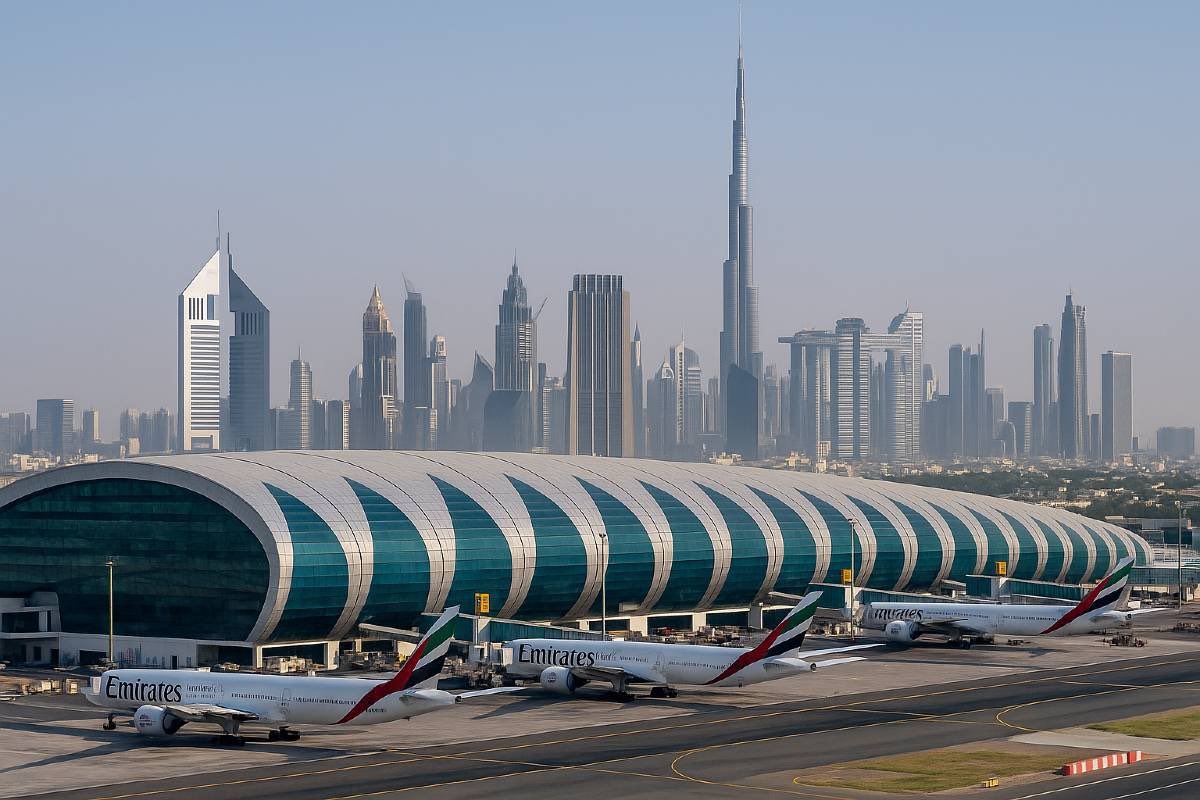
Dubai’s aviation sector was thrown into unprecedented turmoil after missile strikes linked to the escalating conflict involving Iran triggered the shutdown of the United Arab Emirates’ main air gateways, forcing airlines worldwide to suspend or reroute thousands of flights.
Authorities confirmed that Dubai International Airport (DXB)—the world’s busiest hub for international passengers—and Al Maktoum International Airport (DWC) temporarily halted flight operations on February 28, 2026, following the closure of regional airspace due to security threats.
In an official statement, Dubai Airports announced that “all flight operations at Dubai International (DXB) and Dubai World Central – Al Maktoum International (DWC) are suspended until further notice,” advising passengers to contact their airlines for updates and to avoid traveling to the airport during the disruption.
The shutdown came after Iran launched missile and drone attacks across parts of the Gulf in retaliation for military strikes on its territory, an escalation that forced several countries—including the United Arab Emirates, Qatar, Bahrain, Iraq and Israel—to temporarily close their airspace.
Airlines Suspend Flights
The closure of Dubai’s airspace triggered a ripple effect across the global aviation network. Major airlines operating through the Gulf—including Emirates, Etihad Airways, Qatar Airways, Lufthansa, British Airways, Air India, Virgin Atlantic and Wizz Air—either grounded flights or suspended services to destinations across the Middle East.
Aviation analysts say the disruption is particularly severe because Dubai serves as one of the most important intercontinental transit hubs linking Asia, Europe, Africa and the Middle East. Each day, hundreds of long-haul flights pass through the city, carrying passengers and cargo between major global destinations.
The sudden closure stranded tens of thousands of passengers and forced airlines to divert aircraft mid-flight or cancel operations entirely.
Damage and Casualties Reported
Reports indicate that parts of Dubai International Airport sustained minor damage during the missile incidents, with several people injured during the attack.
Debris from intercepted missiles also caused damage in Abu Dhabi and other areas of the UAE, while at least one civilian death was reported in the capital during the wider attacks.
Economic and Travel Fallout
Industry observers warn that the aviation disruption could have major economic consequences. Dubai’s economy is heavily dependent on tourism, trade, logistics and global transit traffic, all of which rely on the smooth functioning of its airports.
The crisis has already triggered thousands of flight cancellations and delays, while rising oil prices and longer rerouted flight paths are increasing operating costs for airlines worldwide, reuters reported.
Travel chaos has also forced some stranded passengers to seek alternative routes or charter expensive private flights out of the region, highlighting the scale of the disruption to global travel networks.
Limited Flights Resume
After nearly 48 hours of total shutdown, UAE authorities began allowing a limited number of flights to resume, though airlines warned that normal operations may take time to restore as security concerns persist across the Gulf region.
Aviation experts say the incident demonstrates how geopolitical conflict in the Middle East can quickly reverberate across the global transport system, affecting millions of travellers and international supply chains within hours.
IduwiniVoice Diaspora
BREAKING: Former President Goodluck Jonathan Bags New International Appointment
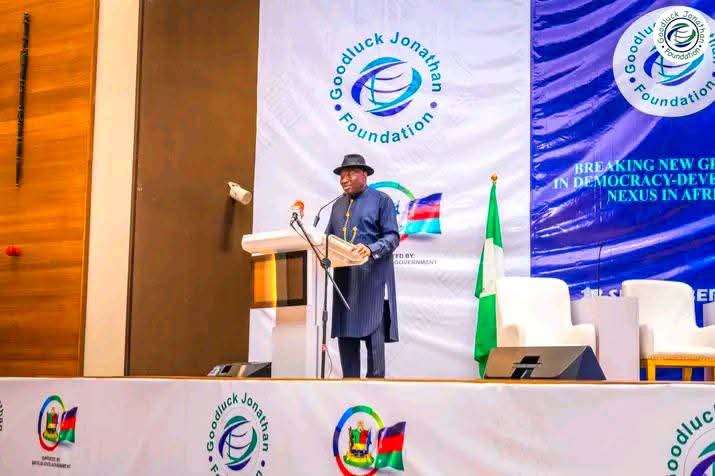
By Favour Bibaikefie
Former Nigerian President Dr.Goodluck Jonathan has been appointed as the United Nations Global Crisis Envoy, a powerful international role backed by the United States, United kingdom, France, China, Russia ,and the United Nations itself. The appointment marks a historic moment,making Jonathan the first African former Head of State to hold such a high-level diplomatic position.
The role is similar in stature to that previously held by former UK Prime Minister Tony Blair, who served as the Middle East envoy under the auspices of the UN, EU, US, and Russia.
Jonathan’s new position will involve engaging in high-stakes global diplomacy, advising on conflict resolution, humanitarian response, and fostering international peace in crisis-affected regions around the world.
This appointment is another milestone in a career that has been nothing short of extraordinary. Dr. Jonathan began as a lecturer and rose steadily through the ranks of public service – serving as commissioner, Deputy Governor,Governor of Bayelsa State,and then vice president of Nigeria. He became acting president in 2010,before being sworn in as President -a position he held until 2015.
Now,nearly a decade after leaving office, Jonathan is returning to the world stage in a new capacity-this time as a global peace broker and advocate.
His selection for the role is seen as recognition of his growing influence in international diplomacy, particularly in conflict mediation and democratic transition across Africa. In recent years, he has led observer missions and facilitated peaceful elections in countries such as The Gambai, Mali, Zambia.
Dr. Jonathan’s appointment comes at a time when global conflicts-from political unrest to humanitarian emergencies-demand experienced leadership and trusted voices. With this new role, the former Nigerian President joins a select group of global statement tasked with navigating the world’s most pressing crises.
Most details on the scope of his mandate and upcoming engagement are expected to be released in the coming days.