
News
Tantita: Stop Troubling Tompolo, Ijaw Nation, Seek for Other Opportunities – Bibaikefie Tasks Detractors


By Favour Bibaikefie
The ongoing controversy surrounding the pipeline surveillance contract awarded to Tompolo’s Tantita Security Services Limited has taken a new turn, as stakeholders across the Niger Delta continue to intensify debate onmver the calls for its decentralisation amid allegations of imbalance, vested interests, and political undertones.
While some groups and individuals have advocated for the fragmentation of the contract to accommodate more regional actors, others have strongly opposed the move, arguing that such agitation is selective and potentially counterproductive to the fragile peace and operational gains recorded by Tantita in recent times.

Adding his voice to the discourse, media executive and Publisher of IduwiniVoice, Prince (Dr.) Peretengboro Klintin Bibaikefie, described the campaign against the existing structure as “misdirected and suspicious,” questioning the underlying motives of those pushing for decentralisation.
“It is witchcraft that they left the owners of oil blocs and even other companies handling the same surveillance contract and are fixated on fighting Tompolo who graciously engaged everyone, thereby bringing benefits to all,” he asserted. “If their intentions were sincere, they would include the Olu’s contract in their misadventure, better still first fight to own the oil blocs or marginal oil fields.”
Bibaikefie further raised concerns over what he described as “selective activism,” noting that there has been little or no agitation regarding other pipeline surveillance arrangements, particularly those reportedly handled by firms such as the Pipeline Infrastructures Nigerian Limited.
“How do you make sense of the fact that nobody seeks decentralisation of similar or even larger surveillance contracts handled by others?” he queried. “Why must a man who played a visible role in the emancipation struggle of the Niger Delta be the one pressured to relinquish his litle opportunity? one which he has used to better the lives of thousands.”
However, IduwiniVoice recall that, the surveillance contract in question, awarded by the Nigerian government, is aimed at protecting critical oil infrastructure across the Niger Delta—a sector historically plagued by crude oil theft, pipeline vandalism, and environmental degradation.
Since its award to Tantita, a firm linked to former militant leader , industry reports indicate a significant reduction in oil theft and improved production output. Government officials have repeatedly cited enhanced community participation and local intelligence gathering as key drivers of this success.
However, critics—among them some ex-militant leaders and regional stakeholders—have argued that the contract should be decentralised to allow broader participation and prevent perceived monopolisation.
Proponents of decentralisation maintain that expanding the contract to include more indigenous operators would:
- Promote inclusivity
- Reduce tension among youth groups
- Ensure equitable distribution of economic opportunities
Yet, opposing voices insist that such arguments may be driven more by economic rivalry than genuine developmental concerns. Bibaikefie noted that competence and fair aggitations must form the basis of their adventure. You cannot be calling for the spliting of Tompolo’s performing contract while turning a blindside to that of PINL which is reportedly bigger.
This only mean one thing, envy towards Tompolo. Pull-Him-Down syndrome. What equity a fairness will you entrench when you have never mentioned PINL’s contract in all your pressure for decentralisation?
Bibaikefie echoed this sentiment, arguing that the focus on pipeline surveillance contracts alone reflects a narrow pursuit of benefits.
“Can’t others seek for drilling contracts, international vessel supply contracts, and other legitimate opportunities within and outside the oil and gas value chain?” he asked, calling for a broader and more strategic engagement with the region’s economic ecosystem rather than fixated witchhunt.
Amid the growing tension, several organisations and opinion leaders have urged restraint, adding that there’s no guarantee that the contract must be awarded to another Ijaw man if it is withdrawn from Tompolo. Also, industry observers warn that destabilising existing surveillance frameworks without viable alternatives could reverse recent gains in crude oil production and security.
Bibaikefie also noted that pipeline surveillance in the Niger Delta is not merely a commercial engagement but a sensitive component of national economic stability, requiring continuity, trust, and local legitimacy.
As the debate intensifies, Bibaikefie’s message is clear; “stop disturbing fellow Ijaws whenever very litle gain is visible. Use those contacts and enrgy to seek for evwn bigger dividents from the federal government to increase our gains instead. “Let us preserve and protect Tompolo’s contract, an arrangement credited with measurable results.
For now, the Federal Government has not announced any formal decision to decentralise the Tantita contract, leaving the issue within the realm of public discourse and stakeholder advocacy.
The controversy underscores deeper questions about sincerity of the fight for resource control, internal strife, and post-conflict economic integration in the Niger Delta. While calls for decentralisation persist, voices like Bibaikefie’s highlight the need to interrogate motives, ensure fairness across the sector on the part of the naysayers, and avoidance actions that could undermine hard-earned stability in the region.







By Ezinne
High Chief Promise Lawuru, a prominent Niger Delta leader and National President of the Southern Youth Movement, has lauded the Federal Government’s current pipeline surveillance framework, asserting that the initiative is delivering “measurable progress” in the protection of the nation’s oil assets.
Speaking during a media engagement on Friday in Warri, Delta State, the All Progressives Congress (APC) chieftain and House of Representatives aspirant for the Warri Federal Constituency stated that the strategic involvement of private security firms has fundamentally shifted the security landscape in the region.
Lawuru specifically highlighted the performance of Tantita Security Services Nigeria Limited (TSSNL), noting that the firm’s operational model has successfully curbed illegal bunkering and stabilized oil infrastructure across the South-South.
“The Federal Government’s objectives in engaging private firms for pipeline surveillance are being realized, particularly with the outcomes delivered by Tantita Security Services Nigeria Limited,” Lawuru stated. “We are seeing a significant drop in illegal siphoning, tighter surveillance of critical national assets, and, most importantly, a stronger collaboration with host communities.”
The APC leader emphasized that the current arrangement has fostered a sense of inclusion by engaging local youths, a move he credits for the visible reduction in sabotage. However, Lawuru issued a stern caution to the authorities against succumbing to pressures to decentralize or weaken the existing security architecture.
“Consistency remains the key to sustaining these gains,” he warned. “Any shift away from strategies that are already working could undermine the progress achieved so far. If the government intends to secure lasting results and meet national oil production targets, it must remain focused and support the systems currently yielding success.”
Lawuru concluded by urging the Presidency and the NNPCL to prioritize the expansion of the current surveillance model, arguing that the stability of the Nigerian economy is tied directly to the continued protection of its oil-bearing corridors.
News
CEPEJ Inaugurates Warri Peace Committee, Unveils Grassroots Programmes to Tackle Ethnic Tensions

By Favour Bibaikefie
The Center for Peace and Environmental Justice (CEPEJ) on Thursday took a bold step towards restoring harmony in Warri with the inauguration of the Warri Indigene and Residents Peacebuilding Committee, alongside the rollout of strategic engagement programmes aimed at strengthening unity among the Ijaw, Itsekiri, and Urhobo ethnic nationalities.
The initiative which brought together a broad coalition of stakeholders, including community leaders, government representatives, market unions, civil society groups, security agencies, and non-indigenous residents took place at its maiden peace-building meeting, thus signaling a united front to prevent future conflicts and rebuild trust across the oil-rich city.

The National Coordinator of CEPEJ, Comrade Sheriff Mulade, while CEPEJ Inaugurates Warri Peace Committee, Unveils Grassroots Programmes to Tackle Ethnic Tensions at the event stressed that “lasting peace in Warri is achievable through deliberate efforts to de-escalate tensions, promote neutrality, and strengthen information-sharing channels” and urged stakeholders to embrace advocacy-driven solutions that foster coexistence rather than division.
A seven-member executive committee was inaugurated to steer the peace initiative, with Mr. Chuks Awogu emerging as Chairman. Other members comprise Toriitseju Igbiaye (Co-Chairman I), Eburu Emuaghogho (Co-Chairman II), Erediegha Precious (Co-Chairwoman III), Comrade Hilda Amogha (Spokesperson), and Mrs. Hajara Abubakar (Secretary).
Mulade charged the newly inaugurated executives to “rise above ethnic loyalties and remain committed to fairness and inclusivity”, noting that peace remains a critical foundation for development.
He also highlighted the efforts of the Governor of Delta State, Hon. Sheriff Oborevwori, emphasizing that “sustained peace is vital for attracting investment and driving economic growth in the state”.
Reinforcing the call for focus and commitment, Abbey Kalio, Coordinator of SID Warri, urged the committee to remain dedicated to its core mandate and avoid distractions.
As part of its broader peace agenda, CEPEJ unveiled a series of capacity-building programmes, including stakeholder training, community engagements, advocacy campaigns, and inter-ethnic familiarization visits.
These initiatives, according to Mulade, are “designed to entrench dialogue and mutual understanding among Warri’s diverse populations”.
It is become imperative to strongly advise and appealed to crises and ethnic conflict sponsors and beneficiaries to desist but rather invest in ventures that would create employment opportunities for our teeming youths.
“No amount of crisis can displace the Ijaw, Itsekiri, and Urhobo from Warri,” Mulade declared.
He maintained that “Conflict only leads to needless loss of lives, while peace creates opportunities for all.” I want to strongly appeal to our traditional and political leaders to kindly support, promote and endorse peaceful coexistence to attract investors and development to Warri and environs.
Earlier, CEPEJ Administrative Manager, Tina Agidi, outlined the meeting’s agenda, revealing a structured roadmap of programmes targeted at promoting peaceful coexistence.
Similarly, Senior Programme Officer, Samuel Ideh, reminded participants of Warri’s long-standing history of inter-ethnic unity, noting that peaceful collaboration remains beneficial to all residents.
With the inauguration of the committee and the rollout of people-centered programmes, CEPEJ’s latest intervention is being seen as a timely and practical move to douse tensions and lay the groundwork for lasting peace in Warri.
* Industrialist warns of economic impact from Middle East escalation
By Ezinne
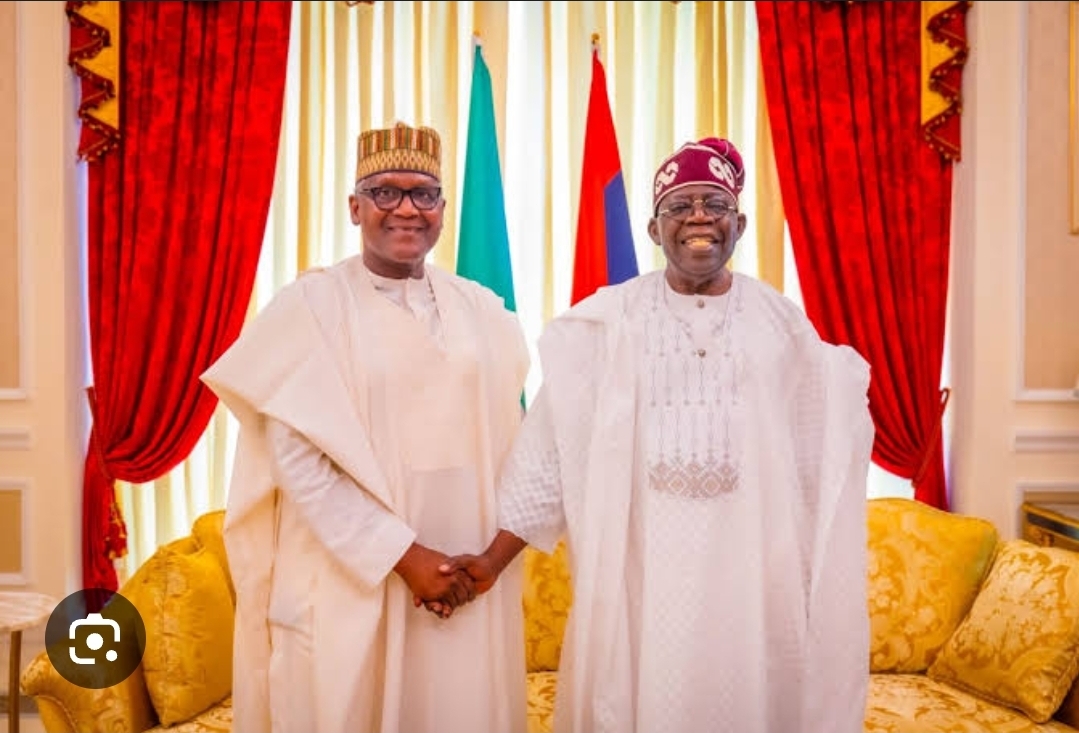
As the drums of war beat louder in the Middle East, Nigeria’s economic leadership is moving to insulate the nation from a potential global energy shock. Africa’s richest man and Chairman of the Dangote Group, Aliko Dangote, held a high-profile meeting with President Bola Ahmed Tinubu at the State Presidential Villa on Monday, March 23, 2026. The discussions focused on the intensifying conflict in the Middle East and its direct consequences on global energy markets, with Dangote calling for urgent diplomatic intervention to stabilize oil prices.
The meeting comes as Brent crude prices fluctuate sharply following recent targeted strikes on energy infrastructure in the Persian Gulf. During the engagement, Dangote emphasized that the volatility in the global oil market poses a significant risk to Nigeria’s economic recovery and the operational costs of major industrial projects, including the Dangote Refinery. Key points from the discussion include: Market stability, Energy security, Inflationary pressures, Refinery preparedness.
Dangote urged the President to leverage Nigeria’s diplomatic influence within OPEC and the international community to advocate for a ceasefire and de-escalation in the Middle East.
The industrialist highlighted that prolonged instability could lead to a spike in refined product costs, potentially impacting the domestic pump price of petrol and diesel if global supply chains remain disrupted.
He noted that a sustained increase in global energy costs would inevitably drive up freight and manufacturing expenses, further straining the purchasing power of the average Nigerian.
Dangote reassured the President that despite global shocks, the Dangote Refinery is optimizing its crude sourcing strategies to maintain a steady supply of petroleum products to the local market.
President Tinubu, in response, acknowledged the concerns, stating that the federal government is closely monitoring the geopolitical situation and is committed to implementing fiscal measures that protect the Nigerian economy from external energy shocks.