
News
Shippers’ Council Urges Dialogue as Freight Forwarders Protest MSC Tariff Hike in Lagos

By Ezinne
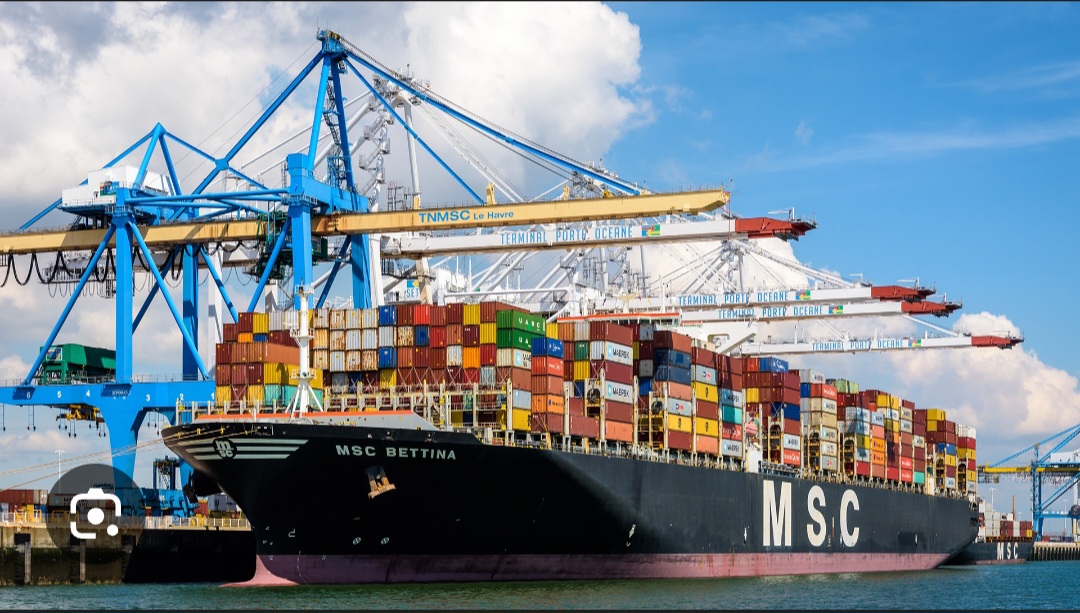
Operations at the Lagos ports were disrupted on Friday as tensions escalated between freight forwarders and the Mediterranean Shipping Company (MSC) over a controversial increase in local shipping charges.
Hundreds of clearing agents and freight forwarders staged a massive protest at the company’s Lagos office, demanding an immediate reversal of what they described as “arbitrary and astronomical” tariff hikes. The protesters decried the rising cost of clearing goods, warning that the new charges would further strain businesses and worsen inflationary pressures across the country.
The protest, spearheaded by five major freight forwarding associations, accused MSC of implementing unilateral price adjustments without obtaining the required regulatory approval from the the Nigerian Shippers’ Council.
In swift response, the Executive Secretary of the Council, Barrister Akutah Pius Ukeyima, intervened, calling for calm and urging all parties to embrace dialogue.
While acknowledging the concerns raised by the freight forwarders, Ukeyima warned that the disruption of port operations could have far-reaching consequences, including port congestion, delays in cargo clearance, and potential international trade penalties.
“The shutting down of shipping operations is a drastic measure that could negatively impact the entire maritime supply chain,” he stated.
The Council has consequently summoned both MSC management and representatives of the protesting associations to an emergency Conflict Resolution Meeting scheduled for early next week, aimed at resolving the impasse through established regulatory frameworks.
Freight forwarders insist that the new tariff structure—affecting container handling and administrative fees—will significantly increase the cost of doing business at Nigerian ports. They have vowed to sustain the protest until MSC suspends the charges and agrees to a transparent review process.
Industry stakeholders have expressed concern over the timing of the dispute, noting that global shipping costs are already under pressure due to geopolitical tensions in the Middle East. Experts warn that prolonged local conflicts within the maritime sector could deter foreign investment and further destabilize Nigeria’s trade environment.
Reaffirming its statutory mandate, the Nigerian Shippers’ Council emphasized that no shipping line is permitted to increase charges without adhering to the Notification and Negotiation Protocol, assuring stakeholders of a “fair and firm” resolution process.
By Ezinne
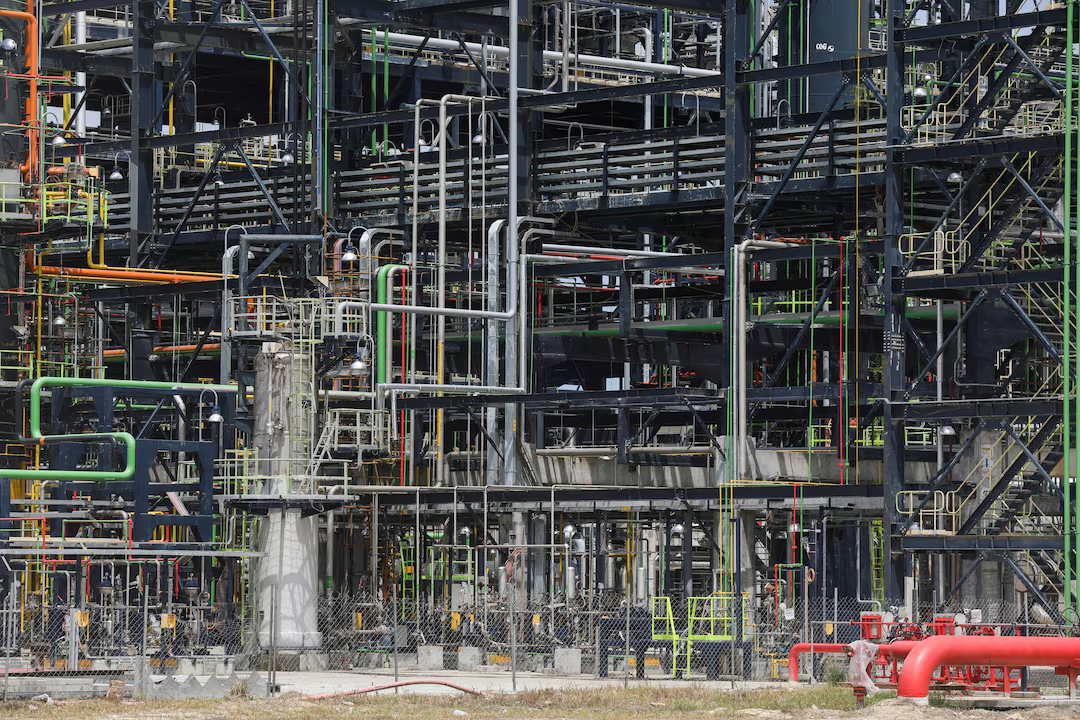
The ripple effects of the escalating conflict in the Middle East have begun to impact Nigeria’s downstream petroleum sector, as the Dangote Petroleum Refinery announced a fresh increase in the price of Premium Motor Spirit (PMS), commonly known as petrol.
As of Saturday, March 21, the 650,000-barrel-per-day facility raised its ex-gantry price to ₦1,245 per litre, up from the previous ₦1,175, representing an increase of nearly six percent.
Management of the refinery attributed the adjustment to the “unprecedented surge” in global crude oil prices, largely driven by ongoing geopolitical tensions in the Middle East involving . Industry data indicates that has consistently traded above $114 per barrel, significantly raising the cost of sourcing crude feedstock.
In a statement, refinery officials noted that while the facility remains committed to serving as a “local shield” for African energy security, it cannot remain insulated from global market realities, particularly the rising war-risk premiums affecting international oil supply chains.
Analysts warn that the development is likely to trigger a fresh round of fuel price increases across Nigeria, as marketers adjust pump prices to reflect transportation, distribution, and logistics costs. Projections suggest that petrol prices in several states could soon exceed ₦1,350 per litre.
Despite the increase, the Dangote Refinery continues to be regarded as the most dependable source of refined petroleum products in the region, especially as traditional import routes through the Red Sea remain disrupted by ongoing hostilities.
The latest price adjustment underscores Nigeria’s continued vulnerability to global oil market fluctuations, even as efforts to boost local refining capacity gain momentum.

By Ezinne
In a major boost to Nigeria’s ongoing counter-insurgency efforts, troops of the Nigerian Army have successfully dismantled several terrorist hideouts in Bauchi State, recovering arms and ammunition during a coordinated “search and destroy” operation.
Military sources disclosed that the operation, carried out within the last 24 hours, targeted insurgent enclaves concealed within dense forest areas bordering neighbouring states. The offensive led to the destruction of multiple makeshift camps used by the terrorists as operational bases for launching attacks on vulnerable rural communities.
According to reports, several insurgents were neutralized during the raid, while others escaped with gunshot wounds into surrounding difficult terrain.
Items recovered from the operation include a cache of weapons, ammunition, motorcycles, and communication equipment believed to have been used for kidnapping and other criminal activities.
The Director of Army Public Relations, Brigadier General , confirmed the development, attributing the success of the mission to credible intelligence provided by local vigilante groups and residents.
He further revealed that troops have established a temporary forward operating base in the affected area to prevent any regrouping of fleeing insurgents and to sustain ongoing clearance operations.
Residents of the impacted local government areas have been urged to remain vigilant and promptly report suspicious movements, particularly individuals seeking treatment for gunshot wounds, to security agencies.
The latest operation underscores the Nigerian military’s intensified campaign to rid the North-East region of terrorist elements and restore lasting peace to affected communities.

By Ezinne
Sequel to the global reflections on the themes of International Women’s Day, stakeholders in Nigeria’s energy sector have intensified calls for deliberate gender inclusion, urging oil, gas, and power companies to elevate more women into leadership positions.
At a high-level industry forum held this week, energy firms were challenged to move beyond symbolic gestures and adopt concrete policies that ensure women are adequately represented at executive and board levels. Speakers at the event stressed that while women have made commendable progress in technical and middle-management roles, a persistent “glass ceiling” continues to limit their participation in critical decision-making positions.
Leading voices in the Nigerian energy space described the current gender imbalance as a missed opportunity for innovation and sustainable growth. According to data presented at the forum, women occupy less than 15 percent of executive leadership roles across major indigenous and international energy companies operating in the country.
Advocates argued that increasing female representation is not merely a matter of equity but a strategic business imperative. They noted that global studies have consistently shown that organizations with gender-diverse leadership tend to record stronger financial performance and adopt more sustainable environmental practices.
Reinforcing the call, the Minister of State for Petroleum Resources (Gas), Rt. Hon. Ekperikpe Ekpo, reiterated the Federal Government’s commitment to gender-inclusive policies. He highlighted that the Petroleum Industry Act (PIA) provides a viable framework to promote equitable participation but emphasized that the private sector must take proactive steps.
According to the Minister, companies should implement structured “mentorship-to-management” pipelines aimed at preparing female professionals—particularly engineers and geoscientists—for top leadership roles.
The forum culminated in the adoption of a formal “Pledge for Parity,” with several industry chief executives committing to monitor and publicly report their gender diversity metrics on an annual basis.
Further strengthening the advocacy, the Women in Energy Network (WIEN) called for a minimum of 30 percent representation of women in all energy-related government appointments and private sector boards by 2030.
The group maintained that investing in women is crucial to strengthening Nigeria’s energy security, particularly as the nation navigates the complexities of global energy transition. According to WIEN, greater female inclusion would unlock a broader pool of talent and diverse perspectives required to address longstanding challenges in power generation and distribution.