
IduwiniVoice Diaspora
Missile Threat Forces Closure of Dubai Airports, Global Flights Disrupted

By Favour Bibaikefie
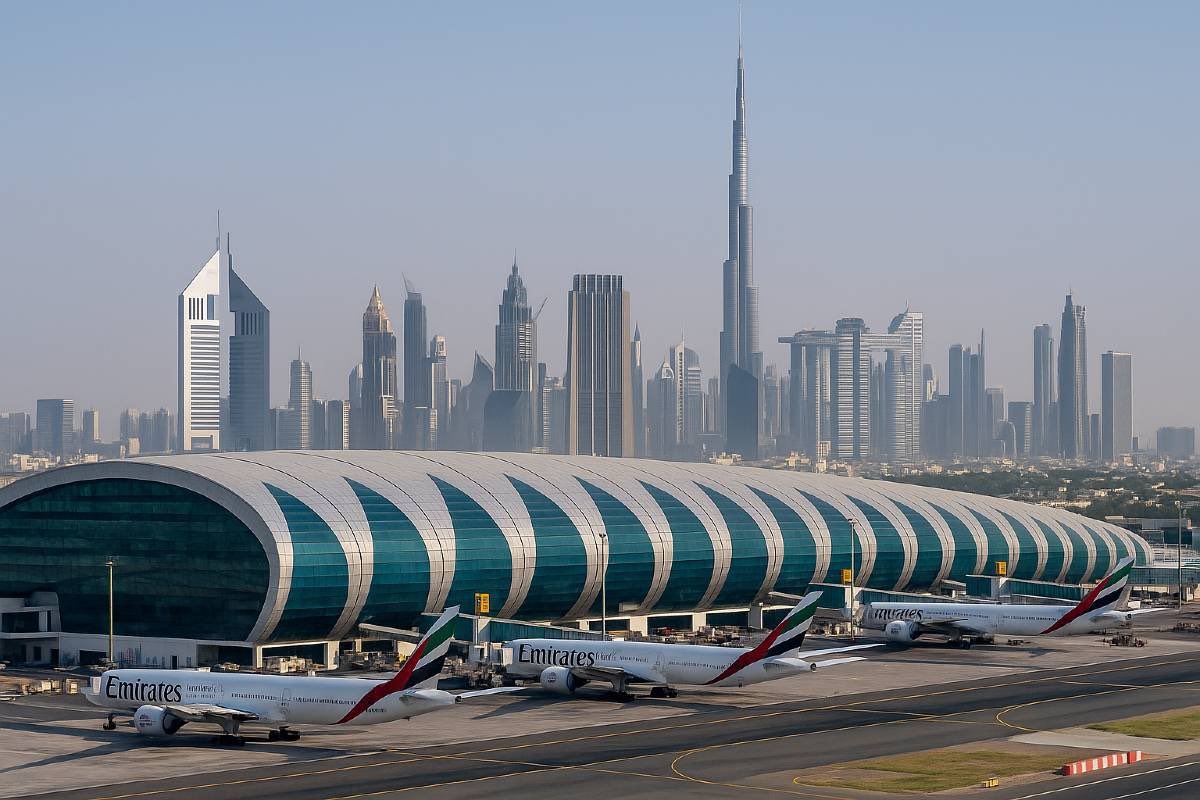
Dubai’s aviation sector was thrown into unprecedented turmoil after missile strikes linked to the escalating conflict involving Iran triggered the shutdown of the United Arab Emirates’ main air gateways, forcing airlines worldwide to suspend or reroute thousands of flights.
Authorities confirmed that Dubai International Airport (DXB)—the world’s busiest hub for international passengers—and Al Maktoum International Airport (DWC) temporarily halted flight operations on February 28, 2026, following the closure of regional airspace due to security threats.
In an official statement, Dubai Airports announced that “all flight operations at Dubai International (DXB) and Dubai World Central – Al Maktoum International (DWC) are suspended until further notice,” advising passengers to contact their airlines for updates and to avoid traveling to the airport during the disruption.
The shutdown came after Iran launched missile and drone attacks across parts of the Gulf in retaliation for military strikes on its territory, an escalation that forced several countries—including the United Arab Emirates, Qatar, Bahrain, Iraq and Israel—to temporarily close their airspace.
Airlines Suspend Flights
The closure of Dubai’s airspace triggered a ripple effect across the global aviation network. Major airlines operating through the Gulf—including Emirates, Etihad Airways, Qatar Airways, Lufthansa, British Airways, Air India, Virgin Atlantic and Wizz Air—either grounded flights or suspended services to destinations across the Middle East.
Aviation analysts say the disruption is particularly severe because Dubai serves as one of the most important intercontinental transit hubs linking Asia, Europe, Africa and the Middle East. Each day, hundreds of long-haul flights pass through the city, carrying passengers and cargo between major global destinations.
The sudden closure stranded tens of thousands of passengers and forced airlines to divert aircraft mid-flight or cancel operations entirely.
Damage and Casualties Reported
Reports indicate that parts of Dubai International Airport sustained minor damage during the missile incidents, with several people injured during the attack.
Debris from intercepted missiles also caused damage in Abu Dhabi and other areas of the UAE, while at least one civilian death was reported in the capital during the wider attacks.
Economic and Travel Fallout
Industry observers warn that the aviation disruption could have major economic consequences. Dubai’s economy is heavily dependent on tourism, trade, logistics and global transit traffic, all of which rely on the smooth functioning of its airports.
The crisis has already triggered thousands of flight cancellations and delays, while rising oil prices and longer rerouted flight paths are increasing operating costs for airlines worldwide, reuters reported.
Travel chaos has also forced some stranded passengers to seek alternative routes or charter expensive private flights out of the region, highlighting the scale of the disruption to global travel networks.
Limited Flights Resume
After nearly 48 hours of total shutdown, UAE authorities began allowing a limited number of flights to resume, though airlines warned that normal operations may take time to restore as security concerns persist across the Gulf region.
Aviation experts say the incident demonstrates how geopolitical conflict in the Middle East can quickly reverberate across the global transport system, affecting millions of travellers and international supply chains within hours.
IduwiniVoice Diaspora
BREAKING: Former President Goodluck Jonathan Bags New International Appointment
By Favour Bibaikefie
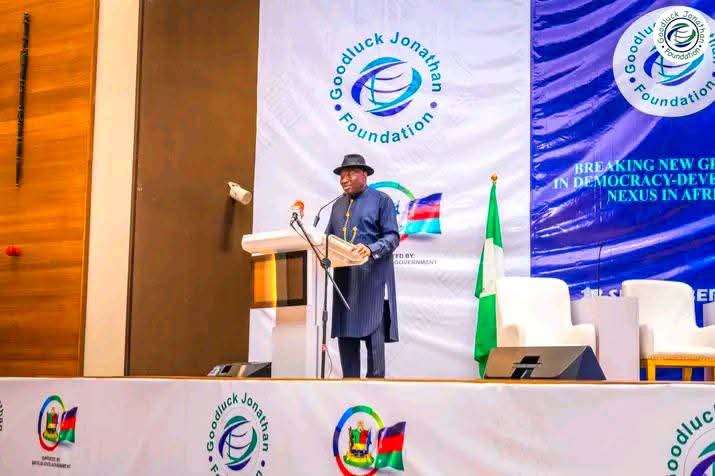
Former Nigerian President Dr.Goodluck Jonathan has been appointed as the United Nations Global Crisis Envoy, a powerful international role backed by the United States, United kingdom, France, China, Russia ,and the United Nations itself. The appointment marks a historic moment,making Jonathan the first African former Head of State to hold such a high-level diplomatic position.
The role is similar in stature to that previously held by former UK Prime Minister Tony Blair, who served as the Middle East envoy under the auspices of the UN, EU, US, and Russia.
Jonathan’s new position will involve engaging in high-stakes global diplomacy, advising on conflict resolution, humanitarian response, and fostering international peace in crisis-affected regions around the world.
This appointment is another milestone in a career that has been nothing short of extraordinary. Dr. Jonathan began as a lecturer and rose steadily through the ranks of public service – serving as commissioner, Deputy Governor,Governor of Bayelsa State,and then vice president of Nigeria. He became acting president in 2010,before being sworn in as President -a position he held until 2015.
Now,nearly a decade after leaving office, Jonathan is returning to the world stage in a new capacity-this time as a global peace broker and advocate.
His selection for the role is seen as recognition of his growing influence in international diplomacy, particularly in conflict mediation and democratic transition across Africa. In recent years, he has led observer missions and facilitated peaceful elections in countries such as The Gambai, Mali, Zambia.
Dr. Jonathan’s appointment comes at a time when global conflicts-from political unrest to humanitarian emergencies-demand experienced leadership and trusted voices. With this new role, the former Nigerian President joins a select group of global statement tasked with navigating the world’s most pressing crises.
Most details on the scope of his mandate and upcoming engagement are expected to be released in the coming days.
By Admin
Abuja – A proposal to create 31 additional states across Nigeria is currently under consideration by the House of Representatives Committee on Constitutional Review. According to the committee, the move aims to address concerns about representation, governance, and regional development across the country.
The proposed states are distributed across various geopolitical zones, with six states suggested for the North-Central region, four for the North-East, five for the North-West, five for the South-South, and seven for the South-West. The committee has indicated that the proposal is in line with Section 8(1) of the Nigerian Constitution, which outlines the requirements for state creation.
Proposed States by Region
North-Central
1. Benue Ala (Benue)
2. Okun (Kogi)
3. Okura (Kogi)
4. Confluence (Kogi)
5. Apa-Agba (Benue South Senatorial District)
6. Apa (Benue)
7. Federal Capital Territory, Abuja (as an autonomous state)
North-East
8. Amana (Adamawa)
9. Katagum (Bauchi)
10. Savannah (Borno)
11. Muri (Taraba)
North-West
12. New Kaduna (Kaduna)
13. Gurara (Kaduna)
14. Tiga (Kano)
15. Kainji (Kebbi)
16. Ghari (Kano)
South-East
17. Etiti (New)
18. Adada (Enugu)
19. Urashi (New)
20. Orlu (Imo)
21. Aba (Abia)
South-South
22. Ogoja (Cross River)
23. Warri (Delta)
24. Bori (Rivers)
25. Obolo (Rivers & Akwa Ibom), possibly a renamed Oil Rivers State
South-West
26. Toru-Ebe (Delta, Edo & Ondo)
27. Ibadan (Oyo)
28. Lagoon (Lagos & Ogun)
29. Ibeju (Ogun)
30. Ife-Ijesha (Ogun, Oyo & Osun)
31. Oke-Ogun (Ogun, Oyo & Osun)
Constitutional Process for State Creation
The proposal will require approval through a series of legislative steps. The Nigerian Constitution stipulates that for a new state to be established, it must be supported by at least a two-thirds majority in the National Assembly, the State House of Assembly, and local government councils in the affected areas. Additionally, a referendum will be conducted, with the final decision forwarded to the National Assembly for ratification.
This proposed restructuring has generated mixed reactions, with some viewing it as a step toward decentralization and regional autonomy, while others question its feasibility given Nigeria’s economic and political landscape.
What are your thoughts on this development? Share your views!
Advert
INC Demands the Creation of Toru-ebe and Oil Rivers States to Address the Underdevelopment of Ijaw Nation.

By Admin – Yenagoa
Ijaw National Congress (INC), the highest socio-cultural body representing the Ijaw people globally, has renewed its call for the establishment of two homogeneous Ijaw states—Toru-Ebe and Oil Rivers—citing persistent infrastructural under-development, political marginalization, and environmental neglect.
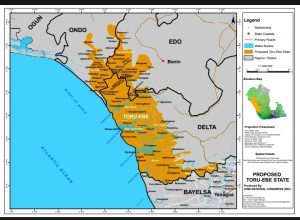
This was disclosed during a press conference held on Wednesday at Ijaw Ware in Yenagoa, Bayelsa State. The INC President, Prof. Benjamin Okaba, emphasized that despite being Nigeria’s fourth-largest ethnic group and hosting some of the country’s key oil export terminals as the single highest producer of oil and gas, the Ijaw people have endured systemic neglect, both in infrastructure and politics.
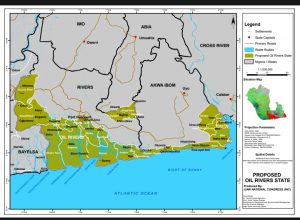
“We call on the Senate President, the Speaker of the House of Representatives, and all distinguished members of the National Assembly to seize this moment in history and act in the interest of justice,” Prof. Okaba stated.
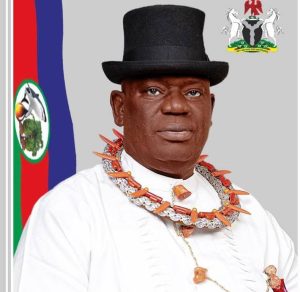
He described this demand as a crucial step toward achieving justice, equity, and lasting peace in the Niger Delta, stressing that it would help redress historical injustices, drive economic progress, and secure a better future for the Ijaw people.
According to the INC, the creation of the proposed states would not only address issues of political exclusion and under-development, but also strengthen national unity. The organization urged all Ijaw people, along with other well-meaning Nigerians, to support the move towards the actualization of this critical milestone for fairness and equity.