
News
Okaba to FG: “Create Toru-Ibe, Oil Rivers (2 Ijaw) States, 33 New LGAs in Bayelsa or Risk Losing Our Commitment to One Nigeria”

– INC Insists on Regionalism, Resource Ownership and New Constitution
By Perez Bibaikefie
Yenagoa, Bayelsa State – July 19, 2025
In a stirring, uncompromising address at the South-South Zonal Public Hearing on the Constitution Review, the President of the Ijaw National Congress (INC) Global, Prof. Benjamin O. Okaba, delivered a historic speech that shook the foundations of Nigeria’s current political architecture. Declaring the 1999 Constitution (as amended) a “satanic document fraudulently foisted on Nigerians,” Prof. Okaba demanded sweeping constitutional changes including true federalism, Resource Control, and the immediate creation of Toru-Ebe and Oil Rivers States, as well as 33 additional Local Government Areas for Bayelsa State. Speaking on behalf of one of Nigeria’s most marginalised yet resource-rich ethnic groups, the Ijaw leader boldly asserted that unless critical constitutional corrections are made, Nigeria’s unity will remain fragile, and the Ijaw people may be forced to reconsider their commitment to the Nigerian Project.
Read details:
“Constitution Review – Ijaw Panacea for Resolution of Ethnic Tensions, Fiscal Federalism and Sustainable Development in Nigeria.
“Being the INC President’s Intervention at the National Assembly Constitution Review Public Hearing, South-South Zone, holding at the Banquet Hall, Yenagoa, Bayelsa State, on the 19th of July, 2025.
“Team Lead and other Honourable Members of the House of Representatives present, Traditional Rulers, Delegates from other Ethnic Nationalities, Gentlemen of the Press, Ladies and Gentlemen.
“1. Evidence abound to the fact that the Ijaw ethnic nationality is the most criminally bastardized and short-changed by the provisions of the 1999 Constitution (as amended), to the extent that, despite being one of the most ancient civilizations, among the four largest ethnic groups and a major producer of the petroleum resources in Nigeria that keep this country economically and politically afloat, we have remained gruesomely exploited, environmentally degraded, marginalized, excluded undeveloped and disillusioned.
“2. Whereas a totally new constitution is more desirable, but, as alternative the bold step taken by the 10th National Assembly, targeted at a comprehensive amendment of this satanic document, that was fraudulently foisted on Nigerians by some undemocratic elements to satisfy their personal political and sociocultural aggrandizement, and make others appear as second class citizens in their own country, is a worthwhile exercise worthy of encouragement by Nigerians.
“3. It should be noted that the Ijaw people who since precolonial times had entered into various treaties and agreements with the early Portuguese explorers, and later with the British Crown, did not surrender their sovereignty, neither was their consent sought during the political engineering processes that culminated in the 1914 amalgamation of Southern and Northern Protectorates, divisions of the Southern Protectorate into Western and Eastern Regions in 1939, independence in 1960, the creation of Mid-West in 1963 and other state and local government creation exercises that further split our territories into insignificant minorities, especially in Ondo, Akwa-Ibom and Edo States.
“These multiple majority status negates the co-terminosity principle, of Dr. Nnamdi Azikiwe in 1980 which emphasizes that no ethic group should be fragmented in a way that makes them minority in multiple states.
4. Given the fact that we have not been fairly and justly treated by successive hegemonic administrations, even after the Willinks Commission of 1958 recognized the need for Ijaws to be given a Special Development Area, and down through to the present administration that has worsened our existential threats, what we seek is self-determination – Control and Management of our Governance Systems and Our God given Resources. The Ijaw self-determination agenda is a moving train, and therefore, those who intend to make this civil and peaceful process impossible will only make violent confrontation inevitable.
“5. We have remained committed to the survival and unity of the Nigerian nation (as can be attested to by the sacrifices of our iconic forefathers such as Chief Dappa Biriye, Major Isaac Boro, Sen. Melford Okilo, Sen. Edwin Kiagbodo Clark etc), and our enormous contributions in human and material resources to the survival of this nation. It is in that vein that we urge all other ethnic nationalities in this country to support this ongoing process, with the belief that if properly managed, will give birth to a citizens-based constitution, where the tenets of equity, fairness and justice, devolution of power from the centre to the federating entities, shall be constitutionally guaranteed.
“6. In seeking several alterations to the Constitution, the Ijaw Nation is driven by the following objectives:
a. Ijaw unity and desire to exist in a united territory (to end balkanization). The Ijaw Nation, as captured in her scientifically geolocated and digitalized world-class map, is culturally homogeneous and geographically contiguous. We have ample evidence supported by treaties intelligence reports, and sound old and contemporary research publications that the Ijaw Nation (her people and territory) was never conquered. Ijaw people everywhere, in all our settlements are not strangers (Edo, Ondo, Delta, Akwa-Ibom, Rivers), but the original owners. Those who intend to distort these historical and simple facts should consider their evil plots as not only fruitless, but mischievous. Those who claim Ijaws are not indigenous to their land should show evidence of tenancy or ground rent payment documents reached between Ijaws and the claimants.
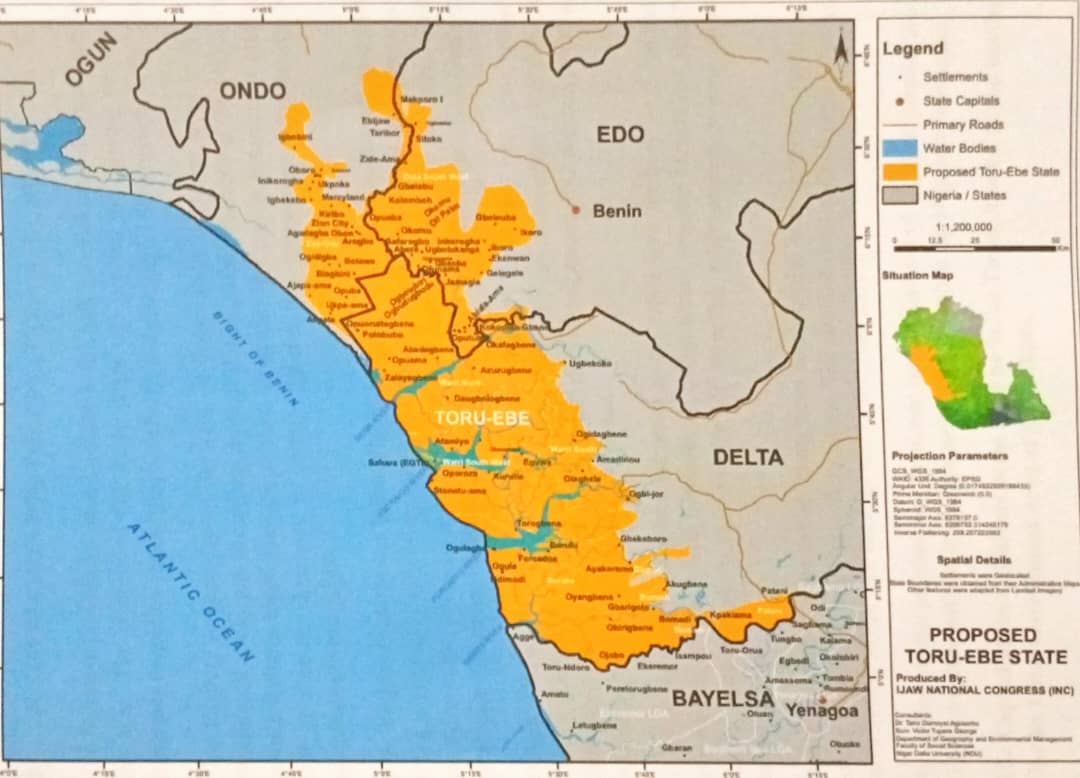
“We reaffirm our demand for the creation of two additional homogeneous Ijaw states, i.e. Toru-Ebe State comprising Ijaws in Delta, Edo and Ondo States, and Oil Rivers State made up of Ijaws in Rivers and Akwa-Ibom States, and additional local government areas for Bayelsa State. The documents submitted earlier provide enormous justification.
“The demand for the creation of the proposed Toru Ebe State is aimed at addressing long standing yearnings and aspirations of the people for justice, peace, stability, self-determination and development. The communities in the three states of Delta, Edo and Ondo, which occupy almost the entire coastline of the west of Niger Delta region, extending from Abare Town in Patani Local Government Area in Delta State to Igbobini Town in Ese Odo Local Government Area in Ondo State, are aborigines in the southern Nigeria and the earliest inhabitants in the Niger Delta region. The territorial configuration of the proposed Toru Ebe State includes only ljaw clans in the present Delta, Edo and Ondo states. These distinct yet culturally homogeneous clans of the Ijaw ethnic nationality and customary owners of all land living in a geographical contiguous territory of their own and who have been deliberately balkanized into different political and administrative units in the country for too long, are the ones demanding for the creation of the proposed Toru Ebe State.
“The oil revenue from the Ijaw areas in the three states accounts for the largest revenue accruing to the National Economy. Despite the receipt of the 13% Derivations Revenue by 3 states (Delta, Edo and Ondo) the Ijaw areas which are mineral producing have been denied of any meaningful development. Modern infrastructure social services such as schools, hospitals, portable water are near absent in Ijaw communities especially in Edo State. Ancient traditions tools are easily denigrated and denied office recognition and patronage. With the political fragmentation in place, it has been impossible for an ljaw man in Edo State to became a mere ward councillor. Because of the neglect there is a high level of rural- urban migration leading to the loss of indigenous cultural heritage.
“However, the Ijaw as inhabitants of this marshy and swampy terrain are blessed with abundant natural resources including oil and natural gas. The proposed state with a population of 2.7million people has natural landscapes with beautiful beaches and lengthy coastline which can be annexed into a blue economy and tourism that will make the State economically viable.
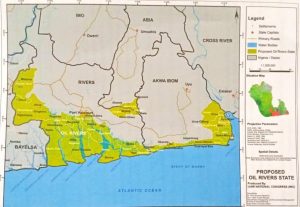
“We also propose Oil Rivers State that comprises Ijaws in Rivers and Akwa Ibom States. This area remains the most naturally blessed but environmentally degraded in the entire world, with massive oil explodes and gas flaring threatening the very survival of the people. Just like our counterparts in Edo State, the Ijaw, especially in Akwa Ibom State, are left with no basic infrastructure, electricity, or health care services. There are no meaningful state and federal government infrastructure in these Ijaw communities. Due to the long period of fragmentation, many Ijaw communities face cultural extinction, with some losing their native language and their traditions. With the creation of the Oil Rivers State, the rich heritage and environment of our people can be resuscitated.
“The proposed Oil Rivers State with Isaka Town, located in the northern part of Okrika Local Government Area as capital is endowed with abundant natural and human resources such as vast mangrove forests, rich fishery and agricultural potentials, palm oil industry, tourism potentials, natural habours and oil and gas resources (with over 30 major oil and gas fields, making it economically viable).
“ADDITIONAL LOCAL GOVERNMENT AREAS FOR BAYELSA STATE.
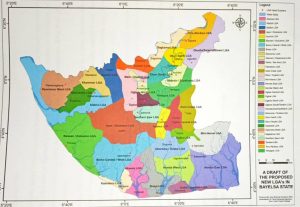
“Bayelsa State, situated in the South-South region of Nigeria is bordered by Delta State to the north, Rivers to the east, and the Gulf of Guinea to the south, with a total landmass of approximately 10,773 square kilometres. Its rivers mass extends far into the Atlantic Ocean and major rivers, including River Niger, River Forcados, and smaller rivers and creeks. This riverine and estuarine setting poses unique challenges such as flooding, erosion, and ocean encroachment. It has a population of over 3.5 million people.
“Bayelsa State’s contribution to Nigeria’s GDP is significant, thanks to its rich human and natural resources. As one of the largest oil and gas producing states in Nigeria, Bayelsa accounts for a substantial portion of the country’s oil production, estimated to be around 35-45% as of 2022. In terms of GDP, Bayelsa State’s contribution stands at $4.3 billion, with a GDP per capital of $1,773, according to 2020 rankings. The state’s economy is largely driven by the petroleum industry, with crude oil and natural gas being major contributors. The state, therefore, has a critical role in the actualization of Mr. President’s projection to meet up with OPEC quota of 2.06 barrels per day.
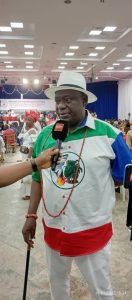
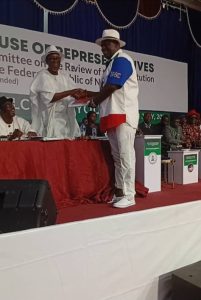
“However, it is worth noting that despite her significant contribution to Nigeria’s GDP, land and river mass and huge potentials for steady growth and development, the state currently has only eight (8) Local Government Areas, which are Brass, Ekeremor, Kolokuma/Opokuma, Ogbia, Nembe, Sagbama Southern Ijaw and Yenagoa.
“The names of the proposed Thirty-Three (33) Local Government Areas are in the Maps attached.
“We all know that Eight LGA for Bayelsa is a case of injustice in many ramifications in terms of federal resource allocation and fair representation.
“Our other concerns include:
b. Protection and remediation of its environment
c. Federal resource contribution through resource control and payment of tax
d. True federal Constitution (with no unitary colouration)
e. Reintegration of Ijaws vide the wholesale prosecution of the Ijaw struggle for self-determination, which has lasted centuries
f. Improve the quality and quantity of representation.
“7. Therefore, the Ijaws have consistently set some MINIMUM PRECEDENT CONDITIONS THAT WOULD GUARANTEE OUR CONTINUED COMMITMENT TO THE NIGERIAN PROJECT. These include:
Restoration of TRUE FEDERALISM including fiscal federalism, Resource Control (100% derivation), devolution of power.
“Guarantee of a NEW CONSTITUTION enacted by the people themselves wherein a lean Exclusive Legislative list is prescribed for the Federal tier to essentially cover Defense, Foreign Affairs, Central Bank, Immigration and Emmigration, Citizenship, Aviation policy and Nuclear Energy, while all other powers are left for the federating units.
“The repeal of all obnoxious and discriminatory laws and policies that have continuously undermined our fundamental human and environmental rights as indigenous people of Nigeria.
“8. This memorandum seeks to alter the following Sections of the 1999 Constitution (as Amended):
Section 3 (1): Establishment of Regions:
We propose the following 10 federating units (constituent states) by way of readjustment of the well-known and accepted 6 geopolitical zones in the country.
1- North West (Sokoto,Zamfara, Kebbi).
2 – Upper Northern (Adamawa, Gombe, Bauchi).
3 – North Central (Katsina, Kano, Jigawa, Kaduna, Niger).
4 – North Eastern (Bornu, Yobe).
5 – Middle Belt (Nasarawa, Plateau, Taraba, Benue, Kwara and Southern Kaduna).
6 – Western (Oyo, Ekiti, Osun, Ondo, Lagos, Ogun and parts of Kogi, Kwara, Edo, Delta).
7 – Midwestern (Edo, Delta and parts of Bayelsa).
8 – Niger Delta (Bayelsa, parts of Akwa Ibom, Abia, Rivers, Delta, Edo, Ondo).
9 – Eastern (Anambra, Enugu, Imo, Abia, Ebonyi, parts of Rivers, Delta).
10 – Eastern Delta (Cross River, Akwa Ibom, parts of Rivers).
“9. Each Region as created by this Constitution, shall by its own Constitution provide for creation of lower tiers of government within its territory.
“The Regions as created by this Constitution may create within its territory States/Provinces/Municipalities/Counties or Local Government Areas as the Region may deem fit in accordance with provision of the Constitution of that Region.
New Section 162 (1) (2): To replace deleted sections as follows;
162(1): Each Federating Region shall control its own resources or any resources found within its territory, including the Exclusive Economic Zone, territorial waters contiguous to the territory of the Region, or any other revenue accruing to the Region from any source whatsoever.
162 (2): The Federating Regions shall pay as tax an amount equivalent to 20% of the total revenue generated from its resources and any other sources as provided in Section 162 (1) to the Federal Government.
Section 313: Is hereby proposed to be deleted since the Federal Government will not be allocating funds any more by our proposal.
Section 315 (5) (d): “The Land Use Act” and other inapplicable acts is/are hereby proposed to be deleted since the Regions are to control their resources.
“It is proposed that each Regional Government will have its own Constitution, Supreme Court, Appeal Court, and Police etc.
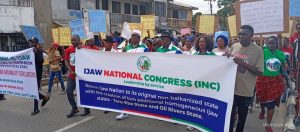
“10. We wish to emphasize that the PRINCIPLES of RESOURCE OWNERSHIP, RESOURCE CONTROL, DEVOLUTION OF POWER and RESOURCE MANAGEMENT under the regional structure are the ALL TIME PANACEA NIGERIA Needs, towards achieving HEALTHY COMPETITIVE SUSTAINABLE DEVELOPMENT, GREATNESS and PROSPERITY, REGIONALISM, COHESIVE INTER-ETHNIC cooperation.
“Thank you and God bless
“Prof. Benjamin O. Okaba
President, Ijaw National Congress (INC) Global”
Prof. Okaba’s powerful submission concluded with a clarion call to all Nigerians and lawmakers: “The principles of resource ownership, resource control devolution of power, and regional autonomy are not threats to national unity-they are its only true guarantees.” As the 10th National Assembly embarked on what may become may become Nigeria’s most defining constitutional ammendment process, the Ijaw nation has drawn a clear line in the sand-either justice, equity, and self-determination prevail, or the calls for structural redress will grow into louder cries for political disengagement.
See attached video:
News
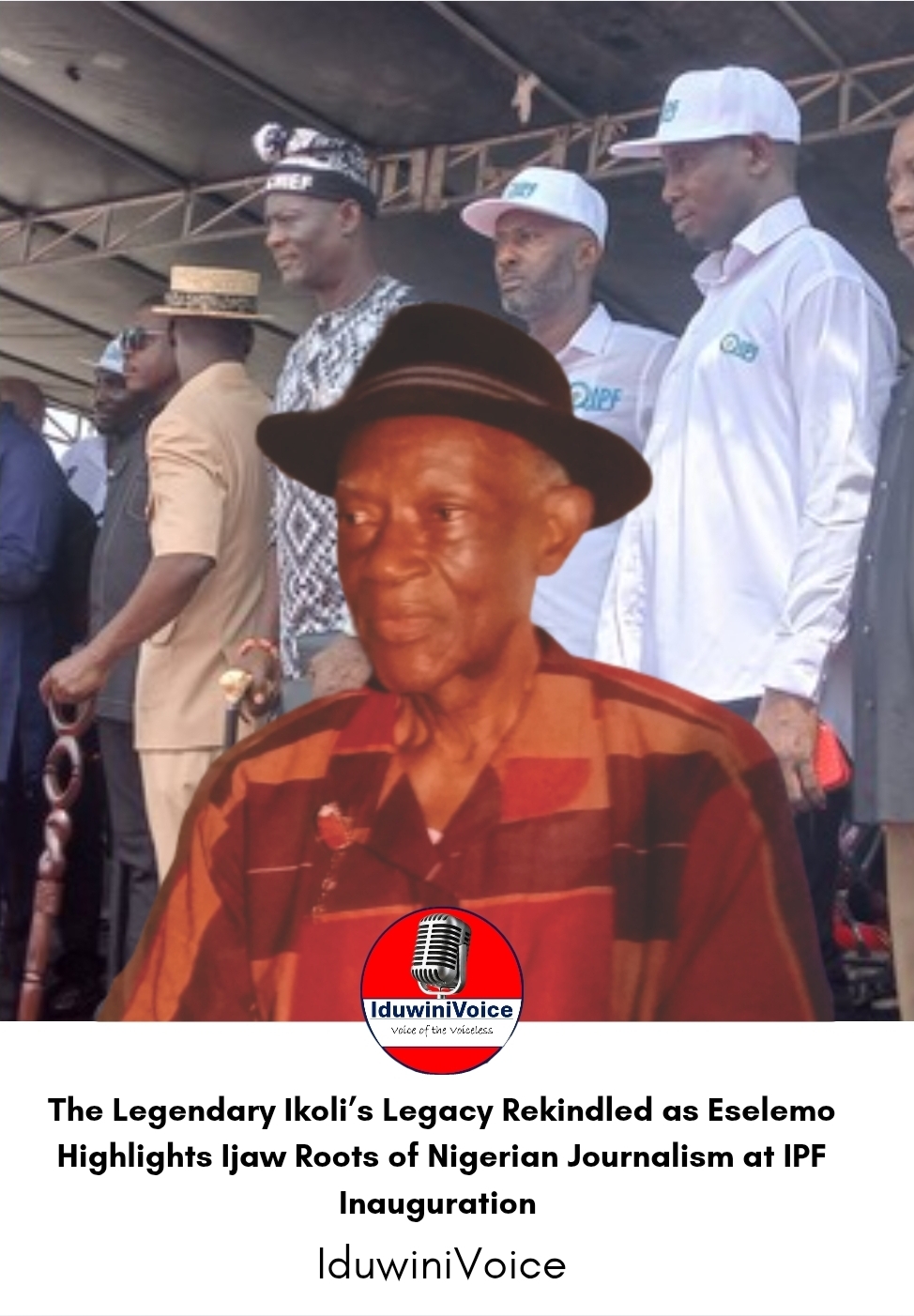
The Legendary Ikoli’s Legacy Rekindled as Eselemo Highlights Ijaw Roots of Nigerian Journalism at IPF Inauguration
By Favour Bibaikefie
WARRI — The enduring legacy of Ernest Sisei Ikoli took centre stage last Thursday in Warri as prominent Ijaw leader, Prince Collins Eselemo, a politician, foremost Ijaw nationalist and an advocate for Resource Control, declared that Nigerian journalism was built on foundations laid by Ijaw pioneers.
Speaking at the inauguration of the new National Executive Council of the Ijaw Publishers’ Forum (IPF), Eselemo asserted that the history of journalism in Nigeria cannot be told without acknowledging Ikoli’s towering contributions.
Ikoli, born in 1893 in Twon-Brass, present-day Bayelsa State, is widely recognised as one of the founding figures of modern Nigerian journalism. He became the first editor of the Daily Times of Nigeria in 1926, shaping public discourse during the colonial era through bold editorials and nationalist advocacy.
At the IPF second inauguration ceremony held last week at Ogbe-Ijoh, Warri, Eselemo maintained that Ikoli’s role in the nationalist struggle and media development underscores what he described as the intellectual heritage of the Ijaw people. He noted that Ikoli’s early association with John Payne Jacksonat the Lagos Weekly Record helped sharpen a nationalist press culture that later influenced a generation of political leaders.
Historical records show that Ikoli founded The African Messenger in 1921 before later editing The Daily Service, the mouthpiece of the Nigerian Youth Movement (NYM), which he co-founded alongside Hezekiah Oladipo Davies and J.C. Vaughan. The NYM later attracted nationalist figures including including Nnamdi Azikiwe and Obafemi Awolowo.
As president of the NYM, Ikoli was elected into the Legislative Council in 1942 and 1946, where he advocated educational reforms and greater Nigerian representation in governance. His philosophy of “one Nigeria, one Africa, one destiny” reflected a pan-African outlook that transcended ethnic lines.
Eselemo’s remarks at the IPF ceremony come amid renewed conversations about the contributions of minority ethnic groups to Nigeria’s political and media history. He urged contemporary publishers to emulate Ikoli’s courage, professionalism and commitment to truth.
Ikoli was awarded the Officer of the Order of the British Empire (OBE) in 1954 and lived to witness Nigeria’s independence on October 1, 1960, before passing away weeks later on October 21.
Today, his memory is preserved through scholarly works, the Bayelsa State “Earnest Ikoli Press Centre, and the Ernest Sisei Ikoli Foundation in Lagos, reinforcing Eselemor’s argument advanced in Ogbe-Ijoh, Warri — that the story of Nigerian journalism remains incomplete without acknowledging its Ijaw pioneers.
News
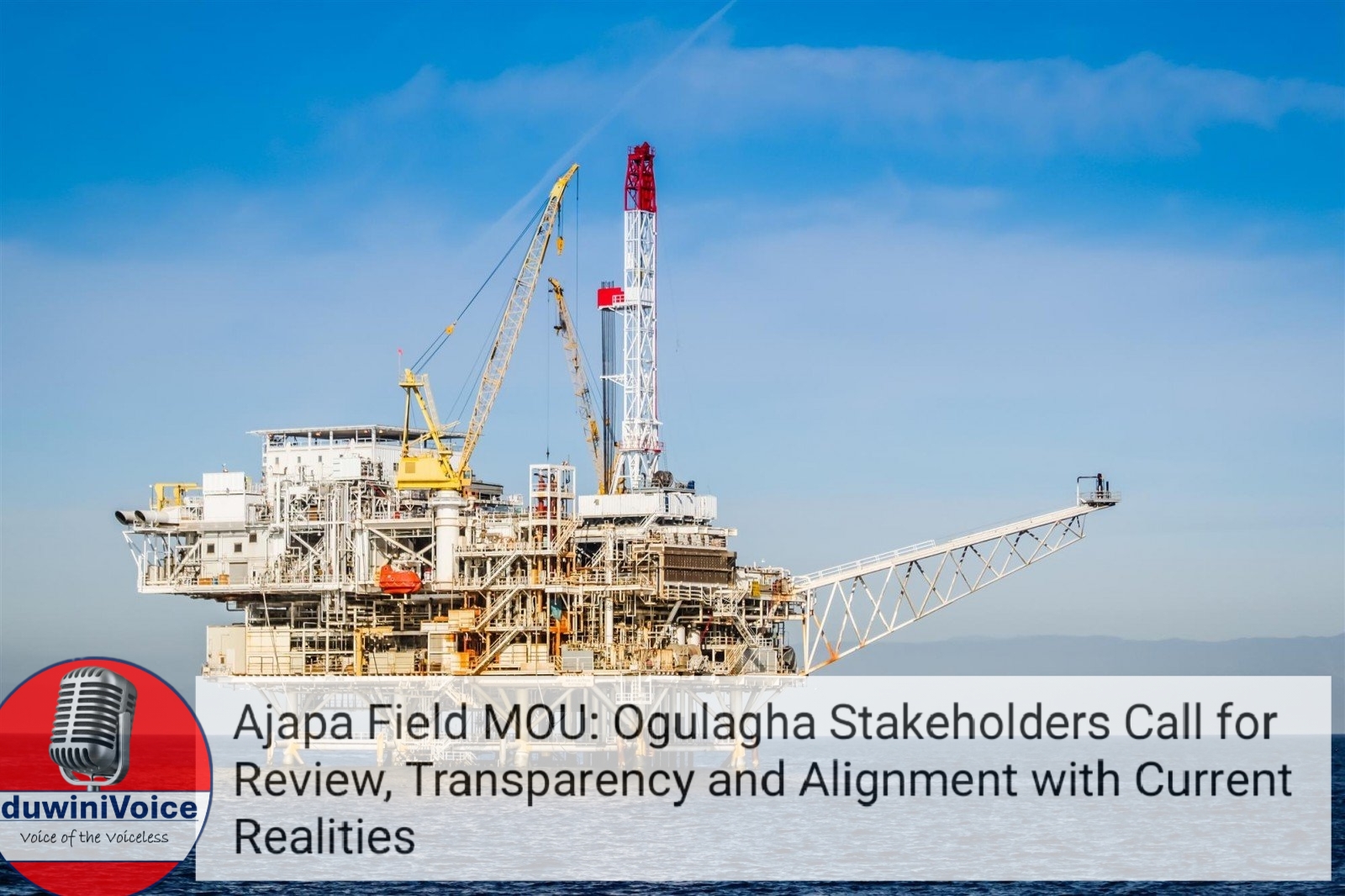
Ajapa Field MOU: Ogulagha Stakeholders Call for Review, Transparency and Alignment with Current Realities
By Charity Ebi
OGULAGHA, DELTA STATE — Nearly two decades after a Memorandum of Understanding (MOU) was signed between Britannia-U Nigeria Limited and Ogulagha Kingdom in Burutu Local Government Area, stakeholders in the oil-bearing community are calling for a comprehensive review of the agreement to reflect present-day economic and industry realities.
The 2007 MOU, tied to operations at the Ajapa Marginal Field, was introduced as a framework for peace, development and mutual benefit. However, community representatives say that while the agreement may have appeared workable at inception, its fixed financial structure has been overtaken by inflation, rising oil revenues and evolving governance standards within Nigeria’s petroleum sector.
Addressing journalists on behalf of stakeholders, Mr. Jude Iyelagha stressed that the concerns being raised should not be misconstrued as an attack on the integrity of Ogulagha’s traditional or political leadership.
“This is not an attempt to indict or insult the credibility of our revered leaders,” Iyelagha clarified. “Rather, it is an encouragement for leaders to revisit the well-documented terms, review them in line with current realities, and ensure they are fully implemented for the benefit of our people.”
Modest Provisions, Expanding Industry
Under the MOU, provisions reportedly included annual allocations for community drugs, scholarships for secondary and tertiary students, training slots at the Petroleum Training Institute (PTI), allowances for trainees, incentives for science teachers and sitting allowances for kingdom committee meetings.
While these figures may have been considered reasonable in 2007, stakeholders argue that their real value has significantly diminished over time due to inflation. Crucially, the sums were fixed and not indexed to oil prices, production output or inflationary trends.
Using conservative production estimates common to marginal fields in the Niger Delta, observers note that annual gross revenues from such operations could run into tens of billions of naira. When juxtaposed with community allocations that reportedly totalled only a few million naira annually at inception, the proportional disparity becomes a central point of concern.
For residents, the issue is less about confrontation and more about fairness.
Development Expectations in a Resource-Rich Area
Ogulagha Kingdom remains one of the oil-producing hubs in Delta State. Yet stakeholders point to ongoing challenges including limited healthcare facilities, youth unemployment, fragile road networks, environmental vulnerability and constrained access to higher education funding.
Community leaders argue that development in oil-bearing areas should translate into tangible infrastructure such as modern health centres, shoreline protection projects, potable water systems, vocational training hubs and structured employment pipelines.
“The frustration is not hostility towards investment,” a stakeholder noted. “It is about proportionality and visible impact.”
Shareholding Claims and Transparency Concerns
Beyond the MOU, a more complex issue has emerged. Leaders within the kingdom assert that Ogulagha may not only be a host community but also a registered shareholder in the Ajapa Marginal Field structure, allegedly documented with the Corporate Affairs Commission.
If such shareholding exists, corporate law provides for certain rights, including access to audited financial statements, notice of Annual General Meetings and entitlement to dividends where declared.
Stakeholders claim that consistent access to production data, audited accounts and dividend clarity has not been fully established, raising questions about governance participation.
Again, Iyelagha emphasised that the intention is not to cast aspersions.
“We believe in dialogue and institutional engagement. What we are asking for is clarity, transparency and alignment with statutory expectations where applicable,” he said.
Petroleum Industry Act and Changing Standards
Analysts observe that the Petroleum Industry Act (PIA) has introduced more structured host community frameworks and governance mechanisms. Agreements executed before the reform era, they argue, may require review to align with contemporary standards of transparency and proportionality.
Stakeholders maintain that revisiting the 2007 framework would not only protect the long-term interests of the kingdom but also strengthen investor-community relations.
Company Response Awaited
Efforts to obtain official comments from Britannia-U Nigeria Limited were unsuccessful at the time of filing this report. The company’s response, when received, will be reflected in subsequent updates.
For now, the central appeal from Ogulagha stakeholders is measured and deliberate: a call for leaders to examine documented agreements, align them with present realities, and ensure that promises made translate into visible, sustainable benefits for the kingdom.
As one community voice put it, “Oil is finite, but our people and our future must endure.”
By Favour Bibaikefie
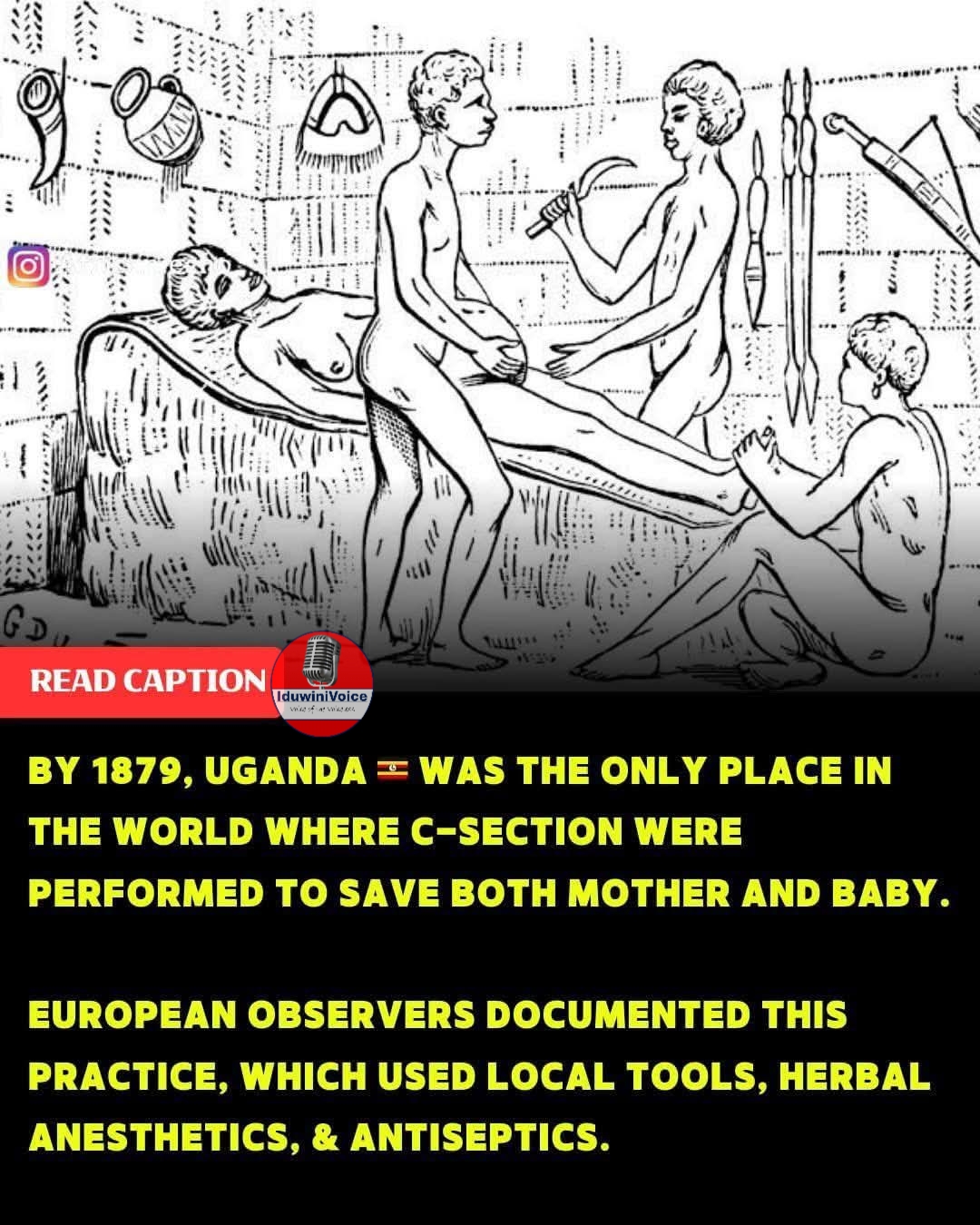
Historical medical records have revealed that indigenous surgeons in the Buganda Kingdom of present-day Uganda were successfully carrying out cesarean sections as early as 1879 — a period when the procedure was still considered highly risky in many parts of Europe.
The account was documented by British medical practitioner and explorer Robert William Felkin, who witnessed and later published details of the operation in the Edinburgh Medical Journal in 1884 under the title “Notes on Labour in Central Africa.”
According to Felkin’s observations, the procedure involved the use of banana wine as a cleansing agent, herbal preparations to manage pain, and cauterization with heated metal to control bleeding. Both mother and child reportedly survived the surgery — an outcome that drew significant attention from European medical circles at the time.
Felkin described the process as orderly and deliberate, noting that the practitioners demonstrated familiarity with anatomy, sterilization methods available to them, and post-operative care. The documentation challenged prevailing 19th-century assumptions that advanced surgical knowledge was absent in African societies before colonial contact.
Medical historians note that cesarean sections in Europe during the mid-1800s were often fatal due to infection and limited antiseptic knowledge. Antiseptic surgical techniques only became widely accepted in Europe toward the late 19th century following developments associated with figures such as Joseph Lister.
Scholars argue that the Buganda example illustrates a broader pattern of indigenous scientific knowledge that predated colonial rule. In his work, historian highlighted the complexity of African societies prior to European intervention, disputing narratives that framed the continent as lacking innovation or structured knowledge systems.
Experts say the 1879 account underscores the need for a more balanced historical perspective — one that acknowledges Africa’s contributions to medicine, technology, and empirical science long before formal Western medical institutions expanded into the continent.
The rediscovery and renewed discussion of such records continue to prompt debates about how global scientific history is written — and whose knowledge systems are recognized.
Source: African Echo