
Breaking
Breaking News: Governor Sim Fubara Returns Government House Amid Renewed Hope and Seaming Uncertainties

Favour Bibaikefie
River State Governor, Siminalayi Fubara, has made a low-profile return to the Government House in Port Harcourt, quietly stepping back into the state’s seat of power after nearly three months away. His reappearance marks a turning point in what has been one of the most turbulent political episodes in the State’s recent democratic history-one characterized by federal intervention,
constitutional debates, and widespread public concern.
The political standoff began on March 18, 2025, when President Bola Ahmed Tinubu declared a six-month state, citing a breakdown in political stability and warning of a looming constitutional crisis. The decision saw the suspension of Governor Fubara, his deputy Dr. Ngozi Odu, and all members of the Rivers state House of Assembly. By the next day, Fubara had vacated the Government House under tight security, retired Vice Admiral Ibok-Ete Ibas as sole administrator. The usually lively Government House soon became a fortress-guarded by federal troops and ringed with armoured vehicles-cut off from the public and symbolic of a centralised command.
Despite this, everyday life in Port Harcourt continued, though a quiet disquiet settled over residents concerned about democratic backsliding, a lack of representation, and the uncertain future of their state.
That uncertainty shifted on June 4 when Governor Fubara was discreetly seen entering the Government House, this time with fewer aides and a smaller security team. There were jo press briefing or official ceremonies-but his presence sent a clear signal:Fubara was back in office.
According to sources close to the matter, his return followed delicate negotiations between federal representatives and respected elders from Rivers State. Although the state of emergency remains officially in place until September, a “soft transition ” has reportedly been agreed upon. Under this arrangement, Vice Admiral Ibas continues in his role as federal liaison, but Governor Fubara is expected to resume key Governance duties, particularly in administration and budgeting.
In a brief conversation with our correspondent shortly after settling back into his office, Governor Fubara expressed a spirit of reconciliation:
We are here to prove a point. We are here to continue the work the people elected us to do. This house does not belong to me. It belongs to River people, and I’m just a servant.”
Nonetheless, the governor returns to a changed political climate.The stated assembly remains inoperative,it’s activities halted under emergency conditions. Political analysts anticipate a battle for authority and legitimacy once the legislature resumes.
Meanwhile, many major infrastructure projects and financial decisions have been on hold since March, with federal officials temporary managing sate funds. Remaining control over the state’s finances is expected to be one of Fubara’s top priorities.
Adding further complexity is the continuing political influence of former governor Nyesom Wike-now serving as Minister of the Federal Capital Territory-and the main adversary of Fubara. Wike’s loyalists within the State Assembly are likely to resist any moves by Fubara to fully consolidate power.
At the same time, civil society groups and youth-led organisations are beginning to mobilize, calling for greater accountability and demanding a definitive end to the emergency rule.
Governor Fubara’s return is being viewed by many as both a comeback and a test of political durability. The road ahead is filled with procedural ambiguities, institutional resistance, and the unresolved tension of recent months.
Yet, despite the uncertainty, there’s a cautious sense of renewal-a belief that governance in Rivers State might, once again, align itself with the will of its people rather than the pressure of political power.
As the sun sets over the palm-fringed lawns of the government house, it’s lights shines once more-signalling not just Governor Fubara’s return, but the beginning a new and uncertain chapter in the state’s unfolding political drama.



Breaking
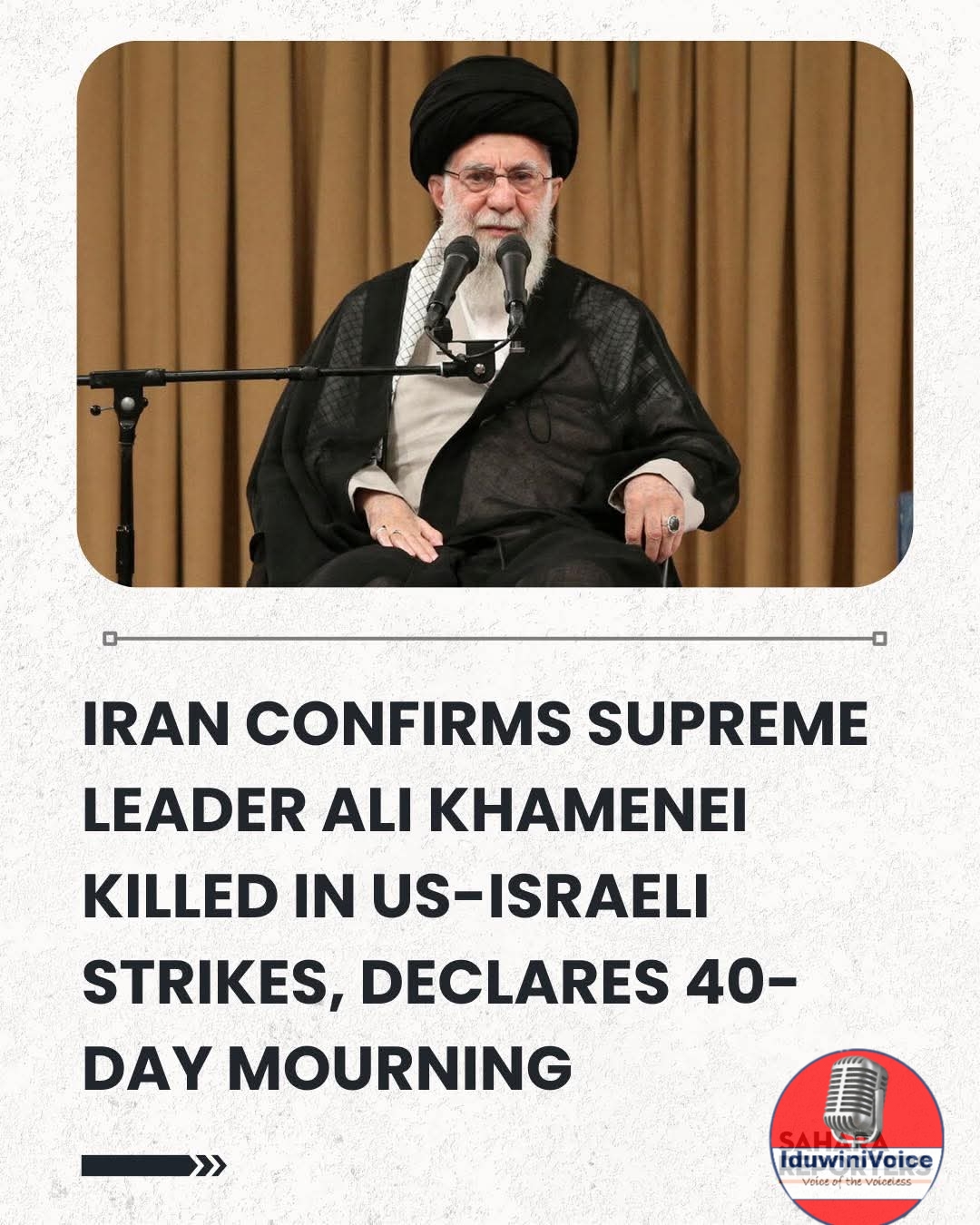
International: Iran Confirms Death of Supreme Leader Ayatollah Ali Khamenei After US-Israeli Strikes — 40-Day National Mourning Declared
By Favour Bibaikefie, International Affairs Correspondent
Tehran — In an unprecedented escalation of Middle East tensions, Iran’s state media has confirmed that Supreme Leader Ali Khamenei has been killed following coordinated military strikes by the United States and Israel, the government announced late Saturday.
In a statement broadcast on state television, Iranian authorities declared a 40-day period of mourning and seven days of public holiday across the Islamic Republic in memory of the 86-year-old cleric, who had led Iran since 1989.
The announcement confirmed reports from earlier in the day by U.S. and Israeli officials that Khamenei had been killed during a major offensive dubbed “Operation Epic Fury” — a series of air and missile strikes targeting regime leadership and strategic sites across Iran.
President Donald Trump, in a social media post, hailed Khamenei’s death as a significant blow to the Iranian regime, describing him as one of “the most evil people in history.” Israeli Prime Minister Benjamin Netanyahu also said there were strong indications that the cleric was “no longer alive” after his compound in Tehran was hit during the attack.
Iranian state media further reported that several members of Khamenei’s immediate family, including a daughter, son-in-law and a grandchild, were killed in the same strike. Tehran’s Supreme National Security Council labelled the attack an “act of aggression” and vowed to hold the United States and Israel accountable.
The death of Iran’s supreme leader — who wielded ultimate authority over the country’s military, judiciary and all branches of government — has triggered widespread uncertainty about the future leadership of the Islamic Republic and heightened fears of broader regional conflict.
The strikes have already prompted retaliatory actions from Iranian forces, with explosions reported across several Middle East countries. International capitals are watching developments closely as responses from neighbouring states and global powers continue to unfold.
By Favour Bibaikefie
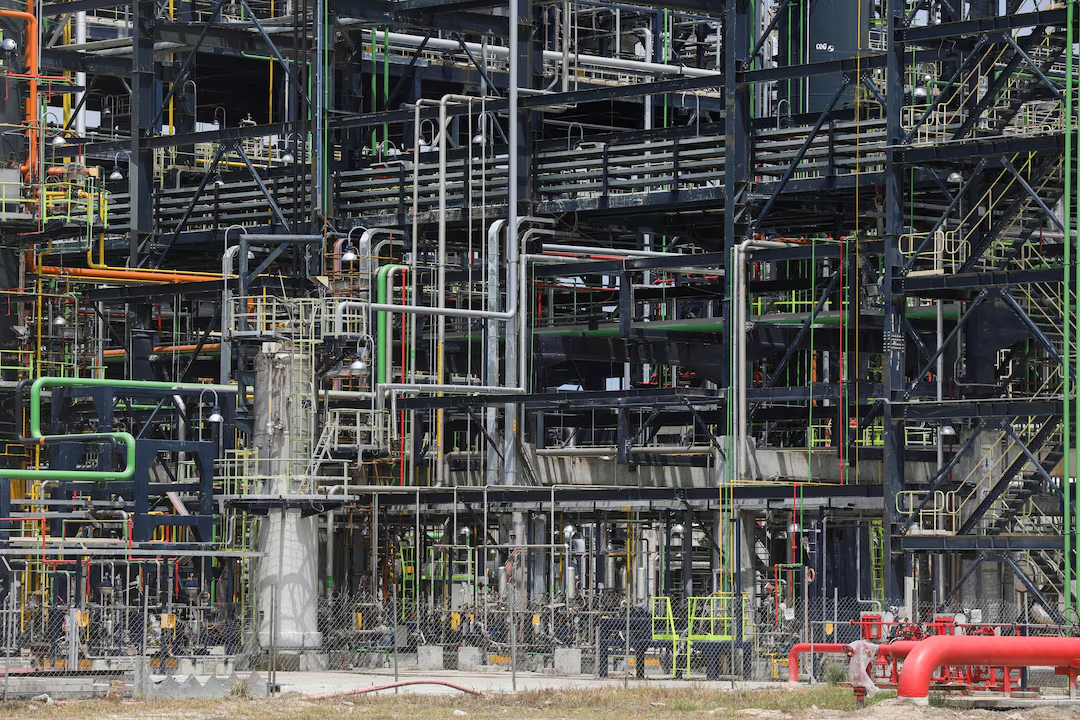
LAGOS — Nigeria’s Dangote Group has signed a $400 million equipment agreement with China’s Xuzhou Construction Machinery Group (XCMG) to accelerate the expansion of its oil refinery, reinforcing efforts to boost domestic refining capacity and industrial development.
The company disclosed on Tuesday that the newly acquired equipment will support ongoing projects across its refining, petrochemical, agricultural, and infrastructure operations. The strategic investment is part of Dangote Group’s broader plan to scale up the refinery’s output toward a projected capacity of 1.4 million barrels per day.
Industry analysts say the expansion represents a significant milestone in Nigeria’s drive to reduce dependence on imported petroleum products while strengthening local production and economic growth.
The Dangote Refinery, regarded as one of Africa’s largest industrial projects, is expected to enhance fuel availability, stimulate job creation, and position Nigeria as a key exporter of refined petroleum products in the global energy market.
Breaking
Agbor Makes List as PDP Appoints Caretaker Committees for Osun, Enugu, Imo, Rivers and Delta States

By: Divine Perezide
The National Working Committee (NWC) of the Peoples Democratic Party (PDP) has approved new caretaker committees to oversee the affairs of the party in five states, pending the inauguration of fresh executive structures.
In a public notice dated January 15, 2026, and signed by the National Organising Secretary, Hon. Theophilus Dakas Shan, the NWC said the decision was taken on behalf of the National Executive Committee (NEC) and in line with constitutional provisions. According to the statement, the appointments were made “pursuant to Section 29(2)(b) of our Constitution (2025 as amended).”
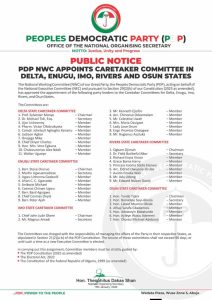
State Committees Announced
For Delta State, the committee is headed by Prof. Sylvester Monye as Chairman, with Dr. Michael Tidi, Esq. serving as Secretary. They will be supported by 16 other members including Ujor Ucheonny, Pharm. Victor Ofobrukuta, Comdr. Johnbull Aghogho Kenairu, Chief Ekiyor Charles, and Hon. Mrs. Vero Egbuna, among others.
In Enugu State, Barr. Steve Oruruo was appointed Chairman, while Martin Ugwuamaideze was named Secretary. The committee includes seven additional members such as Ugwu Uchenna Godswill, Lilian C.E. Ugwuoke, and Chief Cosmas Onyia.
The Imo State Caretaker Committee is comparatively lean, with Chief John Jude Okere as Chairman and Mr. Magnus Amadi as Secretary.
For Rivers State, Ogbam Ojimah was named Chairman, with Dr. Field Baribeful Nkor appointed as Secretary. Other members include Richard Enyia Victor, Grace Boma Harry, Princess Isoma Stella Elenwa, and Austin Emeka Wali.
In Osun State, Hon. Tunde Tijani leads the committee, with Hon. Bamidele Seyi-Abiola serving as Secretary. Five additional members were listed, including Hon. Lateef Mumini Obidel and Alhaji Sarafa Gbadeamosi.
Mandate and Tenure
The PDP clarified that the committees are mandated to “manage the affairs of the Party in their respective States, as stipulated in Section 21(2)(a-b) of the PDP Constitution.” The party further noted that the duration of the committees “shall not exceed 90 days, or until such a time as a new Executive Committee is elected.”
Members were also advised to conduct their activities in compliance with the PDP Constitution (2025 as amended), the Electoral Act 2022, and the Nigerian Constitution (1999 as amended).
Meanwhile, the notice closed with the party’s slogan, “PDP, Power to the People,” indicating continuity of its internal restructuring ahead of future political engagements.