
News
FULL TEXT OF NATIONAL BROADCAST BY PRESIDENT BOLA AHMED TINUBU ON THE 64TH INDEPENDENCE ANNIVERSARY OF THE FEDERAL REPUBLIC OF NIGERIA OCTOBER 1, 2024

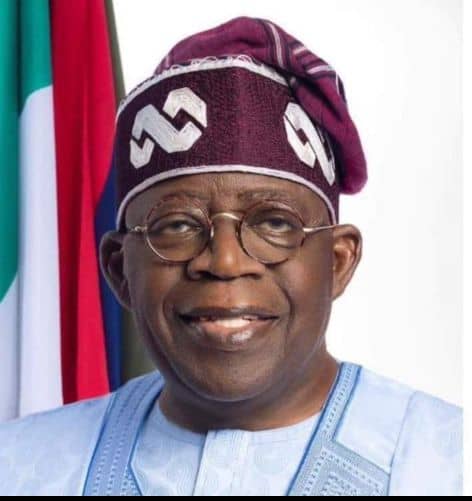
FULL TEXT OF NATIONAL BROADCAST BY PRESIDENT BOLA AHMED TINUBU ON THE 64TH INDEPENDENCE ANNIVERSARY OF THE FEDERAL REPUBLIC OF NIGERIA OCTOBER 1, 2024
Fellow Nigerians, as I address you today, I am deeply aware of the struggles many of you face in these challenging times.
Our administration knows that many of you struggle with rising living costs and the search for meaningful employment. I want to assure you that your voices are heard.
As your President, I assure you that we are committed to finding sustainable solutions to alleviate the suffering of our citizens. Once again, I plead for your patience as the reforms we are implementing show positive signs, and we are beginning to see light at the end of the tunnel.
Exactly 64 years ago, our founding fathers chose democracy as a form of government and launched the dream of a great country that would lead the rest of Africa out of poverty, ignorance, and underdevelopment, a beacon of hope to the rest of Africa and the world. Over six decades later, we can look back, and Nigerians worldwide can see how well we have succeeded in realizing the lofty dreams of our founding fathers.
The world is witnessing and benefiting from the can-do spirit of the Nigerian people, our massive intellectual capacity, and our enterprise and industry in all vocations, from arts to science, technology to infrastructure. The dreams that our founding fathers envisaged are still a work in progress. Every day, we put our hands on the plough, determined to do a better job of it. While it is tempting to focus on what has been left undone and where we have stumbled as a nation, we must never lose sight of how far we have come in forging and holding our country together.
Since independence, our nation has survived many crises and upheavals that led to the dissolution and disintegration of many other nations worldwide. Six years after independence, our country descended into a political crisis that led to a bitter and avoidable civil war.
Since returning from the brink of that darkest moment, we have learned to embrace our diversity and manage our differences better as we continue to work towards engendering a more perfect union. Despite the many challenges that buffeted our country, we remain a strong, united, and viable sovereign nation.
Dear compatriots, our independence anniversary gives us another chance to reflect on how far we have gone in our journey to nation-building and to renew our commitment to building a better nation that will serve present and future generations of Nigerians.
While we celebrate the progress we have made as a people in the last sixty-four years, we must also recognise some of our missed opportunities and mistakes of the past.
If we are to become one of the greatest nations on earth, as God has destined us to be, our mistakes must not be allowed to follow us into the future. My administration took over the leadership of our country 16 months ago at a critical juncture.
The economy faced many headwinds, and our physical security was highly impaired. We found ourselves at a dizzying crossroads, where we must choose between two paths: reform for progress and prosperity or carry on business-as-usual and collapse. We decided to reform our political economy and defence architecture.
On the security front, I am happy to announce to you, my compatriots, that our administration is winning the war on terror and banditry. Our target is to eliminate all the threats of Boko Haram, banditry, kidnapping for ransom, and the scourge of all forms of violent extremism. Within one year, our government has eliminated Boko Haram and bandit commanders faster than ever.
As of the last count, over 300 Boko Haram and bandit commanders have been eliminated by our gallant troops in the Northeast, Northwest, and some other parts of the country. We have restored peace to hundreds of communities in the North, and thousands of our people have been able to return home.
It is an unfinished business, which our security agencies are committed to ending as quickly as possible. As soon as we can restore peace to many communities in the troubled parts of the North, our farmers can return to their farms. We expect to see a leap in food production and a downward spiral in food costs. I promise you, we shall not falter on this.
Our government has been responding to the recent natural disasters, particularly the flooding in parts of the country. After Vice President Kashim Shettima visited Maiduguri, I also visited to assure our people that this federal government will always stand with our people in their times of trouble.
At the last meeting of the Federal Executive Council, we approved a Disaster Relief Fund to mobilise private and public sector funds to help us respond faster to emergencies. Our government has also ordered integrity tests of all our dams in the country to avert future disasters.
The economy is undergoing the necessary reforms and retooling to serve us better and more sustainably. If we do not correct the fiscal misalignments that led to the current economic downturn, our country will face an uncertain future and the peril of unimaginable consequences.
Thanks to the reforms, our country attracted foreign direct investments worth more than $30 billion in the last year.
Fellow compatriots, our administration is committed to free enterprise, free entry, and free exit in investments while maintaining the sanctity and efficacy of our regulatory processes. This principle guides the divestment transactions in our upstream petroleum sector, where we are committed to changing the fortune positively.
As such, the ExxonMobil Seplat divestment will receive ministerial approval in a matter of days, having been concluded by the regulator, NUPRC, in line with the Petroleum Industry Act, PIA. This was done in the same manner as other qualified divestments approved in the sector. The move will create vibrancy and increase oil and gas production, positively impacting our economy.
The more disciplined approach adopted by the Central Bank to monetary policy management has ensured stability and predictability in our foreign exchange market.
We inherited a reserve of over $33 billion 16 months ago. Since then, we have paid back the inherited forex backlog of $7 billion. We have cleared the ways and means debt of over N30 trillion.
We have reduced the debt service ratio from 97 per cent to 68 per cent. Despite all these, we have managed to keep our foreign reserve at $37 billion. We continue to meet all our obligations and pay our bills. We are moving ahead with our fiscal policy reforms.
To stimulate our productive capacity and create more jobs and prosperity, the Federal Executive Council approved the Economic Stabilisation Bills, which will now be transmitted to the National Assembly.
These transformative bills will make our business environment more friendly, stimulate investment and reduce the tax burden on businesses and workers once they are passed into law.
As part of our efforts to re-engineer our political economy, we are resolute in our determination to implement the Supreme Court judgment on the financial autonomy of local governments.
The central concern of our people today is the high cost of living, especially food costs. This concern is shared by many around the globe as prices and the cost of living continue to rise worldwide.
My fellow Nigerians, be assured that we are implementing many measures to reduce the cost of living here at home. I commend the Governors particularly, in Kebbi, Niger, Jigawa, Kwara, Nasarawa, and the Southwest Governors that have embraced our agricultural production programme. I urge other states to join the Federal Government in investing in mechanised farming. We are playing our part by supplying fertilizer and making tractors and other farm equipment available.
Last week, the Federal Executive Council approved establishing a local assembly plant for 2000 John Deere tractors, combine harvesters, disc riders, bottom ploughs and other farm equipment. The plant has a completion time of six months.
Our energy transition programme is on course. We are expanding the adoption of the Presidential Initiative on Compressed Natural Gas for mass transit with private sector players.
The Federal Government is ready to assist the thirty-six States and FCT in acquiring CNG buses for cheaper public transportation. Fellow Nigerians, while we are working to stabilise the economy and secure the country, we also seek to foster national unity and build social harmony and cohesion.
Our economy can only thrive when there is peace. As we work to overcome the challenges of the day, we remain mindful of the next generation as we seek to galvanize their creative energy towards a better future.
We lead today with the future we wish to bequeath to our children in focus, recognizing that we cannot design a future that belongs to them without making them its architects. Considering this, I am pleased to announce the gathering of a National Youth Conference.
This conference will be a platform to address the diverse challenges and opportunities confronting our young people, who constitute more than 60 per cent of our population. It will provoke meaningful dialogue and empower our young people to participate actively in nation-building.
By ensuring that their voices are heard in shaping the policies that impact their lives, we are creating a pathway for a brighter tomorrow. The 30-day Confab will unite young people nationwide to collaboratively develop solutions to issues such as education, employment, innovation, security, and social justice.
The modalities of this Confab and selection of delegates will be designed in close consultation with our young people through their representatives.
Through this confab, it will be our job as leaders to ensure that their aspirations are at the heart of the conference’s deliberations. The government will thoroughly consider and implement the recommendations and outcomes from this forum as we remain resolute in our mission to build a more inclusive, prosperous, and united Nigeria.
Our government is implementing several other youth-centric programmes to give our young people an advantage in the rapidly changing world. We are implementing, amongst others, the 3 million Technical Talents programme (3MTT) of the Ministry of Communications, Innovation and Digital Economy, aimed at building Nigeria’s technical talent backbone. We have also enthusiastically implemented the Nigerian Education Loan Fund (NELFUND), which provides cheap loans to our students to pursue their tertiary educational dreams. In addition, later this month, we shall launch The Renewed Hope Labour Employment and Empowerment Programme (LEEP).
It is conceived as a comprehensive suite of interventions at job creation by the Federal Ministry of Labour and Employment that is aimed at facilitating the creation of 2.5 million jobs, directly and indirectly, on an annual incremental basis whilst simultaneously ensuring the welfare and safety of workers across the country. As is the tradition, the government will soon announce all the beneficiaries of our national honours for 2024.
The Senate President and the Chief Justice of the Federation have been conferred with the honour of the Grand Commander of the Order of the Niger (GCON). The deputy Senate President and Speaker of the House of Representatives have the honour of Commander of the Order of the Federal Republic (CFR), while the deputy speaker of the House has been awarded Commander of the Order of Niger (CON).
Fellow Nigerians, better days are ahead of us. The challenges of the moment must always make us believe in ourselves. We are Nigerians—resilient and tenacious.
We always prevail and rise above our circumstances. I urge you to believe in our nation’s promise. The road ahead may be challenging, but we will forge a path toward a brighter future with your support.
Together, we will cultivate a Nigeria that reflects the aspirations of all its citizens, a nation that resonates with pride, dignity, and shared success.
As agents of change, we can shape our destiny and build a brighter future by ourselves, for ourselves and for future generations. Please join our administration in this journey towards a brighter future.
Let us work together to build a greater Nigeria where every citizen can access opportunities and every child can grow up with hope and promise. May God continue to bless our nation and keep members of our armed forces safe.
Happy Independence anniversary, my fellow Nigerians!
News
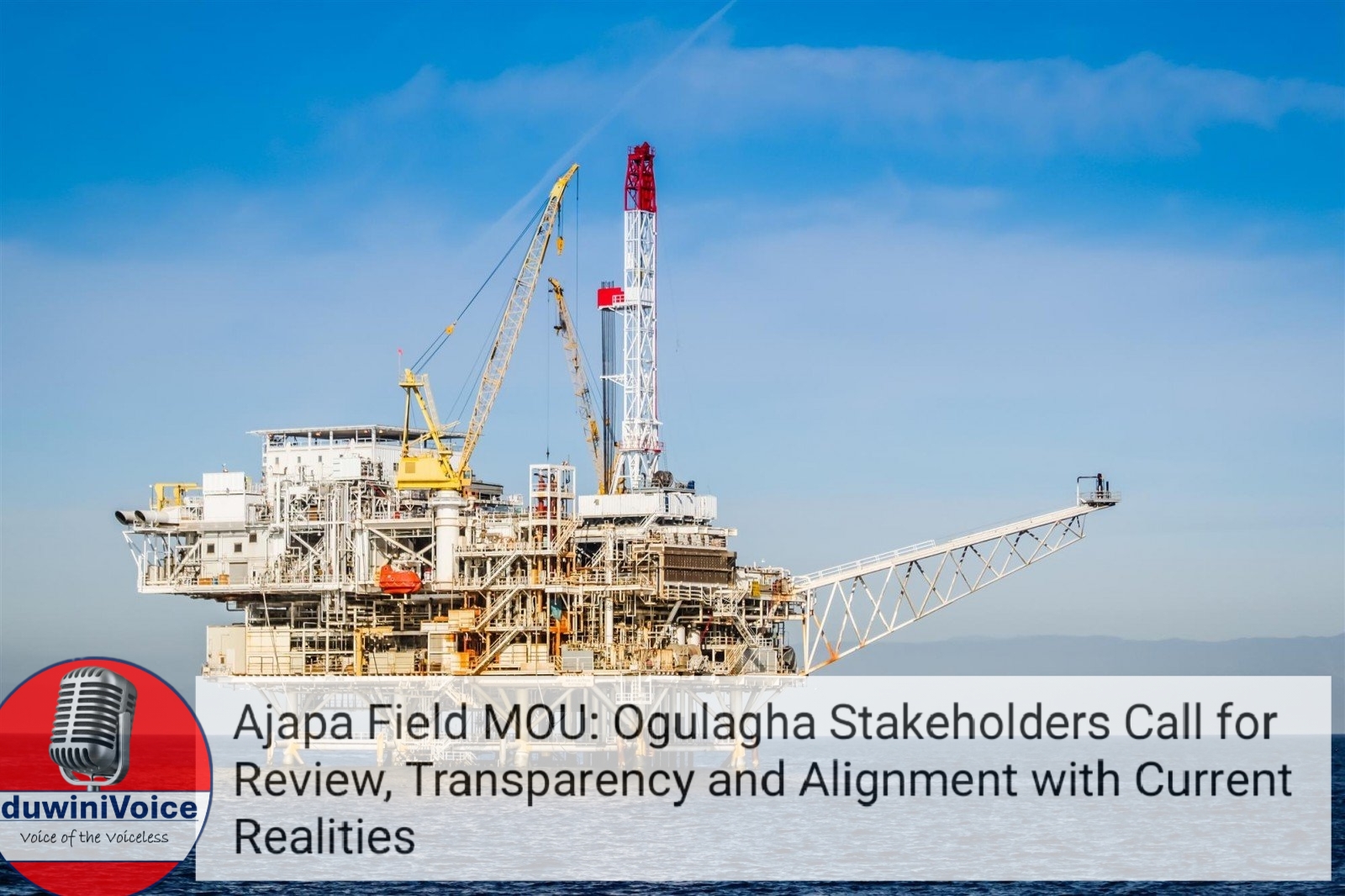
Ajapa Field MOU: Ogulagha Stakeholders Call for Review, Transparency and Alignment with Current Realities
By Charity Ebi
OGULAGHA, DELTA STATE — Nearly two decades after a Memorandum of Understanding (MOU) was signed between Britannia-U Nigeria Limited and Ogulagha Kingdom in Burutu Local Government Area, stakeholders in the oil-bearing community are calling for a comprehensive review of the agreement to reflect present-day economic and industry realities.
The 2007 MOU, tied to operations at the Ajapa Marginal Field, was introduced as a framework for peace, development and mutual benefit. However, community representatives say that while the agreement may have appeared workable at inception, its fixed financial structure has been overtaken by inflation, rising oil revenues and evolving governance standards within Nigeria’s petroleum sector.
Addressing journalists on behalf of stakeholders, Mr. Jude Iyelagha stressed that the concerns being raised should not be misconstrued as an attack on the integrity of Ogulagha’s traditional or political leadership.
“This is not an attempt to indict or insult the credibility of our revered leaders,” Iyelagha clarified. “Rather, it is an encouragement for leaders to revisit the well-documented terms, review them in line with current realities, and ensure they are fully implemented for the benefit of our people.”
Modest Provisions, Expanding Industry
Under the MOU, provisions reportedly included annual allocations for community drugs, scholarships for secondary and tertiary students, training slots at the Petroleum Training Institute (PTI), allowances for trainees, incentives for science teachers and sitting allowances for kingdom committee meetings.
While these figures may have been considered reasonable in 2007, stakeholders argue that their real value has significantly diminished over time due to inflation. Crucially, the sums were fixed and not indexed to oil prices, production output or inflationary trends.
Using conservative production estimates common to marginal fields in the Niger Delta, observers note that annual gross revenues from such operations could run into tens of billions of naira. When juxtaposed with community allocations that reportedly totalled only a few million naira annually at inception, the proportional disparity becomes a central point of concern.
For residents, the issue is less about confrontation and more about fairness.
Development Expectations in a Resource-Rich Area
Ogulagha Kingdom remains one of the oil-producing hubs in Delta State. Yet stakeholders point to ongoing challenges including limited healthcare facilities, youth unemployment, fragile road networks, environmental vulnerability and constrained access to higher education funding.
Community leaders argue that development in oil-bearing areas should translate into tangible infrastructure such as modern health centres, shoreline protection projects, potable water systems, vocational training hubs and structured employment pipelines.
“The frustration is not hostility towards investment,” a stakeholder noted. “It is about proportionality and visible impact.”
Shareholding Claims and Transparency Concerns
Beyond the MOU, a more complex issue has emerged. Leaders within the kingdom assert that Ogulagha may not only be a host community but also a registered shareholder in the Ajapa Marginal Field structure, allegedly documented with the Corporate Affairs Commission.
If such shareholding exists, corporate law provides for certain rights, including access to audited financial statements, notice of Annual General Meetings and entitlement to dividends where declared.
Stakeholders claim that consistent access to production data, audited accounts and dividend clarity has not been fully established, raising questions about governance participation.
Again, Iyelagha emphasised that the intention is not to cast aspersions.
“We believe in dialogue and institutional engagement. What we are asking for is clarity, transparency and alignment with statutory expectations where applicable,” he said.
Petroleum Industry Act and Changing Standards
Analysts observe that the Petroleum Industry Act (PIA) has introduced more structured host community frameworks and governance mechanisms. Agreements executed before the reform era, they argue, may require review to align with contemporary standards of transparency and proportionality.
Stakeholders maintain that revisiting the 2007 framework would not only protect the long-term interests of the kingdom but also strengthen investor-community relations.
Company Response Awaited
Efforts to obtain official comments from Britannia-U Nigeria Limited were unsuccessful at the time of filing this report. The company’s response, when received, will be reflected in subsequent updates.
For now, the central appeal from Ogulagha stakeholders is measured and deliberate: a call for leaders to examine documented agreements, align them with present realities, and ensure that promises made translate into visible, sustainable benefits for the kingdom.
As one community voice put it, “Oil is finite, but our people and our future must endure.”
By Favour Bibaikefie
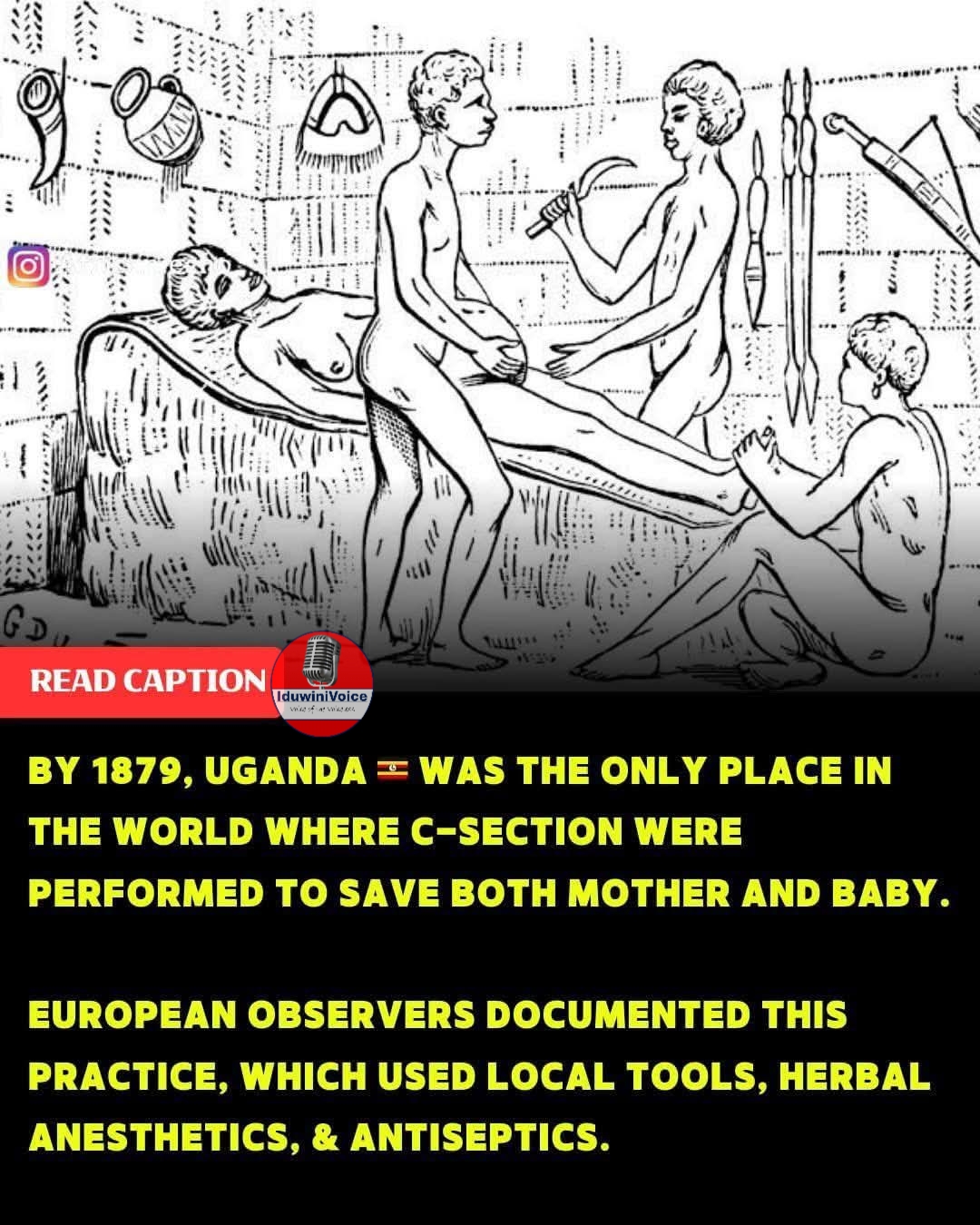
Historical medical records have revealed that indigenous surgeons in the Buganda Kingdom of present-day Uganda were successfully carrying out cesarean sections as early as 1879 — a period when the procedure was still considered highly risky in many parts of Europe.
The account was documented by British medical practitioner and explorer Robert William Felkin, who witnessed and later published details of the operation in the Edinburgh Medical Journal in 1884 under the title “Notes on Labour in Central Africa.”
According to Felkin’s observations, the procedure involved the use of banana wine as a cleansing agent, herbal preparations to manage pain, and cauterization with heated metal to control bleeding. Both mother and child reportedly survived the surgery — an outcome that drew significant attention from European medical circles at the time.
Felkin described the process as orderly and deliberate, noting that the practitioners demonstrated familiarity with anatomy, sterilization methods available to them, and post-operative care. The documentation challenged prevailing 19th-century assumptions that advanced surgical knowledge was absent in African societies before colonial contact.
Medical historians note that cesarean sections in Europe during the mid-1800s were often fatal due to infection and limited antiseptic knowledge. Antiseptic surgical techniques only became widely accepted in Europe toward the late 19th century following developments associated with figures such as Joseph Lister.
Scholars argue that the Buganda example illustrates a broader pattern of indigenous scientific knowledge that predated colonial rule. In his work, historian highlighted the complexity of African societies prior to European intervention, disputing narratives that framed the continent as lacking innovation or structured knowledge systems.
Experts say the 1879 account underscores the need for a more balanced historical perspective — one that acknowledges Africa’s contributions to medicine, technology, and empirical science long before formal Western medical institutions expanded into the continent.
The rediscovery and renewed discussion of such records continue to prompt debates about how global scientific history is written — and whose knowledge systems are recognized.
Source: African Echo
News
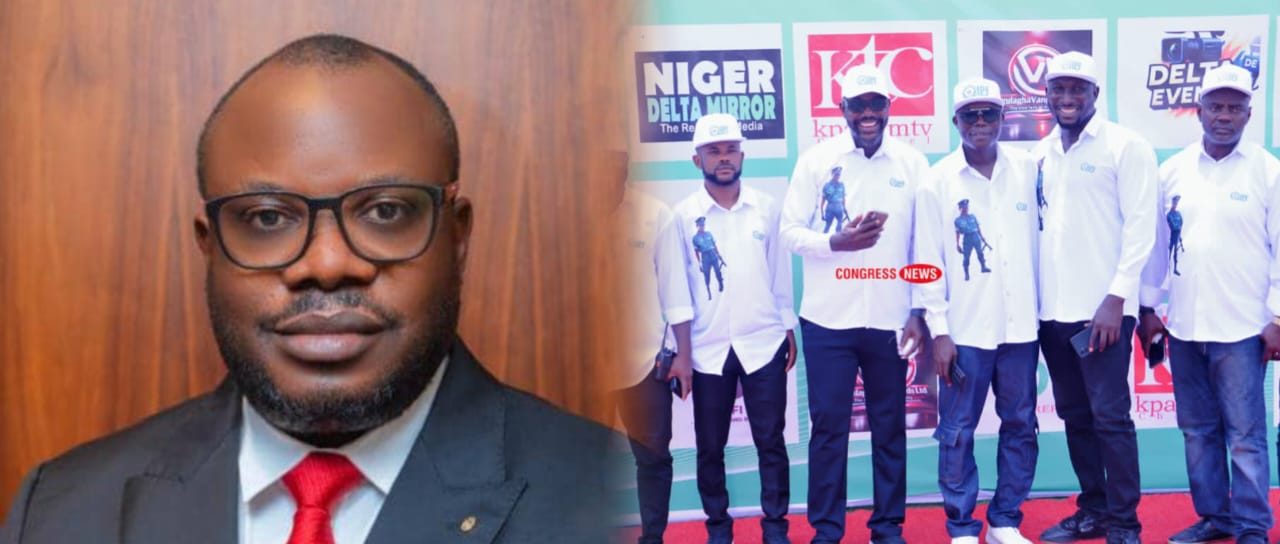
Otuaro Congratulates New IPF Leadership, Urges Confidence and Stronger Advocacy for Ijaw Nation
By Favour Bibaikefie
The Administrator of the Presidential Amnesty Programme (PAP), Chief (Dr.) Dennis Brutu Otuaro, has congratulated the newly inaugurated leadership of the Ijaw Publishers’ Forum (IPF), led by Senior Comrade Austin Ozobo, urging them to remain confident and focused as they steer the affairs of the organisation.
Speaking through Mr. Prebor Presley, Coordinator of the PAP Delta/Edo State Office, Otuaro commended the IPF for consistently projecting the Ijaw and Niger Delta narrative from a rights-based standpoint. He stressed that strengthening indigenous media platforms such as the IPF should be a collective responsibility, given the body’s strategic relevance to the Ijaw nation, the Niger Delta, and Nigeria as a whole.
According to him, the emergence of the new executive comes at a crucial period when the region requires vibrant voices to intensify advocacy for the rights and interests of its people. He encouraged the leadership to consolidate on the achievements of their predecessors and remain steadfast in pursuing the forum’s mandate.
In his acceptance speech, IPF President, Comrade Austin Ozobo, unveiled an ambitious two-year agenda, including plans to establish a permanent secretariat, set up a printing press, and launch indigenous Ijaw radio and television stations. He called on Ijaw sons and daughters to rally behind the organisation in its quest for peace, unity, and development across the Niger Delta.
Highlighting the forum’s advocacy role, Ozobo declared: “Let every headline, every broadcast, every book, every post send one clear message: The Ijaw people will no longer be spectators in their own land.”
In a goodwill message, Princewill Binebai, spokesperson of the Ijaw Youth Council (IYC) Worldwide, congratulated the new executive while cautioning against internal discord. He warned that the Ijaw people must recognise external challenges and avoid becoming divided among themselves.
Also speaking, frontline Ijaw politician, , traced the roots of journalism in Nigeria to the Ijaw ethnic nationality. He expressed disappointment over the absence of some Ijaw political figures at the event, noting that he had hoped it would be more “ceremonious,” with Ijaws asserting their presence as the true owners of Warri.
Reaffirming his commitment, Ozobo pledged to uphold the values of “our great organization and work tirelessly to promote the interests of our organization, the Ijaw Nation and the Niger Delta at large.”
He further stated: “The IPF will continue to advocate for the rights and interests of the Ijaw people, and will continue to promote accurate reporting and storytelling about the over 50 million Ijaw people that are balkanized and marginalized in Nigeria. The Ijaw people have a rich cultural heritage, and it is our responsibility to preserve and promote it.
“We will work with stakeholders to promote peace, unity, and development in the Niger Delta region. We will also provide a platform for Ijaw journalists and publishers to advance and grow in the media profession.”
Calling for unity among leaders, the IPF President appealed: “Ijaw leaders to prioritize Ijaw Nation’s development; we should know where we are coming from. This is not the time for divisive governance, but rather a time for inclusive governance.
“Let us wake up from our slumber and stop doing things that will further divide us or underdevelop the Ijaw Nation.”
He concluded by appreciating stakeholders who have supported the forum and urged collective commitment moving forward. “All well-meaning Ijaw sons and daughters to join and support the organization (IPF) in this journey. Let us work together to build a stronger, more united Ijaw Nation where love, justice and peace will reign.”