
News
IPDI BERATES OPC OVER ATTACKS ON TOMPOLO AND NIGER DELTA PIPELINE SURVEILLANCE CONTRACT.

By Tobouke Jemine
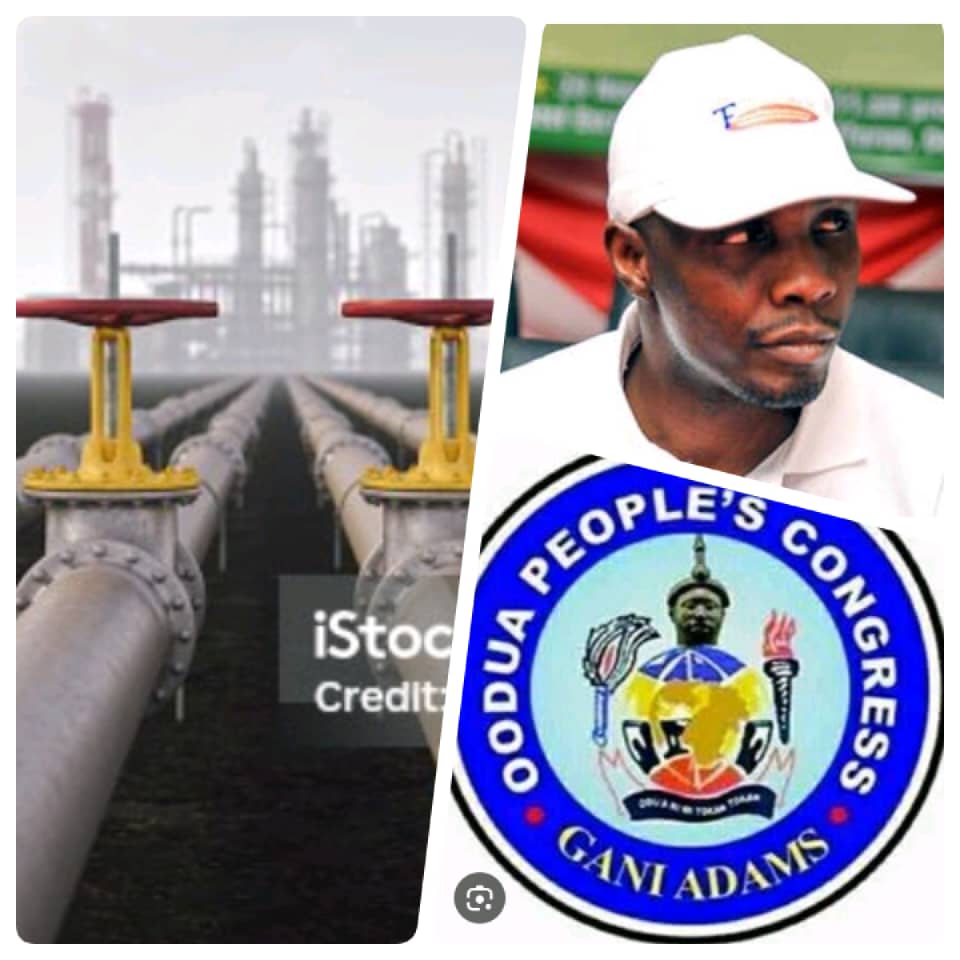
The Ijaw People’s Development Initiative( IPDI) , led by its National President, Comr. Austin Ozobo has berated Oodua Peoples Congress and Civil Society Coalition For Mandate Protection for calling on the Presidency to to review the Pipeline Surveillance Contract awarded to the ex-militant leader of Niger Delta, High Chief (Dr) Government Oweizide Ekpemupolo.
Comrade Ozobo said it was unbecoming of civil rights movement like Oodua Peoples Congress (OPC) to allow itself to be used by agents of turmoil and blackmailers to call for review of a contract that was reviewed barely four months ago. The group revealed that greedy and failed stakeholders who were also biding for the contract are behind the attacks against Niger Delta Pipe Surveillance and the Tantita Security company.
The group said further that “The Oodua Congress and others, in case they forget, should know that the Niger Delta Pipeline Surveillance Contract was initiated by High Chief (Dr) Government Oweizide Ekpemupolo, it was part of the terms agreed upon during the signing of the Presidential Amnesty Programme. Despite the pipeline security contract being initiated by Tompolo, it was awarded to the Yorubas, Calabars, and Benins from 2009 till 2022, when the Buhari led administration awarded part of the contract to Tompolo having observed that the activities of oil theft get increasing despite being superintendent by the Navy, NSCDC, Army and non-indigenous contractors.
“In case the Oodua Congress and others are poor students of history, they should know that the federal government revoked the pipeline surveillance from non-indigenous contractors and military because it loses confidence in them. It took the Buhari administration to sort for capable hands for a reasonable period of time before Tompolo was recommended from the security angle. Despite this recommendation, it was still part of the contract that was awarded to Tompolo. The bigger part which has to do with the offshore is still in the hands of the Itsekiri monarch. I feel disgusted when people of Yoruba, Itsekiri and Ilaje decide to remain mute over the large portion of the Surveillance Contract their brother is handling and continues to point fingers at Tompolo. This is very unfair and mischievous.
“Let me state unequivocally that the Nigeria crude daily production was far below a 1m barrel per day at the time Tompolo came on board, but today the narrative is no longer the same, we now approximately produce 1.7m barrels per day. This was the reason the federal government decided to renew the Tompolo Surveillance Contract. Tompolo has shown capacity, resilience, competence, intelligence and resourcefulness in the fight against oil theft. This is a fact why the federal government will allow Tompolo to continue being in charge of the Surveillance Contract for now. The Itsekiri monarch contract is cutting across Ijaw in scope, but no Ijaw has agitated that the contract should be revoked from the Itsekiri monarch. I am very disappointed at some unpopular stakeholders using all mediums to incite discord against Tompolo in order to get the contract awarded to them. This is shameful and desperation taken too far.
“Again, it should be stated clearly that the government is not interested about who gets what but deeply interested about who can end oil theft in the country. Till this moment, the federal government is aware that in the whole of Niger Delta there is no one who can do the surveillance job better than Tompolo,, hence all these cheap calls for contract review will end up in a deft ears of the government for now.
“We are aware that these unfounded calls have been sponsored by oil thieves and greedy contractors. Their reason is not far fetched, they want the surveillance contract to be given to the military or inexperienced and incompetent contractor to create a room for them to continue their oil theft business. The government is aware of the sinister intention of those calling on president Bola Ahmed Tinubu to review or revoke the Tompolo pipeline surveillance contract.
“The whole gamut of the call to review Tompolo’s Surveillance Contract is being manipulated by corrupt and greedy fellows. To think of it, despite the contract being awarded to Tompolo’s Surveillance Company, it is still being handled by boys, men and women in such areas or tribes where such operations are carried out. No foreigner is employed to do the job. All the subcontractors are indigenes of the oil and gas communities in Niger Delta.
It is a known fact the contract can’t accommodate everybody in the whole community, maybe that is what some referred to as marginalisation, I don’t know. But what I know is that no community under Tompolo’s Surveillance coverage is marginalised and sidelined.
“Therefore, I advised mischief makers and enemies of progress in Niger Delta to repent from their stock in trade and engage themselves in productive activities, rather than blackmailing and betraying a fellow brother for bread and meat. It is part of my appeal to the federal government to ignore and disregard sinister calls of perceived oil thieves to pave the way to continue their business”.










News
Ajapa Field MOU: Ogulagha Stakeholders Call for Review, Transparency and Alignment with Current Realities

By Charity Ebi
OGULAGHA, DELTA STATE — Nearly two decades after a Memorandum of Understanding (MOU) was signed between Britannia-U Nigeria Limited and Ogulagha Kingdom in Burutu Local Government Area, stakeholders in the oil-bearing community are calling for a comprehensive review of the agreement to reflect present-day economic and industry realities.
The 2007 MOU, tied to operations at the Ajapa Marginal Field, was introduced as a framework for peace, development and mutual benefit. However, community representatives say that while the agreement may have appeared workable at inception, its fixed financial structure has been overtaken by inflation, rising oil revenues and evolving governance standards within Nigeria’s petroleum sector.
Addressing journalists on behalf of stakeholders, Mr. Jude Iyelagha stressed that the concerns being raised should not be misconstrued as an attack on the integrity of Ogulagha’s traditional or political leadership.
“This is not an attempt to indict or insult the credibility of our revered leaders,” Iyelagha clarified. “Rather, it is an encouragement for leaders to revisit the well-documented terms, review them in line with current realities, and ensure they are fully implemented for the benefit of our people.”
Modest Provisions, Expanding Industry
Under the MOU, provisions reportedly included annual allocations for community drugs, scholarships for secondary and tertiary students, training slots at the Petroleum Training Institute (PTI), allowances for trainees, incentives for science teachers and sitting allowances for kingdom committee meetings.
While these figures may have been considered reasonable in 2007, stakeholders argue that their real value has significantly diminished over time due to inflation. Crucially, the sums were fixed and not indexed to oil prices, production output or inflationary trends.
Using conservative production estimates common to marginal fields in the Niger Delta, observers note that annual gross revenues from such operations could run into tens of billions of naira. When juxtaposed with community allocations that reportedly totalled only a few million naira annually at inception, the proportional disparity becomes a central point of concern.
For residents, the issue is less about confrontation and more about fairness.
Development Expectations in a Resource-Rich Area
Ogulagha Kingdom remains one of the oil-producing hubs in Delta State. Yet stakeholders point to ongoing challenges including limited healthcare facilities, youth unemployment, fragile road networks, environmental vulnerability and constrained access to higher education funding.
Community leaders argue that development in oil-bearing areas should translate into tangible infrastructure such as modern health centres, shoreline protection projects, potable water systems, vocational training hubs and structured employment pipelines.
“The frustration is not hostility towards investment,” a stakeholder noted. “It is about proportionality and visible impact.”
Shareholding Claims and Transparency Concerns
Beyond the MOU, a more complex issue has emerged. Leaders within the kingdom assert that Ogulagha may not only be a host community but also a registered shareholder in the Ajapa Marginal Field structure, allegedly documented with the Corporate Affairs Commission.
If such shareholding exists, corporate law provides for certain rights, including access to audited financial statements, notice of Annual General Meetings and entitlement to dividends where declared.
Stakeholders claim that consistent access to production data, audited accounts and dividend clarity has not been fully established, raising questions about governance participation.
Again, Iyelagha emphasised that the intention is not to cast aspersions.
“We believe in dialogue and institutional engagement. What we are asking for is clarity, transparency and alignment with statutory expectations where applicable,” he said.
Petroleum Industry Act and Changing Standards
Analysts observe that the Petroleum Industry Act (PIA) has introduced more structured host community frameworks and governance mechanisms. Agreements executed before the reform era, they argue, may require review to align with contemporary standards of transparency and proportionality.
Stakeholders maintain that revisiting the 2007 framework would not only protect the long-term interests of the kingdom but also strengthen investor-community relations.
Company Response Awaited
Efforts to obtain official comments from Britannia-U Nigeria Limited were unsuccessful at the time of filing this report. The company’s response, when received, will be reflected in subsequent updates.
For now, the central appeal from Ogulagha stakeholders is measured and deliberate: a call for leaders to examine documented agreements, align them with present realities, and ensure that promises made translate into visible, sustainable benefits for the kingdom.
As one community voice put it, “Oil is finite, but our people and our future must endure.”
By Favour Bibaikefie
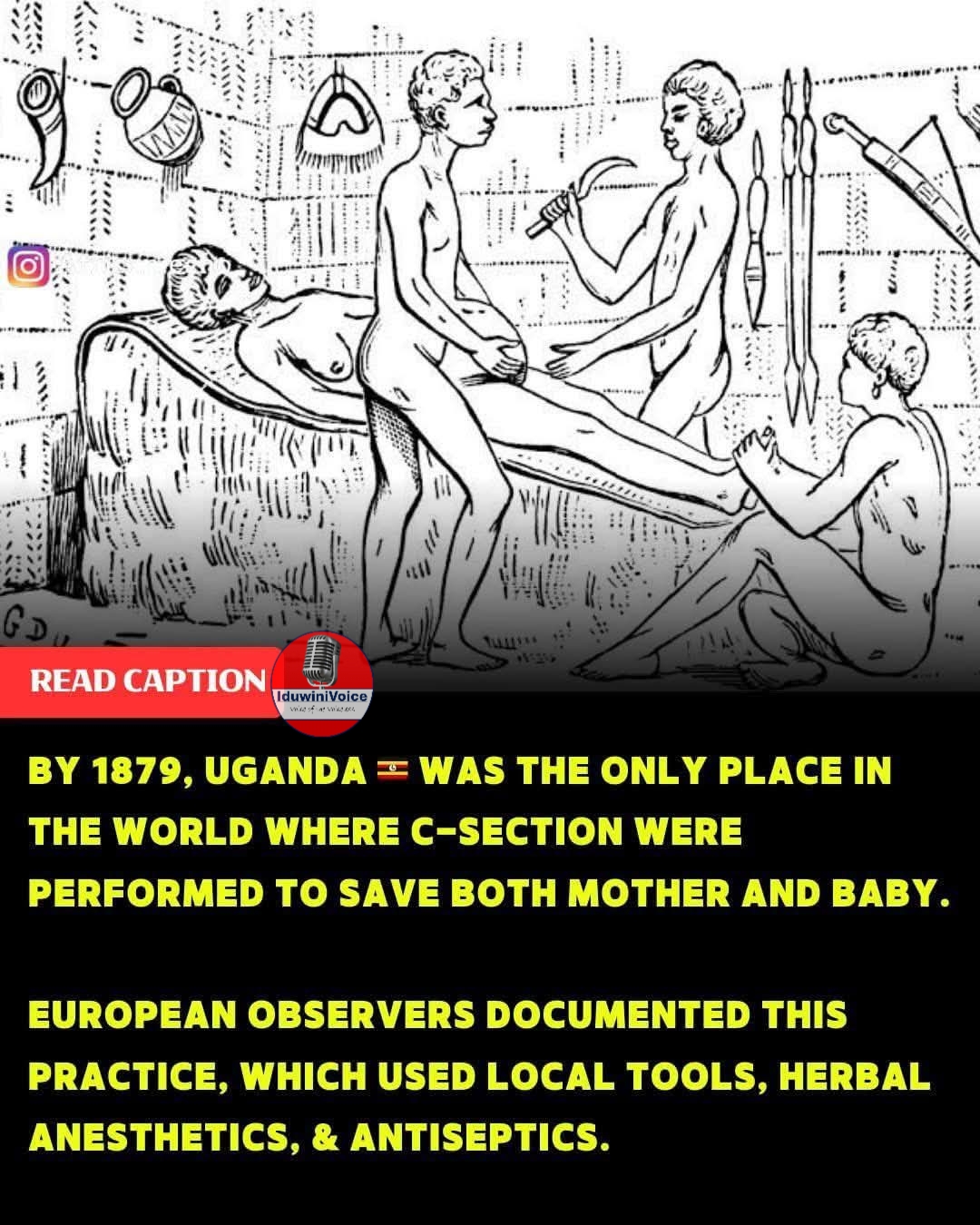
Historical medical records have revealed that indigenous surgeons in the Buganda Kingdom of present-day Uganda were successfully carrying out cesarean sections as early as 1879 — a period when the procedure was still considered highly risky in many parts of Europe.
The account was documented by British medical practitioner and explorer Robert William Felkin, who witnessed and later published details of the operation in the Edinburgh Medical Journal in 1884 under the title “Notes on Labour in Central Africa.”
According to Felkin’s observations, the procedure involved the use of banana wine as a cleansing agent, herbal preparations to manage pain, and cauterization with heated metal to control bleeding. Both mother and child reportedly survived the surgery — an outcome that drew significant attention from European medical circles at the time.
Felkin described the process as orderly and deliberate, noting that the practitioners demonstrated familiarity with anatomy, sterilization methods available to them, and post-operative care. The documentation challenged prevailing 19th-century assumptions that advanced surgical knowledge was absent in African societies before colonial contact.
Medical historians note that cesarean sections in Europe during the mid-1800s were often fatal due to infection and limited antiseptic knowledge. Antiseptic surgical techniques only became widely accepted in Europe toward the late 19th century following developments associated with figures such as Joseph Lister.
Scholars argue that the Buganda example illustrates a broader pattern of indigenous scientific knowledge that predated colonial rule. In his work, historian highlighted the complexity of African societies prior to European intervention, disputing narratives that framed the continent as lacking innovation or structured knowledge systems.
Experts say the 1879 account underscores the need for a more balanced historical perspective — one that acknowledges Africa’s contributions to medicine, technology, and empirical science long before formal Western medical institutions expanded into the continent.
The rediscovery and renewed discussion of such records continue to prompt debates about how global scientific history is written — and whose knowledge systems are recognized.
Source: African Echo
News
Otuaro Congratulates New IPF Leadership, Urges Confidence and Stronger Advocacy for Ijaw Nation

By Favour Bibaikefie
The Administrator of the Presidential Amnesty Programme (PAP), Chief (Dr.) Dennis Brutu Otuaro, has congratulated the newly inaugurated leadership of the Ijaw Publishers’ Forum (IPF), led by Senior Comrade Austin Ozobo, urging them to remain confident and focused as they steer the affairs of the organisation.
Speaking through Mr. Prebor Presley, Coordinator of the PAP Delta/Edo State Office, Otuaro commended the IPF for consistently projecting the Ijaw and Niger Delta narrative from a rights-based standpoint. He stressed that strengthening indigenous media platforms such as the IPF should be a collective responsibility, given the body’s strategic relevance to the Ijaw nation, the Niger Delta, and Nigeria as a whole.
According to him, the emergence of the new executive comes at a crucial period when the region requires vibrant voices to intensify advocacy for the rights and interests of its people. He encouraged the leadership to consolidate on the achievements of their predecessors and remain steadfast in pursuing the forum’s mandate.
In his acceptance speech, IPF President, Comrade Austin Ozobo, unveiled an ambitious two-year agenda, including plans to establish a permanent secretariat, set up a printing press, and launch indigenous Ijaw radio and television stations. He called on Ijaw sons and daughters to rally behind the organisation in its quest for peace, unity, and development across the Niger Delta.
Highlighting the forum’s advocacy role, Ozobo declared: “Let every headline, every broadcast, every book, every post send one clear message: The Ijaw people will no longer be spectators in their own land.”
In a goodwill message, Princewill Binebai, spokesperson of the Ijaw Youth Council (IYC) Worldwide, congratulated the new executive while cautioning against internal discord. He warned that the Ijaw people must recognise external challenges and avoid becoming divided among themselves.
Also speaking, frontline Ijaw politician, , traced the roots of journalism in Nigeria to the Ijaw ethnic nationality. He expressed disappointment over the absence of some Ijaw political figures at the event, noting that he had hoped it would be more “ceremonious,” with Ijaws asserting their presence as the true owners of Warri.
Reaffirming his commitment, Ozobo pledged to uphold the values of “our great organization and work tirelessly to promote the interests of our organization, the Ijaw Nation and the Niger Delta at large.”
He further stated: “The IPF will continue to advocate for the rights and interests of the Ijaw people, and will continue to promote accurate reporting and storytelling about the over 50 million Ijaw people that are balkanized and marginalized in Nigeria. The Ijaw people have a rich cultural heritage, and it is our responsibility to preserve and promote it.
“We will work with stakeholders to promote peace, unity, and development in the Niger Delta region. We will also provide a platform for Ijaw journalists and publishers to advance and grow in the media profession.”
Calling for unity among leaders, the IPF President appealed: “Ijaw leaders to prioritize Ijaw Nation’s development; we should know where we are coming from. This is not the time for divisive governance, but rather a time for inclusive governance.
“Let us wake up from our slumber and stop doing things that will further divide us or underdevelop the Ijaw Nation.”
He concluded by appreciating stakeholders who have supported the forum and urged collective commitment moving forward. “All well-meaning Ijaw sons and daughters to join and support the organization (IPF) in this journey. Let us work together to build a stronger, more united Ijaw Nation where love, justice and peace will reign.”