
IduwiniVoice Edubbas
“Sleep Soundly: Tips for a Restful Night’s Sleep”


“Sleep Soundly: Tips for a Restful Night’s Sleep”
By Anthony Beauty.
In today’s fast-paced world, getting a good night’s sleep can sometimes seem like a luxury. However, quality sleep is essential for our overall health and well-being. If you find yourself tossing and turning at night, here are some expert-backed tips to help you achieve better sleep and wake up feeling refreshed.
1. Stick to a Regular Sleep Schedule.
One of the key factors in achieving better sleep is consistency. Try to establish a regular sleep schedule by going to bed and waking up at the same time every day, even on weekends. This helps regulate your body’s internal clock, making it easier to fall asleep and wake up naturally.
2. Avoid Caffeine, Alcohol, and Nicotine.
While that evening cup of coffee or glass of wine may seem tempting, these substances can wreak havoc on your sleep quality and duration. Caffeine and nicotine are stimulants that can keep you awake, while alcohol may disrupt your sleep cycle. It’s best to avoid these substances, especially in the hours leading up to bedtime.
3. Incorporate Regular Exercise.
Regular physical activity not only improves your mood and overall health but also contributes to better sleep quality. However, it’s important to time your exercise wisely. Avoid vigorous workouts too close to bedtime, as they can actually energize you and make it harder to fall asleep. Aim to finish exercising at least a few hours before bedtime.
4. Create a Comfortable Sleep Environment.
Your bedroom plays a crucial role in the quality of your sleep. Make sure it’s a comfortable and relaxing space by keeping it dark, quiet, cool, and comfortable. You can use blackout curtains, fans, earplugs, or white noise machines to help create the ideal sleep environment tailored to your preferences.
5. Limit Daytime Naps.
While a short nap can be refreshing, excessive daytime napping can disrupt your circadian rhythm and make it challenging to fall asleep at night. If you need a nap, try to limit it to 20 minutes or less, and avoid napping after 3 p.m. This will help ensure that your nighttime sleep remains undisturbed.
6. Relax Before Bed.
Preparation for a restful night’s sleep should begin before you even get into bed. Engage in relaxing activities such as reading, gentle stretching, or listening to soothing music before bedtime. These calming routines can signal to your body that it’s time to wind down. On the other hand, avoid using electronic devices like your phone, computer, or TV before bed, as they emit blue light that can interfere with your sleep by suppressing melatonin production, a hormone that regulates sleep.
Incorporating these tips into your daily routine can go a long way in improving the quality of your sleep. Remember that good sleep is essential for overall health and can positively impact your daily life, productivity, and mood.
So, here’s to better sleep, better days, and a healthier you! Sweet dreams!
Disclaimer: The information provided in this article is for informational purposes only and should not be considered a substitute for professional medical advice. If you have persistent sleep issues, it’s advisable to consult with a healthcare provider.

By: Derick Peretengboro
The growing belief that education remains a vital catalyst for development has been exemplified once again in the riverine Delta as the launch of the 2026 edition of the famous ‘Back to School’ initiative came alove in Delta State, courtesy of the Common Men Assembly (CMA). The body has reiterated its belief in education as a catalyst for development riverine Ijaw communities.
The programme, which focuses on supplying essential learning materials to public primary schools, is expected to benefit pupils in 25 communities across five local government areas.
Hight Chief Angodideke Jude, the Ogungbeiwei of Ngbilebiri-Mein Kingdom and Chairman of the CMA, while addressing stakeholders at the launch, said the initiative was conceived to address the persistent lack of basic educational infrastructure in riverine communities.
Working alongside Tantita Security Services Nigeria Limited and the Godfrey Pondi Book Club, the group distributed desks, books, bags, and sandals to selected schools on day one.
Schools in Okosugbene, Orugbene, and Ofogbene received 30 desks each, while other schools in Burutu and Warri South West LGAs received assorted learning materials.
The items were received by school officials and community leaders, including Mrs. Ebiyerin Esiri, Mr. Roland Government, and Mr. Oweikeniafa Ebi.
Pupils were seen excitedly engaging with the new materials, a development observers say could positively influence learning outcomes in the affected schools.
IduwiniVoice Edubbas
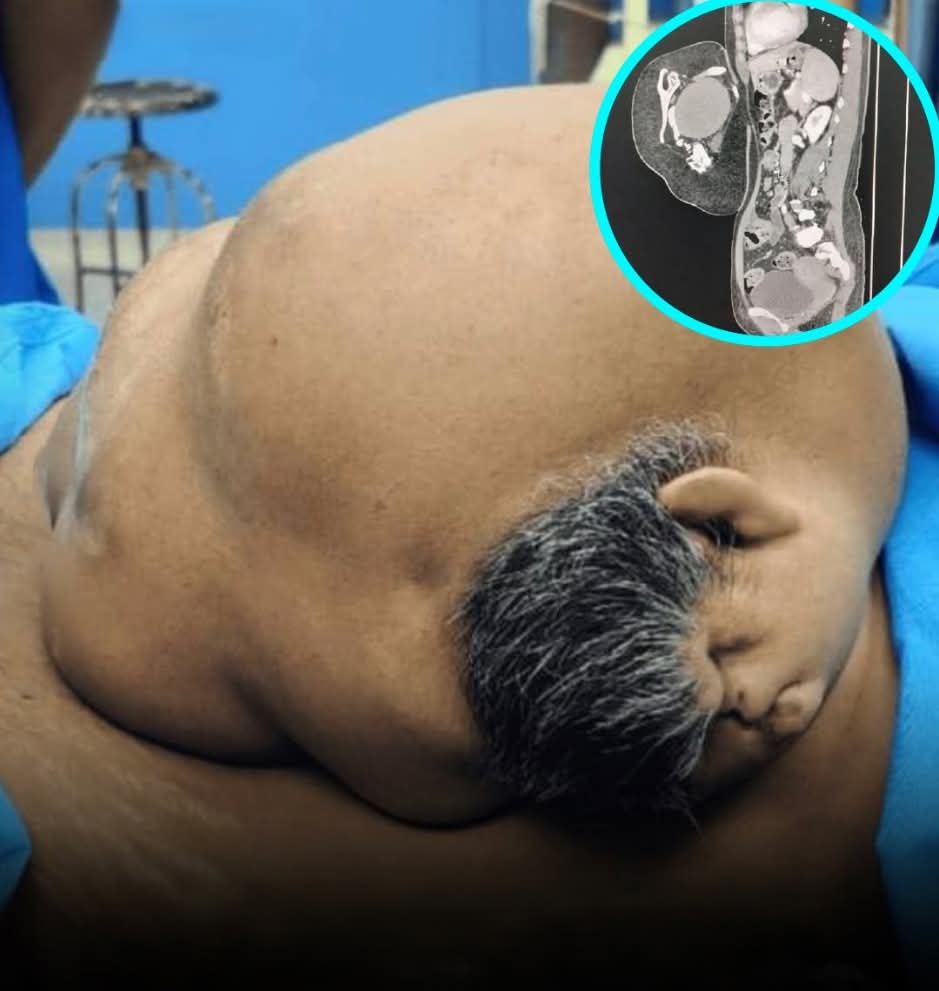
Wonders as Woman Lived with Parasitic Twin Inside Her for Almost 50 Years before Discovery
By: Daire Perez
Medical science isn’t just your everyday paracetamol and headache, seat back and be amazed by this rare and heartbreaking medical case. A 47-year-old woman recently learned that the large abdominal mass she had lived with since birth was in fact her undeveloped twin. The rare congenital condition known as an epigastric heteropagus twin, occurs when one embryo fails to fully develop and remains attached to the other during pregnancy.
According to reports, the woman – a mother of four – decided to undergo surgery after carrying the mass for nearly half a century. Surgeons discovered a 24-centimeter growth containing primitive human features, including an ear, a nose, and partially formed limbs. The mass was being nourished by an artery connected to the carrier’s abdomen.
Medical specialists involved in the case emphasized the crucial role of advanced imaging studies conducted before operation. These scans allowed doctors to precisely map the mass’s structure and safely remove it without endangering the patient’s life.
Cases of parasitic twins are extremely rare, making this one of the most unusual and fascinating occurrences in modern medical literature.
Adapted from Weired, Wonder, and Amazing Tings (Facebook)
IduwiniVoice Edubbas
TITANIC: A GRAVE IN THE DEEP – 113 YEARS LATER, QUESTIONS STILL HAUNT THE ATLANTIC

By Tama Peretengboro
Imagine the icy Atlantic, silent but for the fading cries of the doomed. On the early morning of April 15, 1912, the RMS Titanic-the so-called “unsinkable” ship-vanished beneath the surface of the North Atlantic,taking more than 1,500 lives with it.The tragedy remains one of the most devastating maritime disasters in history.
In the aftermath, survivors huddled in lifeboats, drifting in shock and silence.Many would later recall that the quiet that followed the sinking-the absence of voices, of splashes, of life – was more harrowing than the chaos itself.
For over seven decades, the wreck lay undisturbed, lost to time and memory-untilb1985, when an expedition led by Dr. Robert Ballard discovered the remains of the Titanic nearly 2.5 miles beneath the surface.What they found was a ship torn apart-broken in two and scattered across the ocean floor like an open wound frozen in time.
Since then, more than 5,000 artifacts have been recovered from the site, each one a chilling reminder of that fateful night: bottles of perfume that still carry their scent, letters that never reached their destinations, pairs of shoes lying where their owners once stood. These personal items have become the voice of the dead,telling stories that words cannot.
But even as these objects are studied and displayed in exhibitions around the world, a haunting question remains: Are there human remains still at the site?
Marine scientists are divided. Some argue that the ocean’s immense pressure, low temperatures, and microbial activity would have long since broken down any human tissue. Others point to the way personal effects remain arranged-shoes placed side by side, clothing intact in some cases-suggesting bodies once rested there,perhaps shielded by the deep.
What’s clear is that the Titanic is more than a shipwreck. It is a sunken memorial, a timecapsule lying in darkness. Over a century later, it continues to stir emotion and inquiry, reminding us that beneath the waves lies a tragedy that time can not wash away.
Credit: Weired, Wonder, and Amazing Things on Facebook